
LiLiving with anxiety can feel like being inhabited by a monster that constantly whispers about your fears, insecurities, worthlessness, inevitable failures, and the catastrophes you may be creating. It is estimated that 13-14% of people in Europe live with anxiety. One symptom can be anxiety attacks; some individuals only realise they have been suffering from anxiety when they experience such an attack.
An anxiety attack differs from a panic attack. It is typically a response to a stressor—often a thought, feeling, or specific dread. People experiencing anxiety feel apprehensive and engulfed by fear. Their hearts may race, and they may feel short of breath. Often, individuals feel out of control and may become extremely tearful. A panic attack may include some of these symptoms, but it usually occurs without a clear stressor. Both can be terribly frightening. If you experience anxiety attacks, it is important to be prepared with an emergency response.
Here are some of my favourite techniques to respond when anxiety attacks occur..
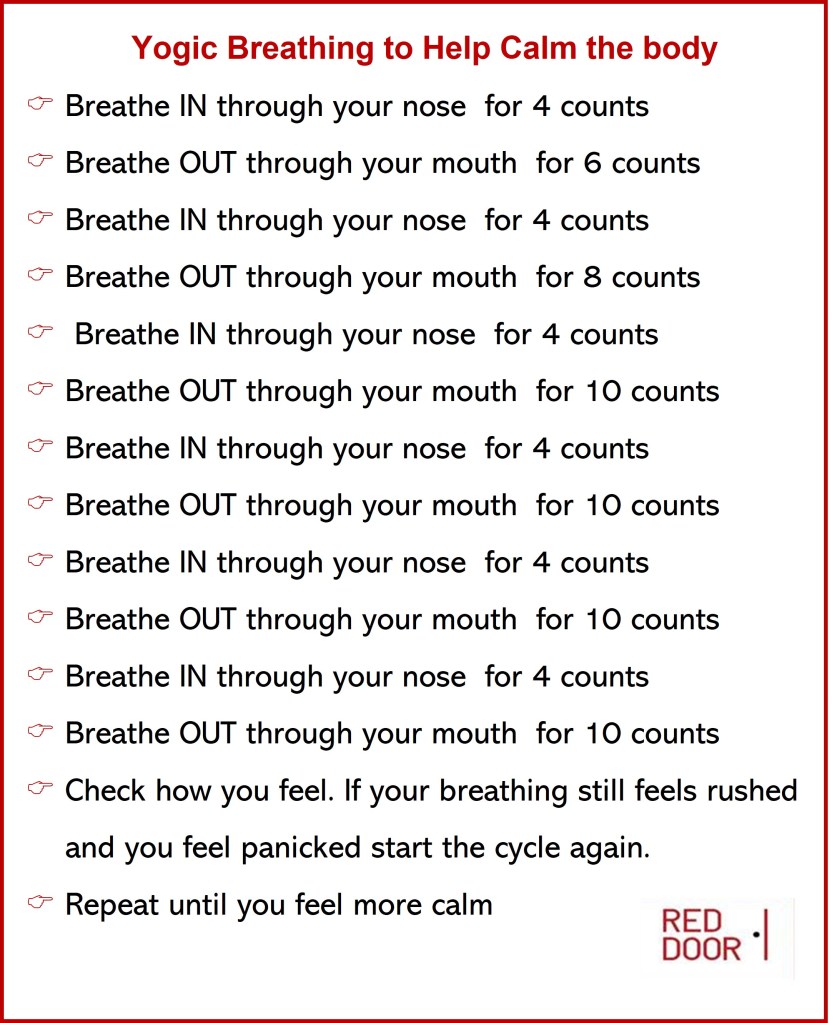
Breathing Exercises: Listen to the pattern of your breath when you feel anxious; it can provide clues about how best to respond to your anxiety. If you are hyperventilating—taking fast, shallow breaths, feeling faint, and fearing that you cannot catch your breath—try breathing into a paper bag. Breathing in and out using a paper bag will recycle air, returning carbon dioxide to your body, which will naturally help make your breath deeper and slower. Do this for a minute. If you do not feel better, try again for another minute.
If you are not hyperventilating, you can use the calming breath technique. Breathing exercises, such as those used in yoga classes, are effective in reducing anxiety. One simple exercise that I use with clients involves counting inward and outward breaths to calm the mind. Breathe slowly in through your nose for a count of 4, then breathe out through your mouth for a count of 4. Repeat. Next, breathe in through your nose for a count of 4, and out of your mouth for a count of 6. Repeat. Finally, breathe in through your nose for a count of 4, then breathe out through your mouth for a count of 8. Repeat. Check to see if you feel better; if you don’t, repeat the exercise again, concentrating on the sensation of your breath.
Distraction Techniques: Distraction exercises help your parasympathetic nervous system override an anxious reaction. By simply refocusing your energy on elements of your environment, you can allow your underlying operating system to return to homeostatic (i.e., regular) breathing.
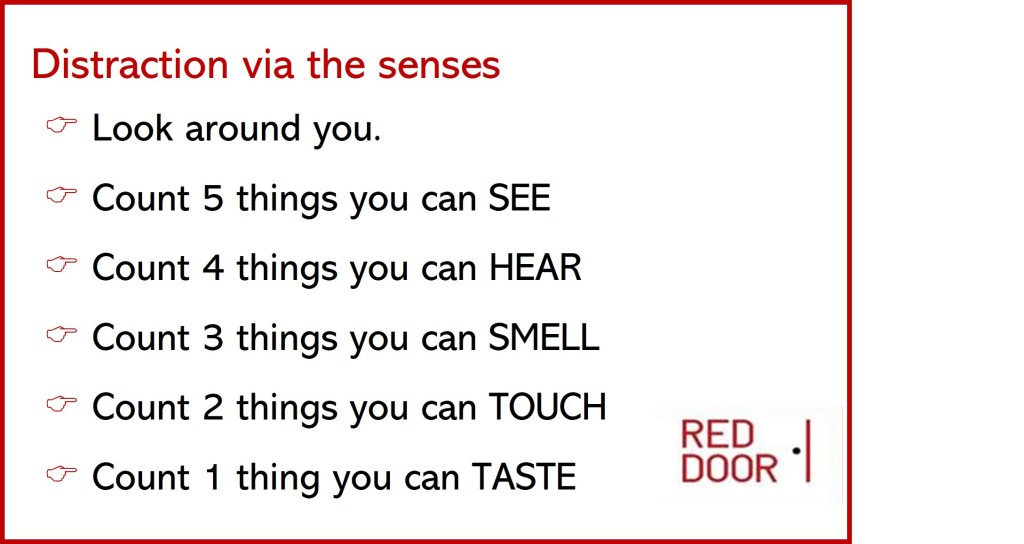
Use Your Senses: The most commonly used therapeutic technique involves engaging your senses to distract your busy mind. Identifying a number of items you can see, smell, hear, touch, and taste can help reset your body. For example, identify 5 things you can see, then 4 things you can hear, then 3 things you can smell, then 2 things you can touch, and finally, 1 thing you can taste. After this exercise, monitor your breathing again. Has it become less panicked?
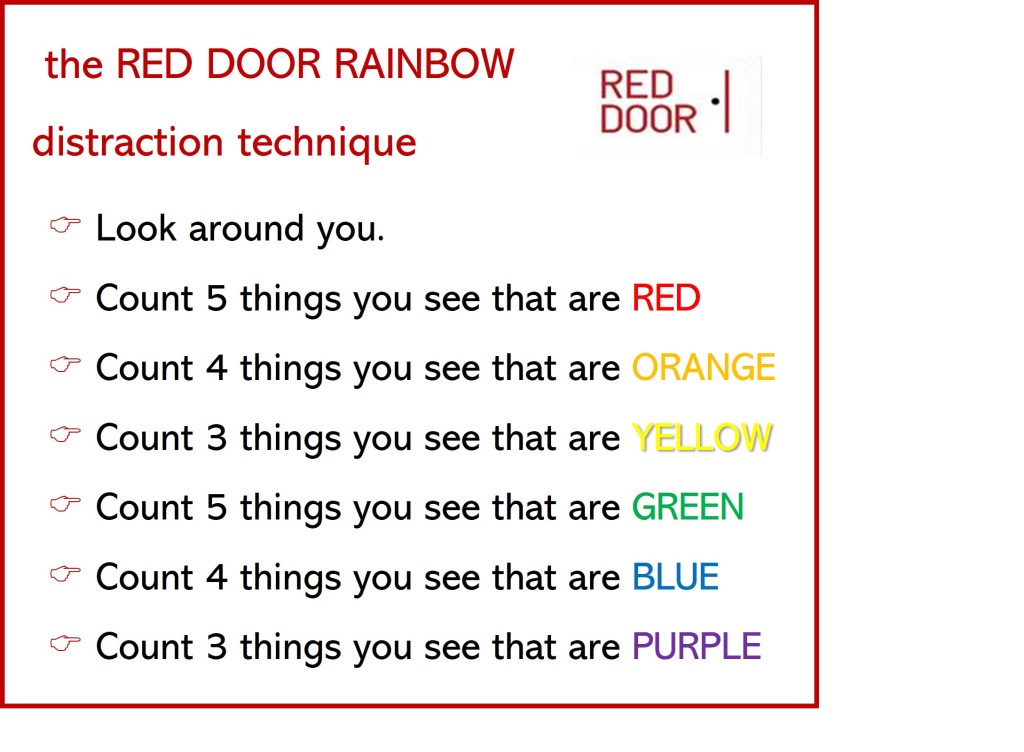
Since we work with numerous teens and children at RED DOOR, we also utilise the RAINBOW technique, often paired with our proprietary rainbow fidget toy, to help teens achieve quick calm. This technique can be performed without the fidget toy. Simply count objects in your immediate vicinity that are specific colours. You can keep track of the total number of objects or count a specified number of objects that are red, orange, yellow, green, blue, and black.

Physical Reset Activities: Distraction can also be achieved through physical “reset” activities, such as repeatedly snapping an elastic band against your wrist or performing sets of 10 jumping jacks.
Meditation/Relaxation: Meditation, when practised regularly, can help individuals reach a relaxed state more easily. Practice makes progress when it comes to meditation. If you are experiencing an anxiety attack, try to find somewhere to sit quietly or lie down. Then attempt progressive relaxation, also known as a body scan, which can be especially beneficial. Progressive relaxation soothes you as you tense and relax muscles, isolating and focusing exclusively on one group of muscles at a time. Begin with your toes and work your way up through your muscles to your head, focusing on relaxing the muscles around your chin and eyes. Guided progressive relaxations are available on Spotify, YouTube, and on CD.
Imagery: In the midst of an anxiety attack, use your active imagination to help alleviate stress. First, isolate the location within your body where you feel the greatest sensation of anxiety. Use imagery to help unwind and relax that spot. Cute, warm, and amusing images will be most beneficial. If you feel tension in your shoulders, imagine a group of kittens massaging the knots away. If you have butterflies in your stomach, envision yourself in your stomach with them
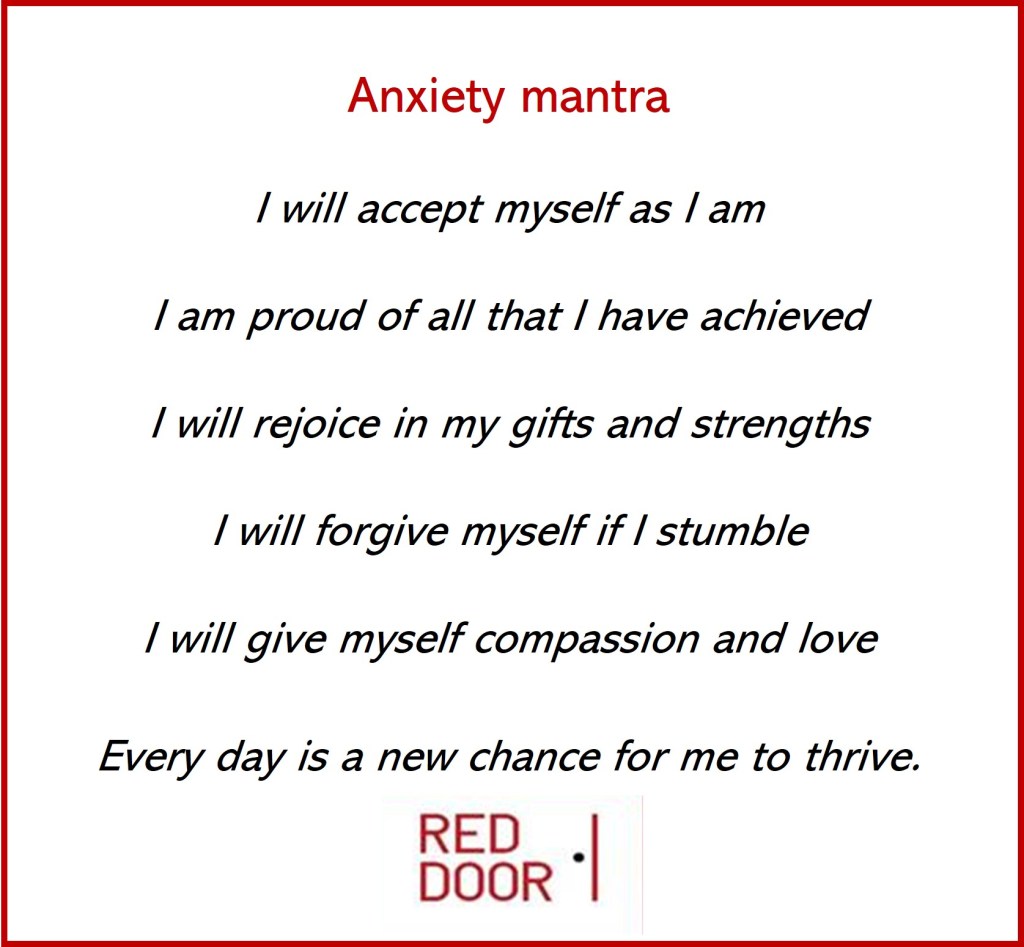
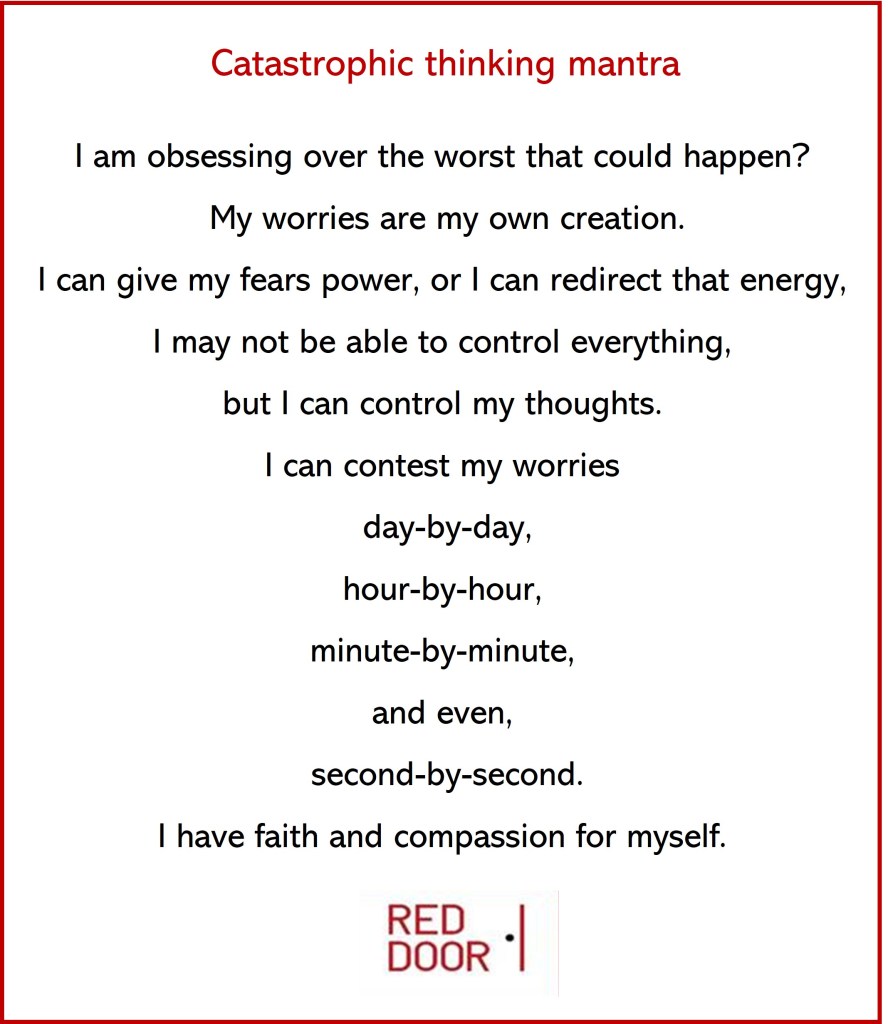
Mantras – Anxiety attacks are created by dreadful thoughts running through your mind. One way to settle these thoughts is to repeat a mantra. While there are mantras on the internet, you may benefit from one that you write specifically for yourself. The mantra should be full of words of kindness, understanding and love. The words “should” or “must” cannot be part of any mantra.
Centre yourself with art therapy techniques
While avoidance is not a long-term technique for managing anxiety, if you are ruminating or feeling a panic attack, distracting yourself with a change of scene or activity can help. Go for a walk, particularly in nature, to reset yourself. Try colouring, which I have detailed in a previous blog [https://reddoorhongkong.wordpress.com/2017/03/06/reasons-to-colour/ ], which involves both sides of the brain, stimulates creativity, and can help to calm the mind. Even listening to some upbeat tunes at this time, get up and dance, just break the pattern of your anxiety for a moment to reset your emotional clock.
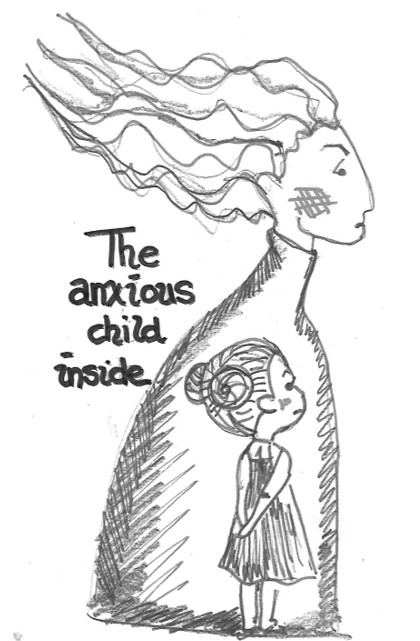
Talk to your anxiety – The long-term cognitive approach to anxiety is to create an internal dispute. Disputing your anxiety helps you reframe situations, see hope, and utilise self-compassion. If you experience anxiety ask yourself to challenge your view of the stressful situation – have you been overgeneralising, personalising, or catastrophizing? Is there an alternative way of looking at this issue? Sarah Wilson[2] , in her compendium of suggestions to utilise in one’s challenge with anxiety suggests an ancient adage, “ First make the beast beautiful”, meaning accept that your anxiety – it is something that originally may have been created to help you, but overtime has started to inappropriately misfire. When you make the anxiety beast beautiful you may say to yourself, “Thank you brain for alerting me to potential danger, but I know I am safe right now, you can go back to your guarding post”. Developing the process of dispute is an area of action where a therapist can be of significant help. If you cannot create this dispute for yourself, utilise the resources of a counsellor.
Prolonged anxiety is extremely challenging to your health. If you have been struggling with anxiety for a while please seek the help of a counsellor or a doctor. They may recommend a combination of therapy and even medication to help lessen your anxiety. There is no shame in needing help. Take charge of your future.
Everyday is a new day for you to thrive. Start gently, start now.
#mentalhealth #mantra #mindfulness #anxiety #reddoorcounselling #selfhelp #anxietyattack #treatmentanxiety #women
Sources
1: Prevalence –
2004: The ESEMeD/MHEDEA 2000 Investigators,2004, Prevalence of mental disorders in Europe: results from the European Study of the Epidemiology of Mental Disorders (ESEMeD) project
2011: https://www.theguardian.com/society/2011/sep/05/third-europeans-mental-disorder
2: Sarah Wilson, 2018, First we make the beast beautiful: A new journal through anxiety. Dey Street Books
__________________________________________________________________
Angela Watkins is a psychologist and counsellor at RED DOOR Counselling in Hong Kong. Her current clinical work focuses on parenting. relationships, anxiety, OCD, career change, stress management and divorce.

