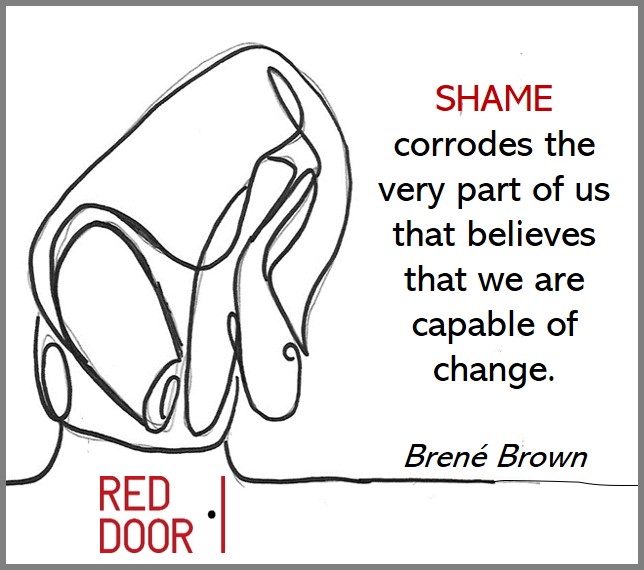
So many people are living in a psychological jail created by a sense of shame. Shame doesn’t have to dominate how you feel about yourself, and the decisions that you make. Break free from the prison of shame.
Shame is a complex, painful experience that most of us experience at some point in our lives. It is characterised by the mental distress, often together with unpleasant feelings within your body including feeling like you have knots in your stomach, chest pain, lumps in the throat, and heated skin, when you feel you have done or are wrong in a situation. There are usually accompanying negative intrusive thoughts such as, “I am bad or messed up”.
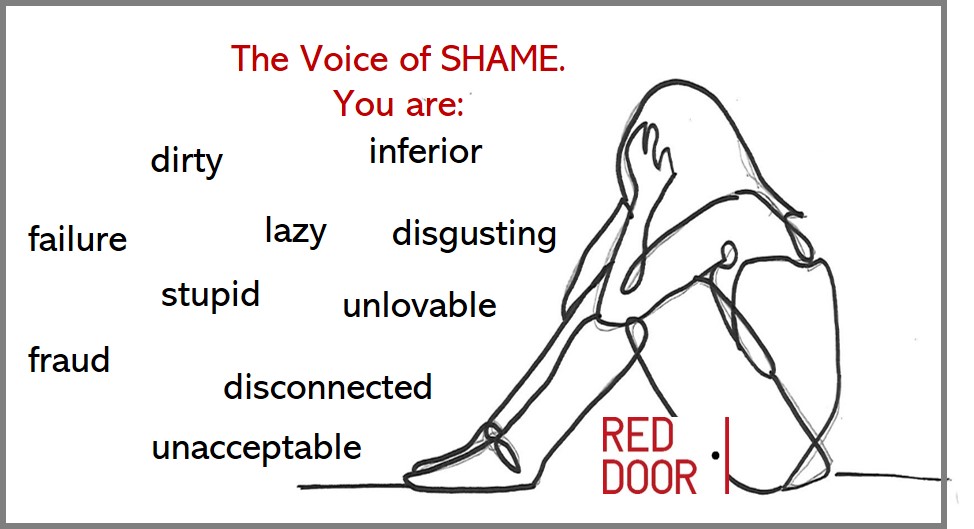
When our shame becomes chronic, it can take over our identity and our energy to live fully. When we experience this type of shame, we are steeped in the fear of being ridiculed, diminished or feeling flawed. Whatever, we feel ashamed of, at its foundation is an unconsciously belief of inferiority or being unacceptable – even being unlovable. I call these our root shame beliefs – they include thoughts such as:
- I am unlovable
- I am dirty
- I am disgusting
- I am inferior
- I am a joke
- I am a bad person
- I am a fraud
- I deserve to be punished
- I am nothing
Shame is a common denominator in low self-esteem, high reactivity, perfectionism, intimacy issues and co-dependency. Shame traps us. Shame breaks us.
There are different types of shame – some is attached to situations, when you break an norm or expectation, or existential shame, when you come to realise something about yourself (e.g. you drink too much). When shame internalised/toxic shame it becomes especially problematic. Internalised/ Toxic shame is when you believe that something is fundamentally wrong with you. Often this is the result of external experiences or commentary.

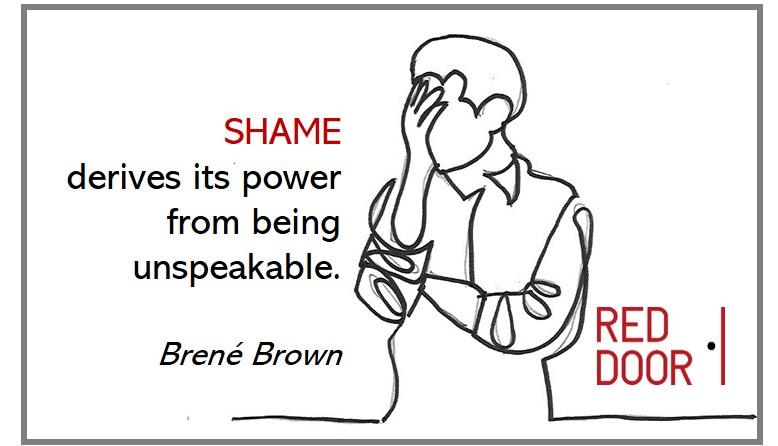
Shame is different from guilt. Guilt is about a specific behaviour or fear of a punishment, whilst shame is about feeling that something is unacceptable about us. When we feel shame, blame is never far behind.
Certain cultures place a high value on reputation, face, honour, and contributions to the community. In such societies, shame may be employed as a tool to modify a community member’s behaviour. In extreme cases, if a “wrong” cannot be corrected, traditional expectations may even include drastic measures such as suicide.
If shame has been shaping your experiences, please know that you can move beyond feelings of disconnection, rejection, and diminishment.
What Are People Ashamed Of?
People contend with a wide array of shame-related issues. In therapy, we work to liberate our clients from these burdens. Often, as individuals who care deeply about our clients, we wish to help them understand that they should not feel ashamed of the things they find shameful. Shame is rarely fair or rational; it erodes our sense of self and our capacity for acceptance unnecessarily.
- Common sources of shame include:
- Appearance
- Culture and ethnicity
- Addictions (e.g., alcohol, drugs, gambling)
- Mental health
- Sexuality
- Identity
- Financial circumstances or status
- Learning challenges
- Marital status, especially for those who’ve experienced divorce
- Rejection by family of origin
- Being in an abusive relationship
Defence Mechanisms Against Shame
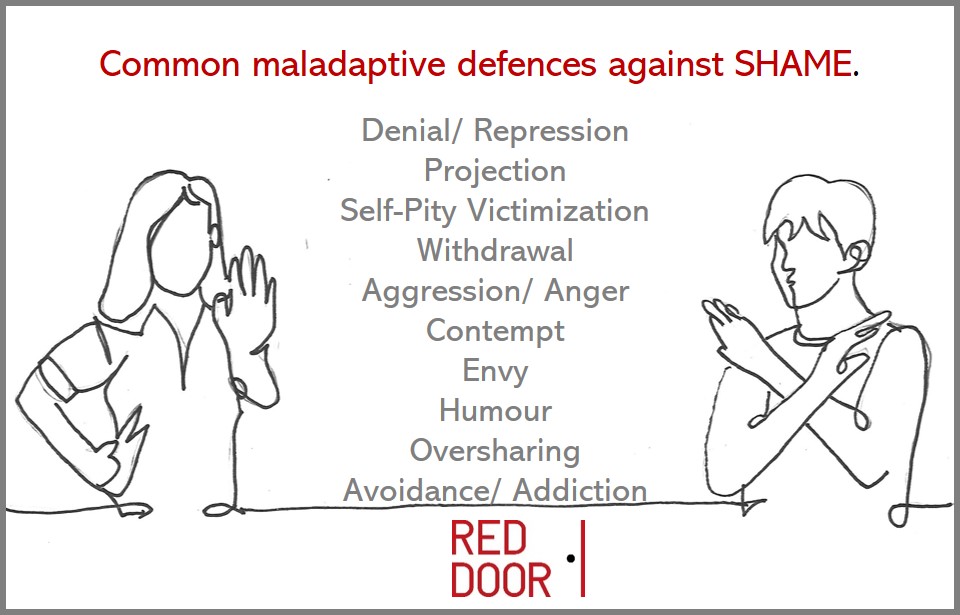
We often respond to shame through various maladaptive strategies. Reflect on whether you have employed any of these techniques to maintain distance from or avoid confronting your shame:
- Denial/Repression: This occurs when we refuse to acknowledge what has transpired or bury it because we or others consider it unacceptable. Such responses can result in becoming easily triggered, as we mask our sensitivities. Paradoxically, in attempting to diminish the impact of a stimulus, we may become hypersensitive to minor criticisms, fearing they could expose our source of shame.
- Projection: This involves disowning our unacceptable feelings, thoughts, or qualities and attributing them to others. Sometimes, we may blame another person preemptively to avoid being judged ourselves.
- Self-Pity/Victimisation: While real victimisation occurs, some may adopt a victim mentality to evade personal growth. In rare instances, individuals might provoke abuse from others to receive the punishment they believe they deserve.
- Withdrawal: Individuals may retreat into isolation to ensure that others are unaware of the source of their shame. Introverts may find themselves particularly prone to this approach.
- Avoidance/Addiction: Strong feelings of shame can lead individuals to self-medicate as a means of escaping the negative feelings and thoughts associated with self-hatred.
- Contempt: At times, individuals may adopt an arrogant demeanour as a defence mechanism, using an inflated sense of self to shield against feelings of inferiority.
- Envy: We might compare ourselves to others and blame them for our situations, believing, for example, “I am this way because others possess resources that I lack.”
- Oversharing: When prompted about our circumstances, we may feel compelled to divulge our entire story, including all the unpleasant details, as a way of discharging our shame.
- Acting Out in Anger or Aggression: Our aggression may intensify if we perceive that someone else is triggering our self-judgement, leading us to respond with vindictiveness, physical aggression, or passive-aggressive behaviours.
A Way Out of Shame
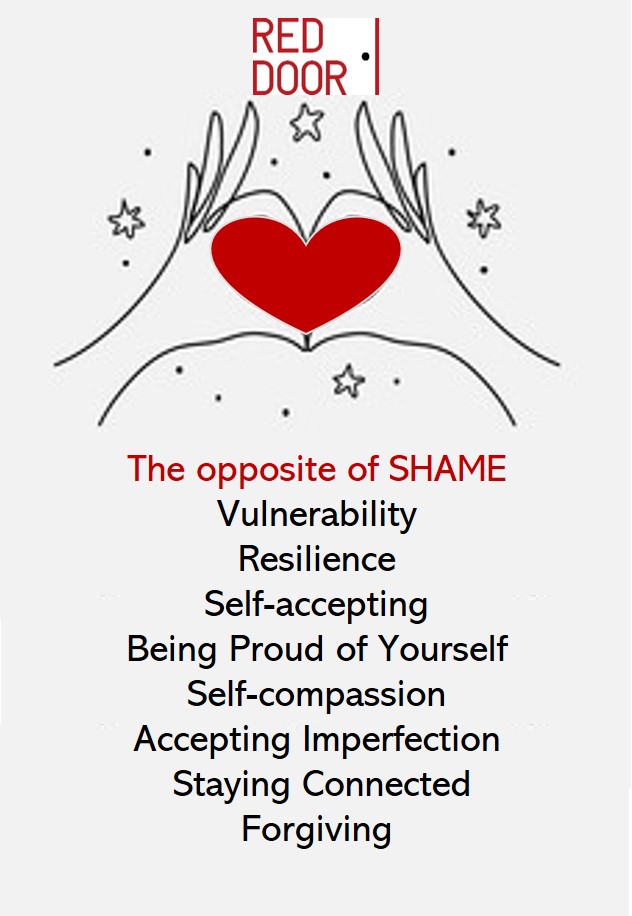
Shame compels us to live silently, defensively, and hyper-sensitively, often forcing us into denial or anger. However, the path to healing involves embracing the opposite of shame. This encompasses self-acceptance, practising self-compassion, acknowledging that perfection is neither ideal nor realistic, and being forgiving of our problems and shortcomings. It also involves recognising that progress stems from consistent effort (i.e., resilience) and fostering connections with others, rather than treating ourselves as if we deserve punishment..
Shame Reducing Exercises
Shame often silences us, makes us defensive, hypersensitive, and combative, and forces us to live either in denial or anger. However, addressing shame requires embracing its opposite. Overcoming shame involves fostering self-acceptance, practising self-compassion, acknowledging that perfection is neither ideal nor attainable, and extending forgiveness to ourselves for our problems and shortcomings. It is crucial to recognise that progress is achieved through consistent effort (i.e., resilience) and to cultivate connections with others, rather than treating ourselves as if we deserve punishment.
In counselling, we introduce various techniques and have dedicated sessions focused on recovery practices. Some particularly effective techniques include quietening your inner critic, nurturing your inner champion, and engaging in reflective journalling to facilitate your healing process.
While these practices may seem daunting, I understand that implementing them can feel easier said than done.
Although it is certainly possible to work on these aspects independently—utilising the books recommended in this article—collaborating with a counsellor can provide more effective results. A counsellor can assist in framing questions that help you gain insight into your shame traps, guide you in navigating the practices that sustain your shame, and support you in prioritising activities that promote healing.
Recovery from Shame
When we explore how individuals react to shame, we can summarise that people typically respond by moving against others, away from them, or towards them. Moving towards people involves embracing vulnerability and expressing love. To be vulnerable and show love, we must liberate ourselves from the power that shame has over us.
Quieten Your Inner Critic
To break free from shame, it is essential to quiet your Inner Critic. Each of us possesses an inner critic that often undermines our sense of self, constructing a kingdom of shame. In our sessions, we frequently confront a client’s inner critic so they can recognise, often for the first time, that they are perpetuating unhelpful and damaging thoughts. This inner critic sustains your shame, creating an extensive “to-do” list of “shoulds” in response to whatever triggers your feelings of shame.
Remember, many of us grant our inner critic a prominent platform while giving scant air time to the soothing words of self-affirmation from our inner champion. The words you say to yourself can either uplift you or diminish you. If you struggle with a negative self-concept, it is crucial to feed yourself positive affirmations. What you are ashamed of is likely not as shameful as you believe. It is time to change the record that plays in your mind. After all, nothing changes if nothing changes.
I often encourage my clients to assign a name to their inner critic, typically one they dislike. I call mine Kevin, so I can remind myself, “Shut up, Kevin,” whenever I find myself trapped in a cycle of self-criticism. This simple act quietens the critic and brings a smile to my face. From there, it is vital to cultivate its antithesis—the inner champion or cheerleader..
Engage Your Inner Champion
Engaging your inner champion or cheerleader requires creating a character within yourself whose role is to uplift and support you. This voice should assist you in accepting your shame and transforming your vulnerability from something to hide from into a source of pride. This transformation is reflected in the movement towards acceptance within the LGBTQ+ community, aptly named PRIDE.
When considering the qualities your inner champion should embody, reflect on the elements that oppose shame. This key inner voice needs to help you stay connected to the world, cultivate compassion, instil pride in yourself, foster resilience, and accept your imperfect nature as perfectly okay. Self-acceptance is paramount.
An effective inner champion could:
- Encourage you
- Provide empathy
- Support you when you feel unfairly treated
- Help build your self-esteem
- Empower you
- Validate your feelings
- Speak positively about your looks, feelings, and experiences
- Recognise that others’ judgements reflect their issues, not yours
- Assist you in identifying and regulating your emotions
- Encourage you to face your responsibilities rather than feel “less than” due to aspects of yourself you struggle to accept
Your champion will respond to the demands of your inner critic, employing self-compassion, acceptance, and even forgiveness to liberate you from the tyranny of “shoulds” imposed by the critic. We can explore these internal dialogues effectively using journaling.
Using Journal Pages and Prompts to Help You Break Free from Shame
I advocate for journaling as a vital component of self-therapy. I have attached a link to an article about journaling at the end of this piece to help you appreciate its benefits.
The creative process of journaling allows all your internal voices to be expressed on the page. Internal self-dialogue becomes much clearer when captured in writing. I personally prefer prompted journals, as blank pages can be intimidating.
Exercise Series 1: Let Your Shame Speak
In this series of journal pages, you will give voice to your shame, allowing it to express the thoughts associated with your fundamental shame beliefs. For instance, write your response to a root belief you hold about yourself. You can identify your root belief by reading through a list of common shame-related beliefs and noting the one that resonates most strongly within you. Below are the steps for this exercise:
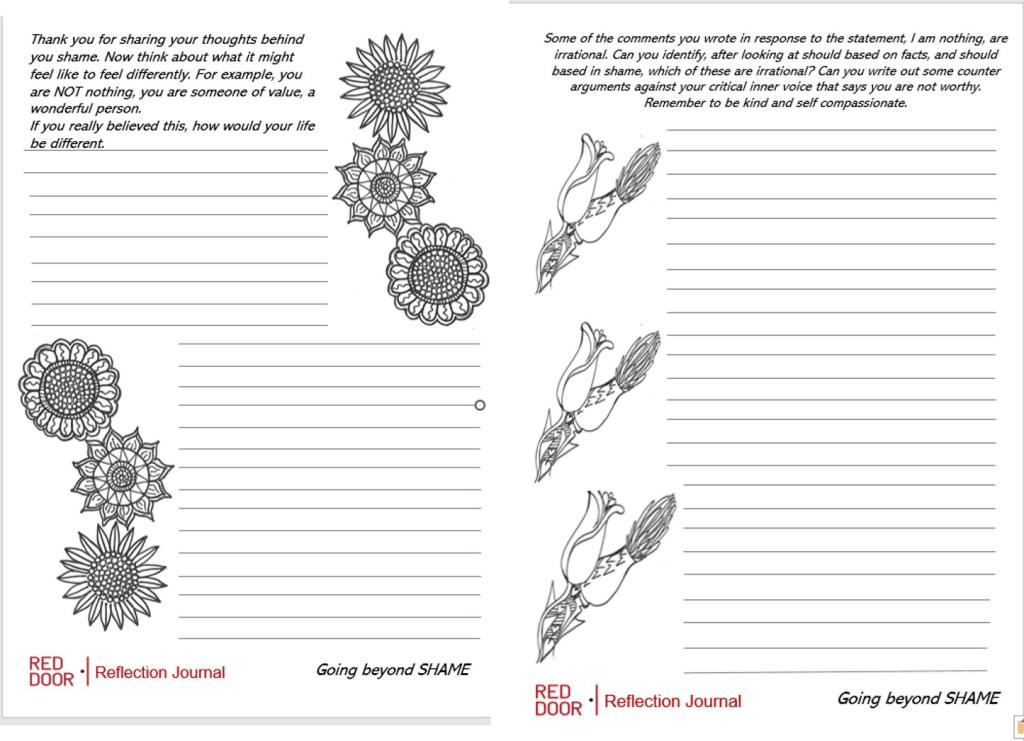
Create a rebuttal to the shame-based beliefs.
Let your shame speak—respond to a root belief.
Separate the “shoulds” based on factual evidence from those rooted in shame.
Imagine an alternative future.
Exercise series 1: Let your shame speak
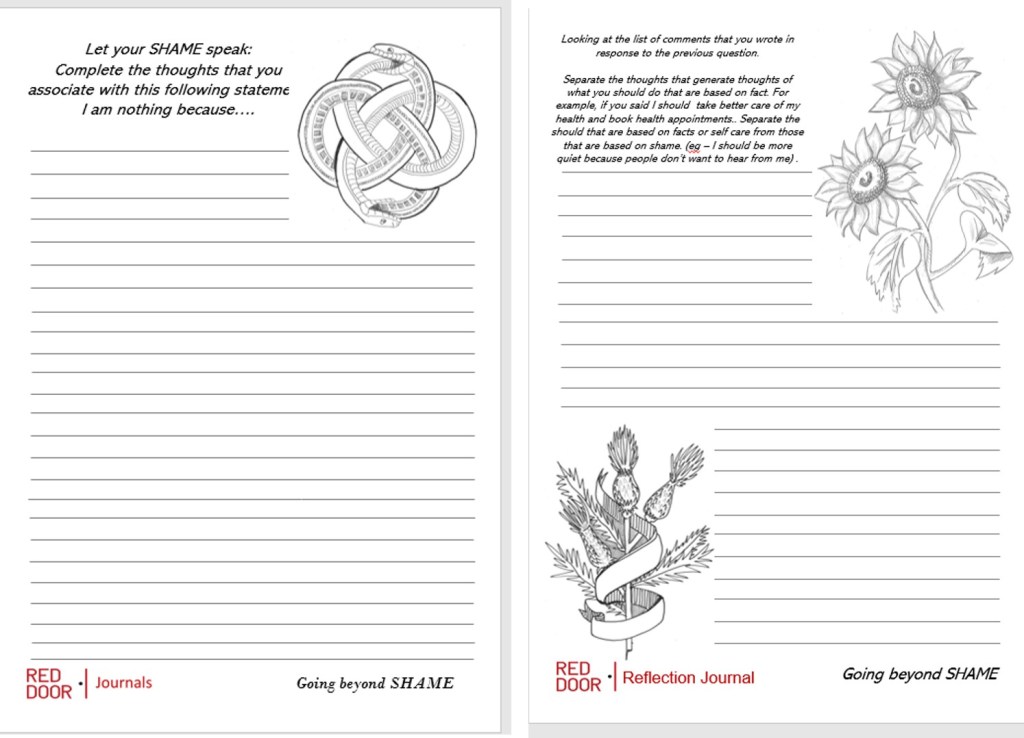
In this series of journal pages, you will give your shame a voice to allow it to express the thoughts associated some of your fundamental shame beliefs. For example, you write your response to a root belief that you hold within your experience of shame. You can know what your root belief is by reading each of the common shame root beliefs and feel in your body the one that gives you the biggest response. We have created these pages for your consideration.
Step 1: Let your shame speak –responding to a root belief
Step 2 Separate the shoulds based in fact from the shoulds that are based in shame
Exercise Series 2: Reprogramming Messages from the Past
Step 1: Identify the message
Identify messages from your youth that have influenced your self-perception. Reflect on the messages conveyed by friends, family, or culture when you were younger, and list them. These may include:
Be nicer
Don’t be so sensitive
Don’t act crazy
You are psycho
Act like a lady
Don’t be so stupid
Be nicer to people
You are lazy
Step 2: Reflect on the Impact
How did these messages affect you? Did you feel embarrassed or humiliated by them? Consider how they may be influencing your adult life today.
Step 3: Recognize the Inner Critic
Have these messages transformed into a harsh “tyranny of shoulds” that your inner critic frequently reminds you of? Reflect on whether it’s fair to be so tough on yourself.
Step 4: Listen to Your Inner Champion
Instead, consider tuning in to your inner champion. Are these critical messages truly necessary or beneficial? If you were to approach yourself with compassion and protection, would you still heed these messages and the tyranny of shoulds?
Conclusion
Recovering from shame is not just about overcoming feelings of inadequacy; it is about reclaiming your self-worth and embracing your authentic self. By recognising the power of your inner critic and actively engaging your inner champion, you can transform your relationship with shame into one of acceptance and resilience.
Remember, the journey to healing is not a linear path. It requires patience, self-compassion, and the willingness to confront deeply held beliefs. The exercises and strategies discussed in this blog serve as tools to support you in this process, helping you to dismantle the barriers that shame has built.
As you embark on this journey, know that you are not alone. Seeking support from friends, family, or a professional counsellor can significantly enhance your efforts in overcoming shame. Surrounding yourself with understanding and compassionate individuals will foster a nurturing environment conducive to growth and healing.
In acknowledging your vulnerabilities, you empower yourself to experience deeper connections with others, paving the way for authentic relationships and personal fulfilment. Embrace the journey ahead with courage, and always remind yourself that you are deserving of love, acceptance, and joy, just as you are.
About the Author: Angela Watkins is the lead counsellor at RED DOOR. Angela helps adults, teens and families break through emotional road bumps. You can feel better. To contact Angela for an appointment email angelaw@reddoor.hk.
Other blogs about Journaling:
Useful books:
Darlene Lancer (2014) Conquering shame and codependency: 8 Steps to freeing the true you
Rebecca Mandeville (2020) Rejected, shamed and blamed: Help and hope for adults in the family scapegoat role.
Hilary Jacobs Hendel (2018) It’s not always depression: Working the change triangle to listen to the body, discover core emotions and connect to your authentic self.
Brene Brown (2007) I thought it was just me: Women reclaiming power and courage in a culture of shame.
Stephen Guise (2015) How to be an imperfectionist.