A million little things – how we build great friendships and protect against loneliness.

In a recent article in the Financial Times newspaper [1], data insights reporter Federica Cocco warns of a growing epidemic of loneliness for people in the world. Citing ongoing research from the American Time Use Survey, Cocco highlights that people in the US are appear to be decreasing their experience of friends and family who they can count on for support.

In particular older people are more affected than other age groups. Over half the people over 65 years of age spend more than 8 hours of their awake time alone. Cocco also highlights that young women are a growing group at risk of experiencing loneliness, as the percentage has doubled of women spending reporting protracted periods alone (2011-2021: 7-14%). 

Loneliness has been associated with objective social isolation, depression, introversion, or poor social skills. It is a threat to physical and mental health.  Income, education, sex, and ethnicity are not protective against loneliness. Rather than trivialised, ignored or blamed in those who experience this condition, we need to consider how we can protect ourselves and others.[2]

We see the expansion of loneliness in our clinical practice as well. In Hong Kong, and especially after the COVID pandemic, many people have reported the loss of of friends and increased experience of social isolation as part of their current life experiences. We are social beings. We thrive on being emotionally connected to others and function well when we are involved in rewarding relationships. {3, 4]

Although many of us still have friends that we can spend time with, we may also being lack of intimacy in the friendships that we have [3]. It is important to have support, people who you can share your worries and concerns with, and provide us with key support that we need and protect us against social isolation and loneliness.

Developing new valuable friends is a skill that we have to learn as children, but often we need to relearn and revisit friendship making skills repeatedly over our lifespan. – We need to go into friendship making mode when we experience an intimacy gap among our friendships, we have lost many friends, we change our life circumstances (living location, having children, marital breakdown, leaving employment).

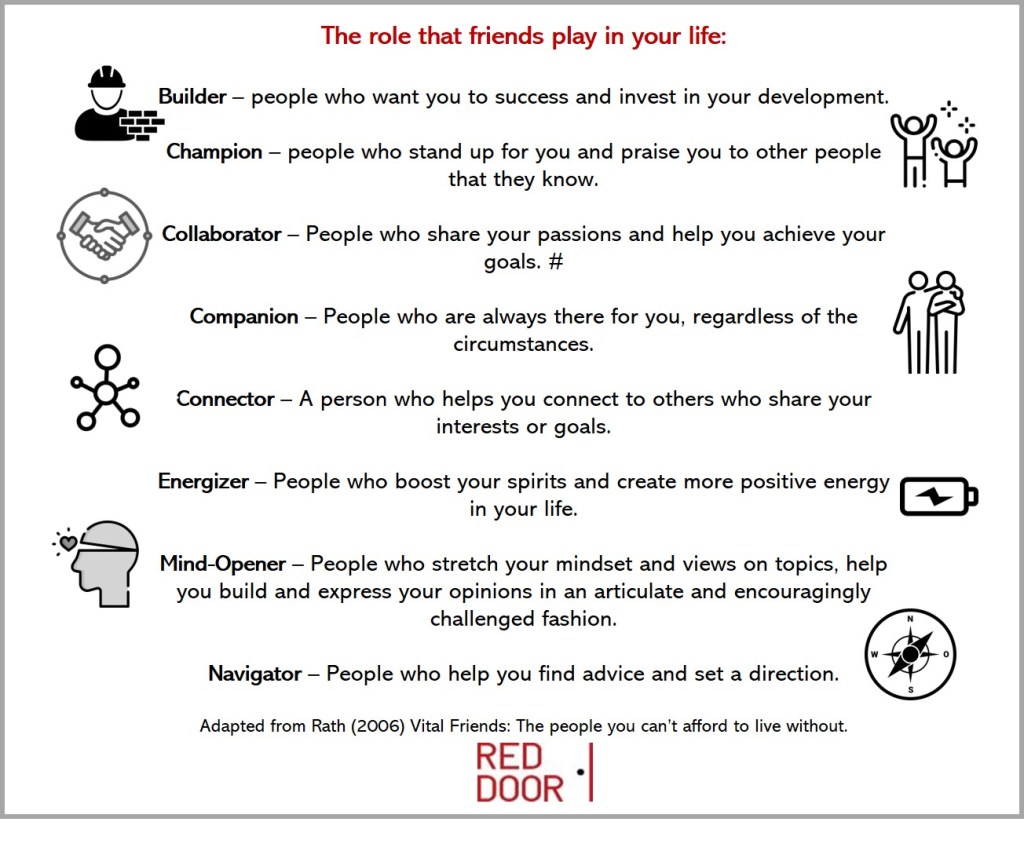
Not only are friendships vital, they fulfill and number of key roles in our lives from championing for our health, connecting us others and helping to challenge your mindset [4].

If you acknowledge that your friendships are not as you would like them to be, in terms of numbers of friends and also depth of friendships we have some recommendations that can help you reboot the Intimacy in your friendships  – frientimacy (Nelson, 2016)

Friendships are the result of combining a number of action/ingredients: consistency of effort, personal positivity, your ability and willingness to be vulnerable, understanding and respecting other people’s preferences, having patience, and reflecting mindfully on what is working/not working in order to determine a future for each friendship. 

Consistency

Consistency is a priority in creating a new friendship. The act of building new, and better friendships, is the accumulation of a million little things rather than a few big events. If you want to build a new acquaintance into a friendship you need to create consistency into the relationship – hence why we become friends with people that we see that they same class or activity each week.[3]  

So, if you are looking to meet and make new friends you will be best placed to attend a regular event instead of a one-off workshop. For example, if you want to make new friends you might consider joining a choir group, sports club, bridge or mah-jong club, or regular support group.

You also play a role in creating consistency in your friendships. If you are invited to lunch and decline, ensure that you protect the consistency of the relationship by offering an alternative catch up opportunity immediately. People drift apart because of lack of sustained effort.

Admittedly relationships still require give and take. If you are constantly offering meet ups, and the other party is not reciprocating, consistency will become difficult to achieve. This highlights the value of the other ingredients needed to create meaningful friendships.

Positivity.

We have all had one friend who has been stuck in a negativity rut and one time or another. Depending on the history, and future aspirations of that friendship, you may need to resist a desire to pull away from such a person. That is because it is very difficult to be around negative people.

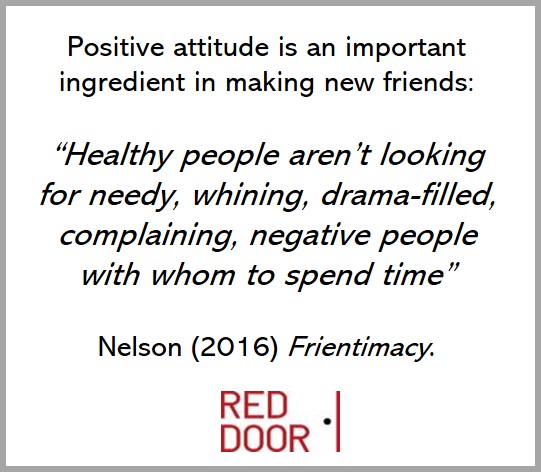
“Healthy people aren’t looking for needy, whining, drama-filled, complaining, negative people with whom to spend time” Nelson, 2016, Frientimacy [4]

Conversely, people are drawn to fun or positive people who help lift the mood at a gathering, or help others feel good.

This doesn’t mean that you need to be over-the-top. People who appear happy all the time appear inauthentic. There is a long range of acceptable emotionality between happy people and negative.

In your relationships with people, you might like to consider how positive and negative you are towards your friends. The Gottmans, the leading marital therapists in the US, state that friendship is the key component of romantic partnerships, and within those that they classify as masters of relationship they share positive action (comments or gestures) to their partner 20 times more than negative comments.

These positive components are not necessarily major investments of time or money, for example nodding when you are listening to a friend’s story is a ‘positive’. Certainly, thanking them for a gift, or their time, or sharing a compliment will spread a feeling of positivity. You could aim for the magic proportion of 5:1 positive to negative action as a starting point. This is be basic ratio that the Gottman’s advise to build positive sentiment in a relationship. [5]
What is a negative element? Obvious verbal criticism, unkind mocking or being caught gossiping will hurt your friends. But it is often small actions that can bring negative element into a friendship such scrolling through your phone when your friend is talking to you, ignoring their texts, rolling your eyes when they tell you a story [again], repeatedly being unavailable to meet up.  

It’s not enough to spend time, and be positive, you also have to be vulnerable. For some people this is difficult.

Vulnerability

When we share vulnerability we are expressing that we are not perfect, we are real humans with feelings, dreams, aspirations and disappointments.  Some individuals find it extremely difficult to share vulnerability, challenges or hurts with another person, possibly because of past trauma or broken trust. By avoiding vulnerability, they keep people at arm’s length. This messages to the receiver that I will spend time with you, but not intimate details of my life. If you want deep friendships rather than acquaintances, you need to let people in.

When we share our vulnerability with another person, we are giving them the opportunity to demonstrate empathy and support for us. Empathy and support within a friendship are the glue that hold it together. After all everyone will have encounter challenges in their life – when changing jobs, experiencing a break up, dealing with difficult co-workers. Friendships are extremely valuable during periods of personal challenge.

I warn you against too much vulnerability too soon. Sharing too much, too soon, and too often can be overwhelming to your audience. Vulnerability as an ingredient needs to be timed and measured carefully. Share vulnerable content only after you have meet with a person 4-5 times and watch their reaction. If they demonstrate empathy, your sharing has helped to deepen the relationship. If they don’t show caring, then it might be that you have overshared or that they are not able/willing to have vulnerability as part of your friendship.

Additionally, you may want to spend the early days of your new friendships to look for red flags about the person, and within the friendship. Individuals who want to take advantage of you, or seem to want to, or do not respect boundaries around your time, relationships, and safety, are not good for you. Go back and find someone new to enjoy a friendship journey with.

Understanding, and appreciating, differences

We are all have different values and priorities. Understanding the world of your friend as well as their communication preferences will help you to build better relationships. Intimacy can be built when people feel understood.  Don’t just focus on being interesting, be interested.

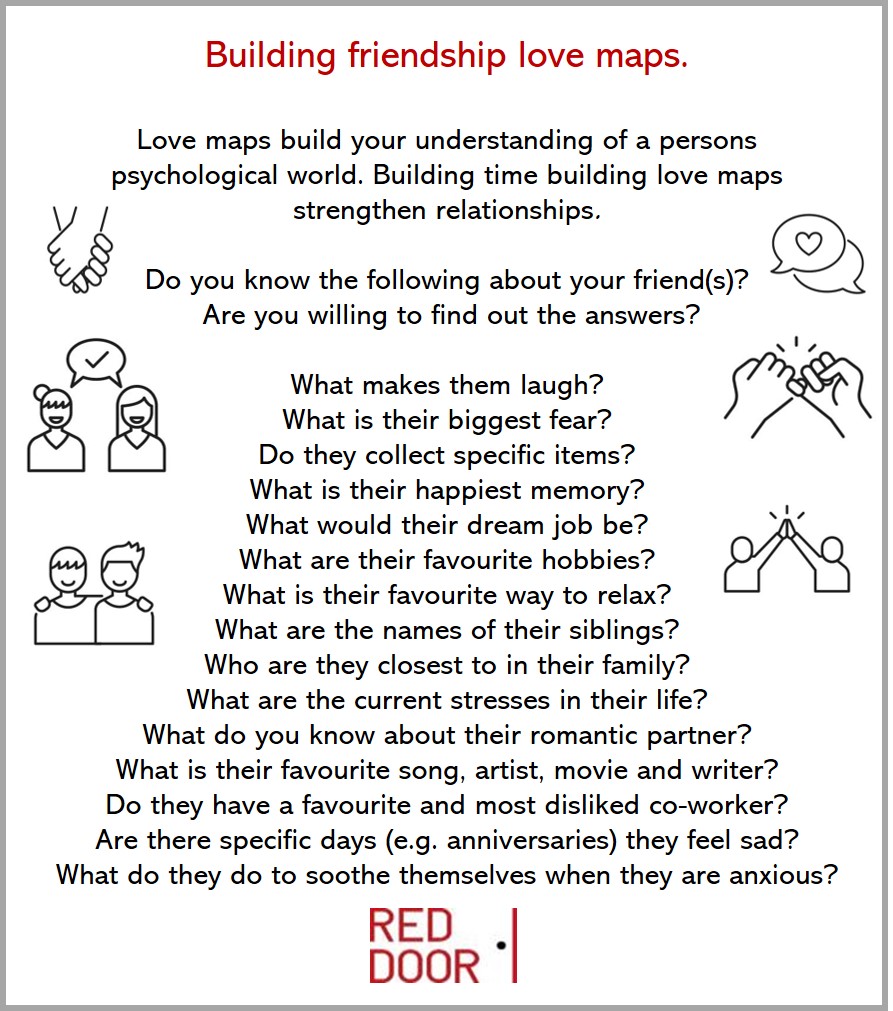
In order to better understand your friends’ build and understanding of their world you can engage in activities that expand your understanding of their world. The Gottmans use love maps to help build back understanding, appreciation and trust into relationships. We have expanded some of their questions to create a friendship love map starter list of questions.

See our picture of  a few questions you might like to know the answers to. Having conversations with your friends about what matters to them indicates that you are interested in their lives. Give it a try.

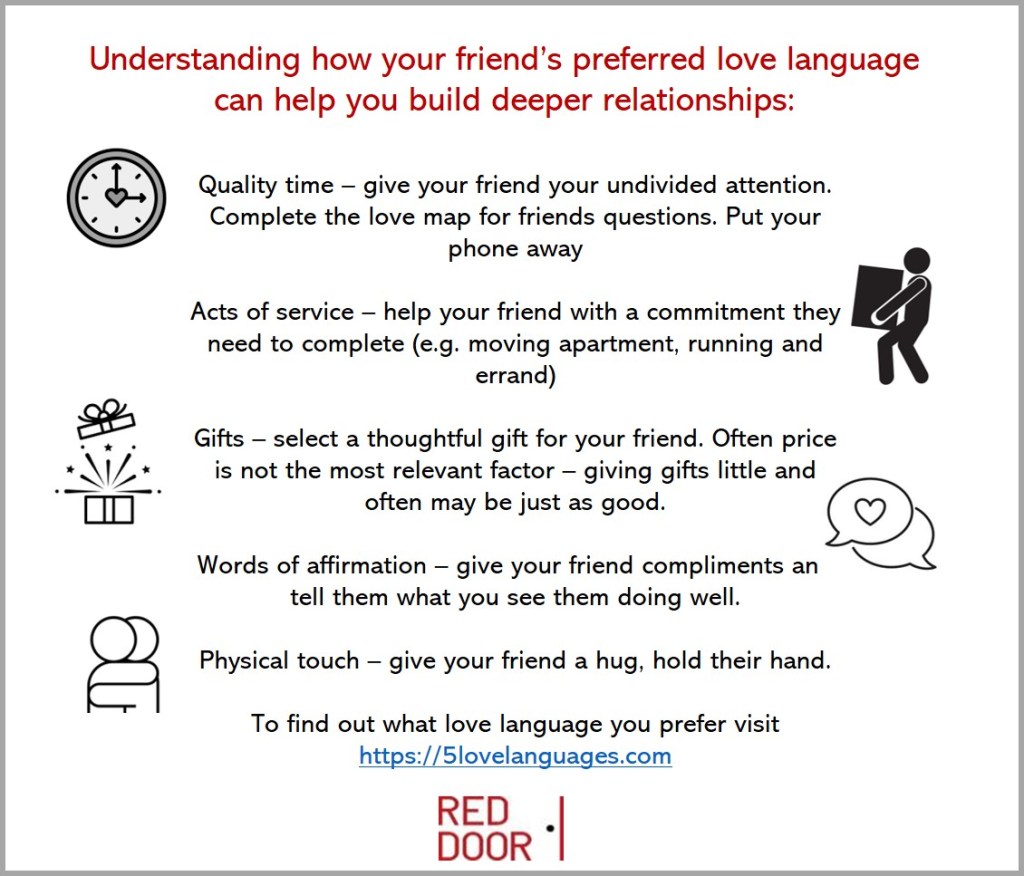
A set of questionnaires that we use  in couples therapy that are also applicable to building good friendships include understanding your friend’s love language and their apology language (see https://5lovelanguages.com). When we respect our friends’ love languages we better connect with them. Understanding that your friend values acts of service means that you will build a stronger relationship helping them with a house move, rather than buying them a box of chocolates to celebrate the mo

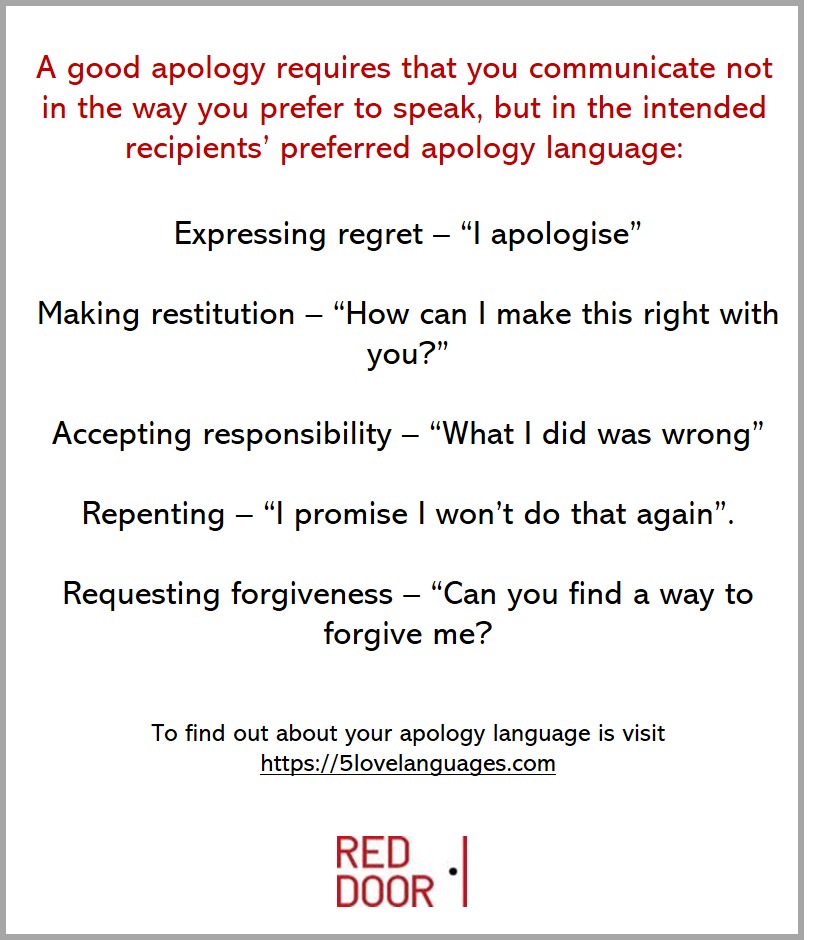
Building better friendships requires expanding our ability to mend fractures in the relationship that can possibly lead to breaks.Friends have disagreements. Apologising to your friend in their preferred apology language, also helps mend the relationship when disconnections. We have a tendency to communicate in our own preferred language rather than the preferred language of our recipient. If your friends’ preferred apology style is different from yours, your apology may feel insincere or incomplete. To learn more about your, and your friends’ apology preferences visit  https://5lovelanguages.com.

Most people have more than one preferred apology language so you might consider combining the language around your friends preferences – for example if your friend prefers restitution and repenting you might apologise by saying to them, “I promise I won’t do that again, and ask can you tell me how I can make things right with you.”

Patience

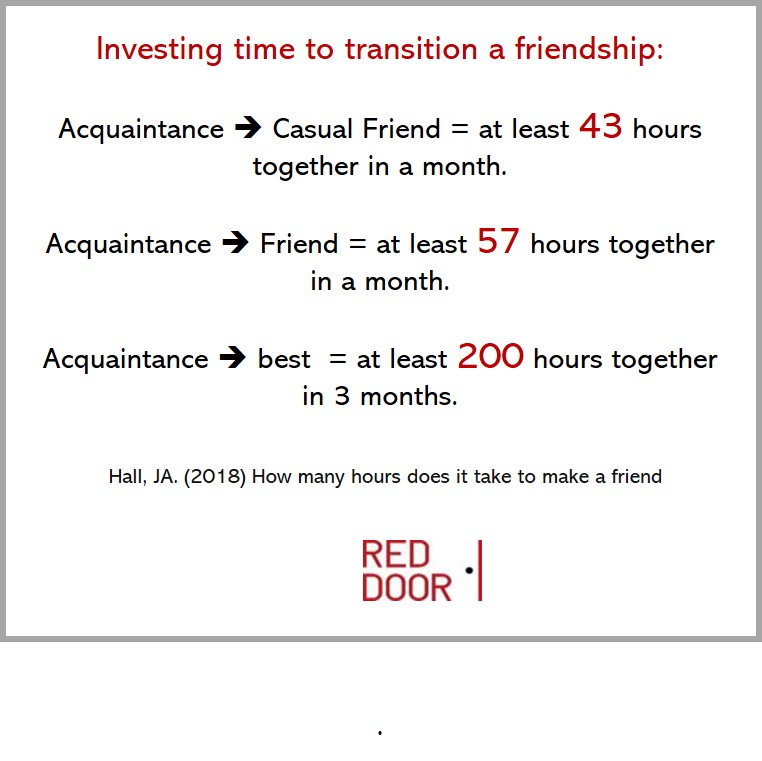
In studying how long does it take for college students to make and secure friendships Hall (2018) [6] suggests the following. The chance of classifying a person as a casual friend rather than simply acquaintance occurs for most students after they have spent over 43 hours together. Casual friends transition to “friends:’ after at least 57 hours together within a 3-week period. Best friends, or good friends take longer. Over a 3-month period an investment of over 200 hours is required.

What can we learn from Hall’s analysis. Basically, it supports the prediction that value of time spent together is a predictor of friendship and friendship closeness. Taking this investment approach to friendships can help us decide if we have really put in enough effort to secure a friendship. Are your expectations realistic? When we desire new deep relationships it can be uncomfortable to understand that friendships take time.

Reflect what is working, and what isn’t before you audit.

New friendships, and building deeper friendships, take time, consistency, vulnerability, understanding, and positivity. Even then you may feel that the relationship is not working for you.  It is quite possible that you become impatient with potential friendship candidates converting to becoming friends.

Ambiguous loss is the term used to describe the grief you have for someone who is still alive, including a relationship which seems to be fading or not delivering as it uses to. It is healthy to audit your relationships to consider if reinvestment could save them, or a mismatch in timing or values is now so considerate that perhaps you would be best to invest your time in another friendship instead – ie audit.

Before you cast a new, or even and old friendship, aside – reflect on the following considerations.

Reflections:

  • People have a bias to overestimate what they give to a relationship, and underestimate the efforts of others. Could you be operating under such a bias way of evaluating your friendship?
  • Do you know what you want from this friendship, and have you made this clear(er) to your potential friend?
  • Am I over-giving and not receiving enough back from this friendship? If so, is this you offering too much or them not offering enough? Could this be changed?
  • What traits do I admire about this person? Do I want to still have access to those traits or offerings. Consider exploring what type of friend they are according to the Rath “Types of friends” graphic. Do you have other people in your life who provide this trait/skill?
  • Is your friend going through a tough period in their life when they can not be a great friend to you? Can you consider to have a more “one-sided” relationship for a specific period, but make it clear that, this is not a permanent status.
  • Am I willing to break out of my comfort zone and usual way of operating in order to make this friendship better? If you are not, are you willing to accept the consequences of “doing what you have always done?”

If you acknowledge that your friendships are not as you would like them to be, in terms of numbers of friends and also depth of friendships the recommendations we have included here could help you make new connections, rebuild old connections, and reinvigorate your friendship base. You don’t need to be alone if you don’t want to be –invest in your connected future.  

References.

[1] Federica Cocco Are we ready for the approaching loneliness epidemic? FT.com 25 November 2022. https://www.ft.com/content/c3aef690-b5a5-4f0d-9da5-2bf4c560c4f4

[2] Gerst-Emerson, K;, and Jayawardhana, J (2015) Loneliness as a public health issue: The impact of loneliness on health care utilization among older adults. American Journal of Public Health, May . 

[3] Nelson, S (2016) Frientimacy: How to deepen friendships for lifelong health and happiness. Seal press.

[4] Rath, (2006) T. Vistal Friends- the people who can’t afford to live without. Gallup Press.

[5] Gottman J and Silver, N (2013) What Makes Love Last?: How to Build Trust and Avoid Betrayal. Simon and Schuster

[6] Hall, JA. (2018) How many hours does it take to make a friend? Journal of Social and Personal Relationships. Volume 36(4) page 12788-1296.

How to grieve.

The Western world has a lot to apologize for when it comes to bereavement. The traditional Western approach to accepting death is not particularly emotionally realistic. This has, possibly been exacerbated, by the way we have had to deal with death during the pandemic.

Our approach to dealing with death can makes dealing with bereavement harder for some people. Conventional advice may actually be making it harder for you to come to terms with the loss of a loved one.

For example, you may have been told, that you will soon “Get over it”/ Getting over our grief, or achieving “closure” seems to be positioned as the objective. This is not healthy.

As counsellors we see clients come to us trapped in their grief over the passing of loved ones, angry at their own impatience that they just can’t get past these feelings.

Each person’s grief is unique and depends on their personality, the relationship with the deceased, the quality of death (sudden, long, quiet, violent), the emotional style of the bereaved, their mental health, and the social and cultural perspectives on death and the afterlife. In short, your path of bereavement is your path. Its OK to not feel OK. It is OK to continue to miss someone. Of course, we may need to also be functional whilst we grieve, but rushing “recovery” is not only unhealthy, it is unrealistic.

Make the most of deathly rituals

The use of rituals at the time of death may help or hinder the experience of grief. The formal funeral common in the western world is a far cry from the Maori Tangihanga – a three-day grieving ritual with gathering, storytelling, beer and tears-a-plenty. The same could be said of the Irish tradition of a merry wake. These highly emotive celebrations lament death and mourning as a rite of passage, normalising the expression of pain. It is not somber, quiet and with restraint. All emotions are explored and experienced. Giving ourselves sufficient time to acknowledge a death has occurred helps us better process the impact of that person’s passing

 The Mexican celebration, the Day of the Dead invites the departed to revisit the earth and join their families. The Chinese traditionally improve the afterlives for their loved ones by burning paper objects such as iPads, new clothes and even cars so that their ancestors are nice and comfortable. These rituals keep the departed loved, remembered and, most importantly connected to the living.

Because of the covid pandemic many individuals did not even have our usual, even inadequate, rituals to help us start the grieving process. We say goodbye to loved ones via the internet, or not at all. We have witnessed an onslaught of death as a consequence of COVID, each body representing the broken hearts of many who were robbed of a final, loving and respectful “goodbye”. We do not have a measure of the collective impact of this grief. In counselling, we face each case, one by one, or occasionally in workshops.

Connect to the echo of your loved one.

Staying connected to those who have passed helps people to continue to grieve. You don’t have a specified period to complete grief, like it is a quest within a game.

In her wonderful book for children, “The Invisible String”, Patrice Karst reminds us that we remain connected to the dead through our shared love and remembrances. Rituals and celebrations are a great way to maintaining connectivity.

Staying connected to the memory of a departed loved one, can provide comfort. For example, celebrate a loved one’s birthday with their favourite food or wine, or enjoying one of their activities, continues to keep you connected to those who have died.

In counselling we can use a utilize a variety of ACT and psycho dynamic therapy techniques to help you accept, repair or resolve the features of your relationship with your departed loved one. If you find your grief more than you can take, it is OK to talk to a qualified professional. If you think it would help, seek out a bereavement workshop, or support group*

Remember dead does not mean forgotten.

In the poem Death is Nothing At All by Henry Scott Holland, reminds us that whilst our loved ones have left our physical world, we need not forget them, or ignore them.

Death is nothing at all.
I have only slipped away into the next room.
I am I and you are you.
Whatever we were to each other,
that we still are.

Call me by my old familiar name.
Speak to me in the easy way
which you always used.
Put no difference in your tone.
Wear no forced air of solemnity or sorrow.

Laugh as we always laughed
at the little jokes we enjoyed together.
Play, smile, think of me, pray for me.
Let my name be ever the household word
that it always was.
Let it be spoken without affect,
without the trace of a shadow on it.

Life means all that it ever meant.
It is the same that it ever was.
There is absolutely unbroken continuity.
Why should I be out of mind
because I am out of sight?

I am waiting for you,
for an interval,
somewhere very near,
just around the corner.

#Bereavement

#CopingwithDeath

__________________________________________________________________

Angela Watkins is a psychologist and counsellor at RED DOOR Counselling in Hong Kong. Her current clinical work focuses on all aspects of family life – including bereavement. Angela has been listed as HK’s best therapist by LIV magazine.

The Best Books to improve your love connections.

As a therapist of individuals and couples, I have read copius books about relationships, and how individuals act within them. In this blog I highlight my 5 favourite books I recommend to deepen the relationship of couples. as well as my current 5 most endorsed references to help individuals better understand their role in their relationships (past and present).

We often spend more time ensuring that we are good employees, than good partners. Take some time to invest in improving your connection to your partner, and your own responsibility, motivations and agency within relationships.

5 Books that will help you strengthen the bond in your romantic relationship.

Whilst some of these books are primarily aimed at married couples, they will also be of help for any couple who are in a serious relationship. Most of these books are written with hetrosexual couples as their examples, but many outtakes will  also be helpful for same-sex couples.

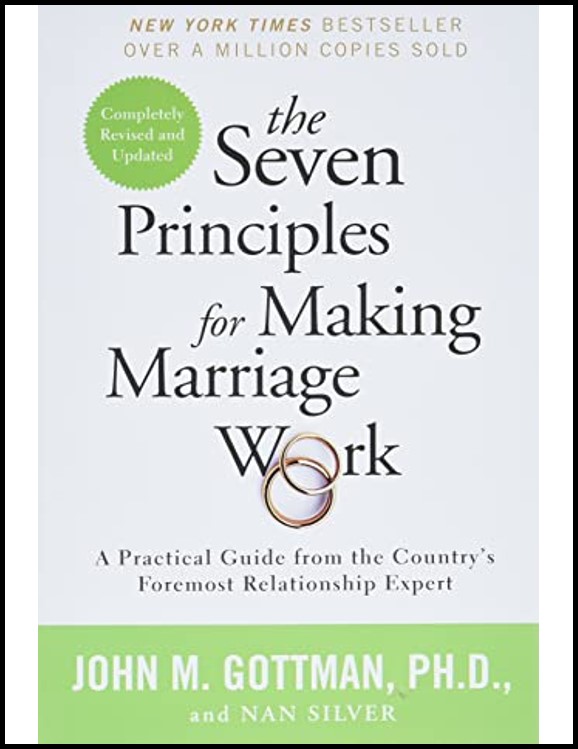
The Seven Principles for Making Marriage Work – John Gottman.

The Gottmans – John and Julie – are the landmark marriage counselling trainers and theorists (see www.Gottman.com). Their fourty years of relationship counselling experience has culminated in their Sound Relationship House model of what makes love last. This model aims to help couples build the positive attributes in marriage (shared meaning, admiration, friendship, understanding) and minimise those activities that compromise and rob the marriage of joy and contentment, which are often on full display when lovers are in conflict.

.There is a plethora of books written by the Gottmans, particularly scholar John Gottman. Most of these books are based on the Gottman model and activities within it. The reason that I recommend this book is that I believe it is the best written of (many) books, and easier to understand. There are helpful exercises to help build mutual understanding, express yourself and your needs, fight fair and repair hurts.

Other great Gottman books to consider – 8 Dates, The Relationship Cure, What makes love last, and, And Baby makes three.

Marriage Rules: A manual for the married and the coupled up. Harriet Lerner

Clinical Psychologist Harriet Lerner is a prolific writer. This book is different from the rest of her publications (see Dance of Intimacy below) in that it is a practical guide for couples. Delivered in the voice of a good friend, a lot of what Dr. Lerner has to say, just makes good sense.

Since the book is presented as a list of “rules”, you can simply skip over those which aren’t applicable to your current relationship situation.

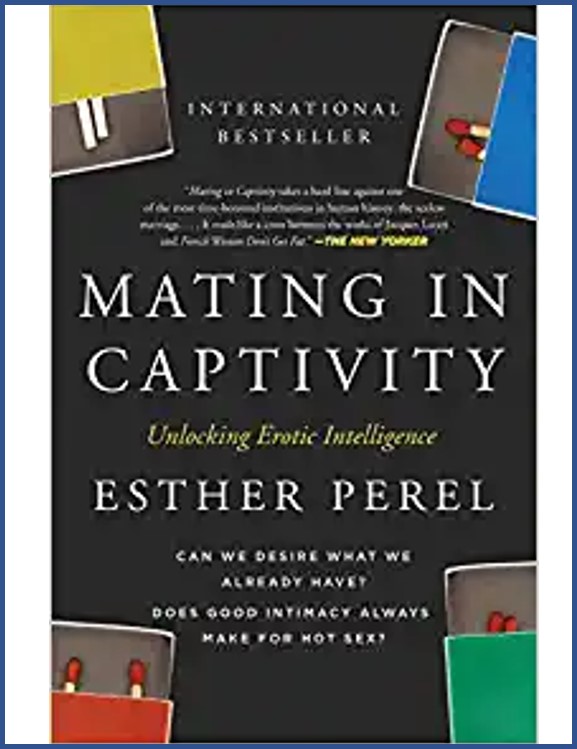
Mating in Captivity – Ester Perel

Esther Perel takes on the questions that couples that have been together for a while frequently avoid – how do we navigate the union of domesticity and sexual desire.

Many couples in therapy express the loss of physical intimacy as a reason for their relationship dissatisfaction. This book takes on bedroom dynamics and promises to liberate and energize your sexual connection.

201 Relationship Questions – Barrie Davenport.

Barrie Davenport is a coach rather than a marriage therapist – something you need to know before you buy and use this book. As such he has created a book that asks many provoking questions that therapists may prefer to ask in session, rather than in the real world. If your relationship is in crisis this is NOT the book for you. Sometimes topics such as how we feel about extended family, and previous relationships are best handled in a supportive, mediated environment.

However, if you feel your relationship is on pretty solid ground, these questions are a great way to see where you and your partner connect – and potentially clash. Understanding and appreciating your partners’ world view is essential to building a long term, satisfactory relationship.

If you are looking for a more mild safe set of questions the Gottmans (above) have question packs available on their website.

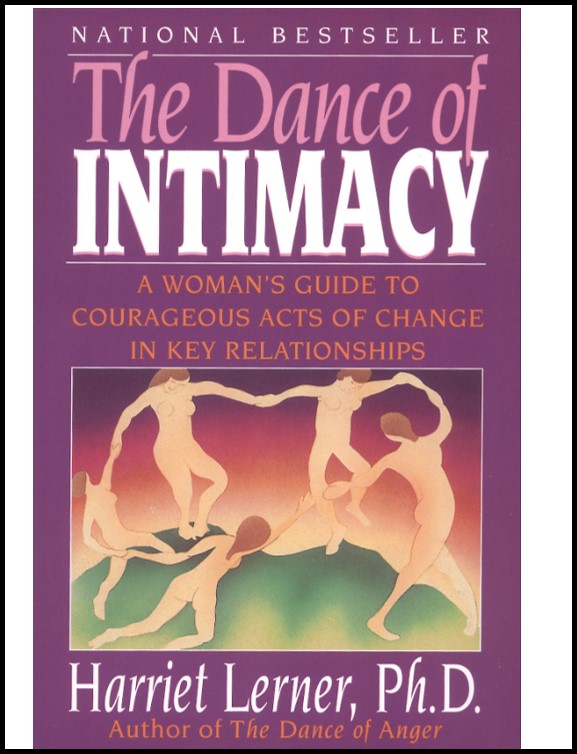
The Dance of Intimacy – Harriet Lerner

Fixing a relationship is an act of teamwork. However, one person’s willingness to model their intimacy may well inspire the other to embrace authentic change as well. Harriet Lerner has produced a litany of “Dance of ___ ” books, all of which I recommend. Whilst the intimacy book is an oldie, it’s still great and packed with several commendale and well considered recommendations.

See also the Dance of Anger, the Dance of Fear.

5 Books that will help you better understand yourself in romantic relationships

Some people have the same, or strikingly similar relationships, with the same painful outcome, again and again. The following 5 books may be of help to highlight your thinking patterns, your needs and preferences so that, should you wish for a romantic relationship again, the experience could be different.

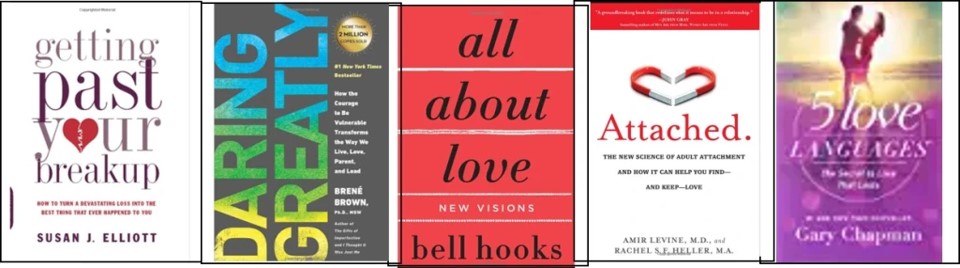
Attached. Amir Levine and Rachel Heller

Talking about attachment theory in relationships is quite the popular psychology topic these days. Recognizing your attachment style is one way to understand and predict your behaviours within a romantic relationship.

We know that attachment styles influence a variety of interpersonal relationship behaviours including- feeling constantly anxious about the commitment of your partner, jealousy, avoiding closeness, and punishing your partner with silence.
This book is a great one on this topic – very interesting with practical insights.

The 5 love languages – Gary Chapman.

The 5 love languages has become part of our popular culture. It will serve you well to understand the love you want and the love you give. If you have been giving friends gifts that don’t seem appreciated, if you have ever received the complaint, “you just don’t make time for us”, then this book is for you.

Essentially people give and receive love differently. Chapman identifies the 5 landmark manners that people like to receive “love”. These languages are physical touch, verbal affirmations, gift giving, acts of service and quality time. Whilst other authors have tried to add more love languages, I still mainly recommend the OG version of the hypothesis because Chapman’s explanation makes the most sense, and has associated online tools to easily help identify your style.

A lot of communication intended to be kind within relationships present missed opportunities. Because we perfer to give love in OUR love language, we are often talking past our partner rather than communicating to them. It is also extremely helpful for us to discuss love languages to our partners – tell them if small gifts go a long way to helping you feel special.

Understanding love languages is not just for romantic relationships – it can be useful within friendships and families as well. For example, I have also assessed my children – one needs verbal affirmations – the other wants gifts.

Recently Gary Chapman has released the 5 apology languages. This is helpful to know about yourself and others and can help to repair relationships when there is conflict.

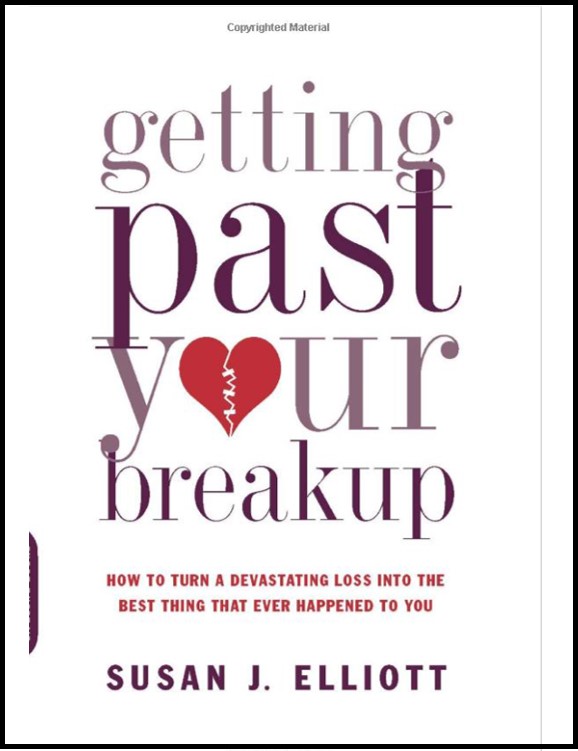
Getting past your breakup- Susan Elliot

Whilst this is primarily aimed at those suffering from the breakdown of a marriage, anyone who has been scared by a breakup can benefit from the lessons it covers. I love that it highlights that the loss that we feel when a relationship end can help be galvanized into a learning opportunity to shape our future.

The book tackles what to do about the feelings of loss, being stuck attached to old partners, self-compassion and self-reflective exercises, and inventory checks to get your mojo and your future relationship prospects back on track.

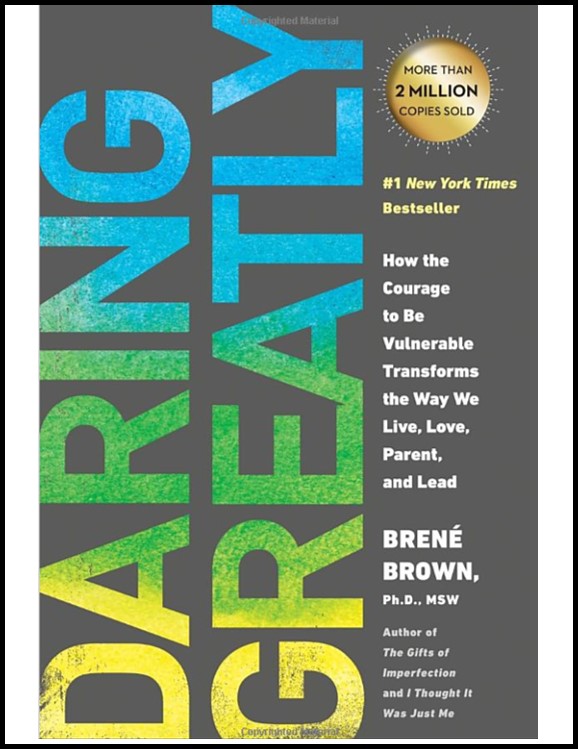
Daring Greatly – Brené Brown

Thought leader Brené Brown is another prolific self-help author. Daring Greatly may not be her greatest book, but it is the most focused on how we are in relationships. Essentially Brown suggests that we are restricted by our fear of being shamed to become the authentic, vulnerable and brave individuals that we need to be – in love, at work and in life. We hold ourselves back from saying what we want, asking for what we need, and asking others to reciprocate our affection. When we dare greatly, shed off our shame, we can achieve the deeper, richer relationships that we crave.

All about Love – Bell Hooks

This thought provoking philosophical book can be quite heavy reading. Its not the kind of book you read in a single sitting. Hook considers what it means to expect love, and what happens when we are denied love, in our familial and romantic relationships. She reviews how love is expressed – through duty, affection and acts of obligation.

We are raised to need love, but sometimes it slips past us. What happens when we are denied the love we need, and what can we do to recover the pain that remains.

The most important thing in life is to learn how to give out love, and to let it come in. I hope you take some time to invest time to better understand what has shaped your concepts of love, your practice of love, and how you deliver love.

Continuing education and vocational planning is essential for young adults with special educational needs.

When we look at options of services to extend the skill development of teens and adults after they finish school in HK is thankfully being expanded, but still has a long way to go. This is even more complicated as we rise and fall with the waves of COVID 19 outbreaks and responding restrictions.

Good people are doing good work, but the data on employment opportunities remains depression. Currently post school programmes are provided by Watchdog, and the Nesbitt Centre all of which do a great job, but there are still areas of need not covered.

In general, this period of time is hard to be young adult (disabled or otherwise)!

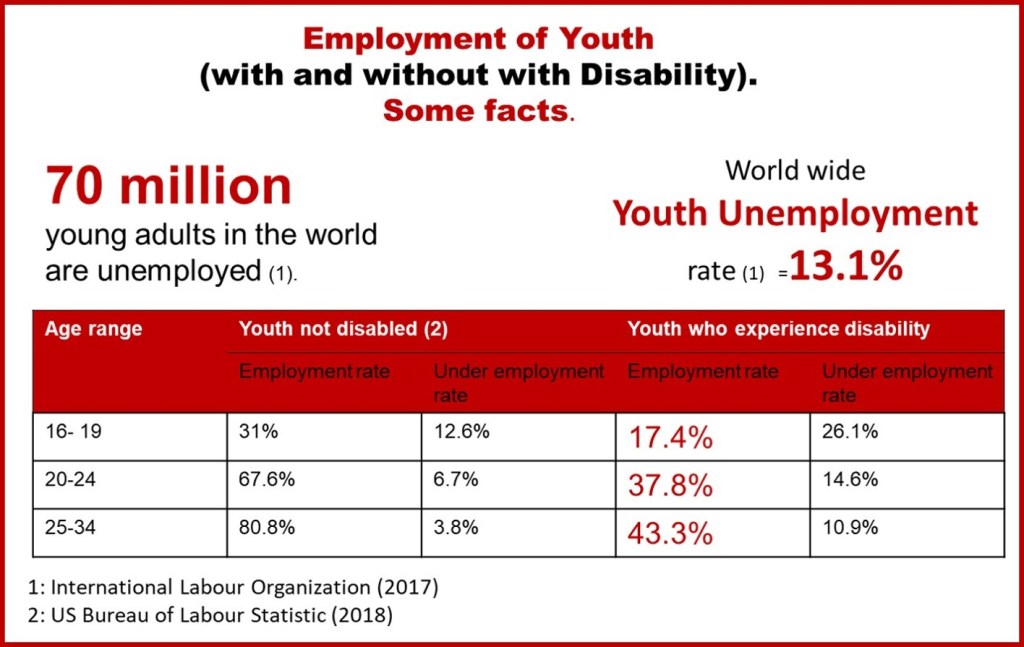
Exploring data from International Labour Organization (2017 data in the link below), global employment trends for growth 2017 suggests the global unemployment rate was 13.1%. The youth population (disabled or otherwise) represents more than 70 million people globally are experiencing unemployment – they are neither in employment or in further education. Young adults are 3 times were 3 times more likely to be unemployed than older adults. And this was BEFORE the global COVID epidemic.

Young people need to be prepared to be educated but still be unemployed. This applies to all young adults, and affects the disabled in a disproportionate format. The future of the world of work is the topic of many fantastic books at the moment and will have a major impact on those already in work, and the next generation of college and school graduates.

It’s even worse if you have a disability.

Exploring US data from the Bureau of Labour Statistics (link below) the disabled experience less employment than those who have no disability and are young.


There are often barriers for those with disability to gain access to suitable employment, including prejudice and misconceptions among employers, difficulty accommodating people’s physical or work schedule needs, the type of disability including the health implications, the ability to act a in socially expected manner, academic or task related competencies, and of course having the right skills. Part of the solution to this problem is adequate education of employers (thank you to the SENsational consultancy in Hong Kong www.senconsultancyltd.com)

• For those 16-19 years old and disabled only 17% are employed, and 26% are underemployed
• For those 20-24 years old and disabled only 37% of that population are employed, and 14.6% are underemployed.
• For those 20-25 years old and disabled only 43% of that population are employed, and 10.9 % are underemployed.


To better prepare the next generation of special educational adults, we as parents and educators need to provide ample services to those young adults as they launch from high school into the next stage of their careers. The majority of areas in which disabled individuals in Hong Kong find employment (hospitality, some retail, office work) are covered by certain centres in Hong Kong, but as these centres have become under greater financial pressure, their futures can also be fragile

Careers need to construct a future  around specific strengths of their SEN teens and young adults.

The gap exists for children who have different areas of strength and varying levels of motivation – perhaps they are great artists, mathematicians, photographers, early childhood teaching assistants, even have extremely good knowledge of music or ability to sing. For them, and many others they not only require a more customised style of vocational training not previously available in HK. What is also important, they may have finished school without their education being complete. They may need a basic entry level of English or Math in order to start their career in a suitable arena, and this needs to be made possible within a setting that also teaches the requisite social skills and independence skills. Private tutoring provides the content but not the context. Quite simply, these kids, need the continue a concept of school until they are more fully cooked.

A new hope for the future – worth considering.

One area of employment growth which I believe has enormous potential is the area of self-employment or entrepreneurship.  Self-employment for people with special educational needs may help build career success within the future world of work. Portfolio work – working on various projects, and different arenas – in a freelancing capacity might be suit them more. What parents and their young adults need is a customised plan to help create these opportunities. Particular psychologists, including myself, can help parents and young people create these customized plans.

Careers developed around the strengths of individuals – artists, mathematicians, photographers, artists, which may involve further training, further therapy, and personalised business development plans.

In collaboration with their families and their community, young adults with disability can start to build a strong plan to identify their strengths, and vocations which celebrate those strengths. I am not saying its going to be easy. I’m simply pointing out that its necessary and possible.

A word about continuing education.

Children with special educational needs often leave school before their education is finished. They have often not solidified basic knowledge of key math and English skills. I heavily encourage parents to continue to work with tutors or other programme providers to continue to develop key English receptive and communication skills, as well as understanding the world of money, basic maths, distance and time.  I will be exploring these key skills to help your child achieve in a future blog.

About the author

Angela Watkins is a counsellor and psychologist working with teens – typical and neurodiverse – to help them overcome various challenges including vocational planning, learning difficulties and emotional challenges such as anxiety, suicidal ideation, self-harm, abuse and violence, and troubles with schooling.

Does living in COVID times lead to PTSD?

As restrictions start to be reintroduced in Hong Kong do your find yourself feeling disproportionately anxious to these regulations? It may be possible that you are reacting due to Post Traumatic Stress responses created by the COVID-19 pandemic.

The COVID-19 epidemic began to spread around the world in the early months of 2020. To date (June 2022), the pandemic has wreaked havoc on population growth, people’s health, the economy and our ability to function. It is suggested that people are suffering psychological challenges including anxiety, depression, and PTSD (Post Traumatic Stress Disorder).

Population Impact. COVID:19 has had a significant impact on the global population with over 6 million people having been lost to the disease, and the epidemic increasing building to a growth in the death rate in the world. [1]. In Hong Kong, we are encountering the highest death rate in the past decade [2]. Over 540million people worldwide are recorded as having contracted COVID, whilst the current figure of cases in Hong Kong is 1.2 million.

Ongoing Physiological Impact: Whilst most people recover from COVID, especially if they have been vaccinated, some people do not recover well. The prevalence and impact of Long-COVID are still being researched and many questions remain unanswered, with inconsistency in numbers in a lot of the research. Current conservative estimates [3] indicate that about 13% of those who contract COVID-19 are still experiencing symptoms after 28 days. Some people – about 2.6% – still experience symptoms 90 days after initially contracting COVID19. This would represent about 1.5 million people worldwide at this time. The most prevalent long-term symptoms include fatigue, headache, attention difficulties, hair loss and shortness of breath.

Psychological Impact from COVID-19: COVID-19 impacts the lives of those who contract it, and the greater population. People fear the consequences of catching COVID and also the impact of particular government regulations and health practices

Anyone who lived in Hong Kong during the period February 2022 and April 2022 may have experienced anxiety during the fifth wave [4].

In Hong Kong we are coming out of our fifth wave, our worst experience of COVID-19 so far. The fifth wave appears to be dissipating, from a height of over 78,000 new cases a day in early March 2022, to an average of 740 cases a day by mid-June 2022, and a death rate of close to 300 deaths a day in March 2022, to zero deaths so far in June 2022. In the wake of the fifth wake, we note an explosion in cases in Hong Kong. At the end of January 2022, less than 1% of the Hong Kong population had contracted COVID, by the time the fifth wave started receding, the rate was 16% [10].

Whilst HK did not experience an official “lockdown”, there was still a significant impact on ‘regular life. Schools had to, repeatedly, move online, working remotely became standard, businesses were closed (and reopened, and re-closed), and various isolation facilities for cases, and close contacts, have been utilised. Flights into and out of Hong Kong have been cancelled, travel has become unpredictable, and quarantine rules continue to be revised (and not yet, removed), and the health system, and those working within it, collapsed. The Hong Kong government’s interdependent approach with mainland China, to supporting the concept of Zero-Covid maintains a sense uncertainty. And the fifth wave will not be the last.

A recent piece of academic research produced by the Hong Kong Polytechnic University [4] revealed a prevalence of over 12% of PTSD (Post Traumatic Stress Disorder) symptomology among Hong Kong adults recorded after the fourth wave of COVID-19 in Hong Kong.

It is suggested that there are particular people who appear to have psychological vulnerability [6] particularly those of lower social socioeconomic status, younger people, and women. The Hong Kong research [4] also suggest that those with lower socio-economic status in Hong Kong, may also have a heighten vulnerability to experiencing PTSD symptomology.

What is PTSD?
PTSD is a psychiatric disorder featuring distress and disruption to daily functioning in response to a traumatic event. Not all people exposed to a trauma develop PTSD. Any particular individual may be exposed to more than one traumatic event in their lifetime, with over 30% being exposed to multiple traumatic events [5].

The characteristic elements of PTSD include a distressing rotation of intrusion and avoidance compulsions together with hyper vigilance. The intrusion elements include experiencing nightmares, visual flashbacks of the trauma, and having intrusive thoughts about yourself, the events and the outcome of those events. Avoidance is demonstrated through deliberate efforts to avoid thinking about or talking about the events, as well as places and people the remind you about the event. Hyper vigilance is demonstrated through being easily startled, and feeling wary and unsafe, and therefore agitated, when the trauma is over [7]

The likelihood that PTSD will develop after a trauma is, in some part, influenced by the type of trauma. More personal and violent traumatic events being more likely to produce a PTSD response [5].

The question now is if the type of stress experienced by actions around the COVID-19 pandemic cause PTSD. This type of trauma has not been studied extensively, given the rareness of this event. So, the HKPoly U [4] finding of a 12% prevalence (from wave 4) is revealing. That study explores the presence of this stress response in the general public, not just those who have contracted COVID-19.

Disasters are a trauma that can produce PTSD. Although there is no consistent definition of disasters in the literature, researchers generally agree that disasters share three key characteristics of large-scale traumatic events. Firstly, disasters threaten harm or death to a large group of people, regardless of the actual extent of lives lost. Secondly, they affect regular process, causing disruption of services and social networks and communal loss of resources such as economic impact. Thirdly, they involve secondary consequences, namely identifiable mental and physical health outcomes, such as anxiety and depression. [8] It appears that the COVID-19 pandemic could fit the criteria of being a global disaster trauma.  

In therapy, people often dismiss their stress responses in response to the COVID-19 pandemic because, “everybody is experiencing this”, thereby invalidating their individual experience because there seems to be a societal expectation to “just get through this”. As with other disasters, it would be a mistake to dismiss that people do not develop PTSD simply because everybody has been exposed to the traumatic event.

When people become influenced by PTSD their nervous system becomes agitated by trauma and people then try to ‘regulate’ this traumatic response. Unfortunately, self-treatment can include an attraction to some destructive practices to soothe those agitations including performing self-injury, drastically controlling food consumption, using alcohol or drugs to create numbness, or distraction through hyperactivity. [9]

Despite the debilitating nature of PTSD, many people do not seek treatment, or only seek appropriate treatment after extended period of suffering from these symptoms, or experiencing multiple traumas [8]. Sometimes PTSD is even used a reason to avoid therapy as people fear facing and exploring their symptoms. How do you know if you have PTSD?

Diagnosis of PTSD.

You can assess if you are suffering from PTSD yourself. You can use the same measure used by team at Hong Kong Polytechnic University [4]. They used a slightly adapted Cantonese version of the Impact of Events Scale – Revised [7]. This questionnaire can be self-administered. A copy of this survey is pictured to the right. You can look up copies online..

This measure corresponds to many of the items from the Diagnostic and Statistical manual (DSM) that psychologists utilize in their decisions about diagnoses.

There are two ways you can use this measure once you have completed it. The questionnaire asks you to rate your experience from 0-4 relating to how frequently you experience a particular symptom. As you are completing the survey consider if you feel this symptom specifically in relation to the COVID pandemic. Once completed, add up your total score. A normal, non-PTSD score, would be less than 12. A score of over 33 merits further attention and may indicate that you are experiencing PTSD symptoms to an extent that requires support.

You can also explore your performance as to which sub scale presents the most problems for you. The three sub scales of the questionnaire are are Intrusion, Avoidance, and Hyper vigilance. The sub scale items are highlighted the bottom right hand courner of the Weiss survey pictured above. Average your score for those sub scales so you can compare them. The sub scale that has your highest score (somewhere between 0 and 4) is the most problematic, and any average score over 2 is warrants further attention.

The treatment for PTSD.

The treatment you can consider for your PTSD depends on the type of trauma you have experienced (see Note). The following information applies to PTSD resulting from your experience of the COVID pandemic. PTSD deserves to be treated properly, through therapy [4,7].

What would you cover in therapy?

In therapy wish to reduce the negative impact related symptoms have on your individual functioning. Ideally our goal would be for a client to no longer experience or be troubled by event recollections, avoidance of event reminders, hyper arousal and disinterest in relationship or activities. in the interim, involve an evolution to becoming comfortable with being uncomfortable rather than seeking numbing through self-medication and other behaviours.

The sub scales that you explored in the survey will tell us what we could focus on first – for example, building self soothing thought processes to reduce hyper vigilance, using CBT (Cognitive Behavioral Therapy) activities to help overcome avoidance demands, and ACT (Acceptance and Commitment therapy) or CBT to overcome intrusive thought processes.

Treatment using these types of tools have great track records in the treatment of PTSD [8,9]. These tools need to be customised to each clients triggers, circumstances, soothing mechanisms, feelings of shame and advocacy, so that, eventually, a new style of calm can be achieved. Therapy can help. Recovery is possible.

NOTE IF YOU have PTSD attached to another trauma – particularly sexual violence – please only visit a therapist who has a solid track record (years) of treating such trauma.

About the author – Angela Watkins is a counsellor and psychologist working out of RED DOOR in Hong Kong. She is experienced in treating anxiety – such as that resulting from the COVID pandemic, loss and abuse. For more information contact Angela at AngelaW@reddoor.hk

References

1 Centre of disease and control and prevention – National Center for Health Statistics: Excess deaths associated with Covid19

2 Macrotrends – HK death rate 1950-2022.

3 Halvalkele, B. D.; and Parham, J (2022). Long Covid: A review of long-term consequences of Covid-19. Journal of Mississippi State Medical Association. Volume 63(6).

4. Cao, Y., Siu J. Y-M.; Shek, D. T. L; and Shum, D. H. K. (2022). Covid-19 one year on: identification of at-risk groups for psychological trauma and poor health-protective behaviour using a telephone survey. BMC Psychiatry. 22:252.

5.Benjet, C et al. (2016). The epidemiology of traumatic event exposure worldwide: results from the World Mental Health Survey Consortium. Psychological Medicine (2016), 46, 327–343.

6. Kessler, R. C et al. (2017). Trauma and PTSD in the WHO World Mental Health Surveys. European Journal of Psycho traumatology , Volume 8.

7. Weiss, D. S. (2007). The impact of event scale revised. In JP Wilson and TM Keane (Eds). Assessing psychological trauma and PTSD: A practitioner’s handbook. 2nd Edition. Guildford Press.

8  Goldmann, E.; and Galea, S. (2014) Mental health consequences of disasters. Annual review of Public Health. Vol 35.

9. Fisher, J. (2021).Transforming the living legacy of trauma: A workbook for survivors and therapists. PESI Publishing.

10. Using Worldometer figures as at 16 June 2022.

Changes to your romantic relationship after you have a child

Becoming a parent changes your romantic relationship. The landmark relationship advisors, the Gottman Institute, assessed satisfaction among new parents. Their research reveals that two-thirds (67%) of the couples that they interviewed expressed dissatisfaction in their romantic relationship within the first two years of having a baby. The pattern of lower martial satisfaction when comparing parents with non-parents is supported by other academic research as well.

There are many paths to parenthood. New parents often feel stressed and exhausted. It can feel as if the distance created by small differences that existed between you and your partner when you first got together, have become a chasm once you are parents.

What drives this unhappiness? And, what can you do to protect, or improve your relationship after bringing home baby?

Perception of individual roles

Part of these differences are due to how you see your new role as parents and how this redefines to your perceived role as a person, worker, friend, partner, and a representative of your community. Suddenly you aren’t just a man, who is romantically involved with this other person, and a worker, and a member of the sporting community. You are now a “Father” – with all that word conveys to others, and expectations that it holds for you.

How we see our roles, and that of our partner, are the result of our research, and created through an osmotic process of being the child of the parents in our family of origin. The father figure featured in your family of origin taught you what you admire, and don’t admire , about the role of being a “Dad”,  The same applies for Mum.

What do new parents fight about?

The Gottman Institute suggest that for each new child, an additional 33 hours of household work is required to look after their needs on a weekly basis. Suddenly time becomes a precious commodity, and you may be exhausted all of it. Given the pressure of child care, and the changes to roles and personal lives that parenting can require, what do new parents mostly fight about?

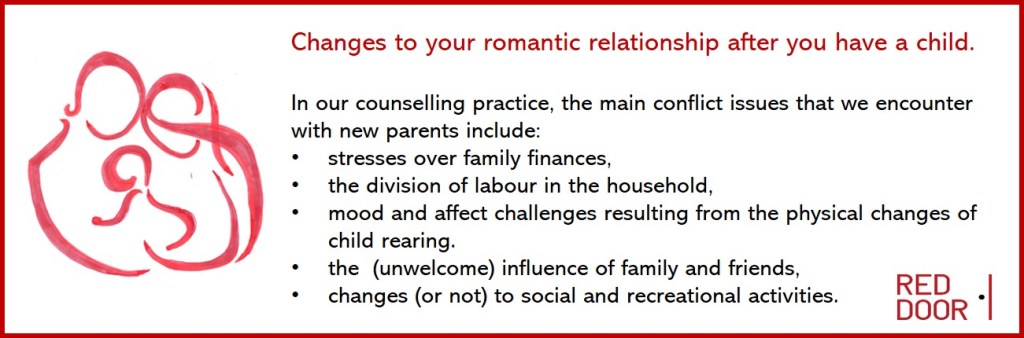
In our ounselling practice, we see similar trends to those seen by the Gottman Institute. The main issues that we encounter with new parents include are stresses over family finances, the division of labour in the household, the  (unwelcome) influence of family and friends, changes (or not) to social and recreational activities, and mood and affect challenges resulting from the physical changes of child rearing.

When couples enter the counselling environment, they are ready for the counsellor to highlight up how wrong their partners’ perceptions, behaviours, and viewpoints are. In essence, they often want the counsellor to be the judge and tell them who is “right”. But the counselling process is not about who is right and who is wrong. Rather the focus is about establishing those practices that make love last.

So, what makes love last?

The answer to this question is so simple, and so complicated, at the same time. In studying successful relationships, famous relationship researcher John Gottman, suggests that the friendship with the romantic relationship which is the greatest predictor of relationship satisfaction. Quite simply, people who like each other are happier together. It’s deceptively simple.

Unfortunately, our romantic partner often receives the worst of us, not the best of us. Sometimes the way we act towards our partner is, quite frankly, unlikeable. Over time those small jabs, and missed connections, create a canyon that feels hard to transverse.

With re-establishing your friendship as a goal, there are a few actions that you can take to help build back that positive affect in your relationship. Whilst all couples have conflict, partners who prioritise friendship are more likely to create homes where conflict is not feared, destructive to the relationship, or negatively impactful on their children.

How do you get back the friendship when all you do is fight? Sometimes a safe zone, such as a counselling environment can help. There are some activities you can try for yourselves:

1.Affirm each other.

Firstly, when you can, try a brief affirmation exercise. This exercise is suggested to help couples appreciate what attributes their partner appreciates and recognises about them. When you have a young child, sharing appreciative or affirming comments, becomes a rare activity. Take a moment to reverse this trend.

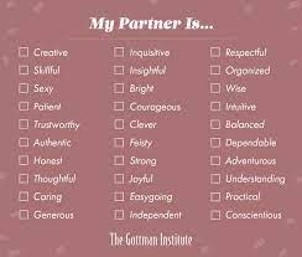
Sit together. Pick three positive attributes about your partner. If you have trouble identifying those attributes, I’ve included some suggested by the Gottman Institute for your ease. You don’t have to pick items from the list. You can identify your own.

from the Gottman Institute website.

Take turns sharing an attribute and the story behind your perception of that attribute. For example, “I was so impressed by how resourceful you are. When we were lost in Italy, it didn’t take you long to sort out new bookings and get our holiday plans back on track.”

After you have each shared three attributes stories, take a moment to think about how it feels to listen to these recollections and compliments from your partner. Do not dismiss your good work with the temptation to share what “bothers” you at this time. Enjoy the positive atmosphere created.

2. Create strong Love Maps.
Another great Gottman Institute idea is to rebuild your Love Maps of each other. A Love Map is the personal knowledge you have of your partner. Sometimes we assume that we know everything about our partner. Often, we don’t, or our perceptions are out of date.

Do you know who is their best friend? Do you know who is the relative they like least, and why? Do you know what their favourite song to listen to is at this time? Who do they talk to most at work? What would they do if they could retire today? What countries are on their bucket list of places to visit? What activity helps them calm down? What things make them smile? What is their favourite meal of all time? What would a dream weekend involve? Who do they wish that they had a better relationship with in their family of origin?

Take some time to really get to know your partner again. You can undertake building love maps as a date-night activity, or you can break it into a series of daily connection moments. Build a path back to understanding, and appreciating, each other’s worlds.

3. Fight fair.

The most constructive thing you can learn to do to support your relationship is to learn to have constructive rather than destructive conflict. It is normal to disagree, and have some form of conflict in a relationship. The style of how you express yourselves during the conflict can, determine if their relationships can last, or remain satisfying. Relationships where conflict discussions include contempt, criticism, excessive defensiveness, and avoidance, are unsatisfying.  When these destructive elements exist, are likely to remain so. They will not go away without activity to change.

Think about at the last time you and your partner had a  disagreement. Did you say hurtful comments that you regret? Did they? Did it feel like things just “exploded”. Did you feel out of control? Did you feel neglected or invalidated? Did you storm off and then refuse to reengage in any future discussion?

Learning to fight well involves developing a series of skills around communication – being a good listener, a responsible speaker, choosing your timing well, using gentle introductions to conflict topics, being respectful of your partner’s world, owing your emotional reactions, avoid blaming and contemptuous language. Think about if you are ready to start adjusting your behaviour. Even one person changing their behaviour can have an impact on style of conflict within a couple. Quite simply, if you do what you’ve always done, you will get what you’ve traditionally got. So, make a change, so that change is possible

In the reference section of this article there are some great books, by the Gottman Institute that suggest activities to help you improve your communication conflict style regarding the specific behaviours that destroy relationships.  Couples’ counsellors are trained to help couples adjust those behaviours. They can help you understand your conflict style, and help practice new habits to help change the disagreements, and dissatisfaction in your relationship. You can seek out couples counselling for conflict, or to make a stronger connections. It is a wise investment in the future of your relationship.

Notes:

  • Red Door Counselling offers couples counselling through the conjoint-counsellor model. This model involves 2 counsellors with 2 clients. This model is superior in avoiding perceived favouritism and situational objectivity.
  • Red Door offers couple connection courses from time to time – for groups – to help teach those skills that make love last. Our next couples’ connection course will run in August 2022.

Useful References

Gottman books you might enjoy:

Gottman, J and Gottman, JS (2007)

And baby makes three: The six-item plan for preserving marital intimacy and rekindling romance.

Gottman, J and Gottman, JS (2008)

Ten lessons to transform your marriage.

Other good references.

Twenge, J.M.; Campbell, W.K.; and  Foster, C.A. (2004). Parenthood and marital satisfaction: A meta-analytical review. Journal of Marriage and Family. Vol 65(3), page 574-583.

Nagaraja, A.; Rajama, N. M.; and Reddy V. V. (2017). Effects of parents’ marital satisfaction, marital life period and type of family on their Children Mental Health Status. Journal of Psychology, p 65-70.

How we can build great girls

As women, and mothers’ of girls, we are constantly reminded that the women’s rights movement still has some way to go, and we can all play a role.

While I am delighted that my generation has experienced a broader remit of occupations they were allowed or encouraged to apply to  than our mothers, it begs the question, what attributes should we be encouraging in young girls to break the glass ceiling, end gender bias, and redefine what it means to be a woman.

Essential skills  for Young Women

Personal strengths – Identifying and celebrating what strengths you have, regularly, is investigated and encouraged. Believing you can face challenges is extremely important. Celebrating overcoming difficulties is particularly important. Young girls often to have an abundance of confidence, but by the time girls are 16-17 this confidence is harder to find. That loss of confidence can be undone.

Believe you CAN– As women we have a responsibility to expose our female teens to all kinds of achieving women so that they can better appreciate that women’s careers are being redefined, daily and hopefully, forever.

Teaching self-acceptance and healthy thinking patterns – Self acceptance is not only recognizing your strengths, but also accepting that you will make mistakes, you will experience failure, and that this is part of life. We need to teach girls to avoid thinking traps such as comparing, personalizing, labeling themselves negatively and catastrophizing. By adulthood many of us are limited by negative thinking patterns – building habitual thinking patterns that challenge these negative thoughts helps to raise teens who accept their mistakes, avoid self-punishing behaviours, and get themselves ready for the next big challenge.

Negotiating with confidence – We can teach girls confidence to negotiate in life, for job promotions, and for salaries. This starts from learning and using negotiation skills as early as the teen years. Negotiating for independence, pocket money, activities, and also performing chores as part of those negotiations, teaches girls that they can determine their future through their efforts, and that they have the right to challenge what is a fair wage for fair work.

You are not your body – You are not defined by your body, and loving your body will help you have a fuller life.  We need to teach girls that women come in all shapes and sizes, and none is better or worse than another. You are not your “fat thighs” or your “boring hair”. Speaking negatively about your body and yourself can be challenged, and need not be part of your self-talk dialogue.  You are more than your body, your healthy body gets you from A to B, and if you look after your body, it will look after you.

Relationships and boundaries – The teen years can include episodes of being bullied, feeling unpopular, wanting to be unique (while being just like everyone else), and wanting to please others for a multitude of reasons. We need to teach our teen girls to reflect on the decisions they make in friendships and if those decisions are to their benefit or cost in the long run. If teens fear being cut off from a group, we can teach them ways to stand their ground, be themselves, and be comfortable with the consequences. Having a broad range of friendships helps protects girls from this vulnerability.

Cyber security – With the proliferation of the internet, young children have access to a wealth of sites, information sources, and social media channels. A teenager can receive a thorough education (and mis-education) simply from spending a few hours a day on YouTube. Recently I discovered that our 15-year old girl had been talking to people overseas on the WWE (World Wrestling Entertainment) website forums! Some of the people were adults. She had sincere difficulty understanding why her parents responded to this with such horror. To her it seemed very innocent. We reiterated our cyber safety rules in the house:  Mum and Dad have access to your online profiles and may check them,  you can use your computer only in public areas of the house, never share personal information about yourself, and never agree to meet in real life (without adult supervision). This is a large topic and deserves a blog all of its own.

Physical safety – I believe that all girls should be prepared to protect themselves physically. This preparation may simply involve them being able to respond to unwanted physical attention in a manner beyond embarrassment. Helping girls become comfortable responding to negative attention may seem like shifting the blame for abuse onto them. This is quite the opposite. We want girls to know that they have the right to protect themselves, to be prepared to respond to a perceived threat, and, particularly, not to freeze in fear. And of course, teach boys to understand that traditional power patterns not only disadvantage girls, the limit them as well. 

We rise and fall together. Don’t harass other girls. – For example: girls who wear big hoop earrings or short skirts are not “hoes” or “sluts”. When girls degrade other girls in these superficial ways, they bring us all down. When we defend all girls, we all rise together.  We need to stop this gender depreciating madness.

The Safety Card – I am a keen proponent of the safety card – setting up a “what if” system to help teens imagine themselves in difficult situations and then determine an acceptable response. A safety card helps teens negotiate highly charged situations when they feel calm, helping prepare them for situations that may feel more out of control. For example, if you feel very depressed and even suicidal, what can you do?  If you found a friend was self-harming by cutting what could you do? If you found one of your friends had drunk too much alcohol at a concert, what could you do? Talking to teens when they are calm in hypothetical situations helps to acknowledge two important aspects of life in Hong Kong.  First, as adults we know that these behaviours do occur, we are not lecturing but helping them negotiate a potential situation. Second, we are enabling them when they are calm to set out set of steps that they can follow if they ever find themselves in difficult situations.

Let’s build a next generation of girls that are stronger, less impeded, and even more liberated than the generation that came before them.

#Internationalwomensday #feminism #teens

About the author- Angela Watkins is a counsellor and psychologist who works with many teens, helping them become stronger, more resilient individuals.

Love yourself first.

In the words of Drag Goddess, Ru Paul Charles, “If you can’t love yourself, how the hell are you gonna love someone else?” As a counsellor, I’ve met so many people who dedicated to demonstrating their love of others, but do not seem to demonstrate love of themselves.

When we celebrate love, prioritize to give yourself love first.

What is self-love?

Practicing self-love means ensuring that you invest enough time and energy in yourself to make sure you have enough love in your life, are kind to yourself, and are grateful for all that you have achieved in life. Sounds easy, right? Now you know this, you can wake up from the trance of unworthiness. Yet it seems so much other to love others ahead of loving ourselves.

What prevents us practicing Self-Love?

Ain’t got time for that.

You are in control of your time, so if you think that you don’t have the time for self-love, I would ask you to challenge how you have chosen to spend your time. How is it allocated? Could you give up scrolling the internet in order to create time for self-love? Could you give up your late-night TV watching?

It is important that you create time for your goals, including the goal to love yourself first. Reallocate your time, delegate tasks to others, challenge what you believe are your priorities so that you create time to prioritise yourself. I remember when my first daughter was born. She was my beautiful dolly. Each day I would take great care in the outfits she would wear out. One day my husband needed to look after her instead of me. He sent me a photo of them at the playground. Was my daughter really out, in public, in her pyjamas? The horror! In reality she was having fun, and he was being a great dad. The outtake was a gift, relax about her wardrobe. It was a priority which, really, wasn’t important.

Putting others, probably everyone else, first.

Running yourself ragged in order to look after everyone else is a recipe for disaster. Burning yourself out, just so you can have a rest, is a little extreme. An audit of your time may raise if you are performing activities only because of other’s expectations rather than for your own benefit. Are you a people pleaser? I want you to challenge this default. You do not need to be class mum! You do not need to pick up other people’s kids. Say no, move on, let go. Remember that in order to take care of others, you need to first take care of yourself.

Why do we do this? This dedication to others is a trap. People want proof of life that they exist. When people call on you, you may feel recognised, required, even, important. In reality your sense of self-worth can only be filled from within. On their deathbed, the dying do not regret completing that last load of dishes, they regret not pursuing their dreams or spending time with people they love. Not doing the to do list set by others.

Self-love is different from being entitled. When a person feels entitled, they believe that something should be theirs, even without effort or merit. This is not the same as recognising and acknowledging your self-worth and setting expectations accordingly.

Oh, the shame!

You may be embarrassed that self-love could be your goal. People tend not to praise other’s self-care achievements. “Look at Claire taking a break – go girl”. “Wow John, good for you that you got yourself a massage to relieve the stress in your shoulders.” Life is too short for you to be concerned with what anyone else thinks.

We are ashamed when we take care of ourselves – this is a trap. Let go of the belief that if you want to take care of yourself that there is something wrong with you. It is important that you preserve and protect the greatest asset that you possess – you.

When I love myself enough.

I find one way to tackle the topic of self-love with clients is to ask them to articulate some of the things they would do differently when they love themselves enough. Some of the common elements of self-love include:

Accept that you have goals.

It is important that you accept the types of person that you may need to be in order to achieve your goals. Many women, in the past, have been criticised for being ambitious. Don’t be embarrassed if you have a goal. When we love ourselves enough, we prioritise our development. We follow our dreams and work to free ourselves of the shackles of shame that others may try to impose.

Prioritising your goals.

when I love myself time management

Part of a self-love routine is to set your priorities around your life goals rather than concepts of ‘urgency”. Stephen Covey in this instrumental book, the Seven Habits, outlines a method to help prioritize tasks/activities into quadrants. I have adapted this slightly in the figure on the left. We all understand the concept of urgency. The concept of importance is somewhat trickier to clarify, and you may benefit from talking to a coach our counsellor about this. For a task to be important it needs to help achieve a value for which you want to be recognised. For example, if you want to become a senior leader in your future, you will prioritise those tasks where you have been given the opportunity to shine as a leader over those where you are simply a contributing voice.

Establish a self-care routine.

A well-rounded self-care routine is essential to your well being. This is an essential element of having a positive growth mindset. You deserve care, it is an investment in you. This would probably include eating well, exercising, getting enough sleep, and watching drug and alcohol consumption. How do you do, even on that short self-care checklist?

Develop an accepting self, not just self-acceptance.

Self -acceptance is saying to yourself, “I like me”. Developing an accepting-self allows us to also allow ourselves to fall down occasionally, and believe this is also okay and acceptable. This attitude of unconditional kindness towards yourself, whatever you may be experiencing helps us grow. You are a work in progress, and that is wonderful.

Add the voices of self-compassion and an inner-cheerleader, to any dialogue with your inner critic.

Our inner -critic is only just a judgemental voice who breaks us down. Sometimes it plays a role similar to a responsible parent, telling us to get out of bed and go to work, get that report completed, pay your taxes! Listening only to your inner-critic can lead to feelings of inadequacy and desire to avoid activities – denying your to do list whilst you glut watch Netflix.

When you add the voice of self-compassion and your inner-cheerleader to the dialogue the script changes significantly. You give yourself the chance to recognise and acknowledge feelings you may have around a challenge. You may produce a report you don’t really feel confident producing. Acknowledge the at many people might feel nervous in that situation. Your inner cheerleader can then add their voice. “You can do this, just give it a go”. This is when your inner critic may help – with practical advice “

Thrive rather than, merely, survive

Many of us have grown up in household with complex emotional environments. Perhaps your parents were too harsh, or not present, or you found it hard to be accepted. Almost all of us have sacrificed parts of ourselves in response to our childhood and adolescence. Perhaps it is time for you to thrive rather than just survive, overcome our box of darkness issues. IF this describes your situation you may find the articles at the end of this blog helpful.

When we love ourselves first and foremost.

When we love ourselves first and foremost, we let go of the feeling that something is wrong with us, that we are not good enough. You exist. You matter. You are loved.

About the author: Angela Watkins is a counsellor and psychologists who works with couples and individuals to help them have better relationships as well as improved mental health.

#reddoor #love  #selfhelp #selfcare #selfesteem #wellbeing #selfcompassion #goalsetting  #relationshipadvice  #relationshipadvice #relationshipgoals  #relationshipadvice

Further reading you might enjoy

Let it go, let it grow

Past hurts and old injustices can keep people stuck in old patterns of behaviour and thought traps. Bad memories can be like emotional quicksand, and can consume your thoughts taking command of your day-dreams, and leave you feeling obsessed over perceived or real losses, betrayals, and inequities.

The American poet, Mary Oliver wrote of her experience of death in the poem “The Uses of Sorrow”: “Someone I loved once gave me a box full of darkness. It took me years to understand that this too, was a gift.”

I must use this quote at least once a week in therapy with clients, especially those who are navigating the painful paths initiated by the actions of a loved one, a spouse who walks out, a broken friendship, the death of someone special. In our moments of shock and grief, it is indeed like we have been given a box of darkness to unpack and cope with. So painful and debilitating, action seems pointless and enormously necessary at the same time.

https://reddoorhongkong.wordpress.com/2019/03/18/the-box-of-darkness-dealing-with-painful-gifts/

.

Your relationship can be better: Implement these four changes now.

valentines day

Do you want to make your romantic relationship better? It is possible. From my experience of working with couples, helping them to reconnect, here are a few considerations that I believe can make your relationship stronger.

Commit to communication.

In all relationships, communication is key. I have clients, considering separation, who can count the words expressed between her and her partner over the course of an evening on less than her 10 fingers. Communicating with each other keeps us connected and is essential when you are in conflict with each other. Rather than focusing on snappy comebacks when you argue, take a moment to reflect back to your partner what you hear them saying, before adding your opinion. Using “I feel” rather than “You did” type of comments helps keep some of the dialogue constructive. By owning your experience you can better deal with conflict. When conflict arises remember to slow communication down, ensure that each partner is heard before you consider your response. Also avoid wanting to score points at the cost of your relationship.

The Gottman institute – a leading relationship research and training facility in the US reminds couples of their 5:1 rule. You should be expressing 5 positive sentiments to your partner for ever single negative or critical comment. Think about the balance in your interactions, and make this small change.

Good communication is like oxygen to a relationship. Give your relationship the breath of life that it needs.

Stay engaged and interested.

Remember how you were in the early days of your love, you knew everything about each other’s days. As time goes on, couples can become disconnected and their relationship focused on the fulfillment of a to do list. Take time to spend time understanding your partner’s experience of the day. What was the best thing that happened to them today? Did anything happen today that made them angry? Show up and show your interest.Building a stronger understanding of your shared experience allows you to build more positive times together.

Be your best self.

Give them the best of you, rather than saving it for others. Often, we are kinder to strangers or people we hardly know than people who are closest to us. Ask yourself, “Who gets the “best” of me?” and then ask, “Who gets the worst?”. Are you taking your workplace stress out on your partner? In addition to sharing your kindest and most sincere communication with your life partner, honour the promises you make to them first, before others.

Learn your language of love.

The best way to convey your love for your partner is to express your love in the language of love that they prefer. The 5 languages of love include words of affirmation, gifts, physical touch, time sharing and acts of service (you can conduct an assessment of your style on the website of author Gary Chapman (www.5lovelanguages.com) . We want to receive love in the matter that we most appreciate. Understanding each other’s preferences is the ultimate form of respect.

Happy Valentine’s Day – I hope your romance grows stronger after trying these techniques.

About the author: Angela Watkins is a qualified counsellor at RED DOOR Counselling. She conducts couples’ therapy as well as runs con- joint co-parenting programmes.

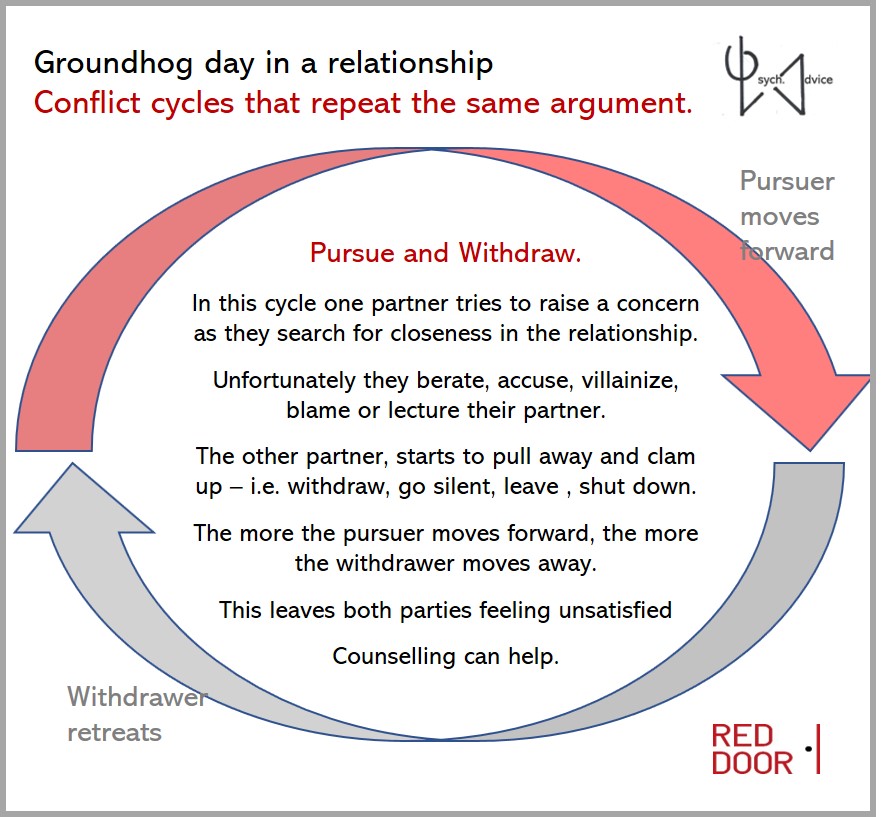
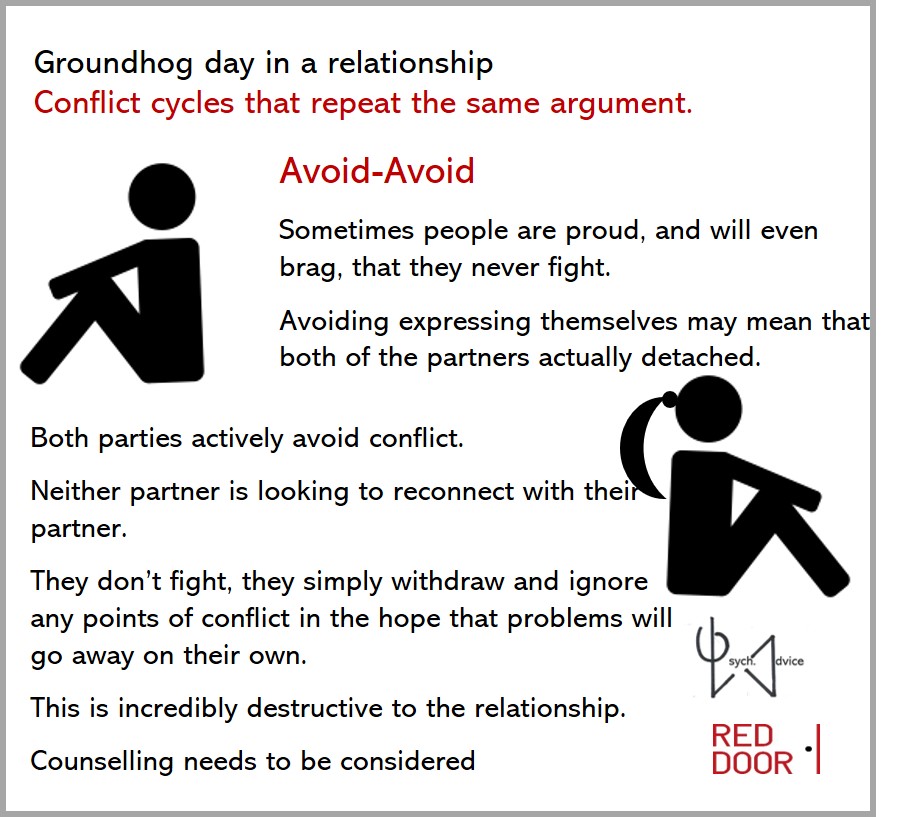
Attached is another article you might find helpful if you are experiencing the same argument repeatedly in your relationship You can break free of those negative conflict cycles.

Groundhog day in relationships – having the same argument again and again, and again…..

#valentinesday

#couplecounselling

#marriage

#love

#relationshipgoals

#couple

#relationships

#lovequotes

#dating

#relationshipadvice

Take a collaborative approach to internet safety with your teen

We can’t, as parents of teenagers, simply prohibit them from being on the internet, and it’s almost impossible to out-manoeuvre an internet-savvy teen. Instead, I suggest that you work collaboratively with them to keep them safe and protect their self-esteem.

Much of the advice you will find on the internet aims to help parents better control their child’s interactions online. Today’s teens are informed about internet risks, but you can help them navigate these challenges to keep their reputation safe, watch your wallet, and keep them out of trouble.

Teens are distinctly different from children. What I propose for teens is not what I suggest for children. Once your child enters the teen years, independence online and offline becomes a continual negotiation.

Teens’ social media lives raise a plethora of issues that they can learn to navigate collaboratively with their parents. To do this effectively, suspend your desire to dictate decisions and agendas. Allow discussion and negotiation to occur, and listen to the ideas your teen has in mind. Open, non-judgmental communication will be your greatest asset. The teen years for parents involve conceding any desire to control your child to protect them.

Talk with your teen about what they think is okay to post on social media regarding their lives. You may need to negotiate with them, and you might lose this discussion. Be prepared to compromise in order to remain engaged.

My own teen posts photos that I consider “too sexy.” It made me reflect on my motives for trying to control her online image. Do I think she is acting too provocatively? Is my perception tied to my social values about what teens should look like? Although I don’t necessarily agree with her posts, I recognize who she is in real life. We often laugh about what’s missing from her outfit in a photo. I can see her online presence and how people celebrate her, rather than the creepy boogeyman I initially anticipated.

That said, we must acknowledge that social media influences how teens, particularly young women, see themselves in comparison to others. The internet can exert a strong influence over teens’ self-esteem. This situation used to be exacerbated by magazines; now, they have exposure to thousands of retouched, fabricated lives and stories daily. Discussing with teens how “real” their profiles are, and how authentic the lives of others are online, is essential. Ask openly: Do you feel better or worse about yourself after scrolling through Instagram? Encourage teens to assess what “perfect” means on the internet. It’s crucial they recognize that a concept of perfection is an illusionary construct.

Social media is central to teens’ social lives. Seeking new contacts on Snapchat and Instagram allows teens to develop friendships outside their school year groups, in different schools, and in various parts of the city. Additionally, some teens who feel marginalized often find great support online. We generally encourage this diversification of friendships, especially for girls, who might regularly experience exclusion.

However, discuss friendship parameters with your teen. For example: What age range is sensible for them to interact with? For my teen, a general 18-month to 2-year gap applies. For younger teens, this range might be too broad; perhaps sticking to the same year group is more appropriate. Kids seek the power to choose, so letting them negotiate some of these boundaries can be helpful. Avoid the temptation to ban members of the opposite sex or potential romantic partners, as this may lead to secrecy rather than compliance.

What I do encourage is that teens get the chance, in groups, to meet the people they talk to online in real life. In counselling, I often sense how close many of those online relationships feel to teenagers. Often, they feel they can share more openly and deeply with those they’ve never met. But encourage your teen to convert online friendships to real-life situations. Online friends can be volatile and may shift from supportive to adversarial quickly, and sometimes the information shared can be deliberately deceptive. Discuss what they prefer about their online versus offline friends, helping them recognize the advantages of each.

Encourage your teen to make decisions about their profile independently, not influenced by others, including you. Peer pressure to post controversial content is more common than you might think. Conversations about what good friends expect from them and what they feel comfortable sharing will help them express who they are.

This brings us to bullying. Bullying online is rampant. Your child’s school will have a policy regarding this behaviour and may involve the police depending on the act. Your child will likely recount a story of internet bullying they’ve heard at school. Ask them about it. Instead of simply addressing right and wrong, ask them what might have driven a bully to act that way, what their agenda could be, and why they’d want others to feel a specific way. Encouraging this kind of reflective dialogue helps teens understand human vulnerabilities that can lead to careless online behaviour.

Also, inquire if they ever get contacted by people who make them uncomfortable, and ask how they’ve handled it. Teens are aware of potential creeps, but they might not know what to do. Talking to their friends can yield valuable advice, and horror stories can serve as learning experiences. My teen simply blocks anyone who gives her a bad vibe. In discussing it further, she explained that the “weird vibe” often came from strangers contacting her out of the blue. Most of her contacts are friends of friends, and she asks her connections for background information to determine if someone is worth engaging with. Reinforce her careful decision-making regarding whom to block.

We also need to talk about vent pages, which teens often use to express their anxiety and pain. Venting online may lead to regret later, as these expressions contribute to their online reputation and can be distressing for others. Teens may not realize that expressions of wanting to “disappear” or harm themselves can trigger their peers. This can result in serious consequences, as I’ve seen with several teen clients. While I believe in helping teens express themselves, we must also find appropriate avenues for this. Encourage an old-fashioned diary instead—but don’t snoop through it!

It’s important to also address the use of AI chatbots. Many teens are turning to these bots as a source of support for their mental health. While they can offer accessibility and a degree of comfort, it’s crucial to remember that AI systems lack the emotional understanding and nuanced judgement of trained professionals. They can provide unsafe advice or misinterpret a teen’s needs, sometimes even reinforcing harmful beliefs. Therefore, while teens may find them convenient, it’s vital to stress that these tools should never replace real human connections and support from trusted adults.

The teen years are such an interesting time, and independence is the goal of this period. Negotiating internet safety with your teen rather than enforcing strict rules can help you navigate this important transition. Open, non-judgmental communication lays the groundwork for better protection and future collaboration.

About the author: Angela Watkins is a counsellor and psychologist working with teens to improve their mental health. She also works with families and adult clients. You can contact Angela at angelaw@reddoor.hk.

We have three teen focused counsellors at RED DOOR..

#teens

#teenager

#socialmedia

#internetsafety

#parenting

#bullying