
How We Build Great Friendships and Protect Against Loneliness

In a recent article in the Financial Times, data insights reporter Federica Cocco warns of a growing epidemic of loneliness worldwide. Citing ongoing research from the American Time Use Survey, Cocco highlights that individuals in the US are experiencing a decline in the number of friends and family members they can rely on for support.
Older adults are particularly affected; over half of those aged 65 and above spend more than eight hours of their awake time alone. Alarmingly, Cocco also notes a rising trend among young women, who are increasingly at risk of experiencing loneliness. The percentage of young women spending extended periods alone has doubled from 7% to 14% between 2011 and 2021.
Loneliness has been closely associated with conditions such as objective social isolation, depression, introversion, and poor social skills. It poses a significant threat to both physical and mental health, with income, education, gender, and ethnicity offering no protection against this pervasive issue. Rather than trivialising, ignoring, or blaming those who experience loneliness, it is crucial to consider how we can both protect ourselves and support others.
In our clinical practice, we observe the expansion of loneliness firsthand. Many individuals in Hong Kong, particularly in the aftermath of the COVID pandemic, have reported experiencing the loss of friends and increased feelings of social isolation. We are inherently social beings; we thrive on emotional connections with others and function best when engaged in rewarding relationships.
Although many of us still have friends with whom we can spend time, it’s possible that we’re lacking the depth of intimacy within those friendships. It is vital to have support from people with whom we can share our worries and concerns, providing us with the critical backing needed to shield against social isolation and loneliness.
Developing valuable friendships is a skill often acquired in childhood, yet we frequently need to relearn and revisit these friendship-making skills throughout life. We must enter “friendship-making mode” when we encounter an intimacy gap—this may occur when we’ve lost friends or faced changes in life circumstances, such as relocating, becoming parents, experiencing marital breakdowns, or leaving our job.e lost many friends, we change our life circumstances (living location, having children, marital breakdown, leaving employment).
Key Ingredients for Building Meaningful Friendships
Friendships are the result of combining several key ingredients: consistency of effort, personal positivity, your ability and willingness to be vulnerable, understanding and respecting others’ preferences, having patience, and reflecting mindfully on what is working and what isn’t in order to shape a future for each friendship.
Consistency
Consistency is crucial for creating new friendships. The process of building quality relationships is an accumulation of a million little interactions, rather than a few grand events. If you want to develop an acquaintance into a friendship, you need to create consistency in the relationship. This is why we often find ourselves becoming friends with people we see regularly in the same class or activity.

To meet and make new friends, it is advisable to participate in a regular event instead of a one-off workshop. For instance, consider joining a choir, sports club, bridge or mahjong group, or a regular support gathering. These environments foster repeated interactions, which naturally help build connections.
You also play a vital role in maintaining consistency within existing friendships. If you receive an invitation to lunch but cannot attend, ensure you protect the consistency of that relationship by suggesting an alternative catch-up opportunity immediately. Individuals often drift apart due to a lack of sustained effort, so proactivity is essential.
It’s important to acknowledge that relationships require both giving and receiving. If you are always the one initiating meet-ups while the other person is not reciprocating, achieving consistency becomes challenging. This highlights the value of the other ingredients that contribute to creating meaningful friendships.
So, if you are looking to meet and make new friends you will be best placed to attend a regular event instead of a one-off workshop. For example, if you want to make new friends you might consider joining a choir group, sports club, bridge or mah-jong club, or regular support group.
You also play a role in creating consistency in your friendships. If you are invited to lunch and decline, ensure that you protect the consistency of the relationship by offering an alternative catch up opportunity immediately. People drift apart because of lack of sustained effort.
Admittedly relationships still require give and take. If you are constantly offering meet ups, and the other party is not reciprocating, consistency will become difficult to achieve. This highlights the value of the other ingredients needed to create meaningful friendships.
Positivity
We have all encountered a friend who has found themselves stuck in a negativity rut at one time or another. Depending on the history and future aspirations of that friendship, you may feel the need to resist the urge to distance yourself from such individuals. It can be very challenging to be around negative people.
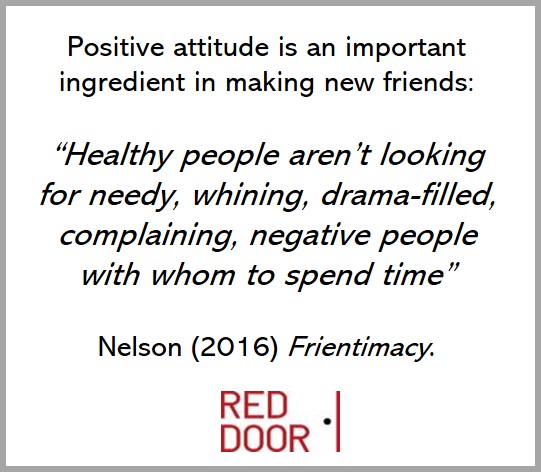
As Nelson (2016) points out in Frientimacy, “Healthy people aren’t looking for needy, whining, drama-filled, complaining, negative people with whom to spend time.” Conversely, we are drawn to those who radiate fun and positivity, uplifting the mood in gatherings and contributing to a sense of well-being.
It’s important to note that you don’t have to be excessively cheerful or mask your true feelings. Authenticity matters. The Gottmans, leading relationship therapists in the US, argue that friendship is foundational within romantic partnerships. Among couples they classify as “masters” of relationships, these individuals share positive actions (comments or gestures) with their partners 20 times more than negative comments.
These positive interactions need not require major investments of time or money. For instance, merely nodding while listening to a friend’s story can be a positive action. Simple acts such as thanking them for their time or sharing build positive regard.
Vulnerability
When we share our vulnerability, we are expressing our humanity—acknowledging that we are not perfect and that we possess feelings, dreams, aspirations, and disappointments. However, some individuals find it extremely difficult to open up and reveal their vulnerabilities, challenges, or hurts, potentially due to past trauma or broken trust. By avoiding vulnerability, they may inadvertently keep others at arm’s length. This sends a message to their friends that they are willing to spend time together but are not ready to share intimate details of their lives. If you seek deep friendships rather than mere acquaintances, it’s essential to allow people to see your true self.
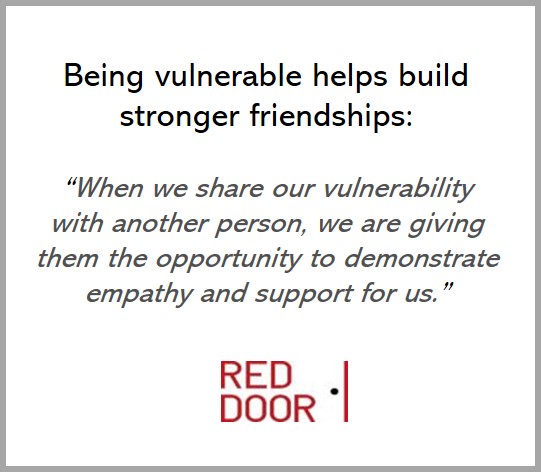
Sharing our vulnerabilities provides others with the opportunity to demonstrate empathy and support. These elements are the glue that holds friendships together. Everyone encounters challenges in their lives—whether it’s changing jobs, experiencing a breakup, or dealing with difficult co-workers. Friendships become invaluable during these periods of personal upheaval.
That said, it’s important to be cautious about the timing and depth of your vulnerability. Sharing too much, too soon can overwhelm others and may even hinder the development of the relationship. It’s advisable to share vulnerable content only after you have met with a person four to five times, paying attention to their reactions. If they show empathy in response, your sharing has likely deepened the bond between you. Conversely, if they seem indifferent, it may indicate that you have overshared or that they are not prepared or willing to embrace vulnerability in your friendship.
In the early stages of a new friendship, it’s also crucial to be vigilant for red flags regarding the other person. Individuals who seek to take advantage of you or who disregard boundaries surrounding your time, relationships, and safety are not conducive to your well-being. If you identify concerning traits, it may be wise to seek connections with others who contribute positively to your life.
Understanding and Appreciating Differences
We all have different values and priorities, and understanding your friend’s world—including their communication preferences—will aid in building stronger relationships. Intimacy flourishes when people feel understood. Therefore, instead of solely focusing on being interesting, strive to be genuinely interested in your friends.
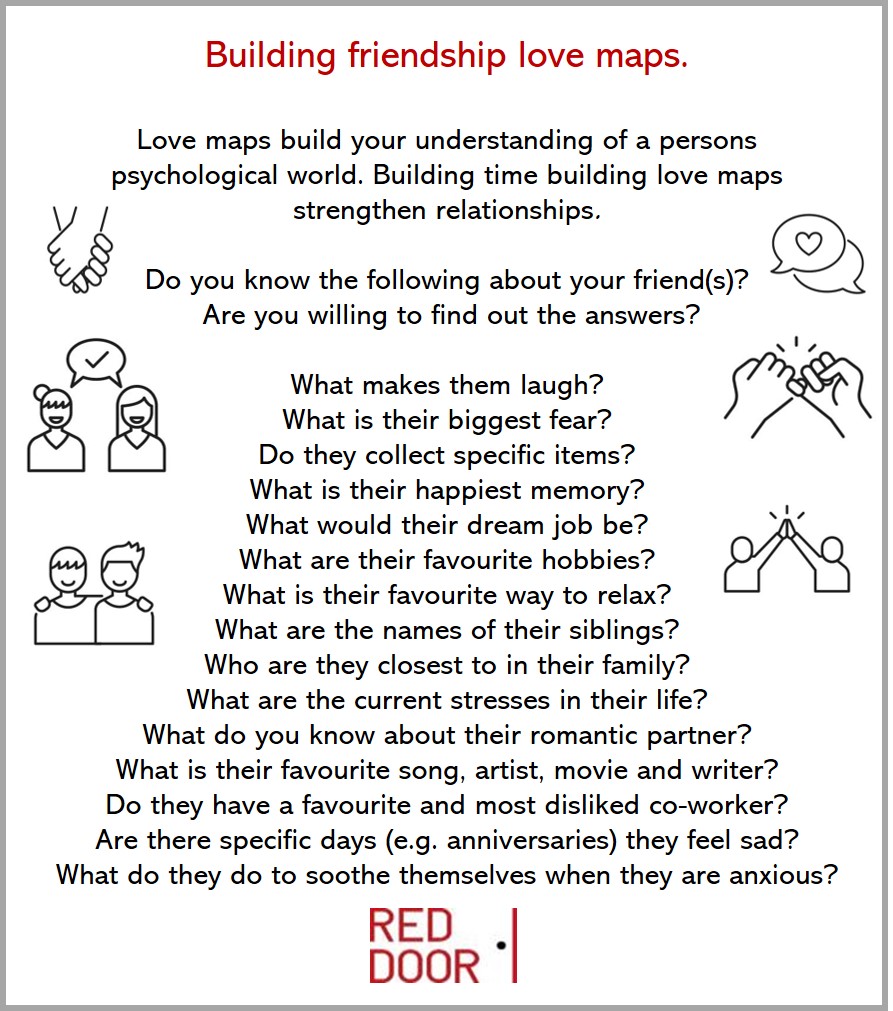
To better understand your friends’ perspectives and enrich your relationship, engage in activities that broaden your understanding of their worlds. The Gottmans propose using “love maps” to help rebuild understanding, appreciation, and trust in relationships. We have expanded some of their questions into a “friendship love map” starter list. Consider asking your friends questions about what matters to them to convey your genuine interest in their lives.
Couples therapy often utilises questionnaires that can also apply to building strong friendships, including discussions about love languages and apology styles (see 5lovelanguages.com). When you respect each other’s love languages, you strengthen your connection. For example, if you know that your friend values acts of service, you might choose to help them with a house move instead of simply buying them a box of chocolates to celebrate a moment.
Building better friendships requires us to expand our ability to mend fractures in relationships that may lead to breaks. Friends will inevitably experience disagreements. Apologising in a way that aligns with your friend’s preferred apology language can facilitate healing during these disconnections. Often, people tend to communicate using their own preferred style rather than considering what might resonate with their friend. If your friend’s preferred apology style differs from yours, your apology might feel insincere or incomplete. To better understand your and your friends’ preferences, you can visit the 5 Love Languages.
Many individuals possess more than one preferred apology language, so consider incorporating elements of your friend’s preferences when you apologise. For instance, if your friend values restitution and repentance, you might say, “I promise I won’t do that again. Can you tell me how I can make things right with you?”


Patience
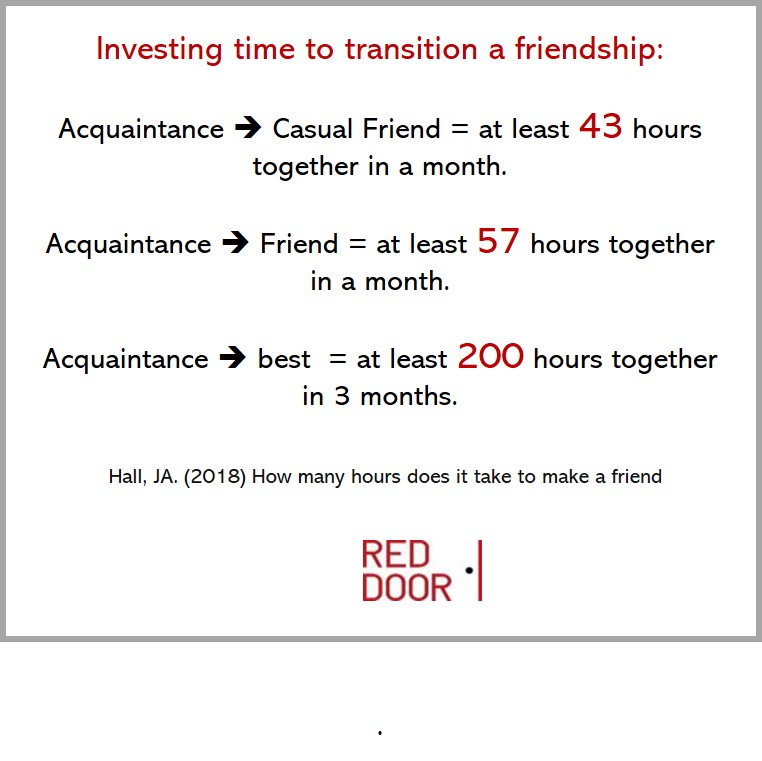
Research by Hall (2018) provides insight into the time required to build and secure friendships. According to this study, the likelihood of classifying someone as a casual friend rather than merely an acquaintance typically occurs after students have spent over 43 hours together. Casual friends transition to “friends” after at least 57 hours of interaction within a three-week period. Best friends, or close friends, require even longer; over a three-month span, an investment of more than 200 hours is necessary.
From Hall’s analysis, we learn that the time spent together is a predictor of the closeness of friendships. This investment approach can help us evaluate whether we have genuinely put forth enough effort to establish a friendship. Are your expectations realistic? When we yearn for profound relationships, it can be challenging to accept that developing friendships requires time and patience.
Before you conduct any audits of your friendships, take time to reflect on what is working and what isn’t. New friendships and the development of deeper bonds require time.
Friendship Check-in: Examining Your Relationships
Before you embark on an audit of your friendships, take a moment to reflect on what is working and what isn’t. Building new friendships and deepening existing ones requires time, consistency, vulnerability, understanding, and positivity. Even if you put in the effort, you may still feel that a particular relationship isn’t fulfilling your needs. It’s common to become impatient, especially with potential friendships that seem slow to develop.
Ambiguous loss describes the grief associated with a relationship that appears to be fading, where the other person is still alive but no longer as present. Conducting a healthy audit of your relationships can help you determine if reinvestment is worthwhile or if a misalignment in timing or values means it would be better to invest your time elsewhere.
Before you decide to cast aside a new or longstanding friendship, consider the following reflections:
- Evaluate Your Contribution: Are you perhaps overestimating your efforts in the relationship while underestimating those of your friend? It’s possible to have a biased view of your contributions.
- Clarify Your Needs: Do you understand what you want from this friendship, and have you communicated this clearly to your friend?
- Balance Giving and Receiving: Are you over-giving while not receiving enough in return? If so, consider whether you are offering too much or if your friend isn’t contributing adequately. Is there room for change?
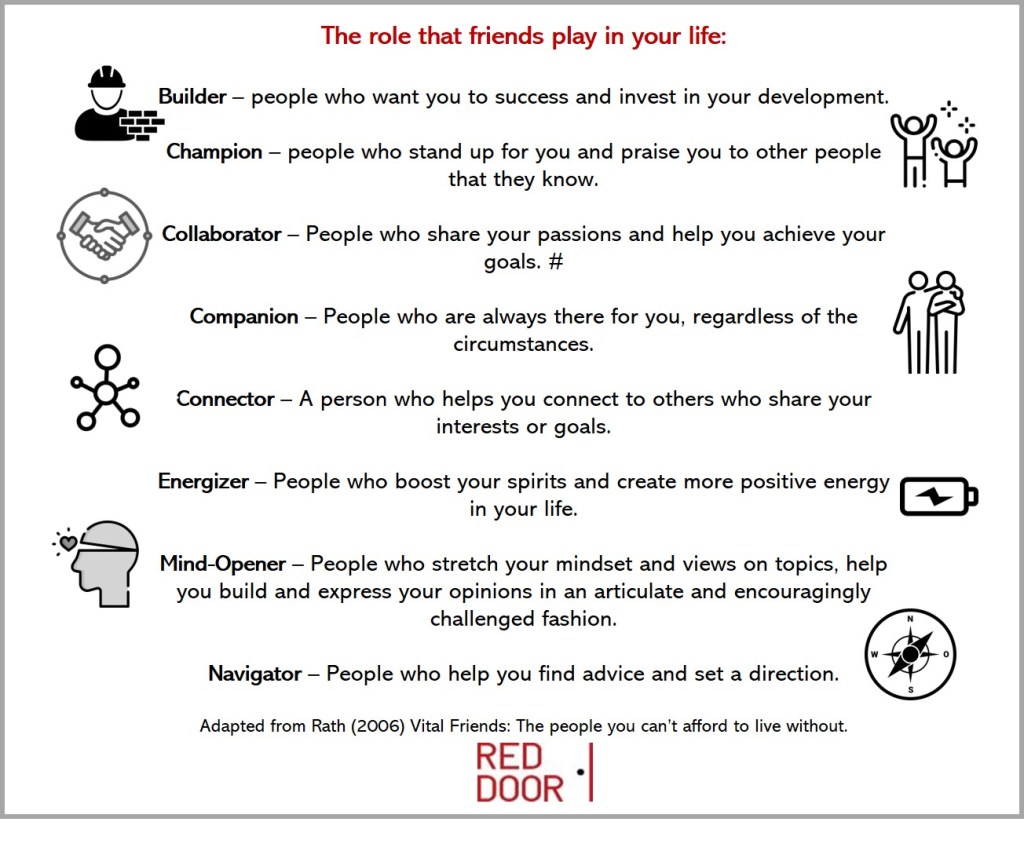
- Reflect on Admired Traits: What qualities do you appreciate in this person? Consider what type of friend they represent according to concepts like Rath’s “Types of Friends” graphic. Do you know others who provide similar traits or skills in your life?
- Consider Their Circumstances: Is your friend currently navigating tough times that may limit their ability to be a supportive friend? If so, are you willing to accept a more “one-sided” dynamic for a while, making it clear this situation is not permanent?
- Willingness to Evolve: Are you open to stepping out of your comfort zone to enhance this friendship? If you’re not willing to make these efforts, are you prepared to face the consequences of perpetuating the same patterns?

Acknowledging that your friendships may not be as fulfilling as you’d like—either in quantity or depth—opens the door to enriching your social connections. The recommendations provided here aim to help you forge new connections, rebuild old bonds, and reinvigorate your friendship circle. Remember, you don’t need to feel alone if you don’t want to—invest in your connected future.
Conclusion
In an increasingly lonely world, fostering meaningful friendships is more important than ever. By recognising the vital ingredients of consistency, positivity, vulnerability, understanding, and patience, you can build deeper relationships that enrich your life and combat feelings of isolation. Friendships not only provide support during challenging times but also enhance joy and fulfilment in everyday life. As you navigate the complexities of forming and maintaining friendships, remember that it’s never too late to make new connections, rekindle old ones, or invest in the relationships that bring you happiness. Your journey towards stronger social bonds can lead to a more connected and fulfilling life—one million little moments at a time.
References.
[1] Federica Cocco Are we ready for the approaching loneliness epidemic? FT.com 25 November 2022. https://www.ft.com/content/c3aef690-b5a5-4f0d-9da5-2bf4c560c4f4
[2] Gerst-Emerson, K;, and Jayawardhana, J (2015) Loneliness as a public health issue: The impact of loneliness on health care utilization among older adults. American Journal of Public Health, May .
[3] Nelson, S (2016) Frientimacy: How to deepen friendships for lifelong health and happiness. Seal press.
[4] Rath, (2006) T. Vistal Friends- the people who can’t afford to live without. Gallup Press.
[5] Gottman J and Silver, N (2013) What Makes Love Last?: How to Build Trust and Avoid Betrayal. Simon and Schuster
[6] Hall, JA. (2018) How many hours does it take to make a friend? Journal of Social and Personal Relationships. Volume 36(4) page 12788-1296.
Other blogs from Red Door that you might like:
 Start your Red Door Journey