2 years in – COVID19 continues to produce considerable anxiety.

Since early 2020 we have been experiencing continual threat from the COVID 19 virus and the numerous variants that have developed. COVID has impacted our lives significantly – how and when we can socialise, go to work or school, travel, see family, celebrate special occasions, even say goodbye to loved ones. All aspects of our regular life seem to have been altered. And we do not know when this will end. This leaves us in a repeating cycle of anxiety and flight/fight type of responses.

Anxiety can be a crippling emotional challenge. As a psychologist and counsellor I work with clients dealing with their anxiety and I want to share some information about this condition and its management.

A strategy of waiting for normalcy to return is impractical. Pandemics take years to work out so please consider adjusting to a new normal of living with COVID-19 for now.

It’s not only exhausting to spend so much time in a state of high alert, but it can also be physically damaging. The physical consequences of acute stress can include high blood pressure, migraine headaches, and exacerbation of various inflammatory illnesses. After more than 2 years of stress, people may need to explore more than some deep breathing exercises to calm their nervous systems down.

If you feel flooded with COVID-Anxiety:

  • Limit your time scrolling news about new cases and the current situation. Measure your experience of anxiety when you are looking at news sources. Sometimes no news is a good approach.
  • Acknowledge your anxiety – give it a voice, but not a megaphone. Talk to your anxiety as you would a worried child. Accept that it exists, how it might perceive the situation, and offer alternative ways of looking at the issue. Be kind to yourself.
  • Seriously consider talking to a therapist at this time. Sometimes the process of just expressing your anxiety to a properly qualified listener will help. We often can not change a situation, but bottling up our anxiety and feeling trapped within it will only make one feel more stuck.
  • Perspective is important. Try to focus on what is positive in your life when you feel weighed down by the difficulty of dealing with this situation. Many of us have not seen family, for years.  Sometimes this might feel very difficult. You may actually benefit from being thankful that things are not worse. If you get stuck a negative through cycle, start your next thought with the line, “at least ….. “.
  • Be careful when you share information. Search for facts, not rumours. At the same time, share facts not opinions – seriously wear a mask, get your vaccine, do your bit.
  • Don’t judge those who leave, or those who stay in your area as the number of cases grows or fluctuates. People make the choices that they think are best for their family.
  • Practice being grateful. Gratitude allows you to stay positive.
  • Challenge your thinking. We often employ cognitive filters when we interpret information and this can increase our anxiety. For example, if you tend to catastrophise situations it will possibly lead to exacerbated anxiety. Take a look at the following article which might help. (https://reddoorhongkong.wordpress.com/2019/03/28/change-the-view-challenging-your-thinking-filters/)

Working actively on your anxiety can help to reduce it. Sometimes talking to a professional might help. If you’d like to tackle your anxiety with Angela, or one of our other therapists, in Hong Kong, contact us at angelaw@reddoor.hk or SMS to 852-93785428.

anxiety #depression #mentalhealth #mentalhealthawareness #mentalhealthmatters #stress #ptsd #therapy #health #wellness #anxietyrelief #covid #anxietyawareness

7 ways to achieve your goals in 2022.

It’s tempting to set new goals at the beginning of the year. As a counsellor, I encourage our clients to invite change into their lives. As a psychologist, I need to be able to share what makes change, through goal setting, more successful.

Here are 7 elements that will help you better achieve your goals.

1.Be SMART

 If you want to achieve a goal its important that you know what that goal looks like. For example, you might want to lose 10 kilos in this year. What do you have to do to lose this weight? Normally this would involve a combination of diet and exercise goals to make the weight loss possible. So how often are you going to exercise? What kind of exercise are you going to do? Is this the kind of exercise that typically helps people lose weight? What kind of diet changes are you going to make? How often are you going to eat, or not eat, this way? These smaller questions make your goals SMART – an acronym representing Specific, Measurable, Attainable, Realistic and Time Bound. Setting SMART goals will help you understand your success in specific steps. But this is not enough, our other six ideas will help you gain the momentum to actually get required actions done

2. Tell the world.

There is a plethora of research as to how public posting of information increases not only one’s perception of being accountable, but helps people achieve their goals better. If you are the only person who knows that you didn’t achieve your goal that day, there is no pressure. Telling the world, or a team your goals, is asking others to keep an eye on your achievements.

3. Be a groupie.

Find a group of people with similar goals. Often, we are better cheerleaders for others than we are for ourselves. Join or set up a group to help keep you on track with your goals this year. Helping others achieve their goals will also create out some competitive elements for you to also show you are able to do the work.  

4. DO rather than DON’T.

Framing your goals in positive style language, rather than negative, helps you feel more positive about them. No body likes to feel like they are missing or losing something. By adding a goal, you can start with a more positive framework.

5. Plan for potholes.

People fail to achieve their goals because they do not plan to stumble or fail in their interim goals, and once they do, the abandon their overall goals. “I missed my exercise today, so I will just give up”. Planning for potholes, or small stumbles, is not only a compassionate way to treat yourself, its actually more realistic than expecting a flawless execution of your goal plan. If you missed a day of exercise, make up for it, or note it down and move on. A goal is a culmination of many days of effort, not one alone.

6. Own your goals.

Your goals should be set by you, for you. Other people do not need to tell you what your goals should be. Write about how you imagine you think your life will be better or different if you can achieve your goals. How might you feel? These are your goals to achieve, or to not achieve – no one else’s.

7. Set yourself some rewards to reinforce your success.

Did you like star charts as a kid? If you did, set yourself a new, adult star chart. Reward yourself with an appropriate reward at key junctures. If you want to lose 10 kilos, reward yourself whenever you lose 0.5 kilos. You need to select appropriate and supportive rewards.  A piece of cake would not be a supportive reward when weight loss if your goal.

#goals #2022 #mentalhealth #weightloss #REDDOOR

We (continue to) need to talk about Mental Health

We need to destigmatize talking and being ashamed about mental health. Especially in times of heightened anxiety and challenges created as a consequence of the covid pandemic.

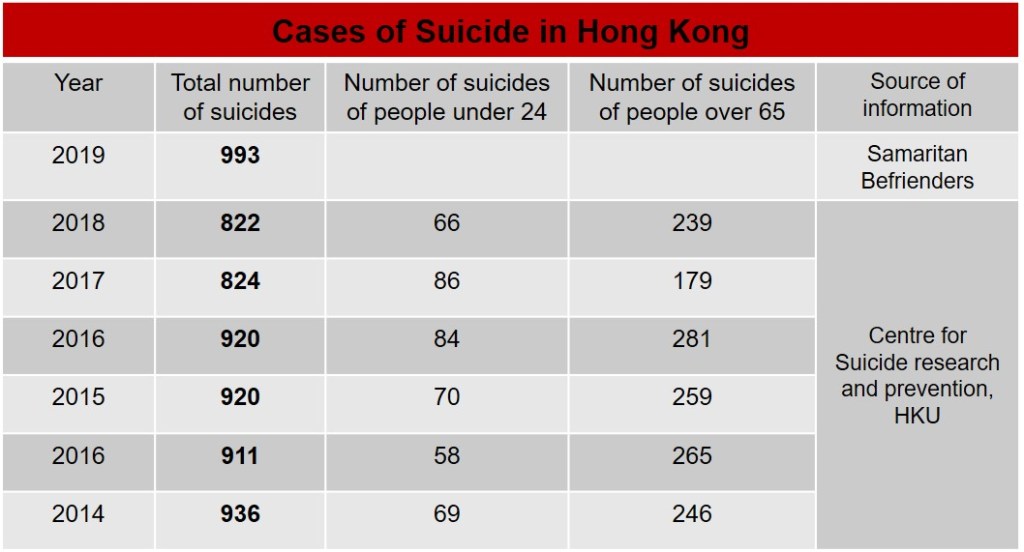
September 10th is observed as the day to raise awareness of Suicide and Suicide Prevention around the world. Whilst people attempt suicide for a variety of reasons including loneliness, depression, physical illness, loss of self-worth, shame, bullying, and hopelessness, compromised mental health is a common factor. In Hong Kong we lose 800-1000 persons a year from suicide. Suicide death is preventable death.

We need to help ourselves, our families and our friends better cope in moments of compromised mental health.

In order to help ourselves and others de stigmatize mental health we need to (1) evolve our understanding of mental health and (2) learn to talk to others about their mental health in a helpful, rather than unhelpful, way.

Understanding mental health.

A helpful way to understand mental health is to consider it, as you would physical health, as a continuum.

On one end of the continuum is good mental health and at the other end, very poor mental health. On any given day we may find ourselves moving along this continuum, just as our physical health is sometimes better, and sometimes worse on any given day.

Sometimes we have a chronic illness which lasts weeks, months, years such as a bad flu, diabetes, asthma, and this can make it harder for us to experience good health. We may need medications, undertake a change in lifestyle and seek out expert help to assist movement along the continuum towards better health. At no time do we expect that we will be completely recovered the next day, or do we expect this of others.

Similarly, mental health conditions can affect us for a day, a week, or for chronically long periods. Again, we may require additional help, medications, and a change in lifestyle to move towards the healthier end of the spectrum. Unlike physical health, people sometimes misunderstand that recovery takes time, and is certainly not just a matter of “getting over it”.

Mental health is a continuum.

Talking to someone about their mental health.

So how can we talk to people who might be experiencing mental health issues, or an episode of poor mental health?

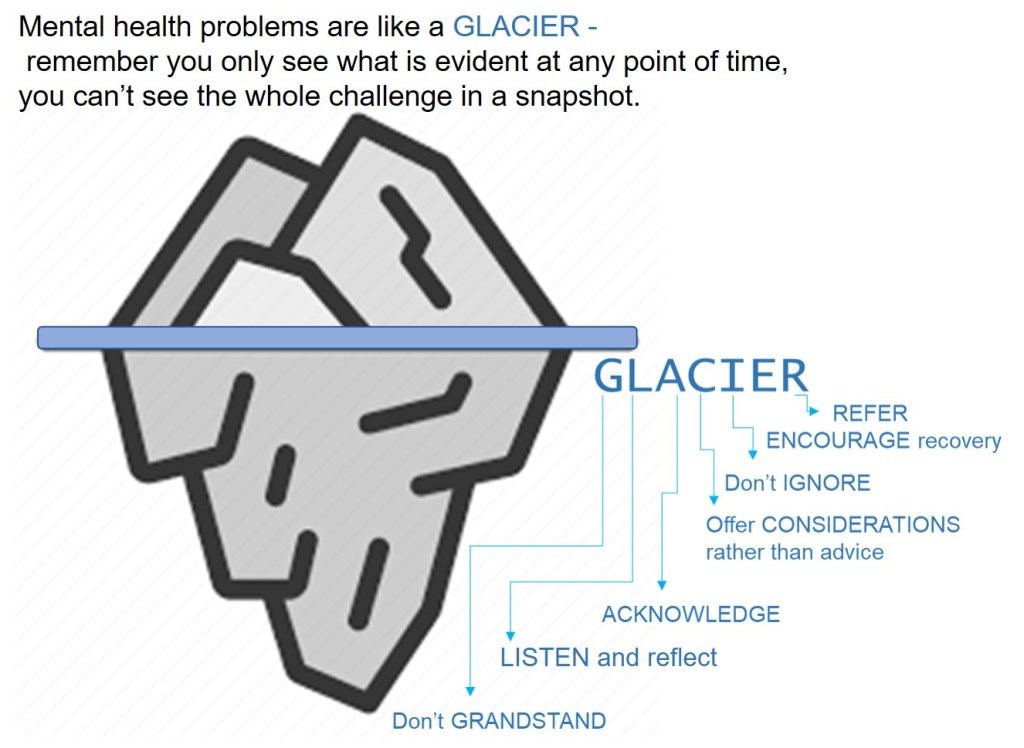
Remember you are dealing with a GLACIER of an issue. What you see is not all of the issue. You are just seeing the part of an issue that is above the water. In order to reinforce this message, I have highlighted my “thoughts to remember when you talk to someone about their mental health” within the framework of the word Glacier.

Thoughts to remember.

G – Do not grandstand. Whilst everyone experiences anxiety and depression, we need to avoid depleting someone’s experience by comparing it our own challenges. Avoid competition over the relative importance of your traumatic experiences.

It is sometimes enticing to share your experience. You are entitled to express your experience and to ask for help. For example, teens often compare each other’s experience of anxiety, each teen detailing, in-turn, how their experience of anxiety was worse than the person who spoke before them. This grandstanding is unhelpful for two reasons. Firstly, rather than helping to connect with your friend, you may be dismissing their experience as inconsequential. Secondly, it isn’t a competition where only the person who has the worst experience is entitled to have their feelings acknowledged or be deemed worthy access to help. We all need help and to be heard.

L – Listen. Real listening is an important skill to learn. When we listen properly, rather than focusing on continuing a dialogue we need to take the time to demonstrate that what has been said, has been heard. Reflecting back to the person some of the words that they said, or a summary of it, and asking for clarification, is helpful.  For example, what follows is a conversation between Laura and Sam. Sam is demonstrating reflective listening skills.

Laura: I have been feeling really anxious about the pandemic

Sam: so you feel anxious?

Laura: Yeah, the numbers keep going up, I’m worried if we should be in the office

Sam: So you feel anxious about keeping safe from the virus?

Laura: Yes, every day my stomach is a bundle of knots

Sam: Sounds like you feel pretty worried.

Try listening like this instead of jumping in with our opinion or even a solution. See how it changes your conversations and connections with people.

A – within the listening skill set is the simple act of ACKNOWLEDGEMENT. Help normalize people’s feelings but at least accepting that they are occurring, and that they are valid. In the example above Sam doesn’t give his opinion of Laura’s feelings. He simply allows them to exist and be acknowledged. The process of acknowledgement can be challenging if we believe that our college shouldn’t feel the way that they do. If you feel like this, I would ask you to consider if you can allow your colleague the respect and space to have their experience, even if you disagree with it. It may be more important for them to be heard, rather than “corrected”.

C- use the word CONSIDER rather than give advice. When we see people in distress we can rush to “solve” the issue, including providing solutions to the problem. Its is a real skill to sit with someone in their anguish and just simply experience their condition, rather than move to fix it. This is true empathy. Once you have listened and sat with someone, acknowledged their feelings, if you want to give advice you might like to frame it as a consideration rather than a recommendation. Rather than, “You really should give up drinking”, or “You really need to go to a counsellor”, or “You need to get medicated”, suggest it as something to consider. “Do you think you could consider changing your relationship to alcohol? Do you think you might consider counselling? Do you think you could consider if medication might help you”? Think of any advice as sowing seeds of trees that might start to grown on another day, not necessarily today.

I – Don’t IGNORE. Denial or ignoring a problem will NOT make it go away. Telling someone they “shouldn’t” feel the way that they do, is not a form of treatment. Telling them how you would like them to see the issue, also not helpful. Let people have their experience. Respect their experience of the world, and encourage change rather than deny or demand it.

E- ENCOURAGE people to seek help. As you would if you saw if a friend or colleague had a physical injury, ask them to consider if change could be possible and they could find a resource to help them feel better. Even top performers encourage coaches and counsellors to move from good to great.

R- REFER them to experts. There are people who are great with people in a crisis. Natural talent is not the same as training. Mental health issues are best addressed by mental health experts. These experts are trained in listening, testing, helping to build allegiance, methods of behavioural change, and usually have a network of other experts that they access when required. Like any expert a personal recommendation from another user is always helpful. In the days of Facebook, a recommendation is only one post away.

I hope this helps you to help yourself and others. If you have any questions about your own mental health, or the mental health of a friend, feel free to contact the RED DOOR team at our email. Let’s talk about mental health – our own and that of others. reception@reddoor.hk

++++++++++++++++++++++

Angela Watkins is a qualified counsellor and psychologist working with teens and adults within the RED DOOR Counseling practice in Hong Kong. In October 2022, Angela was proclaimed Hong Kong’s best therapist in response to a poll by LIV magazine.

Talk to your Anxiety

You may feel that you are powerless over your anxiety. Using the following anxiety dialogue exercise may well help you learn to manage your anxiety during this time and in the future.

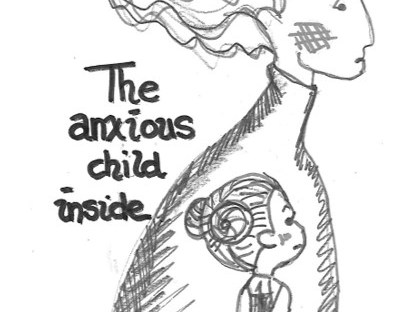
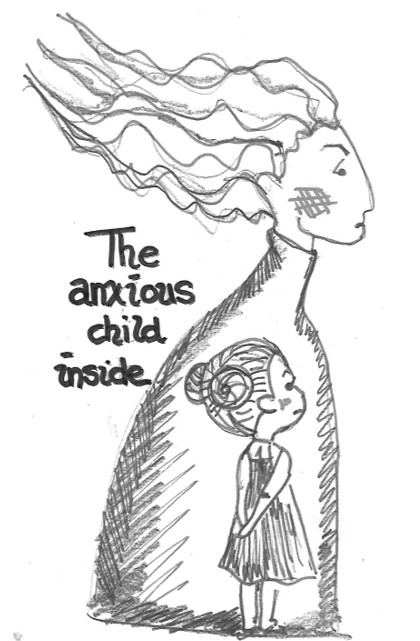
Talk back to your anxiety, as if it is a small child that lives inside you. Help this young child understand the risks that exist, in a realistic rather than catastrophic manner. Hold their hand whilst you explain the actions that you are going to undertake to help mitigate the risks ahead. Don’t tell dismiss their worries, by saying that worry is silly. Do not try to simply silence your anxiety. Rather, listen, and talk back. Acknowledge the fear, but explain that you do not need to let worries disable you. Reassure your internal anxious child that you will take care. Thank your anxiety for reminding you that there are threats in the world, and that there is danger, but that you have the resources and strength to face challenges.

Dialogues with your anxiety may run as waves lapping at the shore of a beach. Let the anxiety roll in and regress, as if your anxious child, and your adult self, are engaged in a dance – make it a waltz.

Intervention 101 – knowing who will be a good fit as an intervention partner.

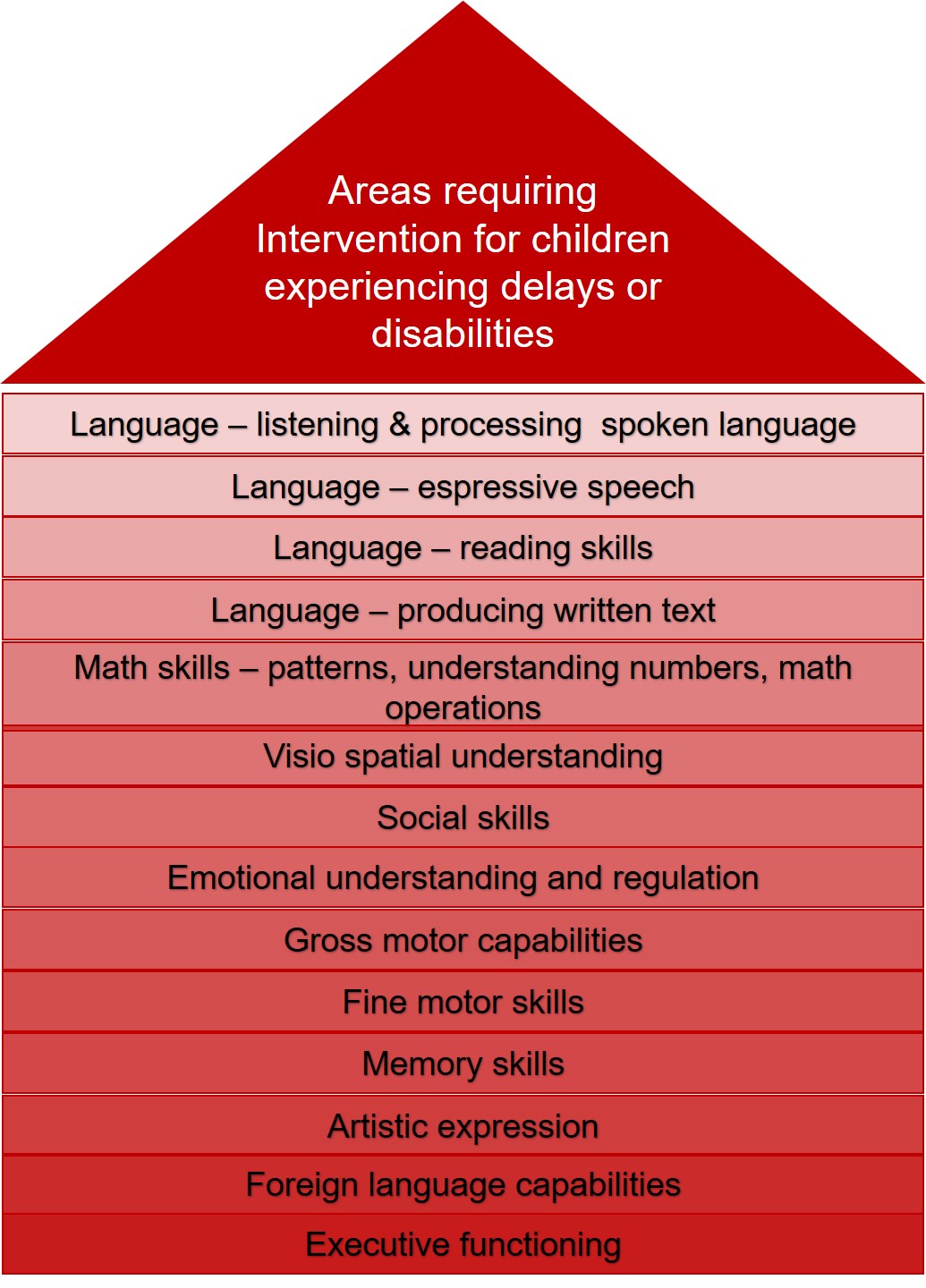
intervention areasWhen you are deciding on how to approach early, or continuing, intervention strategies to help your child with special educational needs, it maybe overwhelming.

Here are some thoughts that might help parents views the situation in a systematic and manageable way. I am writing this not only from the perspective of a psychologist who leads a team of intervention focused practitioners, but also as the parent of a child with autism. Even as a psychologist I found navigating this territory difficult, understanding who really could help and had the best intentions for my child.  .

Intervention provides might include speech language therapy, occupational therapy, and behavioural skill therapy.

Finding a good partner to help you with intervention practices.

The right kind of partner –  It is important to work with key providers who really HELP.

They should have a (H) helpful and holistic perspective of your child. Being the parent of a child who required special educational adjustments is worrying. Your provider can help you see the strengths is your child as well as their challenges. They need to look at the activities needed today and in the future.

They should have a clear (E) evaluation road map for your child. They should able to tell you what key skills need to be developed, and why, show you a road map and help update you where your child is in their development. Your intervention provider should contribute to, even lead the IEP (Individual Education Plan) or IDP (Individual Development Plan). That whole plan should be updated 3-4 times a year, if your child is under 8. For children 9-12 year old, the plans should be updated 2-3 times a year. From the age of 12, their plans need to be completely reworked in line with the second wave of development. See this article for more information

Activating the Second Wave – Intervention for teens experiencing learning challenges.

Listening (L) and cooperating with you is really important. You are the current expert on your child and your team should feel like real team members with a shared goal. It’s important that your fears, your worries, aspirations are heard.

Planning (P) is also important. Any intervention strategy should be clear to you and you should be able to turn up, or down,  the volume as needed. You should be able to place scenario within an overall agenda.

Respectful. You may have heard that there is a lot of negative feedback from neurodiverse adults who were subjected to ABA therapy. Their main complaint is that the actions that they use to regulate their emotions, often seen as “stimming”, has been treated in a negative way. Our knowledge of “how to best help” kids who have delays expand with information every year. We now understand that making kids “look normal” shouldn’t take precedence over their need to feel reassured and safe. Ask your provider how they approach and treat “stimming” behaviours such as hand flapping, jumping, hair twisting. It is important that you are truly comfortable with their approach and that their approach is respectful to the needs of your child.

Goal-oriented. The purpose of an overall plan, and each element and activity within the plan should be completely clear to you. When kids are under the age of ten, our intervention efforts are often focused in a more concentrated manner towards helping the child start to achieve age expected behavioural, academic or communicative goals. This model is often referred to as a deficit model. I prefer to think of it of these behaviours as creating equalizing opportunities for these children. As your child becomes older, you will want the focus to alter – so that expansion of their key skills becomes a greater focus. This strengths focus helps prepare your child for potential vocation opportunities.

Fair -It is important that you believe that intervention therapies are fairly priced. It takes a lot of energy and education to provide appropriate intervention strategies and activities. As a provider I can tell you that it isn’t cheap to provide these services well. However, as a parent I have seen many programmes that are ‘eye=-wateringly” expensive. I encourage you to select a partner where you feel that you are getting a fair service for a fair price.

Lastly, please watch if your caregivers and intervention providers really care about the kids that they are helping. Warm relationships work wonders. Be sure that your child is being stretched by a person who really cares about them, and is interested in their development.

These are both my personal and professional opinions. When you start this journey, it is hard to know those who really care from those who are trying to just go through the motions, or overcharge and under deliver. Life is hard enough. Use the above guidelines and I hope you, and your child, can get the support you definitely deserve.

****************************************************************

I

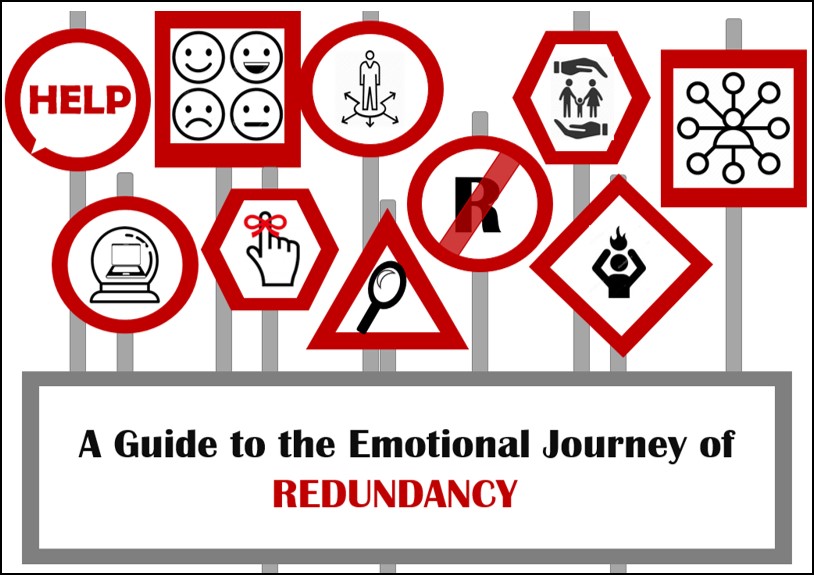
A guide to the emotional journey of REDUNDANCY

redunancy_overallBeing made redundant is one of the most stressful events you can experience in your career. Many of us count on our professional image not only for financial security, but as a source of identity. When you loose a job, you loose so much more than the salary that went with that post.

It is an emotional journey. As counsellors, we help professionals navigate the journey, helping them adjust and, eventually, re imagine their futures. Here are some outtakes from what we have learnt helping individuals through this process.

redundancy_notadirtywordRedundancy is not a dirty word

There has been a shroud of shame associated with the word redundancy. You may be feeling embarrassed, as if you are not good enough, or that you are not needed. That feeling is not necessary. Most recruiters are familiar with the concept and wide use of redundancy as a common HR  tool during hard times. Redundancy decisions are often financial rather than personal. Being embarrassed or shameful, might prevent you from seeking legal advice when it might be of benefit to you. It is your right to fight for the best exit deal you can get. You may feel shame, but don’t let that let you  stop negotiating the best deal you can


redundancy_understandemotionsAcknowledge what you are feeling

Aligned to the experience of shame are many other feelings associated with job loss including shock, grief, depression, fear,  and even anger.  It is healthy to accept those feelings rather than reject them as they are experienced. It is a natural cycle of adjustment to move through these feelings. You might consider writing a journal to work your way through these emotions. This will help you capture if you get particularly stuck feeling a particular way.


redundancy_familyprotection

Family focus

Redundancy can put your personal relationships under pressure. If you are the major breadwinner, you may find that your partner becomes fearful about the future and money. Children, as well, may not understand.

Embrace this situation as an opportunity for your partnership and family to learn to confront a problem together. This stress will pass, but in the meantime you may need to tighten your belt, suspend spending on luxury items. Everyone can help, rather than wait. By modelling partnership and leadership within your family during times facing redundancy, you are modeling how your children see the world of work, and learn about emotional resilience through observation.


redundancy_rememberTwo important things to remember

Firstly, try to remember that this is a temporary situation. As long as you continue to move forward, any event, including being made redundant, will become simply a page in a chapter of a book.

Secondly, remember that there are two key stages in the progression through redundancy – the first stage is the initial reactive stage. This stage ends when you are able to start accepting what has happened. The second stage is the resolution stage – this is finding a solution to the issue of joblessness and how you are going to approach ending that condition, and when. You don’t have to go backwards, and do the same as you have done before. The future stretches out before you filled with possibility.


redundancy_ExploreresponsibilityExplore responsibility

Whilst it is not constructive to blame yourself for what has happened if you have been made redundant, it will benefit you to explore what you are responsible for, and what you are NOT responsible for.

For example could you have done more to make yourself essential to an organisation? Would you have been willing to do that in order to keep your job? Did you make enemies that could maneuver against you during downsizing? Could that be avoided in the future? Can you learn from this experience? Now you have done that, consider the role of your previous organisation in your departure.

How much of the responsibility for your redundancy sits with your (previous) employer? Had they ignored the need to find efficiencies in the past? Did they not believe your function was business essential? What could be learnt from this experience?


redundancy_opportunitytoexploreYou can use this opportunity to re-imagine your future

Given the length of your life span, you might consider changing career completely. It would make sense that you have two to three careers over a 50 year work span.

Maybe consider a complete change of career? If not you can use some pen and paper tools to help brainstorm potential futures for you to consider. In coaching sessions we use eight pronged spider diagrams to discuss at least 8 career change options with clients. We use a large number to help people break out of the restrictions they may have put on themselves. For one of the positions I usually ask the client, “What would you do for nothing?” Once the 8 slots are filled we start further information on what clients would like about each of the opportunities, and how they could make money from those activities. Usually two to three of the options start to look more probable or attractive, or something new can be created from combining 2-3 of the items.

Many of the skills you have already are transferable to another industry. Creativity, ability to write, budgeting skills, and project management skills, can be helpful in a number of different careers. Working with a counsellor or a coach will be extremely helpful with these brainstorming activities.


redundancy_looatthefutureConsider the future of work

It may have been a few years since you have had to apply for a job. The shape of the world of work is changing, because of mobility, illness and global interactions. You may need to upgrade your tech skills and your attitude towards the physical workplace. Update your view of your occupation so that you are ready for the future of your job.  You might find this blog helpful. https://reddoorhongkong.wordpress.com/2017/08/09/defeating-fo-fow/

Additionally the job search mechanism has changed. You will be encouraged to network so that your world of contacts becomes bigger. For middle and senior executives I want you to consider your view on recruitment experts – headhunters. There was a time professionals waited to see what jobs headhunters could put in front of them. This model of job search is not the only way. Pitching yourself to an organisation can be framed under the umbrella of ‘market research’. Rather than selecting from offers that a recruiter can, or cannot, put in front of you, make the future happen for you. Employers generally respond to evidence of  responsibility and pro activity in a positive manner.


redundancy_networkNetwork

Many people find their next job through their network rather than in response to a job advertisement. Utilizing your network is the way to find the jobs that nobody knows about. If you can apply for the job before it becomes available you have a special advantage. Any meeting of new people may be treated as the first stage of a job interview, so have your ‘elevator pitch’, that is your 2-3 sentence summary of who you are and your differentiation, well practiced. It can be difficult to be positive if your ego has been hurt by your current job frustrations or job loss. It can be tough to be positive. However remember job stress and job loss are not rare or exceptional, just state the facts in a non-emotive manner. You have nothing to be ashamed of – just focus on the positive rather than list your litany of complaints about your previous job.


redundancy_AngerWork your way through your anger

It is very common to be resentful and angry if you have been moved out of an organisation. It is really quite possible that you were not treated with respect, or given  a chance. It is not fair. That may keep you angry for a while. I get it. I’ve been there. It is in your long term interest to work your way through your anger. The only person it hurts is you.

It is challenging to have been overlooked, or moved against. write your way through these feelings. At some point in time, you will start to feel, “I’m done”.


Seek Helpredundancy_seekadvice

You do not need to work through the journey of redundancy on your own. Sometimes organisations offer counselling as part of their downsizing plans. If offered, consider it. Talking about your feelings and fears will be extremely helpful. Especially if you feel stuck in anger, or fear seek professional advice how to move forward.You may prefer to do this with an independent expert, not attached to your organisation.   A counsellor can help you explore patterns in your past that may have you stuck in your present, and help you move on.

If you want to re imagine your future work with a counsellor or coach who specialises in strategies to expand your career plans. That person needs to understand you, your values and emotional state, your goals and needs, as well as how your strengths can be channeled into new endeavors.


Redundancy is unpleasant to be sure. Whilst it is definitely a PAUSE, remember it is not the END.

————

#careerchange #resiliency  #futureofwork #stress #redundancy


About the author: Angela Watkins. Having worked in corporate life for 20+ Angela is familiar with the stresses and strains of work and family life in Hong Kong. Angela started her career as a psychologist and educator. She was attracted into work for corporates for many years, before return to her psychologist roots, and opening RED DOOR in Hong Kong. RED DOOR is a psychology counselling practice operating in Hong Kong.


Life, Interrupted

life interupted

Episode one.

Live under the pandemic of COVID19 is manageable in 2-week chunks. But, the reality may be much longer than a series of 2-week chunks, with an eventual return to normal. Things may be challenging for quite a while.

Breathe before reading this paragraph. …

What is probably going to be the case? According to Dr Marc Lipsitch (1), epidemiologist and leading commentator from the school of Public Health at Harvard University. We are just at the beginning of learning to live with COVID-19. The nature of infectious diseases is to replicate and spread as much as possible. The interim strategy of social distancing has been effective to slow down transmission, but does not work permanently. What we need is the security provided by a immunization, proven treatment regimes and a dearth of recovered cases. We will be living with COVID19 until there is a vaccine -one that is available to everyone. Estimates for a vaccine range from 1 year to 18 months away. In the meantime, we will manage with the range of public health activities that we have been using thus far (hand washing, social distancing, mouth covering) Things are not going ‘back to normal’ for a while (1,2.3)


The new ‘normal’.

Over the next year to eighteen months will possibly feature repeated periods of work-from-home scenarios, new models of education, suspension of gathering of large groups, and interruptions in activities – a new normal.

This interrupted life is unsettling. It is created by the progression and regression of a pandemic, that despite our best unattempts, is not completely predictable. Anxiety is a natural reaction to this uncertainty.

Anxiety can be experienced in an acute or chronic form. We experience acute anxiety in a strong concentrated form, possibly escalating into a panic episode. These acute instances are intense, usually one-off episodes attached to a trauma. Anxiety around exams and in response to an accident may be examples of acute anxiety.

Chronic anxiety is more constant. Perpetual. It presents as unregulated feelings of nervousness – often located in the stomach, head and neck. Frequent worries persist. Catastrophic thinking – expecting the worst to happen – becomes more regular. Sleep disturbances, stomach upset, migraines and aches and pains in the body are expressions of this anxiety.

What can you do? Anxiety considerations during the new normal. I will cover actions in a series of episodes.

Episode 1: Anxiety dialogues

Episode 2: Create calm

Episode 3: Body basics

Episode 4:  Untangled

Episode 5: New beginnings


Episode 1: Anxiety dialogues

Monitor your feelings of anxiety when you watch the news or spend time on social media. For some people those activities can increase their sense of anxiety, for others it may decrease their anxiety. If you are reacting with increased anxiety, consider to decrease your exposure to news and social media streams.

Given the severe outcomes from COVID-19 you may worry about other tragedies that might befall you, Because of our fight/flight/freeze stress response that we respond to threats, remains over stimulated. We can’t calm down without deliberate activity aimed to do so. Our already heightened anxiety starts to look for additional threats. In the case of our experience of COVID-19 this is not an imagined threat to the human species. We can sometimes overgeneralise the threat of these threats to us specifically.

anxious childYou may have felt that you are powerless over your anxiety. This anxiety dialogue exercise may well help you learn to manage your anxiety during this time.

Your anxiety child: Talk back to your anxiety, as if it is a small child that lives inside you. Help this young child understand the risk. Hold their hand whilst you explain the actions that you are going to undertake to help mitigate your risk of infection. Don’t tell dismiss their worries, by saying that worry is silly. Do not try to simply silence your anxiety. Listen, and talk back. Acknowledge the fear, but explain that you do not need to let worries disable you. Comfort your internal anxious child that you will take care. Thank your anxiety for reminding you that there are threats in the world, and that there is danger.

Dialogues with your anxiety may run as waves lapping at the shore of a beach. Let the anxiety roll in and regress, as if your anxious child, and your adult self are in a dance – make it a waltz.

*****

As always we are open to feedback and questions about the advice that we provide. If  you would like more information on want to provide feedback please contact us at reception@reddoor.hk

#COVID19 #anxiety #newnormal #anxietymanagement #reddoor #chronicanxiety


Readings

  1. Kissler, SM; Tedijanto, C; Goldstein, E; Grad, YH; and Lipsitch, M. April 2020. Projecting the transmission dynamics of SARS-CoV-2 through the postpandemic period. https://science.sciencemag.org/content/early/2020/04/14/science.abb5793
  2. Gates, B. Feb 2020. Responding to Covid-19 — A Once-in-a-Century Pandemic? Bill Gates. The New England Journal of Medicine https://www.nejm.org/doi/full/10.1056/nejmp2003762
  3. Ferguson, NM; Laydon,D; Nedjati-Gilan, G et al. March 2020. Report 9: Impact of non-pharmaceutical interventions (NPIs) to reduce COVID-19 mortality and healthcare demand. Imperial College COVID-19 Response Team https://spiral.imperial.ac.uk/bitstream/10044/1/77482/14/2020-03-16-COVID19-Report-9.pdf

Cohabitation conflict – Relationship tension during a lockdown.

cohabitation conflictEven if you love your partner truly, madly, deeply, you may find that spending time together, in virtual lockdown, has you feeling more well and deeply, truly mad.

The Coronavirus pandemic is challenging relationships and changing family life. The WHO estimates that 1.4 billion children are out of school without access to their regular activities. Parents are under additional pressure to maintain their jobs and employment opportunities, whilst caring for children and conducting or overseeing home schooling. This has serious implications. Evidence indicates that violence and vulnerability increase during periods of health emergency (1,2). The media in Britain has recorded 2 cases of femicide during lockdown. According to the French media, reports of domestic violence have increased by 36% during the lockdown period.

Even without the serious element of violence, conflict between couples appears to be increasing whilst individuals spend more time together during stay at home instructions. There are numerous social media comments indicating that even regular relationships are under renewed pressure because of the siege. According to some news reports, divorce applications in China spiked after their lockdown, and in New York, divorce lawyers claim an increase in calls regarding inquiries regarding divorce.

Perhaps you might be seriously considering divorce, and if you are, I recommend that you read our article on preparing for divorce in the references below (3).

If your desire to split is, perhaps, created by intensive time together and extreme focus on your partner’s habits or behaviours, here are some potential cohabitation conflict busters that might be of help.


“What was that?” The power of distraction.

Some of the arguments that you may want to have, or personal shortfalls that you might like to highlight, do not need to happen. Hit “Pause”. Eject the tape. winston c WordsLeave the room. Go for walk. Distract yourself. You don’t need to have a fight that you will possibly regret. The best fight you had, was the one you never had.


“Is it me?” Reflections that might help you hit “Pause” when you want to blow up.

If you are feeling particularly frustrated with your partner consider the following 5 questions to help you reflect on your position.

Question 1. Timing: Does this discussion have to happen right at this time? Would there be another time be more constructive to have this discussion? For example, if you don’t like the way your partner is caring for your child, is it better to shout at them at the time that they are conducting child care, or might it be better to wait until later in the evening when such a conversation may be held without the child present, and in terms of shared goals and expectations?

Question 2. Collaborative Partnership: Do you want your relationship to be a partnership? Do you feel that you and your romantic partner collaborative or more as rivals? Does one partner encourage change or demand change of their partner? If you think behaviours of your partner need to change, is this possibly based on your personal preferences rather than real necessity? If you have an irritation that you would like to highlight to your partner, is there a method that you could use that highlights your desire to be seen as a partner that is without judgement or threat?

conflict can not survideQuestion 3. Status You: What is your emotional state right now, and will this be the same way you might feel later? If you are tired, hungry, feeling unwell, or coping with pain, you might feel differently after a nap or a visit to a doctor.

Question 4. The villain: Are you portraying your partner as some type of Disney-villain rather than a person who is a work-in-progress? Are their shortcomings, or issues, a big problem to your life, or rather, a small problem that you have become oversensitive to?

Question 5. Control: Is it possible that you are trying to control your partner rather than simply being irritated by their actions? This might include your response to Covid-19 precautions or to tidiness requirements within your home. Your standards may be different and you might feel that your partner should adhere to your standards, but is this fair?

comflict is inevitableYou may like to journal written responses to these questions. Remember, that whilst conflict may be inevitable during increased time together, combat remains optional.


“It’s not me, it’s you”. If you are going to fight, fight fair.

We have a recent article below about the key aspects of fighting fair (4) This includes understanding that people have different values, and this is to be expected, accepted, and respected. Compromise and understanding are the goal or any discussion, rather than winning control over your partner. You need to own and take responsibility for how your feelings. Avoid name calling or threats. Focus on listening to your partner rathe than what you want to say, and waiting for the gap to insert your opinion. If you find yourself using terms such as “always” or “never”, I feel almost certain that you are exaggerating your arguments. Try to be specific. Remember. kindness is king.


“It’s not you, or me, its us”. Is it time for you to update your relationship operating system?

Companies regularly explore business continuity exercises in order to navigate possible problems which could derail delivery of their services. Various scenarios are explored, pitfalls identified, and the company responds with temporary or permanent changes in the operation of their business.

Perhaps it time for you to update they way that your marriage operates during this crisis, and potentially beyond.

Zoning: During the Covid pandemic there may be cyclical periods of “work from home” required.

Therefore, I recommend that you might like to zone your house in order to better support your ability to execute your work, and home schooling. Make changes that you can live with for a few months, rather than a few weeks. For more details please refer to your article on creating tension free work environments at home (5).

Your role or mine? It might be time for you to update your home task gender roles to the 2020 world, especially as you are at home more often. Men can cook?kitchen Women do not need to be the only parent supporting home schooling. Even kids, can step up their level of contribution at this time.

House rules: you might want to update your house rules as well. Given the amount of time we might spend on our screens – in zoom meetings, or google hangouts – our tolerance of the amount of permissible screen time may have drifted upward within in the early days of the pandemic. As we acclimatised to the novelty of all this screen time during the day, the use of screens outside of work and school might also need to be reviewed. Within our family I noticed we had become like workers each in our own silo, but all under the same roof. I have asked to reconstruct everyone’s day in order for us to spend more time together, especially around dinner, or exercise, or game time. This can be the same for couples as well as families. Reconnect in positive ways, and, perhaps, conflict can dissipate.

We want to celebrate our differences. But people who have different values and mindsets make conflict inevitable. Regardless combat is not inevitable. Hopefully these thoughts help you create some distraction, allow you to reflect, and perhaps even consider reconstruction, which might support your partnerships at this time. If conflict continues, and you want outside mediation, consider a counsellor.

Be well. Keep Calm. Wash your hands. Love one another.

*************************

Readings


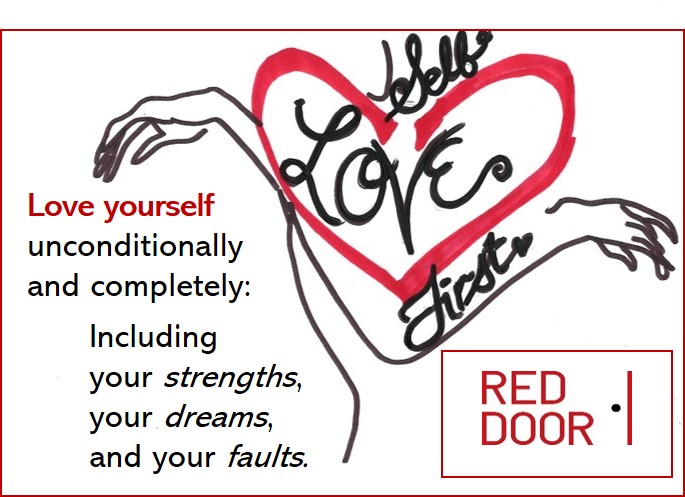
Self-Love First

selflovefirstIn the words of Drag Goddess, Ru Paul Charles, “If you can’t love yourself, how the hell are you gonna love someone else?” As a counsellor, I’ve met so many people who dedicated to demonstrating their love of others, but do not seem to demonstrate love of themselves.

When we celebrate love, prioritize to give yourself love first.

What is self-love?

Practicing self-love means ensuring that you invest enough time and energy in yourself to make sure you have enough love in your life, are kind to yourself, and are grateful for all that you have achieved in life. Sounds easy, right? Now you know this, you can wake up from the trance of unworthiness. Yet it seems so much other to love others ahead of loving ourselves.

What prevents us practicing Self-Love?

Ain’t got time for that.

You are in control of your time, so if you think that you don’t have the time for self-love, I would ask you to challenge how you have chosen to spend your time. How is it allocated? Could you give up scrolling the internet in order to create time for self-love? Could you give up your late-night TV watching?

It is important that you create time for your goals, including the goal to love yourself first. Reallocate your time, delegate tasks to others, challenge what you believe are your priorities so that you create time to prioritise yourself. I remember when my first daughter was born. She was my beautiful dolly. Each day I would take great care in the outfits she would wear out. One day my husband needed to look after her instead. He sent me a photo of them at the playground. Was my daughter really out, in public, in her pyjamas? The horror! In reality she was having fun, and he was being a great dad. The outtake was a gift, relax about her wardrobe. It was a priority which, really, wasn’t important.

Putting others, probably everyone else, first.

Running yourself ragged in order to look after everyone else is a recipe for disaster. Burning yourself out, just so you can have a rest, is a little extreme. An audit of your time may raise if you are performing activities only because of other’s expectations rather than for your own benefit. Are you a people pleaser? I want you to challenge this default. You do not need to be class mum. You do not need to pick up other people’s kids. Say no, move on, let go. Remember that in order to take care of others, you need to first take care of yourself.

Why do we do this? This dedication to others is a trap. People want proof of life that they exist. When people call on you, you may feel recognised, required, even, important. In reality your sense of self-worth can only be filled from within. On their deathbed, the dying do not regret completing that last load of dishes, they regret not pursuing their dreams or spending time with people they love. Not doing the to do list set by others.

Self-love is different from being entitled. When a person feels entitled, they believe that something should be theirs, even without effort or merit. This is not the same as recognising and acknowledging your self-worth and setting expectations accordingly.

Oh, the shame!

You may be embarrassed that self-love could be your goal. People tend not to praise other’s self-care achievements. “Look at Claire taking a break – go girl”. “Wow John, good for you that you got yourself a massage to relieve the stress in your shoulders.” Life is too short for you to be concerned with what anyone else thinks.

We are ashamed when we take care of ourselves – this is a trap. Let go of the belief that if you want to take care of yourself that there is something wrong with you. It is important that you preserve and protect the greatest asset that you possess – you.

When I love myself enough.

I find one way to tackle the topic of self-love with clients is to ask them to articulate some of the things they would do differently when they love themselves enough. Some of the common elements of self-love include:

Accept that you have goals.

It is important that you accept the types of person that you may need to be in order to achieve your goals. Many women, in the past, have been criticised for being ambitious. Don’t be embarrassed if you have a goal. When we love ourselves enough, we prioritise our development. We follow our dreams and work to free ourselves of the shackles of shame that others may try to impose.

Prioritising your goals.
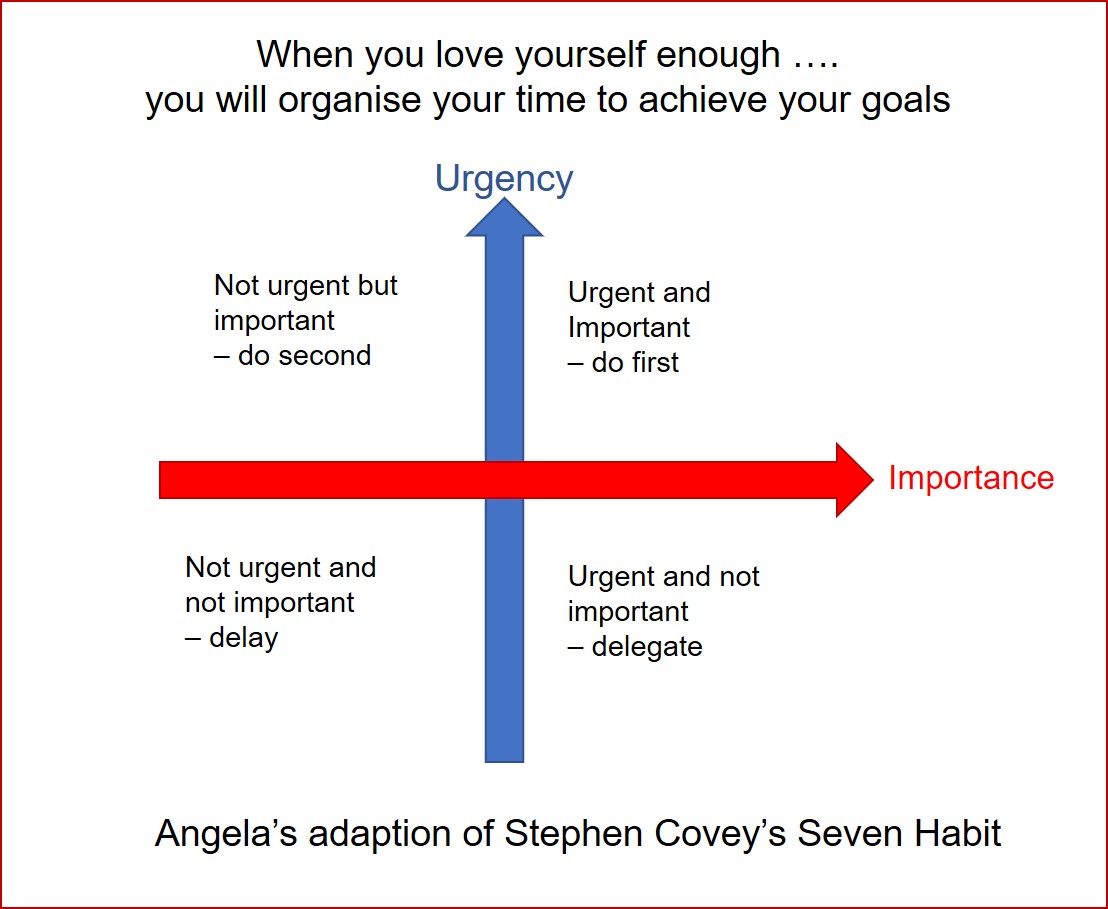
when I love myself time managementPart of a self-love routine is to set your priorities around your life goals rather than concepts of ‘urgency”. Stephen Covey in this instrumental book, the Seven Habits, outlines a method to help prioritize tasks/activities into quadrants. I have adapted this slightly in the figure on the left. We all understand the concept of urgency. The concept of importance is somewhat trickier to clarify, and you may benefit from talking to a coach our counsellor about this. For a task to be important it needs to help achieve a value for which you want to be recognised. For example, if you want to become a senior leader in your future, you will prioritise those tasks where you have been given the opportunity to shine as a leader over those where you are simply a contributing voice.

Establish a self-care routine.

A well-rounded self-care routine is essential to your wellbeing. This is an essential element of having a positive growth mindset. You deserve care, it is an investment in you. This would probably include eating well, exercising, getting enough sleep, and watching drug and alcohol consumption. How do you do, even on that short self-care checklist?

Develop an accepting self, not just self-acceptance.

Self -acceptance is saying to yourself, “I like me”. Developing an accepting-self allows us to also allow ourselves to fall down occasionally, and believe this is also okay and acceptable. This attitude of unconditional kindness towards yourself, whatever you may be experiencing helps us grow. You are a work in progress, and that is wonderful.

Add the voices of self-compassion and an inner-cheerleader, to any dialogue with your inner critic.

Our inner -critic is only just a judgemental voice who breaks us down. Sometimes it plays a role similar to a responsible parent, telling us to get out of bed and go to work, get that report completed, pay your taxes! Listening only to your inner-critic can lead to feelings of inadequacy and desire to avoid activities – denying your to do list whilst you glut watch Netflix.

When you add the voice of self-compassion and your inner-cheerleader to the dialogue the script changes significantly. You give yourself the chance to recognise and acknowledge feelings you may have around a challenge. You may produce a report you don’t really feel confident producing. Acknowledge the at many people might feel nervous in that situation. Your inner cheerleader can then add their voice. “You can do this, just give it a go”. This is when your inner critic may help – with practical advice “

Thrive rather than, merely, survive

Many of us have grown up in household with complex emotional environments. Perhaps your parents were too harsh, or not present, or you found it hard to be accepted. Almost all of us have sacrificed parts of ourselves in response to our childhood and adolescence. Perhaps it is time for you to thrive rather than just survive, overcome our box of darkness issues. IF this describes your situation you may find the articles at the end of this blog helpful.


When we love ourselves first and foremost.

When we love ourselves first and foremost, we let go of the feeling that something is wrong with us, that we are not good enough. You exist. You matter. You are loved.

About the author: Angela Watkins is a counsellor and psychologists who works with couples and individuals to help them have better relationships as well as improved mental health.

#reddoor #love  #selfhelp #selfcare #selfesteem #wellbeing #selfcompassion #goalsetting  #relationshipadvice  #relationshipadvice #relationshipgoals  #relationshipadvice

Further reading you might enjoy

Let it go, let it grow

Past hurts and old injustices can keep people stuck in old patterns of behaviour and thought traps. Bad memories can be like emotional quicksand, and can consume your thoughts taking command of your day-dreams, and leave you feeling obsessed over perceived or real losses, betrayals, and inequities.

Let it Go, Let it Grow

The box of darkness: Dealing with painful “gifts”.

The American poet, Mary Oliver wrote of her experience of death in the poem “The Uses of Sorrow”: “Someone I loved once gave me a box full of darkness. It took me years to understand that this too, was a gift.”

I must use this quote at least once a week in therapy with clients, especially those who are navigating the painful paths initiated by the actions of a loved one, a spouse who walks out, a broken friendship, the death of someone special. In our moments of shock and grief, it is indeed like we have been given a box of darkness to unpack and cope with. So painful and debilitating, action seems pointless and enormously necessary at the same time.

The box of darkness: Dealing with painful “gifts”.

.

This isn’t what I signed up for! Creating tension free work environments at home.

notwhatisignedupforI’ve written extensively about the epidemic of anxiety resulting from the novel coronavirus. A second mental health challenge is created by the stress of working and living with your partner 24/7. Even if you love your partner to bits, does working and living together all day and night, make you want you pull them to pieces?

Add to this, children off school, and some people may find that their sense of humour has left the building, even though, they are stuck at home.

Here are some coping techniques that might help.

You zone or mine? Create clear work zones for each person. It’s tempting to drift. Allocate zones exclusively for persons or activities, and even for specific activities within specified time periods. For example in our home – the master bedroom is for work calls during 9-6. Not all calls take place in that room, but if you require privacy it is to be respected there. Asking for silence in the lounge is just not realistic.

Celebrate the end of the day: Celebrate the work of the end day with a change of activity. This is now partner time or family time. Go for a walk. Play a game. Talk. Everyone working from home can be stressful, so check how your home-based-workmates are doing.

Remember that experiments are imperfect: We are inadvertently participating in a countrywide “work from home” experiment, for all family members. Even if your organization has a robust business continuity plan to activate, there will be a number of tweaks required within our new reality. In my past life I contributed to various business continuity plans, but at no time did I consider that I would have to build in  a “hands on” parenting aspect that novel coronavirus has introduced.  Your employer is also finding there feet in these uncertain times, evolving how they continue to provide services to their clients, and so their expectations of you may change day to day. Sometimes it seemed that remote work would be impossible, only to find this is not the case at all. 

Schedule flexibily: That said scheduling might help create some order in the chaos within your home. Try to create some structure – who has calls, and when when? Who will take care of shopping or dinner? Which parent will work with the kids, and when? Schedule only one or two days in advance, and remember it can all change. That is okay.

Kindness is king: You may feel anxious because of Covid-19. That is to be expected. It may be inconvenient to have to share your lounge office with your partner. You could become irritated. The situation may be irritating. Regardless you choose how you respond to any situation. Demonstrate kindness, it pays greater dividends in the long run.

Be aspirational: Remember this too will pass, every person encounters challenges in their lives. How we respond to these challenges determines how well we will deal with the next challenge (and there will be one). Think about the values and attributes that you want to be admired for possessing – because this is the time to demonstrating them.

Or just live, day-to-day:  If you are not coping – that’s okay too. We all fall down sometimes. Tomorrow is another day.

Lots of love, Angela


If you are overwhelmed or worried about your ability to cope at this time our counsellors are still around during the crisis. Send an SMS to 93785428 or email Angela at reception@reddoor.hk and we will try to help.

Also consider to read (or even re-read) our article on coping with anxiety in the times of pandemic. https://reddoorhongkong.wordpress.com/2020/02/05/the-ultimate-cure-to-the-current-pandemic/