
Volunteer for better mental health

volunteer High School students pursuing the International Baccalaureate certification are expected to participate in CAS (Creativity, Action, Service) activities. The goal of these activities is to help children develop a holistic well-rounded perspective to learning and becoming a member of the community.  The activities are mandatory. Outside of CAS, should students (of all ages) be encouraged to participate in volunteering activities?

One benefit of volunteering is to build a CV, and consequently to improve your”chance” to gain entry to an elite university. I am not encouraging you to push your child into volunteering as part of a helicopter parent or over-parenting agenda, but rather to help them explore volunteering as a means to develop independence, resilience and empathy. These traits are predictors of success in life, not just at university.

Psychological benefits of volunteering:

World-centered vs self-centred

Exploring the plight of others helps teens see that other people experience significant challenges, helping them see the world outside of their secure and (frequently) privileged  lifestyle. Regular voluntary work increases the development of empathetic and altruistic behaviour. The voluntary action of giving your time and energy to help others aids in the development of compassion and gratitude.

Improved psychological functioning

Volunteering helps in reducing stress and anxiety, as connecting with others encourages proactiveness, wards off loneliness, and helps to combat the growing psychological culture of individualism and self-absorption.

Gain a sense of satisfaction

One of the primary psychological benefits of volunteering is the sense of accomplishment and self-satisfaction that accompanies working to make a positive difference.

Health Benefits 

For both adults and teenagers, research from the United States by Federal Government’s Corporation for National and Community Service and The University of British Columbia’s Faculty of Education and Department of Psychology, indicates that people who volunteer regularly experience better cardiovascular and mental health, including happiness and resiliency. Your child will live longer and be happier.

Create positively disruptive internal dialogue

Helping others provides teens with a valuable sense of purpose and meaning, allowing them to identify the morals and principles that they hold in high regard and then act upon them. Being aware of one’s priorities becomes rewarding once you are able to live those values and believe that you are channelling your time and efforts to make a difference. Therefore, instead of internalizing what you ‘should’ and ‘would’ do, start tackling what you ‘can’ and ‘will’ do to make a change.

For young people today, working for a charity is generally not seen to be a serious career option or even a legitimate tool for progress. However, the mental health benefits, although still a novel concept, far outweigh the overly simplistic view that volunteering is only a stepping stone to other career options. Despite this, there are a huge variety of ways for someone to serve and help others, whether you sort donations for a local charity or assist caring for children in an orphanage, both big and small acts reap psychological benefits.

You will often find that you will get more out of it than you give.

Teenagers are not aliens

22032017115504-0001

Teenagers Are Not Aliens

While it may sometimes feel like your teen is from another planet, adolescents are not, in fact, an alien species. They are, more simply, a misunderstood one.

If your teen is under 18, legally, they are still a child, and you are responsible for guiding them. As uncomfortable as it might be, take the lead, take control, and help them navigate this challenging stage until their brains are fully developed and capable of independent reasoning.

Understanding the Teen Brain

To truly understand teenagers, it’s essential to understand their developing brains. Until recently, society considered teens as “little adults,” but as detailed in The Teen Brain by Frances Jensen and Amy Ellis Nutt, this is far from the truth.

From a neurological perspective, the teen brain is only about 80% mature. The finely tuned connections in the brain’s wiring are still forming. During this period, their brains are highly receptive to learning and excitement. The neurons at the back of the brain, responsible for sex and excitement, are well-connected, but the frontal lobes—crucial for rational thought, self-awareness, risk assessment, abstract thinking, and planning—are still developing. Jensen likens the teen brain to a sports car that’s revved up but has nowhere to go.

Teens are also expanding their knowledge base, in a phase characterized by great plasticity, offering significant opportunities for growth and learning. However, this open brain is also more responsive to dopamine—the neurotransmitter that makes us feel good and fuels desire, often leading teens to seek out stimuli that boost dopamine levels, like alcohol and drugs.

The Teen Personality: Excited, Curious, and Irrational

Putting it all together, a typical teenage personality can be described as highly excited, often learning easily but struggling to articulate themselves, resist stopping an activity, or see things from another person’s point of view. It’s like a second “terrible toddler” stage.

One memorable example from a recent event involved a parent, an early childhood educator, who said, “I suddenly realized that my teen daughter, who was acting rude and obnoxious, wasn’t looking for a fight. Like a toddler, she was seeking comfort. When I offered a hug, she collapsed into my arms like she did when she was little.”

Tips for Navigating the Teen Brain

Here are some recommendations to consider when communicating with and supporting your teen:

1. Create a Time to Talk

Don’t assume your teen is ready to engage just because you are. Set a specific time for conversations and give them space for silence—remember, “Silence is never silence,” as Irvin Yalom notes.

2. Get Real with Facts and Stories

Teens respond best to concrete data and relatable stories, especially when discussing sensitive topics.

3. Prioritize Sleep

Sleep is vital—teens need at least 8.5 hours nightly to support brain development and stress relief. If they need to wake at 7 am, they should be in bed by around 10 pm, with devices turned off by 10 pm.

4. Use Reinforcement and Support Memory

Since planning and memory are still developing, have your teen write down tasks and repeat instructions to reinforce learning.

5. Limit Distractions

Teens are not great multitaskers, and their easily excitable brains are prone to distraction. Limit messaging, videos, and other distractions during study time. Recent research suggests over 80% of teen driving fatalities involve some form of distraction—often their phones.

6. Help Install the OFF Switch

Teens find it hard to stop activities due to dopamine sensitivity. Teach them to turn devices off and set boundaries on screen time together—discuss and agree on appropriate limits.

7. Perspective Matters

Because self-awareness is still developing, teens may misinterpret your tone or intentions. Be mindful of how they perceive your communication, and ask whether they understand and feel understood.

8. Prioritize Safety

As outdoor activities increase, revisit safety practices with your teen, especially regarding socializing, alcohol, and drugs. Explain how their teen brains are sensitive to substances and work out safety plans. Role-play scenarios, like recognizing when a friend has had too much to drink, and encourage them to seek help when needed.

9. Discuss the X-Plan

Consider talking through options like the “X-plan”—a safety plan designed for emergencies—so your teen knows how to handle difficult situations.

Final Thoughts

I could go on about communication techniques, but I’ll save that for another time. Parenting a teen can be challenging and lonely—but also full of shared laughter and growth. In our workshops, parents often find comfort in knowing they’re not alone in the frustrations and joys of raising teenagers.

Keep striving to understand and support your “alien-teenager.” Remember, we’re all in this together.

X-Plan: Giving your kids a way out (#xplan)

I could write even more about effective communication techniques with teens but I’ll save that for another blog. Parenting a teen can be challenging and even lonely, I noticed in our regular parenting-a-teen workshops that the empathy and frustration that the parent-participants shared, and the laughter as well. Keep going in your search to understand and best support your alien-teenager, and remember, we are not alone.

#parenting

#parenthood

#parentingtips

#raisingteens

#postiveparenting

#parentingteens

#parentingadvice

#teenager

#parentofteen

#reddoorcounselling

Note – an earlier version of this article was published in 2019.

Bullying at school – How to protect your child.

Bullying is generally defined as intentional abuse or intimidation having a component of real or perceived power imbalance and repetition over time. Bullying includes actions such as verbal name calling, physical aggression, social exclusion, psychological stalking or harassment, or through cyber platforms including social media, WhatsApp and email.

Bullying is a serious problem. The prevalence of bullying in schools varies with study place or group. In general, bullying tends to increase through the primary school years and peaks in middle and early secondary school years.

Bullying is being recognized as an important public health issue internationally. The rising phenomenon of bullying is posing enormous challenges to the school educational system in several countries worldwide causing a negative effect on academic stability, student health, well-being, and safety.

Kids bully for a variety of reasons including that they have been bullied (at school or at home); bullying has been supported in particular environments in the past (including mocking by teachers in schools), bullying is not directly addressed and this looking the other way has demonstrated that bullying can be an “effective” tool of controlling other people.

Whilst schools say they have a zero tolerance to threatening behaviour dealing with bullying is not as simple as it might first appear. Many factors make it difficult for schools to deal forcefully with incidents of bullying.

For example, often bullying occurs off campus. On campus bullying is usually regarded within the remit of the school to deal with. When bullying happens between members of a school community, but off campus, sometimes schools see this as outside their jurisdiction. This is sometimes the case with online bullying. If this happens to you, remember that schools often have a communication and technology use policy. It may be good to read the policy so that you can involve the school actively if cyber bullying is a stated infraction of their rules.  

Bullies are people too. Sometimes people who are bullying are actually quite vulnerable individuals themselves. They may be being bullied (in school or at home), they may not have strong social skills in order to better express their needs. Whilst they are dys-regulated and may have reasons for their outbursts and controlling behaviour, this doesn’t dismiss them from some accountability from their actions.  

There is a tendency to blame the victim in aggressive situations. Sometime individuals look to the victim of a crime to see how they have contributed to the situation, not only how they feel as victims of the bullying. We often do this ourselves, as a may to make sense of situations. Whilst no one may be blameless in an incident there are lines of acceptable behaviour that we need to draw and communicate what is poor behaviour, from aggressive behaviour.

Supporting your bullied child/ teen.

Listen to your child – They may want to ignore what has happened. There are times when you can ignore bullying, such as when a bullying person is simply trying to get a rise out of you. Remind your child that no one has the right to harm them.

Document your experience – so that you are clear about what is happening. You want to include if this is a one-time situation or has occurred on a repetitive basis. Also document the impact – was it perceived by your child as hostile or threatening. Include details of the bullying as fully as you can. 

Work collaboratively with the school. Whilst you can assert that you expect the school to take action, remember it will be more helpful to work collaboratively with them not attack them for your child.

Consider ‘retribution’. What do you consider an acceptable “correction of the bullying behaviour”? Do you know, and does your child know, what an appropriate apology looks like for their victim? For example, in a recent example I worked through with my own teen was cyber bullied by a person at her school – she detailed her desire, “he can’t just say some vague sorry on line, he needs to say what he did was wrong and that he understands why it was wrong” . These components of an apology mean, saying a sincere sorry, understanding why the person has done something careless (personal responsibility), understanding the impact on the victim. If you would like to understand more about what makes a good apology to you, I suggest you explore the apology quiz if your child is a teen. What makes an apology meaningful to them?

https://5lovelanguages.com/quizzes/apology-language

Professional support. Consider if your child will need additional help to navigate their feelings around the events.  If exclusion happened you might like to consider counselling. Many schools have school counsellors that you may have free access to. Otherwise consider private counselling. Nip any negative thought cycles or shame created by bullying in the bud. It is established that childhood bullying has a propensity to continue into adulthood and, if persistent, can leave lifelong scars. Help your child access the support to leave these incidents in the past once they leave school.   

Therapeutic exercises such as journalling and confidence building exercises can help the victim of bulling. One journalling exercise I particularly like, at the time of bullying, is one where the victim of bullying writes a letter to themselves. This helps them support themselves and, hopefully, construct a plan of how they would like to respond.

Take a break from social media. If your child has been cyberbullied encourage them to take a break from social media for a while. Cyberbullying is very difficult to contain because of Cyber bullying is different from in person bullying because it is un-boundaries, often moves faster, privacy cannot be maintained, there is no refuge for your child, the content can remain live forever if it is shared by others, and it’s harder to trace. People feel emboldened to say things online that they would rarely feel confident to express face to face. Having your child observe the speed at which gossip can spread online can be distressing. Sometimes being away from the bullying rather than observing how information can spread, can be less distressing.

Quality family time. You may like to spend more time with your child if they have been bullied. This helps to remind your child that their family is their primary source of support, and will always be there for them.

Build a bigger network of friends. Have your child spend time with friends outside of school for a little, rather than their usual school friends can sometimes help. Whilst I don’t recommend isolating from supports at school, sometimes its nice to have some distance from all the drama involved in bulling and have a nice day out where the bulling is not the only topic of conversation

Own it. Encourage your child to talk to their friends about what has happened. Bullying is, unfortunately extremely common. Sometimes your child might feel ashamed of what has happened. Encourage your child to talk openly about their experience. Their loud sharing may save another child from suffering, and possibly harming themselves, in silence.

Proactive work. Schools and counselling groups work with children to help them build some resilience to withstand bullying. Some groups, such as members of the LGBTQ+ community, and children with different educational capabilities, experience bullying at higher rates than other teens. Helping them bolster their self-esteem, learn some clever clap backs, may be of help.

Set standards. Do not accept that bullying is a normal or acceptable behaviour, at school, or at work. Check your own behaviour to see if you have been complicit in supporting the bullying of others. We can all be more aware that bullying occurs, and that we can all help to stop these behaviours.

Bullying can have long term impact. Protect and support your child.

About the author: Angela Watkins is a counsellor working with teens and adults as they navigate traumatic, or challenging events in their lives. Angela has been named the best therapist in Hong Kong. If you’d like to meet Angela for an appointment, email her on Angelaw@reddoor.hk

Useful Books on bulling:

De Lara, E.W. (2016) Bullying scars: the impact on adult life and relationships.

Lohmann, RC, and Taylor, J. V. (2013) The bullying workbook for teens.

Martocci, L (2021) My bullied past – why does it still hurt?

Mathews, J and Mathews, A. (2011) Stop the bullying.

Payne, K, J., and Llosa, L.N. (2022) Emotionally resilient tweens and teens.

#teens #teenmentalhealth #reddoorcounselling #bullying #redddoorcounselling

Bullying: How long does it hurt?

Many adults still experience the pain and anxiety associated with bullying incidents from their past. Why can’t they just get over it.?

The effects of bullying are not left behind at school:

When we explore books on bullying (see the end of a few that I recommend) these long-term effects can include Trauma (Adult post bullying syndrome), considering self-harm and suicide, continued feelings of rejection, becoming a people-pleaser, depression, remaining extremely self-conscious, remaining indecisive and anxious, feeling anger, maintaining revenge fantasies, living in denial, having difficulty trusting people, and even bullying others yourself.

The reason that bullying remains important is that the incidents themselves tend to echo a longing for acceptance and belonging, and these incidents remind us that there are threats to our sense of acceptance and belonging – feeling powerless, feeling humiliated, feeling insecure, feeling ashamed. The script we may say to ourselves is “ I want to believe that I am xxx but my experience indicated that I am yyy”

What is bullying?

Bullying is a challenging concept to define. In academic literature many aspects of bullying are argued, for example academics debate aspects such as if a threat needs to be clear, if exclusion is a different or the same as bullying, if a person who has been bullied can also be considered a bully.

In simple terms bullying can involve ongoing actions that are deliberate violations of one’s dignity. (Martocci, 2021). Many people when recounting stories of their personal experiences are reminded how powerless and humiliated, they felt

when they recount their personal historieis of being bullied

Bullying is different from geopolitical atrocities, where people are under physical and deep psychological threat. That doesn’t mean that we should dismiss bullying as it is not as severe as living under threat of war etc.

How can we recover?

When bad events happen to us we can sometimes blame ourselves for what happened, instead of placing bad behaviour at the feet of the people who are not behaving nicely. We can become ashamed of the events, and ourselves.

Individuals can remain obsessed thinking about the bullying incidents, can deny the impact of the actions on them, live in an escapist fantasy where they bullying never happened, or remain angry about what happened. We need to work through these feelings.

If you are still hurting from those events of the past, you might like to consider journalling your feelings around those incidents and responding to specific prompts that we have outlined that can help you work through the impact that those incidents had on you, and may continue to shape your experience. If journalling is not your thing, then consider talking to a counsellor. You will be asked to reflect on those events, and whilst that might feel a little uncomfortable at first, we use these reflections to help understand how bullying has shaped your world view, self-concept, and reactions to conflict. When we explore and understand how these incidents have impacted you, and continue to drive your reactions, we can start to rewire your thoughts, feelings and fears.

Start to heal – reflection exercises

Prompts you might use to help you constructively reflect on your bullying experiences. Journalling is an important process within the counselling realm. For more about the benefits of journalling see our articles on this topic.

Reflective questions that could work as journal prompts.  These prompts will also be helpful if you experienced bullying at work as an adult, not only if you are looking to overcome bullying experiences from your youth.

* What do I let my bullying incident[s] tell me about my value and my sense of belonging?  What is your narrative around what happened. What do you tell yourself about how you were feeling int the moments around being bullied. Did you feel powerless? Humiliated?

  • How did you respond to being bullied? Did you act in denial? Has it made you become depressed? Have you escaped into another world?  Did your shame around these events render you mute to talk about them? What has been good/bad for you about the way you chose to respond?

    * What was unfair about that situation?

    * How has this incident affected your self-confidence?

    * Approaching yourself from a perspective of self-compassion. Can you tell yourself for the components that you might be responsible VERSUS the parts that you are definitely not responsible for. Think about what you would have wanted to happened during an incident of bullying. Maybe you wanted someone to accept you, instead of their perceived rejection of you. How can you give yourself the acceptance you did not receive in that moment?
  • * Do you hold yourself responsible for what happened? Is this a kind way for you to treat yourself?


    About the author: Angela Watkins is a counsellor at RED DOOR counselling in HOng Kong. Angela works with adults and teens exllporing their experience of trauma. For appointments with Angela contact her via email on Angelaw@reddoor.hk

Books on bulling

De Lara, E.W. (2016) Bullying scars: the impact on adult life and relationships.

Lohmann, RC, and Taylor, J. V. (2013) The bullying workbook for teens.

Martocci, L (2021) My bullied past – why does it still hurt?

Mathews, J and Mathews, A. (2011) Stop the bullying.

Payne, K, J., and Llosa, L.N. (2022) Emotionally resilient tweens and teens.

#teens #teenmentalhealth #reddoorcounselling #bullying

How to be a good friend when someone is going through a divorce.

Supporting a friend whilst they go through divorce can be challenging. It is hard to witness people in pain – which is a major component of the divorce process. At times it may be frustrating. You may consider that your friend is making mistakes in their negotiations. You may be of the belief that they are being ‘ too dramatic’ about their circumstances. You may disagree with their narrative of what happened in their marriage. As divorce is an emotional process, your friend might seem, ‘too much’ for you to handle sometimes.

It takes a special kind of friend to be able to support someone during a divorce.

As a counsellor, I help individuals and groups navigating this process. Our RED DOOR proprietary research on divorce indicates that having good friends is one of the most important supports that divorcees say helped them navigate the process positively. It’s great when friends turn up in support of the divorce.

In some instances friend can, inadvertently, make a painful situation worse. In our Iron Fairies support group, a frequent topic of discussion is how divorcees have experienced a second episode of betrayal, first from their marital partner, and secondly, from their closest friends. Friendships make the divorce process both easier, and harder.

The following blog combines my learnings from supporting people through divorce, as well as listening to groups of people share how their friends have helped, and otherwise. If you have a friend going through divorce, I respectfully request that you to consider how you are helping your friend navigate the process, and contemplate if some of your actions might be causing hurt.  

How friends help divorcees navigate the divorce process.

Empathy

Empathy is the ability to emotionally understand what another people feel, see things from their point of view, and imagine yourself in their place. By walking in the shoes of your friend going through divorce, you might better understand their fears, anger, and hurt.  When we listen and really try to understand our friends’ feelings and their experience we can be of more help, if we choose to.

You don’t have to fix a situation; you just need to try to understand it.

Patience

You may fiend your friend’s pain and grief exhaustion to be around. People going through divorce are going to explore a plethora of emotions, and occasionally feel overwhelmed and dysregulated. It is common to feel angry, stuck, scared, sad, tired, and defeated. Helping your friend as they run this emotional gauntlet is difficult. Compassion fatigue is a real thing.

It is helpful to understand that divorce takes longer than most people appreciate. A “quick divorce’ is probably a year to 18 months in duration. And your friend’s pain may not end when the decree nisi is received.

A note to those going through divorce – You will probably be surprised by who turns up for you during your divorce. Most people are unaware of the pain of divorce unless it has happened to them directly. Those who have been through the process may become your closest friends during this challenging time.

Be patient with your friend, and understand that for some months, the divorce may be all that they talk about. Give them some time.

Many divorcees express that they fear their friends become “fed up” listening to their updates about divorce. Understand that you can also set boundaries to say, especially after you have listened to their struggles for a good few months, to draw a line and suggest that you want to have other topics to discuss as well as their divorce. This is fair.

However, don’t block the topic of divorce completely, if your friend trusts you, invalidating their greatest pain and need will hurt them.

Define the type of support that your friend needs

One form of boundary that you might like to define with your friend going through divorce is the type of support that they need at this time. They may need tangible support – helping with activities. You could be that someone who goes to court with them, helps them pack boxes, or look after their children on occasion.

Most divorcees need significant emotional support. If this is too hard for you to provide, for your own reasons, provide practical support instead.

Reputation protection

Unfortunately people like to gossip. A couples’ marital breakdown is a juicy piece of news for others to babble about. Don’t join the party. Disengage.

Divorce has enough challenges – the grief of love lost, the need to conduct tricky negotiations – without the humiliation of being the subject of idle chit chat. If you encounter gossip about your friend, shut it down. Remind people how distasteful it is to engage in malicious talk about a person in pain. Then leave.

A person’s ex partner will have their “version of events” which could be slanderous of your friend. Defend your friend without getting caught in the reeds of scandal. For example, you can simply say, “You certainly have a great story that you are running around telling”, and leave it to that. Those within earshot will get the message.

What actions may hurt your friend, directly or inadvertently.

Switzerland*

Your friend may ask you to stop talking to their ex-partner. What do you think of such a request.  might feel convenient, and more mature, to say that you want to stay neutral. After all, you might think, “every story has two sides”.

The chump lady, a regular commentator on surviving infidelity, calls friends who express a desire to be neutral “Switzerlands”. It is not meant as a compliment. When a person is struggling in pain, people rarely seek out “neutral” support. They want to feel understood.

In my experience as a counsellor, individuals going through divorce need to feel that their friends are on their side. Only when this basic tenant is in place do you have the validity to shine light on your friends choices. Your friend is vulnerable and will possibly surround themselves with people who’s loyalty is clear.

Wanting to remain neutral may be more about your comfort level. It is difficult to negotiate social relationships with both parties in a divorce. Friends that try to play Switzerland sometimes inadvertently given key information away. Simply talking to both parties in a divorce puts you in a position where you might hold information best not shared. Remember you are not a qualified, or invited, mediator.

If you in a couple who were couple friends with the divorcing partners, you will need to be very careful about alliances. Often one of each couple, support different people in the divorce. If you find yourself in this emotional matrix, be careful regarding what information you share with your romantic partner. It is hard to know the value of information when tricky negotiations are taking place.

Comparison

Other peoples drama can seem unattached and difficult to understand, as its not your drama. You may try to analyse your friend’s relationship so that you can find out what went wrong. Check your motives for doing this.

What we see in practice is that sometimes people are looking what to avoid in their own marriage when analyzing their friend’s marital breakdown. Inadvertently, you may be looking to blame your friend for their marriage breakdown, so that you can, within a cognitive bias, say your relationship is stronger than theirs.

For example, you might consider, “Amy’s husband left her. Amy refused to take on work outside the home and the weight of supporting the family fell onto Jim alone. I have a good job so its unlikely that my partner will leave me.”

Its tough to not compare, just reflect, are you helping, or hurting, or even simply trying to provide yourself with an illusion of “security” through this comparison.

Betrayals

Many divorcees experience perceived betrayals by friends during the divorce process. Through our support of people going through the process of divorce we hear numerous accounts of friendship betrayals including:

Sharing key information about the divorcee with their ex partner.

Flirting with the divorcee’s ex partner.

Expressing frustration with the divorcee with others, without highlighting to them that you need some space from their divorce process.

Using your friends divorce as a tool against them when you are competing for a job opportunity.

Setting the ex partner up on dates.

Keeping secrets about their ex partner from them. And gossiping to others about what you know.

Pretending to Switzerland*

For many people the process of divorce can be humiliating. We need to be careful not to kick our friends with when they are down.

It is not easy to be a good friend during the divorce process. It takes a special person to help navigate the pain, fear and necessary change. If you can be that person for your friend, you are to be admired, congratulated, and cherished.

About the author- Angela Watkins is a counsellor working for several years with individuals going through divorce in individual and group therapy (the Iron Fairies). To contact Angela for session information contact angelaw@reddoor.hk

  • for more information about Switzerlands, read Leave a cheater, gain a life: the chump lady’s survival guide by Tarachy Schorn.

Red Flags – Are they in you or in them?!

Anyone who has been in the dating game or in a toxic relationship knows we can talk endlessly about red flags. We carefully analyse and deconstruct our dates, we pull apart alarming behaviour with surgical precision… but somehow still never see that the best red flag warning system is within us!

This is especially true for those of us who have spent countless hours telling your friends about your partners upsetting behaviours but always end up staying with them. You offer up explanations on their behalf, accept excuses, and have heard the all too familiar ‘just dump them already!” from your friends. 

Here’s the thing – it’s not them. It’s you.

A person can be a carnival of red flags, but if you’re in a vulnerable headspace you may very well be letting yourself get wrecked by a toxic relationship. Someone could be waving scarlet, crimson and fire engine red blankets in your face, and you might just think, “yeah but they said they’re sorry, and that this won’t happen again!” 

Instead of looking at their red flags, look at what’s happening internally. The only red flags that matter are the ones in you. How does your partner make you feel?

Internal Red Flag Warnings

  1. Feeling like you have to walk on eggshells in fear of their reactions.
  2. Avoiding expressing your feelings or requesting a need because you don’t want to upset them, be needy or ‘too much’. 
  3. Not telling your friends what they’ve done or said to you, because you don’t want your friends to hate them. You feel ashamed that you tolerate their behaviour. You mask how your relationship is really going.
  4. Making excuses for them and justifying their behaviour, to yourself or to others. 
  5. Feeling the urge to go through their phone or to control them (because you just don’t trust them).
  6. Telling your friends “But when we’re good, we’re so good!”
  7. Telling yourself or others that your partner would be so great, if only xyz didn’t happen.
  8. You’re afraid to leave because you’re afraid of being alone. You think it’s better to be with them than be single. 
  9. The pain of staying in the relationship is tolerable because at least you’re avoiding the pain and inconvenience of a break up.
  10. Trying to change them into a version of themselves that doesn’t keep hurting you.
  11. You find yourself thinking and saying things like, “I can’t live without you”, “I have nothing without you.”
  12. You’re preoccupied with the fate of the relationship. This thought takes up a lot of time in your head and in discussions with friends. These thoughts can be intrusive and/or obsessive and may include a fairytale ending or a disastrous break up. 
  13. Continuously forgiving harmful patterns of behaviour without seeing any change. This can look like not bringing up their behaviour or repeating the same old conversations about it.
  14. Acting fine with their poor behaviour, betrayals and boundary violations because you’re afraid standing up for yourself will lead to break up.
  15. Thinking that there is one solution that will fix everything, such as marriage or a baby!
  16. You’re more concerned about whether they like you, rather than whether you like them

When to seek counselling

If you don’t know how to end your relationship, then counselling can help you build your self-worth to make it possible for you to choose yourself. We can help you lead a happier and fulfilling life by building your self-esteem and mapping out how to build a social support network. 

If you find your feelings of sadness, hopelessness and apathy are overwhelming you then counselling would be beneficial. If sad feelings start disrupting your daily life (cancelling plans, withdrawing from friends, calling in sick to work) or if you cannot see a way past this (feelings of hopelessness and/or helplessness) then we can also help. Contact us at reception@reddoor.hk

Ok there are a million red flags in me…  but it’s so hard to end this.

If some or much of the above list resonated in you, you’re likely stuck in a toxic push-pull relationship. Your friends have told you to end it but for some reason you just can’t. 

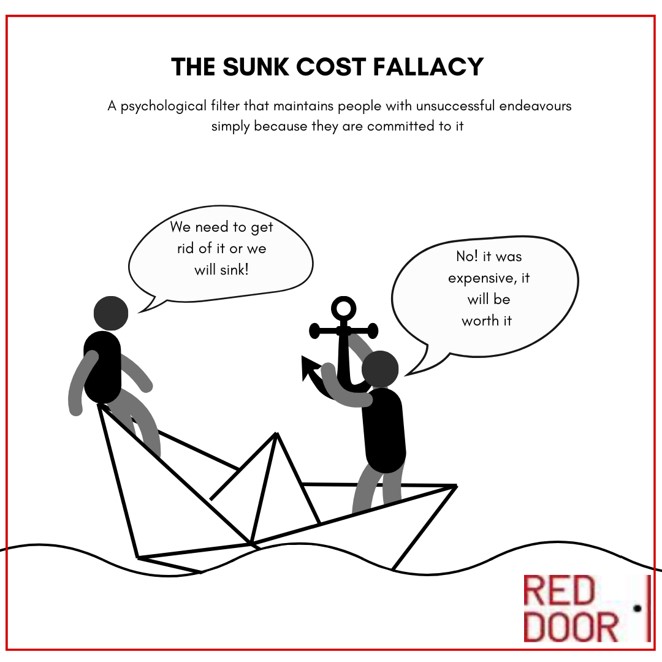
Ending a toxic relationship like this is very difficult. There’s a sunk cost fallacy where we have spent a lot of time and/or tried our utmost to make it work, so we think we have to make it work. This just isn’t true. 

Human beings like routine and familiarity, and unfortunately it means we can stay in situations that are familiar but miserable. We become comfortable in this misery, simply because it is routine and what we are used to. 

Ask yourself these questions:

  • What decisions/choice have you made about your relationship that were made from fear? How would those choices be different had you made them from self-love?
  • Imagine you have bucket loads of self-respect and self-esteem. Now what would you do?
  • What would you advise your friend?
  • What does choosing yourself look like? Write it down.

And then?

Only you can choose to walk away. But the below can help you with this process.

  1. Make a plan. Write it out step by step. 
  2. Stay firm in your decision to leave. No more oscillating. 
  3. Cut off all contact, including social media. Delete their number and block their socials. 
  4. Lean on your support system, or build one. See your friends, make plans, start or continue an old hobby. Practice self-care. 
  5. Use therapy as on-going support throughout this difficult time.
  6. Know that there ARE other people out there that you can be happy with. Know that you deserve a lovely, happy and respectful relationship. 

Sometimes our brains can tell us to stay in familiar misery, but our instincts are trying to warn us the relationship is just bad. Don’t wait for your partner to turn into a full-on villain to make it easier to leave. You must choose yourself and listen to your red flags, they’re telling you something for a reason!

About the author: Kirsteen Thain is a counsellor at Red Door Counselling. Kirsteen’s work focuses on helping individuals change patterns of behaviour that have lead them to feeling stuck – at work, in relationships, and in life. If you would like to organise a session with Kirsteen email our reception at reception@reddoor.hk or send a whatsapp or sms to our practice manager on +852-93785428.

5 principles that make couples’ communications click.

How highly do you rate the communications within your romantic relationship? How well do you rate your own ability to communicate? I’ve been a couples’ counsellor for more than 7 years, and in this article, I am happy to share 5 principles that I’ve seen and learned that will improve your communication bond.

Communication is not just a component of your relationship; it is the one of the greatest diagnostics predicting the success of your relationship. Couples who have conversations that include contempt or criticism, are more likely to experience relationship failure. What can couples do to improve or establish positive communication patterns in their relationships?

Be Curious/Be Generous.

When couples come to counselling one of the regular traits that we, as counsellors see, is a lack of generosity when describing each other’s behaviours. One partner often tells us what their partner thinks and why they do the things they do. When we challenge these perceptions, they are revealed as just that, perceptions rather than realty. Why do we jump to these conclusions, thinking that our partners thoughts and actions are constructed to cause us injury? Firstly, one reason is that  we have lost curiosity about what our partner is really thinking. We jump to conclusions instead. And then, secondly, because we jump to conclusions, we assume motive. Often acts that upset us were not conducted as a means to deliberately hurt one another. Often hurt occurs out of lack of thought, or neglect of feelings, or concern for own needs. There isn’t a specific malicious intent.

Ask rather than assume. Be curious to explore what your partner is thinking. Be generous when considering their motivations.

It’s our commitment to being curious rather than correct in a situation, that allows partners to turn towards each other rather than turn away from each other. This process is referred to attunement. You can spend a lifetime being curious about the inner world of your romantic partner as well as sharing your inner world. It is exciting when we practice and receive love through the process of attunement. This helps couples greatly improve their communication, and their relationships.

You don’t have to “totally relate” and agree with your partner. Simply showing your partner that you are willing to listen and understand, rather than judge can change the dynamic of your relationship.

Feeling accepted by one’s partner is a substantial gift. Acceptance by your partner goes a long way towards building a sense of “we” as a couple. When we listen and understand our partner, we model acceptance.

Bring your best self to your communications with your partner

Unfortunately, we often present the calmest, warmest, most rational versions of ourselves to complete (and sometimes unimportant) strangers, whilst our romantic partners see the worst of us. When you stand back from the relationships in your life, who gets the best version of you?

When we give our romantic partners the best versions of ourselves being curious and generous may become a bit easier to do.

When you are being your best self with people are you critical? With our partners it helps to dial down your criticism. Definitely stop using insults. When you do feel the need to address your partners behaviours avoid comments that use the term “You”, rather make I statements. I statements saying “I want, I fear, I feel”, help you express yourself empathetically with emotional awareness. Avoid saying “I think”.

Remember that constructive criticism focuses on actions, and data, rather than sweeping character judgements.  If you have a tendency to jump to conclusions about the motivations of your partner, I encourage you to talk about what you see going on, without your assumptions. Collect data on how often an event occurs. This helps you avoid the destructively descriptives of “always” and “never” which often lead partners to feel defensive. When we say, “You never take out the rubbish”, you have not acknowledged the one time your partner did. If you want to ask for help, ask for help, and give proper data.

When you are the best version of yourself, could you consider praising behaviours that you want to experience more frequently rather than criticising behaviours that bother you. Saying something like, “I really appreciated that you listened to me last night when I told you about my problems at work. I’d feel valued if you could do that more often”, rather than “You listened to my work problems for one whole minute, why can’t you be more supportive”.

Understand that conflict is normal, and you can respond to conflict in a healthy fashion.

Many couples believe that conflicts are actually a reality of relationships. Conflicts are not a sign that you have married or partnered with the wrong person. Rather, conflict teach us how to love, support and encourage each other.

According to the Gottman Institute, the landmark couples therapy programme in the US, the difference between masterful, successful couples, and those who break up, is how they deal with conflicts that occur in their relationships. Successful couples treat their partners as friends with respect and warmth, starting difficult conversations with soft start ups and attune to their partners’ dialogue.

You don’t have to win a fight, rather see the issue that you are fighting about as external to your relationship. There is you, and your partner, facing the problem. When the problem becomes external to you personally you can step away from a point scoring mentality. Rather than winning you can explore issues and allow your partner to contribute, and perhaps even influence you. You might agree to meet in the middle on an issue, meet on their side, or even meet on it later, when you are able to resolve an issue in a calmer fashion. We can be flexible, we can negotiate. When we treat conflicts as external problems for our team of “We” to be solved, the relationship wins. Glorify the struggle as problem that “we” can solve.

Accentuate the positive.

Sometimes couples can become trapped in negative communication cycles after a conflict. To break this cycle, and even improve the general temperature in your relationship, commit yourself to focusing on the positive practices for a day, or a week.

Successful couples communicate more positively than negatively. The Gottman Institute (see books by John Gottman below) suggest that successful couples communicate positive sentiments at least, 5 x more than the communicate negative sentiment. Sometimes even more.

A dedicated period of positive communication, both verbal and non-verbally, helps repair some of the hurt in a relationship. If you and your partner can commit to even 24 hours of positive communication, you may see a significant shift in your perception about your relationship.

During that day try to share compliments and appreciation for the actions of your partner. Express fondness. It will help if both of you commit to this exercise. In session, we often see couples waiting for their partner to ‘go first’.

Talk Less

When you are talking during a period of conflict, or negotiation, consider talking less. Overtalking on your part can lead to under listening from your partner. When you are talking with your partner, try to make your point in 3 sentences or less. Focus on understanding their perspective rather than getting the result you want. Remember the main goal is to improve your relationship, rather than win an argument.

In order to talk less you need to firstly stay focused on the issue at hand. Don’t kitchen sink during a discussion. Kitchen sinking is a form of complaining where one of the partners decides to ‘throw everything in but the kitchen sink’, meaning every time an argument happens, they decide to list out every complaint and mistakes of their partners. This technique is tempting to use when winning becomes more important that resolution.

Secondly, try to really listen. Try empathetic listening (for more see the book, I hear you).. Empathetic listening happens when we listen with curiously, we give our full attention, invite your partner to open up, observe their verbal and non-verbal communicative tools, encourage our partners to continue talking, and offer validation on their experience.

Listening is not just about hearing and repeating what your partner says, it is about validating what has been said. Offering validation involves demonstrating that you understand your partners’ experiences. You might say something like, “I can see why you felt that way in that situation”, or “I think a lot of people would feel as you do in these circumstances”. Try to stay focused on understanding your partner’s experience. Try not to jump into “fixing” mode, or matching (or surpassing) with an example from your own life.

You don’t have to be silent. Balance in conversations is important. If you feel that your partner talks a lot more than you do, you can ask if you can set a 1-minute timer to talk. This might help both of you focus on your messaging. Remember, keep it kind.

Our romantic relationships are important. Often, we just expect, because there is love, that communication will be easy. Good communication takes work. Make the investment, it pays significant dividends.

About the author. Angela Watkins is an experienced couple’s counsellor working out of Red Door Counselling in Hong Kong. To contact Angela to talk about your relationship email her at Angelaw@reddoor.hk

Useful books if you want to learn more about communication in your romantic relationship:

  • Chapman. G.  (2010) Things I wish I’d known before we got married.
  • Gottman, J., & Schwartz Gottman, J. (2018). Eight Dates – Essential conversations for a lifetime of love.
  • Gottman, J & Silver, N. (2015) The seven principles for making marriage work.
  • Lerner, H. (2012) Marriage rules: A manual for the married and coupled up.
  • Richo, D. (2021) How to be an adult in relationships – the five keys to mindful loving.
  • Sorensen, M. S. (2017) I hear you: The surprising simple skill behind extraordinary relationships.

Help your teen to survive being excluded.

Being excluded, or cut off, by your friends is a fairly common experience for teenage girls, and occasionally for teen boys. This rejection can be extremely stressful for teenagers. Exclusion is such a challenge to the mental health of teenagers that we often find that it is still impacting the self esteem of many adult clients, years after they survived exclusion.

How can you help your teenager best survive this common, hurtful, traumatic, friendship event.  

Diversity the friendship base.

The reason that exclusion is a crushing emotional experience because it highlights feelings of abandonment and loneliness. Suddenly your teen has no friendship emotional “home”. If this home is now somewhere they are being ignored, we need to encourage them to move onto another environment where they can start to feel welcome again.

It is helpful to build a diverse group of friends – in school, and, out of school, in preparation for friendship breakdowns.

At the time of exclusion your teen does not need to stay within the environment where they are being ignored. Encourage them to go to their other friends at school or make new friends. Encourage them to tell others that they are being excluded. There is no shame in this condition. It is so common that many teens have experienced or witnessed episodes and empathise.

Exercise your family values

If you can, strongly support your teen at this time. This support can be as simple as spending more time together as a family when your child has been cast out of their friendship group. For example, pick them up from school and take them out for a fun dinner. Play cards or watch movies together. This reminds your teen that their family is their first and guaranteed source of support. Of course, time with friends is fun, but family is their solid, reliable resource in tough times.  

Be shameless.

Don’t be embarrassed if you are excluded by your friendship group. You may be in the wrong, or exclusion can happen for reasons you are completely unaware of. However, exclusion as group management tool is only powerful when it beats you down. So, try to not let it achieve this aim. If your friends decide to exclude you, it doesn’t mean that you are unlovable even if that is what your internal dialogue is telling you.  Remember, “Thoughts are not facts”.

Groups experience conflict. Exclusion is an immature response to difficulties. I would like to say that people grow out of it, but even some adults use exclusion in response to conflict in the workplace or with adult friends.

Call it by its name.

The problem with exclusion, especially when it conducted by girls, is that the exclusion is not clearly exercised as exclusion. Instead of admitting to excluding others, groups of individuals are suddenly “to busy” to meet up with your child after school. When we let others get away with such behaviour we are not confronting unacceptable and hurtful behaviour. Ask your teen to call it out. For example, rather than communicating to excluding friends’ messages euphemistically, such as, “I understand you are all very busy right now”, they can write “It seems you are choosing to exclude me from the group at this time”. Calling out this shameful behaviour, helps other teens consider accountability rather than hide behind excuses.
Sometimes members of a group will accept the exclusion of a group member for a few days, but when exclusion drags out, into weeks, teens have to face their own consciousness that this is a behaviour they are choosing to do, and that it is going on longer than they may have been comfortable with.

Seek support

Offer your child access to counselling at this time. A good counsellor will help them identify and separate their responsibilities from other people’s behaviour. The counsellor can help them identify the subtle rules of being a member of any group, and decide for themselves if they are willing to pay that price to maintain those friendships.

As painful as exclusion events are on teens these episodes are helpful to review key individual identify concepts such as what your teen stands for, what they believe they need from others, what they want to achieve in the future, and their values. We want our children to be forged into stronger versions of themselves through this unfortunate adversity.

The counsellor might work to help your child build the skills to help build a diversified group of friends, helping them avoid the negative impact of exclusion if it happens again in the future.

Consider forgiveness.

Teenagers can behave badly. They are not small adults, they are big children. Their moral and reflective skills are still in development.

When conflict occurs in a group, exclusion may be used as a method to excerpt control by certain members of the group. Not all members of the group may be actively committed to the decision to exclude. Exclusion often continues longer than some group members are comfortable with and eventually those members of the group may reach out to your teen again. Your teen will then need to decide if they forgive the excluders or not, to re-engage or cease contact for themselves. There can be merit in considering forgiveness.

If your teen does decide to forgive, remind them not to forget. The best defence against exclusion is a diversified friendship base. You may go back to being friends with those that excluded them, but we need to make sure that we have a broad range of friends to spend time with should your teen decide, they cannot forgive after all, or they are actually not willing to pay the subtle price of group inclusion, or be affected if those individuals attempt exclusion again.  

Wait it out.

Whilst there are some episodes when the friendship group completely breaks down, often exclusion doesn’t last very long – a week or so. Whilst you are being left out, it feels like forever. Make sure that you are looking after your teen, and they are looking after themselves, so that they can survive one or two bad weeks. If things last longer, consider involving the school or taking a different tactic.

Time-management

When friendships go wrong, suddenly your teen will find they have time that is unallocated. They intended to spend that time with their friends, but now they are at a loose end. Exclusion does not usually last long, so ask them if they would like to spend this new “spare” time? For example, perhaps they might like to take up a new hobby, or consider spending some time on much needed study instead of hanging out with friends. Just for a while.

Do not go quietly

In the early days of an exclusion, you will seek that your teen removes themselves from environments in which they are actively being ignored. That is a self-protection mechanism. But once they have spent some time building new friends, or receiving counselling, go back into the environments that they use to hang out with the excluding group, and start hanging out in these areas that the excluders feel dominant. Excluders like that you remove yourself. They do not have to face up to their own bad behaviour if you make yourself invisible. If you can handle it, go back into their space when you feel a bit stronger This makes the excluders continue to have to confront their own bad behaviour, which can become progressively more uncomfortable for them. Often those who were not fully committed to exclusion start to fall away from the expectation to exclude when they believe that enough time has passed. Be inconvenient. Be proud. Do not go quietly.  

Inform the school, or not.

Talk to your teenager about if you will contact the school about the case or not. Whilst many schools encourage teens to inform teachers if they are being excluded, sometimes complaining about exclusion can backfire on the complaint maker. So, it’s very difficult to decide to inform the school or not. My professional recommendation is to keep your child close, and to set a deadline with your child, when they school could be informed. This deadline could be a week or two. Often your teen will change their feelings about their excluders, and themselves during this decision time. Definitely consider support to help fortify your teen.

About the author: Angela Watkins is a counsellor and psychologist working with teens and adults on issues such as self- esteem, interpersonal relationships, anxiety, depression, and recovery from trauma. To contact Angela for a session email angelaw@reddoor.hk.

What about me? Supporting the siblings of children with disabilities.

As the parent of a child with a disability,  and a neuro typical child, I personally understand the complexity of supporting children who have extremely different needs. Having children with SEN (Special Educational Needs) kids, and supporting their siblings, is a common concern when I talk to families of children with disabilities, either as a counsellor or as another parent navigating the world of special needs.

Every day I see our typical child struggling with her sister in a manner beyond the typical challenges between siblings. Our typical child often has hang outs with friends interrupted by her sister who is less capable of making friends and is attracted to this group of younger people. When she was little, our youngest was  occasionally sent to her room (frightened) when my husband and I are dealing with one of my eldest’s  more extreme meltdowns. And like many siblings of SEN kids, our typical child feels jealous of the attention, and “double standards” she perceives about our parenting. 


As parents of special needs children, with IEPs (individual Education Plans) to complete, therapies to attend, extra lessons to consider, and difficult to forecast futures to plan for our SEN kids, we can burn ourselves out providing SEN support, leaving our typical kids to wonder, “What about me?”

Let’s begin with some positive news. Studies suggest that siblings of special needs children are more likely to be extremely caring towards others, unselfish, and more willing to advocate for the disabled. In my personal experience, my typical child may be extremely annoyed with her sister, but will be the first to defend her if she feels that our SEN child has been bullied. 

While these are wonderful benefits, there are many challenges for these “typical” kids who have special needs siblings experience as well. Siblings of SEN kids often experience a range of emotions towards their sibling including pride, embarrassment, love, anger, jealousy, fear, worry, feelings of responsibility, and these intense emotions need an outlet.

For example, a younger sibling may quickly reach levels of independence less possible for their special needs sibling. Rather than feeling pride in their own accomplishments, they may feel guilt that their sibling may not be able to achieve such a milestone.

What has happened in our family, the neuro-typical child has may witnessed her parents’ difficulty in managing their special needs child’s meltdown due to the child’s emotional regulation challenges. This can be scary. While our daughter has a lot of love for her sister, she also finds the anger of our autistic sibling extremely frightening and worrying. My own child often recalls, with fear, incidents of meltdowns that frightened her. 

Sometimes siblings feel like they are an only child, when they are not. For example, they may feel that there are limited activities their sibling is willing or able to do with them in terms of play. They can worry that they carry ALL the hopes and dreams of their parents, and feel like they have to overachieve. 

Outside of the home your typical child may feel fiercely protective of his or her sibling, while also feeling embarrassed when their brother, for example, makes loud noises in a quiet setting. They may experience their friends mocking children from learning support classes, and feel torn as to how they should respond.

Frequently when interviewed, siblings of SEN kids, mention that they often feel jealous of the attention that their parents  pour into the SEN child, and, simultaneously, feel guilty that they feel this way. As parents, we need to recognize that it is highly possible that our easier, typical kid may be missing out on attention, and consider how to redress the imbalance.


Activities to implement to better support your neurotypical child in a SEN home
1) Open and honest: Helping your ‘neurotypical’ child can be improved by open and honest communication about the condition, your feelings, the division of labour, and the situation at home. Simply telling your child that the situation is “all okay” and that they shouldn’t worry, won’t allay their fears and may accidentally convey that their feelings are unwanted or not important. If this pattern continues, the child’s desire to express his or her feelings may become suppressed, inadvertently heightening their concerns.

2) Super-model: Model positive ways to interact with your child with disabilities, so he or she can learn how to have fun with this sibling. Also talk with your child regarding their options when challenging situations such as meltdowns occur.

3) Fair division of labour: Try to balance household chores so that each child needs to contribute to the household within their capabilities. Yes, do give your children chores, although you probably have a helper. One child may wash the dishes or fold laundry, while the other helps with more complicated tasks, such as cooking.

4) Do not delegate responsibility: Do not expect, or allow, your typical child to be a teacher or parent to their sibling. Discourage this if your typical child starts to try.

5) Special love: Don’t forget to give special attention to your typical kid. Support them with one-to-one time, and consider basing a family holiday around their interests.

6) Educate: Hep your typical child understand their brother/sister’s condition. They should know that it is not contagious, what to expect and, if they are old enough, talk about your plans for the future of your child with a disability.

7) Listen: let them express their feelings to you. It may be difficult to listen to their complaints, and it may feel hard them to be fully expressive since they may fear offending you. Encourage them to be frank, even though their opinions may be hard to hear. If you and your child are struggling with this dialogue, consider counselling.

8) Find support: Where possible, help them join a support group or make friends with other children who have SEN siblings. Allow them to bicker.  Life can feel unfair, so let them express this. 


#SpecialEducationalNeeds

#SiblingSupport

#Family Support

If you would like to regularly read our RED DOOR blogs – on a range of topics from mental health and wellbeing, resilience, relationships, parenting, SEN life,  anxiety, sadness, addiction, and so much more – please like our FB page:

https://www.facebook.com/REDDOORHongKong/

______________________________

About the Author – Angela Watkins is a counsellor and psychologist working out of the RED DOOR Counselling practice in Hong Kong. Angela helps SEN families build current and future plans in support of their SEN children, helps families learn to cope with the special circumstances that occur as the parent or the sibling of a child with special needs. Together with her SEN clients she builds customised plans that help them accentuate their positive traits, and overcome specific challenges.  Angela is a SEN parent herself, and understands both professionally and personally that different is NOT less, and we all benefit by identifying find our own version of awesome.

Please email Angela at RED DOOR if you are interested to learn more about our SEN- siblings-support programme at angelaw@reddoor.hk

Girls are different: Expanding our understanding of Autism.

In the United States, one out of every 54 children, is suspected of being autistic (1). This rate has increased each time that the CDC performs studies to explore the rate. One of the reasons is our increased understanding of autism and how we define autism. Our ability to detect and label early signs of autism is improving and this allows for early intervention strategies to be employed during key developmental growth time-windows.

Rates of autism vary around the world, and this may be a factor of access to resources, parental feelings about diagnostic labels, and growth in the prevalence of autism in general. Males outnumber females at a ratio of 4.5:1. (6)  In the past 10 years there has been a renewed exploration of girls and autism – to see why autism is less prevalence among females. We are discovering that our diagnostic criteria and approach to girls may mean that many girls have been missed. This has significant impact. Girls do not get access to early intervention which would benefit them. Additionally, they may be labelled as having other disorders that are an element of their autistic traits, rather than a diagnosis on their own. (6)  

Why is autism in girls missed?

When researchers explore clinicians and school records of autistic girls, it seems that they were missed because they ‘fly under the radar” (8). One reason is that girls need to be bimodal- diagnosed – early and late (9) because of preferential diagnosis towards boys. Practitioners have been using indications of social isolation as a method to identify ASD (Autism Spectrum Disorder) and girls simply do not play alone as much as boys (9).

This inability to see autism, and label it as such, seems to happen at all the stages that typically identify a child as being autistic.  These stages include when a)  their parent thinks something is different and of concern with their own child, b) if teachers or another significant adult in the child’s life has concerns or has suspicions that this child is different from other kids, c) if the family doctor believes that this child’s agrees with the suspicions of those adults, and that then, d) a  psychologist observes and conducts appraisals that might be decisive that this girl child is different from other children and that autism may be the cause of those differences (8) .

In describing how it is that girls look different and get missed (7) , Carpenter and his colleagues write, “Many autistic girls have a desire to fit in with their peers. It appears that, to a greater extent than most autistic boys, many girls use protective and compensatory factors to give the appearance of social conformity and integration with their peer group. They may use observational learning to interpret and imitate facial expressions, create scripts for social interaction and apply rules by rote to social-emotional situations and friendships”. (7)

Girls with autism can use compensatory behaviours such as staying in close proximity to pears, weaving in and out of activities, which appear to mask their social challenges (9). Girls can even learn to “linguistically camouflage” using “Um” and “Uh” appropriately to create pauses in conversations (10). We call these compensatory behaviours camouflaging. It includes the skills of Blending and Masking (11).

It appears that girls are flying under the diagnostic radar in terms of being labelled autistic. It’s important to understand that when autistic girls act in a manner that looks normal, it doesn’t mean that they are typical. It is exhausting to mask. But girls do it because they seem to want friendships (11, 12). And there are consequences to this.

Firstly, girls are being diagnosed in a manner that Professor Francesca Happé , from Kings College in London, describes as diagnostic over-shadowing. In this process by which these girls are brought to the attention of psychologists struggling with other problems, or an educational or mental health nature. Happé comments, “Autistic girls seem more likely to conceal and internalise difficulties. Over time this imposes a detrimental psychological burden, making autistic girls vulnerable to emotional difficulties and mental health disorders such as anxiety, self-harm, depressive, personality and eating diseases. There are a growing indications that autism may be an underlying case of a significant number of undiagnosed girls experiencing those difficulties”(7).

From my personal perspective I meet teen girls that come for help, presenting with learning profiles such as dyspraxia, and anxiety together with communication challenges, or with ADHD, depression and signs of OCD, that are quite possibly autistic. Autism is the core component of their experience and these other challenges, are manifestations of living with autism and masking. Identifying that autism is part of the profile is a mental health, and learning therapy, game-changer.

We need to support autistic girls. Whilst they may look like they can manage friendships, and their cleverness to blend may distract from an autism diagnosis, research indicates that they also have trouble within those friendships. When compared to typical girls, autistic girls encounter more social and communication challenges and can find friendships much more difficult and stressful to manage than their neurotypical peers (12,13).

These problems include troubles with bullying, difficulties with conflict in friendships, understanding flexibility in friendships, understanding who they are versus playing personas, and understanding social rules (12,13). Indeed, it seems that whilst these girls are doing really well, we need to help them do better.

For too long girls’ abilities to fit in may have dismissed their need for support for their autism. Just because you can hide it, doesn’t mean it doesn’t exist. These autistic girls are the potential poster children of accomplishment, and we need to support them as such, not wait until they are overwhelmed and need help because they present to psychologists with another mental problem.

******************************

About the author: Angela Watkins is a counsellor and psychologist working our of the RED DOOR Counselling practice in Hong Kong. In addition to her work with teens dealing with issues such as depression, learning styles, anxiety and perception of self, Angela is SEN educator working with teens with a variety of Special Educational Needs. Angela is the proud mum of Alex – an autistic teen girl. Angela has been identified as the Best Therapist in Hong Kong by Liv Magazine (October 2022)

References and Resources

  1. Australian Bureau of Statistics survey of Disability, Aging and Careers (2015)
  2. US CDC figures
  3. US census data 2019
  4. National Autistic Society UK
  5. Epidemiology and Research Committee, Child Assessment Service, Department of Health, Hong Kong. https://www.dhcas.gov.hk/file/caser/CASER3.pdf
  6. Naguy, A; and Alamiri, B (2018). Girls and Autism – Any sex-based peculiarities? The Journal of Nervous and Mental Disease. Vol 206(7) page 579.
  7. Carpenter, B; Happé, F, and Egerton, J. (2019) Girls and Autism: Educational, Family and Personal Perspectives. Routledge. Quotation from Chapter 1: Where are all the autistic girls?
  8. Happé, F. (2019). What does research tell us about girls on the autism spectrum. Chapter 2 of Carpenter, B; Happé, F, and  Egerton, J. (2019) Girls and Autism: Educational, Family and Personal Perspectives. Routledge.
  9. Dean, M; Harwood, R; and Karsari, C. (2016). The art of camouflage: Gender differences in the social behaviours of girls and boys with autism spectrum disorder. Autism. Vol 21(6), 678-689.
  10. Parish-Morris, J; Liberman, MY; Cieri, C; Herrington, JD; Yerys, BE; Bateman, L; Donaher, J; Ferguson, E; Pandey, J; Schultz, RT. (2017) Linguistic camouflage in girls with autism spectrum disorder. Molecular Autism. Vol 8(48).
  11. Ryan, C; Coughlan, M; Maher, J; Vicario, P; and Garvey (2020). Perceptions of friendships among girls with autism spectrum disorders. The European Journal of Special Needs Education. April.
  12. Cook, A; Ogden, J; and Winstone, N. (2018). Friendship motivations, challenges and the role of masking for girls with autism in contrasting school settings. European Journal of Special Needs Education. Volume 33(3), page 302-315.
  13. Sedgewick, F; Hill, V; and Pellicano, E (2018). It’s different for girls: Gender differences in the friendships and conflicts of autistic and neurotypical adolescents. Autism. Vol 23(5).