
Prisoner to Perfectionism

Are you a perfectionist prisoner in the dating game? Could your quest for perfection be standing in the way of your relationship fulfillment? You are not alone. It turns out that our relentless pursuit of dating perfection could be sabotaging our chances of finding lasting love. Several academic studies have indicated that there is a connection between perfectionism and relationship dissatisfaction (Ashby & Lennox, 2010; Stoeber & Stoeber, 2009; Haring et al., 2003).
What is perfectionism?
Perfectionism is often defined as having the tendency to be demanding of oneself or others, leading to excessive expectations or self-criticism. Perfectionism can lead to unrealistic standards, fear of intimacy, and difficulty maintaining healthy relationships. Understanding the role of perfectionism in dating is crucial for building fulfilling and satisfying connections. Being in good mental health can be beneficial for both your partner and your romantic relationship.
So, what’s the deal with perfectionism and dating? And how can we ditch these self-imposed shackles to find more fulfilling connections? Let’s dive in:
The Perfectionist’s Playbook: Recognizing sneaky dating habits
First, let’s have a quick peek at some common perfectionist dating tendencies. Do any of these sound all too familiar to you?
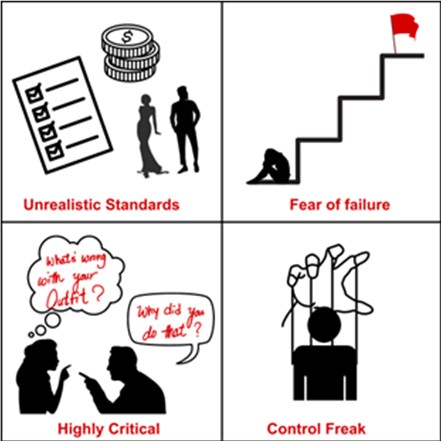
As perfectionists, we may often carry an invisible burden into our romantic relationships. This manifests in various ways such as having unrealistic standards. Sometimes we meticulously curate the ideal partner, convinced they must align with our rigid checklists. But reality rarely matches our fantasies, leaving us perpetually dissatisfied. The fear of failure can also weigh heavily on us. The mere thought of falling short or being rejected paralyzes us. We may withdraw, overthink every move, or demand constant reassurance – all in the name of self-protection.
Furthermore, our inner critic is often ruthless, and we may become highly self-critical. We may even project this critical mindset onto our partners, engaging in constant analysis and judgment. For example, a perfectionist partner may endlessly nitpick their significant other’s behavior, criticizing their communication style, their house-keeping habits, or the way they are dressed. Some perfectionists may also exhibit a strong rigidity in their thoughts and values, leading them to try and control their partners. The need to micromanage every aspect of the relationship robs both individuals of autonomy, and this constant overthinking and controlling may erode the trust and intimacy in the relationship while depriving both partners of freedom essential for a healthy partnership. This control-based approach stifles growth and breeds resentment.
The trap of dating perfectionism
So now that we recognize ourselves and the signs of dating with perfectionism. But how exactly does this mindset mess with our love lives and mental health?
Perfectionists tend to seek relentless control and may try to have everything perfectly aligned in their dating life. This preoccupation with order and control may stem from a deep-seated fear of uncertainty, vulnerability, and the unknown. We think that if we can plan every little detail, we can avoid potential disappointment or failure.
But here’s the thing – relationships can be inherently messy and unpredictable and require a delicate balance of compromise or giving in. When we try to orchestrate every step, we end up suffocating a relationship’s natural flow and evolution.
The perfectionist’s relentless pursuit of control can lead to a number of issues in dating:
- Unrealistic expectations: We may set the bar for our partners and relationships too high that it becomes virtually impossible to meet the standards. This can lead to constant disappointment and a never-ending cycle of dissatisfaction.
- Fear of intimacy: We may avoid deep emotional connections out of a fear of vulnerability and the possibility of being hurt. We may prioritize maintaining an image of perfection over allowing ourselves to be fully seen and known.
- Difficulty navigating conflict: When conflicts or challenges arise in a relationship, we may struggle to approach them with flexibility and problem-solving skills. Instead, we sometimes may get defensive, point fingers, and refuse to compromise. We may also engage in unproductive ‘point scoring’ rather than focusing on finding a mutually agreeable solution.
- Micromanaging behaviors: We may try to control every tiny little detail of a relationship, from scheduling dates to dictating how our partner should behave. This can suffocate the relationship and leave little room for spontaneity and mutual growth. Relationships need space to breathe.
- Burnout and resentment: The constant striving for perfection can be emotionally and mentally exhausting, leaving us feeling drained, disillusioned, and ready to throw in the dating towel for good.
Overcoming Perfectionist Tendencies
The good news is that there are ways to break free from any of your perfectionist tendencies and build more fulfilling connections.
In counselling, we can have the space to unpack the thoughts and behaviors fuelling your need for flawlessness. Counselling can be a powerful and game-changing tool, empowering you to approach your relationships more flexibly and adaptability. We may often dive deeper behind the unending quest for perfectionism. Through this process, you can cultivate genuine self-acceptance and bring more compassion to the table. A study by Rice and colleagues (2014) found that people who are super critical perfectionists towards themselves tend to be less satisfied in their relationships and have more conflict. Through acknowledging and addressing those perfectionist tendencies, you can start developing a healthier, more balanced approach to dating and relationships.
Some key strategies we may explore in the counselling process include:
- Challenging your unrealistic expectations: We work together to identify and reframe any sky-high standards you have for yourself and potential partners, embracing more realistic, adaptable goals.
- Embracing vulnerability: We practice letting go of the need for control and allowing ourselves to be emotionally vulnerable with a partner. This may involve slowly opening up about your fears, insecurities, and desires for the relationship. It can be challenging, and the counselling setting is specifically constructed to support this journey.
- Developing conflict resolution skills: This technique can allow us to learn healthy communication and conflict resolution techniques that prioritize mutual understanding, compromise, and problem-solving over rigid adherence to our perspective.
- Practicing self-compassion: By cultivating self-acceptance and compassion, recognizing that perfection is an unattainable and often harmful goal. And celebrating your growth and progress – even if it’s not “perfect.”
- Experimenting with imperfection: Deliberately engaging in activities or situations where you cannot control the outcome helps you build tolerance for discomfort and resilience. Again, this can take time, but in the long run, it is very valuable.
Beyond the counselling environment, there are other self-help resources and strategies that can help you navigate the challenges of perfectionism in dating beyond the counselling journey:
- Journaling: Regularly write about your thoughts, feelings, and experiences related to dating and your perfectionist tendencies. This can help you gain clarity and self-awareness.
But remember, it only works if you revisit your journals and reflect on your writing.
- Mindfulness practices: Engaging in mindfulness exercises, such as meditation or deep breathing, to cultivate a greater sense of presence and acceptance in the moment rather than being fixated on future outcomes.
- Boundary setting: Learn to set healthy boundaries in your relationships with yourself and your partner’s relationship. This can involve saying no to unreasonable demands or requests that compromise your values and self-respect. For example, you might set a boundary around the amount of time you’re willing to spend on dating apps or the types of behaviour you’re willing to tolerate from a partner.
- Seek supportive connections: Surround yourself with friends, family, or support groups who can provide a compassionate and non-judgmental space to explore your perfectionist tendencies and their impact on your dating life.
Remember, overcoming perfectionism in dating is a process, and being patient and kind to yourself. By cultivating self-respect and embracing imperfections, you can build a healthy dating mindset.
About the author:
This blog was written by DURA Hema, who is a summer intern at Red Door Counselling in 2024. She has recently completed her Master’s in Counselling. Her areas of interest include helping individuals make sense of their relationships with themselves and their partners, addressing perfectionism, and managing academic stress, especially among young individuals. With a background in psychology and counselling psychology, Hema is a compassionate and trustworthy individual. Her expertise and empathetic approach empower people to navigate the complexities of fostering greater self-awareness and fulfillment.
References:
Stoeber, J., & Otto, K. (2006). Positive conceptions of perfectionism: Approaches, evidence, challenges. Personality and Social Psychology Review, 10(4), 295-319.
– This review article discusses research showing that perfectionism is associated with lower relationship satisfaction. The authors explain that perfectionist tendencies can lead to setting unrealistic standards for partners, difficulty being vulnerable and intimate, and challenges in maintaining healthy, fulfilling relationships.
Macneil, C. A., & Hasty, M. K. (2005). Perfectionism and interpersonal problems. Behaviour Change, 22(2), 77-89.
– The researchers determined that perfectionistic tendencies, such as high personal standards and concern over mistakes , including excessive need for control, were linked to experiencing more interpersonal difficulties and relationship problems.
Shea, A. J., Slaney, R. B., & Rice, K. G. (2006). Perfectionism, impulsiveness, and adaptive/maladaptive tendencies in college students. The Psychology Record, 56(4), 559-574.
– This study demonstrated that maladaptive perfectionism, characterized by excessive self-criticism and concerns about mistakes, negatively impacted the quality and satisfaction of romantic relationships
– Maladaptive perfectionism, including setting unrealistically high standards, was linked to lower relationship satisfaction.
Haring, M., Hewitt, P. L., & Flett, G. L. (2003). Perfectionism, coping, and quality of intimate relationships. Journal of Marriage and Family, 65(1), 143-158.
– This study found that perfectionism, especially socially prescribed perfectionism, was linked to poorer conflict resolution and relationship quality.
Sherry, S. B., Hewitt, P. L., Flett, G. L., & Harvey, M. (2003). Perfectionism dimensions, perfectionistic attitudes, dependent attitudes, and depression in psychiatric patients and university students. Journal of Counseling Psychology, 50(3), 373-386.
– This study showed that maladaptive perfectionism was linked to higher levels of burnout, resentment, and depressive symptoms.
Rice, K. G., & Mirzadeh, S. A. (2000). Perfectionism, attachment, and adjustment. Journal of Counseling Psychology, 47(2), 238-250.
– This study revealed that perfectionists tend to have insecure attachment styles, which can contribute to relationship difficulties, such as fear of intimacy and difficulty trusting their partners.
 Start your Red Door Journey