
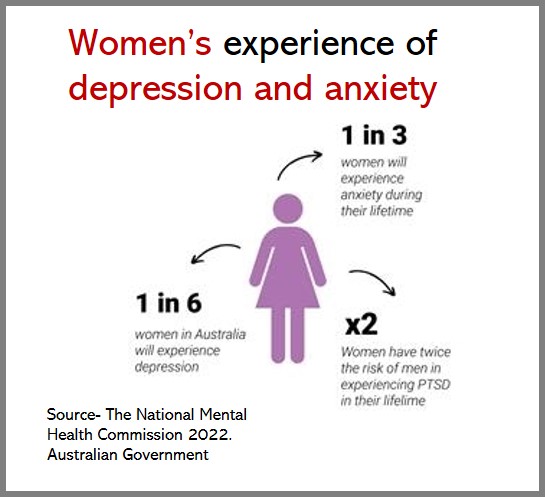
Being sad is a normal reaction to difficult challenges in your life. Often the sadness lasts a few days, and then lifts. Sometimes the sadness does not dissipate. Depression is a persistent condition that lasts for more than 2 weeks. Women are more likely to suffer from depression than men.
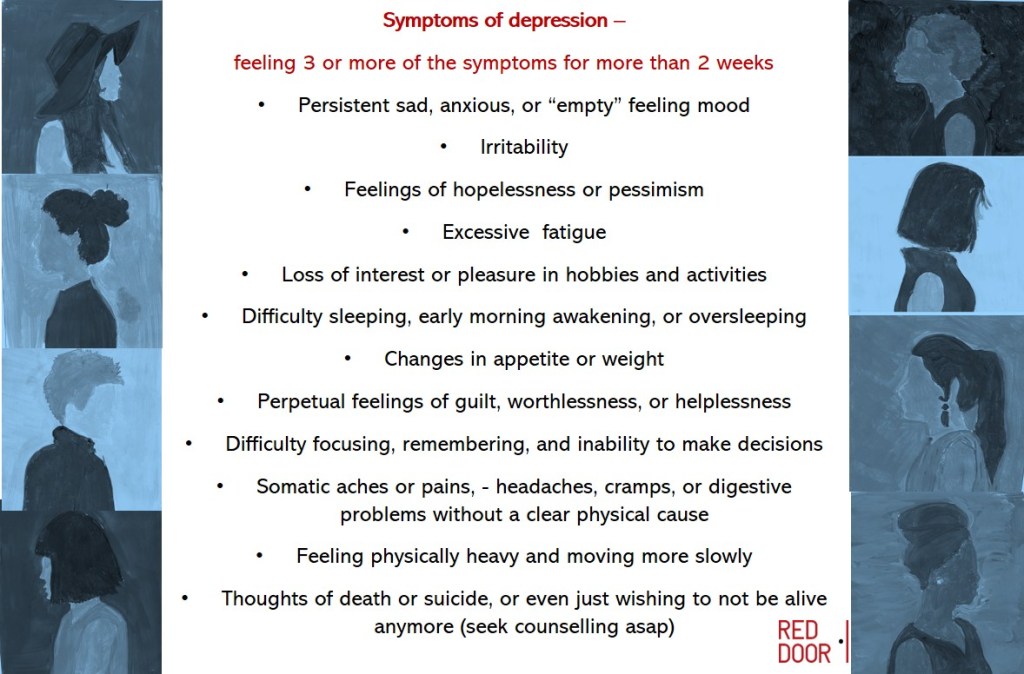
Some of the symptoms of depression include the following. These signs or symptoms may have lasted more than a couple of weeks.
- Persistent sad, anxious, or “empty” feeling mood
- Irritability
- Feelings of hopelessness or pessimism
- Excessive fatigue
- Loss of interest or pleasure in hobbies and activities
- Difficulty sleeping, early morning awakening, or oversleeping
- Changes in appetite or weight
- Perpetual feelings of guilt, worthlessness, or helplessness
- Difficulty focusing, remembering, and inability to make decisions
- Somatic aches or pains, – headaches, cramps, or digestive problems without a clear physical cause
- Feeling physically heavy and moving more slowly
- Thoughts of death or suicide, or even just wishing to not be alive anymore.
.
Depression can interrupt your ability to live a regular life. It can interfere with your ability to work, study, parent, socialise and live a full life.
You can’t just snap out of depression. Depression is caused by the interaction of several internal (thoughts, hormones, diet) and external (stress, expectations) factors. Sometimes we hope that if one can just “focus on being happy” our friends and family will be able to move beyond their depressed state. In addition to your empathetic and persistent friendship, most people who have experienced persistent depression need treatment.
Treatments for depression can include medical and talk therapy. Treatments affect each individual differently. There is no “one-size-fits-all” plan for treatment. It may take some trial and error to find the treatment that works best.
Medical interventions usually include anti-anxiety or anti-depressant medications.
Many clients are hesitant to take these medications because they fear that they will become dependent on these medicines. It is not an easy decision to undertake. Talk to your GP about these medications to see if you can explore some of these fears. If you have tried behavioural and psychological approaches with no success, you might need to consider medications to start kick start your recovery.
How counselling or psychotherapy can help.
Different psychotherapists use different approaches to help resolve the issues that their clients want help with. Here are some of the most common approaches that counsellors and psychologists in Hong Kong use with clients trapped in depression.
CBT – Cognitive Behavioural Therapy . IN CBT the therapists works to explore the relationship between a person’s thoughts, behaviours and feelings. We look at finding patterns in thoughts or behaviours and explore if these patterns help or restrict your development.
Collaboratively the therapist and the client work together to develop constructive ways of thinking and reacting to situations so that alternatives can be found if that would improve your experience. For example with Depression we might discuss the types of thoughts that you have around certain relationships or activities to see if you can challenge or change those patterns of behaviour.
For example, many individuals suffering from depression can see a given situation through a lens which highlights all the catastrophic elements that could occur. Together we would try to figure out where these perceptions of risk originated, and how we could challenge the likelihood of catastrophise occurring.
Psychoanalytic therapy – Originally based on the work of Sigmund Freud, modern psychoanalytic therapy has evolved significantly. Simply put modern psychoanalytic therapy looks at what components of life represent including dreams, free flowing associations, understanding projection of feelings. The goal is to hope patients gain insight as to how their past experiences informs their present behaviour. In regard to treating depression a psychoanalytical counsellor might help explore feelings and thoughts that keep clients trapped inside the depressive state. For example, a person may feel powerless to take charge of practices that they know might help them feel better, but be trapped inside their recurring experience of being abandoned and powerless from their childhood.
DBT – Dialectic behaviour therapy. DBT is abridged from CBT, but focuses more on emotional regulation. Skills such a mindfulness, clear and calm communication and learning to tolerate difficult situations are a focus.
For example, DBT for depression could focus on staying present in today’s goals rather than racing ahead trying to solve tomorrow’s problems. Or when other people disappoint us, learning to tolerate and explore these feelings of upset, and work to clearly communicate our needs to the other party involved.
ACT – Acceptance and Commitment therapy. ACT is another therapy abridged from CBT, but whilst CBT works by helping one identify and change their negative thoughts and behaviours, ACT helps people accept that we can learn to get comfortable with some of discomfort of life. The central tenant of ACT is that the only way out of pain is through. Therefore ACT is sometimes used in situations where a positive outcome may never be possible – e.g. with serious illness. It isn’t just about sitting still. As clients explore situations, they can become less agitated or worried about them. For example, when dealing with clients with depression we can discuss some of the more worrying thoughts that they believe might happen, or happen again for them. We consider what individuals need to move towards, and consider if they can tolerate not moving away from unpleasant thoughts.

