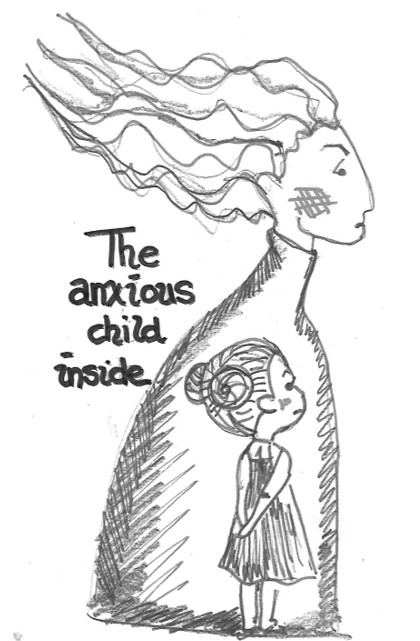

Standing Up for Coming Out – Supporting Your LGBTQIA+ Teen.

One of the earliest conversations you may have had with your child involves their declaration of gender identity or sexual orientation. They might tell you they are a boy, a girl, or even express that they feel like one gender one day and another the next. As children grow, their identities and attractions may not fit neatly into the social norms they’ve been exposed to.

According to the U.S. Census, about 10% of teens identify as LGBTQIA+—an acronym that includes lesbian, gay, bisexual, transgender, queer, intersex, asexual, and others. Many more might be questioning their gender or sexuality. Unfortunately, there’s limited data for Hong Kong youth, possibly due to societal stigma and discrimination against LGBTQIA+ individuals.

During adolescence, young people naturally explore their identities. They might not identify with the gender they were assigned at birth, experience attraction to the same sex, or feel no attraction at all. As a parent, here’s what you can do to support your child and foster a positive, trusting relationship:

Be Accepting

Avoid dismissal or judgment. If your teen shares their identity or attractions, don’t dismiss it as a phase or something to be fixed. Instead, embrace their honesty. Their exploration is a vital part of understanding who they are. Express to your child that you love and support them no matter what.

One of the most loving actions a parent can provide is creating a safe space for your teen to explore and reflect. Show genuine interest, listen actively, and affirm their feelings. Remember, acceptance and validation are crucial; they help your child develop resilience and self-confidence.

Remember: There Is Nothing Wrong With Being LGBTQ+

This isn’t a problem that needs fixing. If you find yourself struggling with feelings of denial or discomfort, consider what’s best for your relationship in the long run. Challenging your internal biases or prejudices now can be vital. Research shows that rejection from parents can severely impact an adult’s mental health and ability to maintain relationships. Ultimately, your ongoing support could be the most important gift you give your child—far more powerful than any initial resistance.

The mental health statistics are sobering: LGBTQ+ youth are more vulnerable to depression, anxiety, low self-worth, and loneliness. These challenges are universal, and youth in Hong Kong are no exception. A supportive, accepting home acts as a protective anchor—avoiding blame or shame helps your teen feel safe and loved, even when they face external challenges.

Navigating Name change and Identity changes

Many transgender, non-binary, or gender-queer teens may choose a new name—often more gender-neutral—to better reflect their true selves. This act of changing one’s name can be empowering. However, it may be difficult for parents to adjust to their child’s new name. From my perspective as a counsellor, I sometimes experience parents struggling with the concept of “dead naming”. Be patient and give yourself time to adapt.

Discuss what the new name means to your teen, and understand it’s part of their journey. There have been cases in Hong Kong when parents learnt about the chosen name only after learning the child is using their new name, with support, at school. It’s helpful to communicate closely with their school and other community members, fostering an environment of acceptance and support. Open and accepting conversations really help.

Be an ally and advocate

It’s natural to worry about your child facing bullying or discrimination. Despite growing awareness, studies like the 2021 GLSEN School Climate Survey reveal that over 90% of LGBTQ+ teens experience verbal abuse at school; 81.8% feel unsafe; and many avoid school functions altogether.

As a parent, stay involved with your child’s school. Advocate for inclusive policies like LGBTQ+ support groups and comprehensive sex education that extends beyond heteronormative teachings. Working together with educators can make a real difference.

Show Your Support

Your words and actions matter. Be a visible ally—display symbols of support, speak positively about LGBTQ+ issues, and include your child’s experience in your conversations with family and friends. For example, one teen I work with shared, “My mum brought ALL the flags and even bought me a shirt that read ‘I Can’t Even Think Straight’—it made me feel loved and accepted.”

Talk to your child about how they would like you to communicate about them with broader family members. They might like you to be their spokesperson, or maybe prefer to talk for themselves. Teens sometimes do not appreciate being “outed” to family members.

Advocate for your child. Help schools establish gay-straight alliances. Push the school to provide more inclusive sex education, rather than the hetro-normative model that is pervasively taught. Rowan, who is attracted to women, retells, “Sex education at school was very weird for me”. Its not surprising as it was not about the sex that they were expecting or wanting to experience.

Moving Forward

Supporting your LGBTQ+ teen means standing firmly with them, advocating for equity, and continuously learning. Your acceptance can help your child navigate challenges, foster resilience, and build a future rooted in love and respect.

Useful references if you want to learn more

  • Besner . H. F., and Sungin, C.J. (2014) Gay and Lesbian students: Understanding their needs. Routledge. New York.
  • Georgina H. Gnan, Qazi Rahman, Greg Ussher, Dan Baker, Elizabeth West & Katharine A. Rimes (2019) General and LGBTQ-specific factors associated with mental health and suicide risk among LGBTQ students, Journal of Youth Studies, 22:10, 1393-1408, DOI: 10.1080/13676261.2019.1581361
  • Lehman, J. R.; Diaz, K; Ng, H;  Petty, E.M.; Thatikunta, M;, and Echstrand, K (editors). (2020) The equal curriculum: the student and educator guide to LGBTQ Health. Springer press. Switzerland.
  • Sadac , A. (2021) Parenting your LGBTQ+ teen: A guide to supporting, empowering and connecting with your child. Rockridge press
  • GLSEN National School Climate Survey. 2021 Visit GLSEN.org

https://www.glsen.org/research/2021-national-school-climate-survey.

About the author: Angela Watkins is a counsellor at RED DOOR Counselling practice in Hong Kong. Angela is a proud parent of two LGBTQIA+ individuals and an LGBTQ+ ally. Red Door is an identity affirming practice.

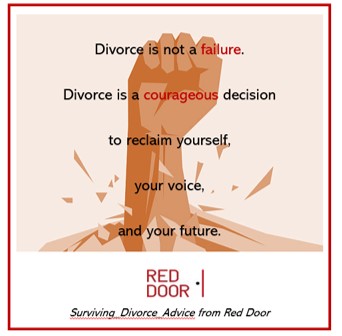
Divorce Missteps

Over the past 7 years I’ve supported a lot of individuals, particularly women, as they proceed through divorce. As a relationship counsellor I also work to help couples who wish to avoid the divorce process. I’ve learnt a thing or two about what makes the ending of a marriage better, or worse, for the parties involved. Its hard to watch people make mistakes in this journey, choosing actions that often make emotional recovery harder in the long run. If you are willing to learn the mistakes to avoid, here are some of  missteps that we encounter in helping navigating the divorce process.

Misstep 1: not being aware of your rights

Seeing a lawyer is expensive. However not knowing your rights in a divorce is a potential landmine. Without decent legal advice you run the risk of receiving careless and incorrect information about what you can negotiate in a divorce. Do not be threatened by your ex that, “We don’t need to use lawyers, we can just do this ourselves”. Often such statements precede unfair negotiations. Knowing your rights is your right, and is a must.

Misstep 2: Accepting divorce advice from your ex-partner instead of a professional

I’ve lost count of the number of times I encounter clients who accept what their ex-partner tells them what they are entitled to in a divorce. Your soon to be ex-partner does not get to define what your divorce outcome will look like.  This is particularly an issue in codependent relationships where one partner is used to listening to the advice or demands of their romantic partner without challenge. Seek legal advice. An initial consultation should suffice for you to better understand what you are entitled to fight for, and if it is in your interests to do so.

Misstep 3. Not considering or committing to couples counselling

As a couples’ counsellor we often encounter couples trying to decide if they should divorce or stay together. Counselling can help repair your relationship, in certain circumstances and it looks good to the court if you have tried to repair your relationship.

If you are BOTH willing to do the work, relationships CAN recover.

Relationships cannot recover when there is an ongoing affair or one party is continuing the divorce process at the same time as the counselling process. You can’t amputate a leg and reattach it at the same time. Coming to counselling to collect dirt on your partner does not work. Experienced couple counsellors will see through those tactics, and will often call them out. Counselling is used to see if sincere recovery can be made.

Misstep 4. Telegraphing your wants instead of negotiating.

It may sound contradictory to not communicate what you want out of your divorce. It is important that you don’t show “all your cards” until you are ready to make a deal.

The process of divorce is essentially a negotiation. In any negotiation you want to know what your adversary wants, before you let them what you want as part of your divorce settlements.

It may seem tempting to explain, “I just want a basic settlement and full custody of the kids”. But if you do this, you will have just told your ex what matters to you most. Do yourself a favor. Learn about negotiation skills, as if your life depended on it. Because your lifestyle going forward, does. I particularly like the teachings of Chris Voss on negotiation, and have clients who have used the Chris Voss negotiation techniques to break the patterns of fruitless negotiations that they had fallen into.

Misstep 5: Jumping into a new relationship too quickly.

The feelings of rejection often associated with divorce can be extremely painful. It can be tempting to avoid those feelings by jumping into a new relationship as fast as possible. This is a misstep.

Firstly, you need to heal from your previous relationship, not simply avoid the pain. I know this sucks.

Secondly, the impact of a new relationship can influence your negotiations in your divorce. If you have a partner who could be assumed to be paying some of your rent may impact your financial settlements.

Thirdly, children may be negatively impacted by your new relationship. It can be tempting, if you’ve fallen in love with another person, to rush into playing “happy families” with your children and your new partner. You chose your new partner. Your children didn’t. Sometimes children see the new partner as the reason for your marital breakdown, even if this wasn’t the case.

Resist the temptation to involve your new partner in your children’s lives, and even better, take a break from dating in the early months of your divorce.

Misstep 6: continue the conflict communications rather than seeking distance.

If you have had a relationship that has been full of conflict, and if you are used to constant conflict, you might be tempted to continue your continual arguments throughout your divorce process. I would argue, that it might be wise to explore an alternative to constant fighting.

If you had got along with your ex-partner, you probably wouldn’t be divorcing them. The declaration to divorce, can mean that you can STOP fighting. It takes only one party to stop fighting. Just stop. This might mean blocking your ex-partner, so that you don’t communicate with them, except through your lawyers, or only via slower communication channels such as email rather than immediate messaging platforms such a WhatsApp.

Involving your lawyers in all of your interpersonal conflict is a double-edged sword. You may need to use your lawyer to tell your partner to stop harassing you. But if you want the fighting to stop, you have to also agree to stop communicating with your ex-partner. Using third parties or apps to communicate such a parent coordinator person or app (such as the Family Wizard) can help break the cycle of conflict communication.

Misstep 7: Triangulation of children

It is very tempting to involve your children in your divorce. Bringing your child into divorce understanding or negotiations happens fairly often. After all, you are hurting and it would be helpful to you if they can see how much pain your ex-partner is causing you. This is a mistake. Your child is entitled to continue to enjoy their parental relationship without your experience influencing their view of their parent.

You don’t win if you turn your child against their other parent. All that happens is that your child loses. They lose the impact of that parent in their life, rather than the impact of your ex-romantic partner on you. They may begin to feel responsible for your emotional state – a reversal of the parent child relationship. Additional triangulation does not pay often pay in the long run. As children mature they will start to observe and appraise your behaviour throughout your divorce.  Later on, children do not appreciate the perception of being manipulated during divorce and this can be one of the reasons that they become estranged from their parents when they grow into adulthood.

You don’t have to hide your pain from your child. Be mindful not to involve them in understanding your pain to the extent that they feel obligated to champion of you. It isn’t fair. It isn’t healthy, for your children. They deserve to have two parents to love if this is being offered.  

Misstep 8: Allowing others to define your value.

Those going through the divorce process can feel diminished. Their marriage is over. This often feels bad, and it is common to feel feel like you have “failed”. Your ex-partner may extend those feelings of failure by telling you that the reason your marriage failed is because of your personal “failings”. They may even feel entitled to judge your competence as a parent.

Most of the women in our support group have been told that they are bad mothers. In every case I’ve encountered such accusations appear grossly misplaced. For those vulnerable individuals, being judged so harshly by their ex-partner can really be a blow. Remember these commentaries are often a  tactic to make you feel bad, and not based in reality. Especially the reality of your children.  You need to know your value, financially and personally.

It is time for you to know your value for yourself. Your value as a person is NOT determined by your ex, or anyone else besides yourself. Its time for you to work on you, so that you know who you are. Don’t let anyone else attempt to define your value. This is an area that people often seek counselling to help them overcome.

Misstep 9: Bad habits lead to compromised ability to cope, and vice versa.

Habits help build your health and over the long term determine how well you can navigate the divorce process. Regular self-medication, especially through alcohol, will erode your ability to cope. Conversely taking a positive approach to habits and your health at this time will be extremely helpful. Exercise, rest, sleep, eat healthily, all of these will help you better survive what is an incredibly stressful life event.

Misstep 10: Doing it alone.

Whilst many people feel ashamed that divorce is happening, the worse thing you can do is feel ashamed and remove yourself from support.

Even I have been delightfully surprised by the amazing value of group support during divorce.  Iron Fairies, our therapeutic support group for women going through divorce is seen as an amazing resource by all of the active members. Each of the women in the Iron Fairies is navigating their own divorce journey, and may feel trapped by their personal struggles, but at the same time, understand the challenges faced by other women, and amazingly suggest creative pathways forward for others, even when they feel ‘stuck’. Being able to help others, reminds group members that we all feel undone sometimes and that we can eventually navigate through these very uncomfortable circumstances. Having a friendly group to vent to can be extremely cathartic, especially if one of the expectations of that group is that you will continue your journey forward, at a glacial or racing pace.

Misstep 11: Wrongful resource allocation

There are a number of resources that you may involve in your divorce journey including a financial adviser, a lawyer, an accountant, a counsellor, a mediator, your family, a support group, and friends. It will be an expensive waste of time to use your lawyer as your counsellor. At a typical cost of USD 1000 per hour, you want to use your time consulting your lawyer as cleverly as possible. Save your crying time for friends, a support group, or a counsellor.

Additionally, divorce is a topic that many people have experience of, and have opinions about. Legal advice from friends can be completely wrong. They have no real obligation to ensure that the action or information they give you is in support of your rights. Please check your legal position with legal professionals.

Misstep 12: Allowing drama to impede or knock you off course.

It is quite possible that you ex will try to get you to delay or even stop the divorce process. Not because they want to reconcile, but because they want to delay or derail the divorce process for their own personal, and sometimes, financial ends. It takes quite a while for people to decide that they need to divorce their partner. Once this decision is made, please try to keep the divorce process moving forward.

You ex may try to delay you by making deals or threats such as, “Let’s meet and see if we can work this out between ourselves”, or, “If you proceed with the divorce I will do x, y, z.”. Ex- partners may try to derail the process by blowing up bombs to distract you from the momentum of divorce. For example, they may accuse you of having affairs, or acting in harassing fashion, or even being a poor parent. Don’t fall for these distractions if they are unfounded.

Once you have made this difficult decision to end your marriage, move steadily towards the exit. You can master the change that needs to happen, rather than allowing your ex-partner’s agenda to master you.

You CAN survive the divorce process. Especially if you avoid some of the pitfalls that make the journey more challenging.

Anxiety Attacks – Emergency responses

Living with anxiety feels as if you are inhabited by a monster constantly whispering about your fears, insecurities and your worthlessness, your inevitable failures and the catastrophes which you can’t avoid and are probably creating. It is estimated that 13-14% of people in Europe [1] live with anxiety. One symptom is anxiety attacks. Some people only realise that they have been suffering from anxiety when they experience such an attack.

An anxiety attack differs from a panic attack. It is usually a response to a stressor – often a thought or feeling or specific dread. People feel apprehensive and full of fear. Their hearts may race and they may feel short of breath. Often people feel out of control and may become extremely tearful. A panic attack may include some of these symptoms, but usually occurs without a clear stressor. Both can be terribly frightening. If you experience anxiety attacks it is important that you are prepared with an emergency response.

Here are my favourite techniques to respond when anxiety attacks.

Try this exercise when you feel anxious.

Breathing exercises – Listen to the pattern of your breath when you are anxious. It can give you a clue as to how best to respond to your anxiety. If you are hyperventilating – taking fast, shallow breaths, feeling faint, and fearing that you can’t catch your breath, try to breath into a paper bag. Breathing in and out using a paper bag will recycle air, returning carbon dioxide to the body, which will naturally make the breath deeper and slower. Do this for a minute. If you don’t feel better, try again for another minute.

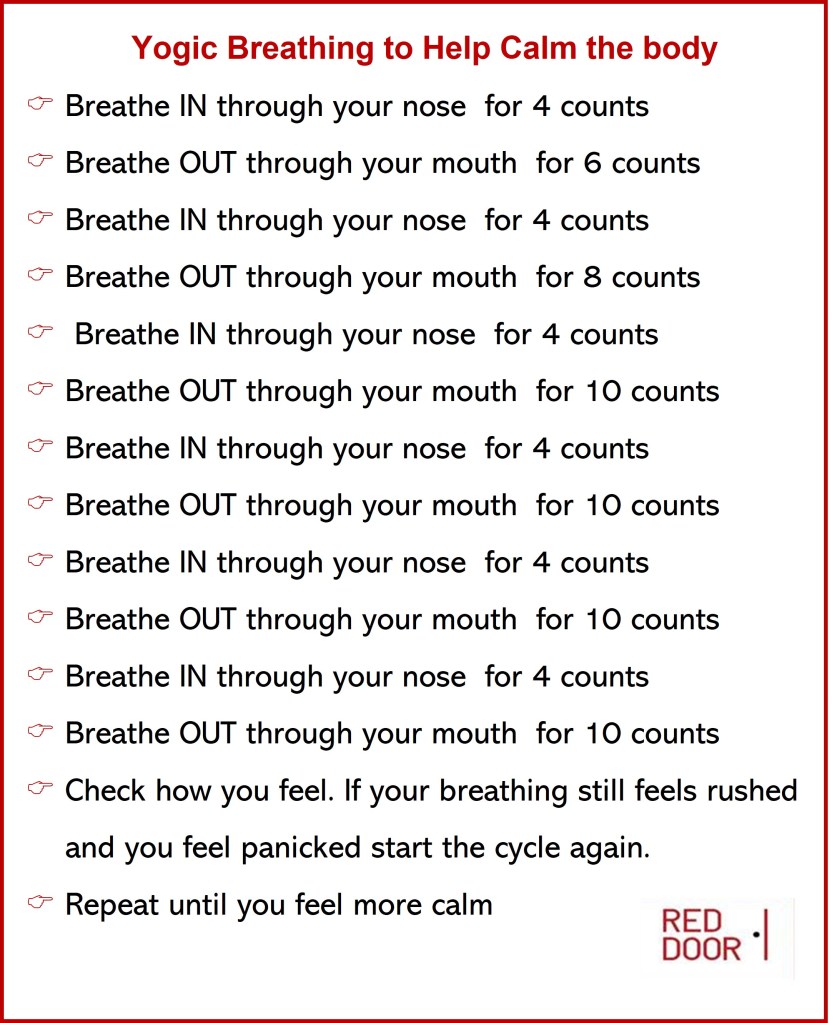
If you are not hyperventilating, you can use the calming breath technique. Breathing exercises such as those used in yoga classes are effective in reducing anxiety. One simple exercise I use with clients uses counting inward and outward breaths to calm the mind. Simply breathe slowly in through your nose for a count of 4, then breathe out of your mouth for a count of 4. Repeat. Then breathe in through your nose for a count of 4, and out of your mouth for a count of 6. Repeat. Then breathe in through your nose for a count of 4, then breathe out of your mouth for a count of 8. Repeat. Check to see if you feel better. If you don’t, repeat the exercise again, concentrating on the sensation of your breath.

Distraction exercises. Distraction exercises help your parasympathetic nervous system override an anxious reaction. By simply refocusing your energy to elements of your environment and allowing your underlying operating system to return to homeostatic (ie regular) breathing.

Use your senses to help calm your breathing

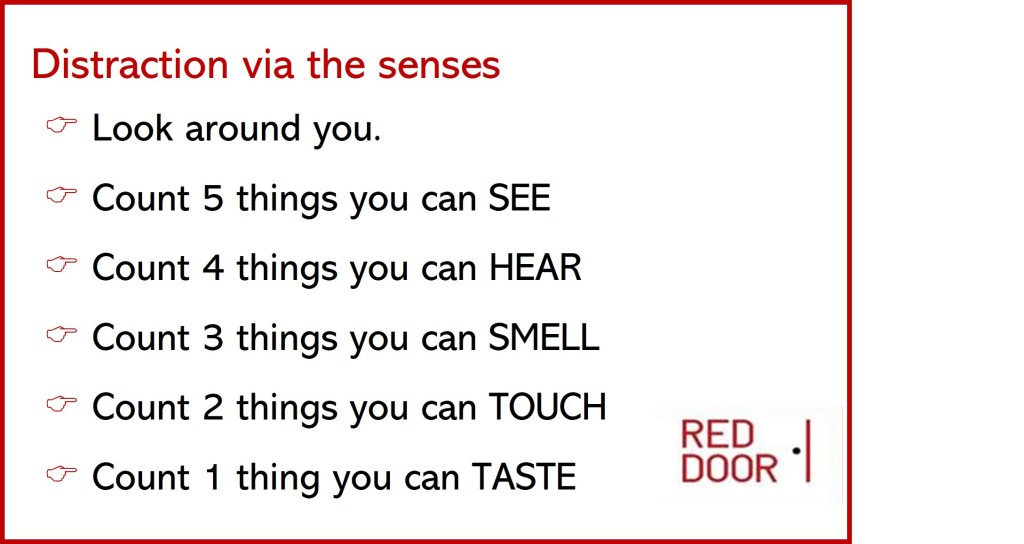
The most commonly used therapeutic technique asks the client to engage their senses to distract their busy minds. Identifying a number of items you can see, smell, hear, touch and taste can help you reset your body. Imagine 5 things you can see, then 4 things you can hear, then 3 things you can smell, then 2 things you can touch, and 1 thing you can taste. Then monitor your breathing again. Has it become less panicked?

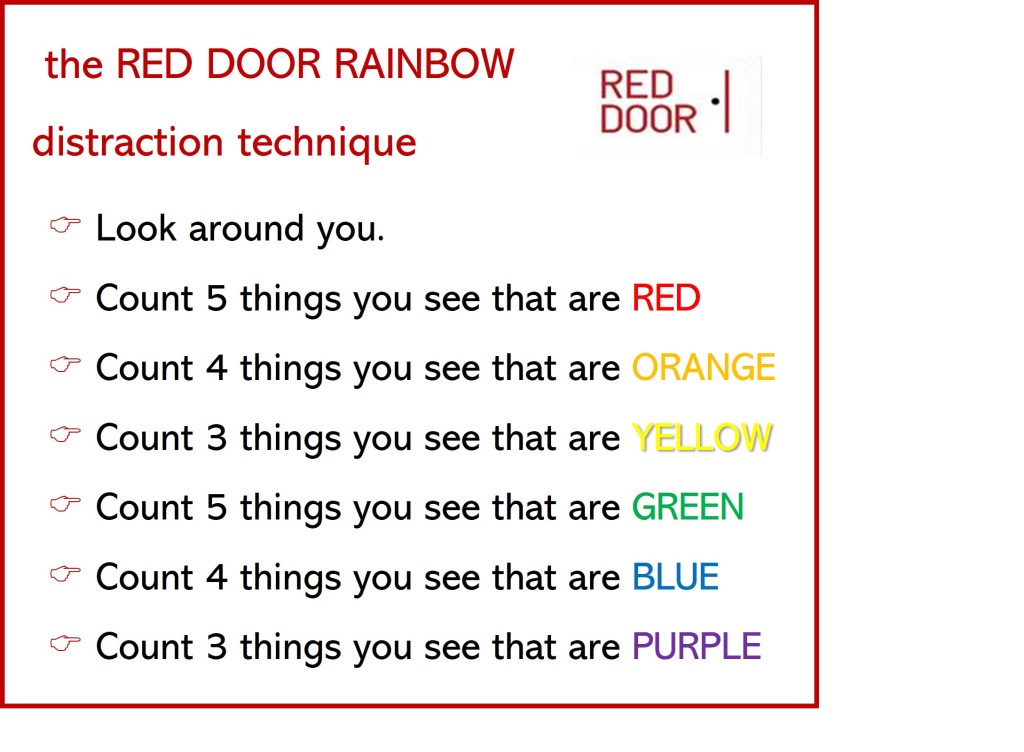
Since we work with a number of teens and children at RED DOOR we also use the RAINBOW technique, often with our proprietary rainbow fidget toy, to help teens achieve quick calm. One can perform this technique without the fidget toy. Simply you count objects in your near vicinity which are specific colours. You can count the number of objects, or a specified number of objects that are red, orange, yellow, green, blue and black.

Distraction and can also be created with some physical “reset” activities such as repeatedly snapping an elastic band against the wrist or performing sets of 10 jumping jacks.

Meditation/Relaxation – Mediation, when practiced regularly, can help people reach a relaxed state more easily. Practice makes progress when it comes to mediation. If you are experiencing an anxiety attack, try to find somewhere to sit quietly or lie down. Then try progressive relaxation, also known as a body scan, which can be especially helpful. Progressive relaxation soothes as you tense and relax muscles – isolating and focusing exclusively on one group of muscles at a time. Begin with your toes, and work up through your muscles to your head, where you may focus on relaxing the muscles around your chin and eyes.  Guided progressive relaxations are available on Spotify, YouTube, and on CD.

Imagery – In the throes of an anxiety attack use your active imagination to help your de-stress. First, isolate the location within your body where you feel the greatest sensation of anxiety. Use imagery to help unwind and relax that spot. Cute, warm, and amusing imagery will be of the greatest help. If you feel tension in your shoulders imagine a collective of kittens massaging the knots away. If you feel butterflies in your stomach – imagine yourself in your stomach with them, asking each to settle on your arms and flutter no more. One client recently expressed her fear of butterflies, so, using imagery, we collected the butterflies and they turned into Golden Retriever puppies, ready for a cuddle.

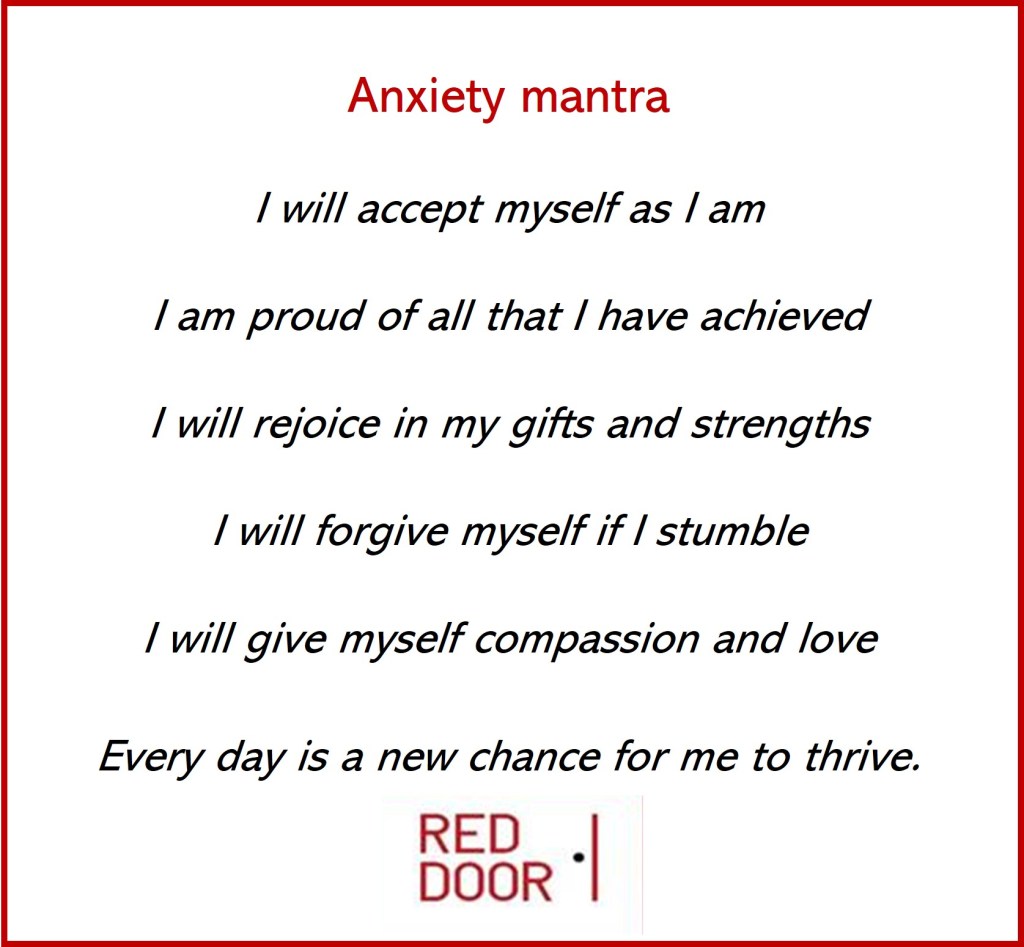
This mantra might help with your negative self-concept

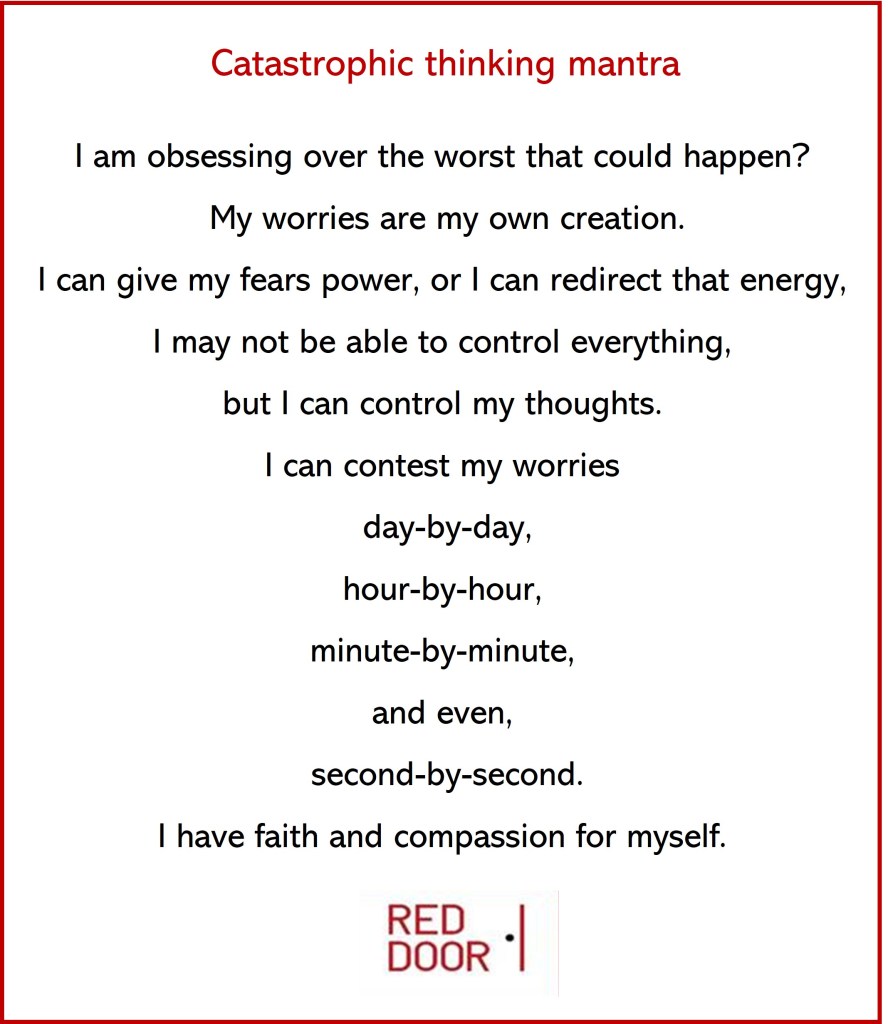
Mantras – Anxiety attacks are created by dreadful thoughts running through your mind. One way to settle these thoughts is to repeat a mantra. While there are mantras on the internet, you may benefit from one that you write specifically for yourself. The mantra should be full of words of kindness, understanding and love. The words “should” or “must” cannot be part of any mantra.

Centre yourself with art therapy techniques

While avoidance is not a long-term technique for managing anxiety, if you are ruminating or feeling a panic attack, distracting yourself with a change of scene or activity can help. Go for a walk, particularly in nature, to reset yourself. Try colouring, which I have detailed in a previous blog [https://reddoorhongkong.wordpress.com/2017/03/06/reasons-to-colour/ ], which involves both sides of the brain, stimulates creativity, and can help to calm the mind.   Even listening to some upbeat tunes at this time, get up and dance, just break the pattern of your anxiety for a moment to reset your emotional clock.

Talk to your anxiety – The long-term cognitive approach to anxiety is to create an internal dispute. Disputing your anxiety helps you reframe situations, see hope, and utilise self-compassion. If you experience anxiety ask yourself to challenge your view of the stressful situation – have you been overgeneralising, personalising, or catastrophizing? Is there an alternative way of looking at this issue? Sarah Wilson[2] , in her compendium of suggestions to utilise in one’s challenge with anxiety suggests an ancient adage, “ First make the beast beautiful”, meaning accept that your anxiety – it is something that originally may have been created to help you, but overtime has started to inappropriately misfire. When you make the anxiety beast beautiful you may say to yourself, “Thank you brain for alerting me to potential danger, but I know I am safe right now, you can go back to your guarding post”.  Developing the process of dispute is an area of action where a therapist can be of significant help. If you cannot create this dispute for yourself, utilise the resources of a counsellor. For more information see our post on this topic https://reddoorhongkong.wordpress.com/2020/09/07/talk-to-your-anxiety/

Prolonged anxiety is extremely challenging to your health. If you have been struggling with anxiety for a while please seek the help of a counsellor or a doctor. They may recommend a combination of therapy and even medication to help lessen your anxiety. There is no shame in needing help. Take charge of your future.

Everyday is a new day for you to thrive. Start gently, start now.

 #mentalhealth #mantra #mindfulness #anxiety #reddoorcounselling #selfhelp #anxietyattack #treatmentanxiety #women

Sources

1: Prevalence –

2004: The ESEMeD/MHEDEA 2000 Investigators,2004, Prevalence of mental disorders in Europe: results from the European Study of the Epidemiology of Mental Disorders (ESEMeD) project

2011: https://www.theguardian.com/society/2011/sep/05/third-europeans-mental-disorder

2: Sarah Wilson, 2018, First we make the beast beautiful: A new journal through anxiety. Dey Street Books

__________________________________________________________________

Angela Watkins is a psychologist and counsellor at RED DOOR Counselling in Hong Kong. Her current clinical work focuses on parenting. relationships, anxiety, OCD, career change, stress management and divorce.

Your mental health matters – protecting your mental health in a world experiencing a mental health crisis.

Hong Kong’s mental health crisis has escalated dramatically since the COVID-19 pandemic, but alarmingly, troubling trends were already in motion. The World Health Organization now estimates over 1 billion people worldwide battle mental health conditions requiring support, underscoring an urgent global concern (WHO, 2025).

Locally, data from the Hong Kong Jockey Club Centre for Suicide Research and Prevention at the University of Hong Kong reveals a grim reality: suicide rates in Hong Kong have surged more than 22% since 2011, with suicide tragically the leading cause of death among those aged 15 to 24. A startling 1 in 4 youths in this age group face mental health challenges, with academic pressure topping their stressors, followed closely by work demands. Nearly 20% experienced suicidal thoughts within the past year (HKFP, 2023).

The workforce is also under immense psychological strain. An overwhelming 87% of Hong Kong employees report feeling stressed, with one in five describing this stress as unmanageable (Cigna 360 Hong Kong Well-being Survey, 2025). Work-related pressures, uncertain futures, and social isolation are key contributors, especially among young professionals and Gen Z, the most affected demographic facing elevated anxiety, depression, and burnout.

Mental health is far more than the absence of illness. The WHO defines it as a dynamic state of emotional, psychological, and social well-being that enables people to cope with everyday stresses and thrive. It exists on a continuum, shaped not only by challenges like job loss or divorce but also by positive transitions such as marriage.

Recognizing warning signs early is critical:

Physical symptoms like racing heart, fatigue, muscle pain, or sleep disturbances often signal unmanaged stress activating the body’s fight-or-flight response.

Emotionally, mood swings, irritability, persistent sadness, and feelings of hopelessness warn of deeper struggles.

Cognitive red flags include overthinking, poor concentration, and decision-making difficulties.

Socially, withdrawal, loneliness, and changes in interaction patterns indicate potential burnout.

The urgent takeaway: mental health demands deliberate, daily care. It’s essential to check in regularly with oneself—acknowledging feelings, understanding limits, and crafting protective strategies. Self-care isn’t indulgent; it’s vital. Simple habits like scheduling downtime, practicing mindfulness, engaging in positive self-talk, and nurturing sleep can fortify resilience.

Stress management is equally crucial—setting boundaries, saying no, breaking tasks into manageable chunks, and celebrating small victories help keep stress from becoming overwhelming. Lifestyle choices matter too: regular exercise, outdoor time, nutrition, hydration, and conscious digital detoxes bolster mental resilience.

Lastly, nobody should suffer in silence. Seeking support from trusted friends, family, support groups, and mental health professionals is a sign of strength, not weakness. Talking about struggles makes them more manageable—a truth captured by the saying, “What is shareable is bearable.”

Hong Kong’s mental health landscape not beyond hope. With awareness, proactive care, and compassion—for oneself and others—individuals can move from merely surviving to truly thriving in these challenging times.


The counsellors at Red Door are here to support you if you are not sure who to turn to or would value objective and unbiased guidance. Alternatively, below are a selection of resources and hotlines in Hong Kong to support you in starting a conversation. Please share this and help to raise visibility so that this information can reach more people.

Alcoholics Anonymous Hong Kong

https://www.aa-hk.org/

9073 6922

Emotional Support Hotline – The Samaritan Befrienders

2389 2223 – Mon-Fri 6.30-10pm (English)

2389 2222 – 24 hours (Cantonese)

Suicide Prevention Hotline – The Samaritans

2896 0000 – 24 hours (Multilingual support)

#worldmentalhealthday #mentalhealthawareness #mentalhealthsupport #mentalhealth #wellbeing #selfcare #stressmanagement #anxietyrelief #breakthestigma

About the author.

Contact the RED DOOR reception to set up an appointment with Tanya. reception@reddoor.hk

References

Cigna. (2023, November). 2022 Cigna 360 Global Well-Being Survey [Press release]. https://www.cigna.com.hk/iwov-resources/docs/en/about-cigna/news/2022-Cigna-360-Global-Well-Being-Survey-Reveals-9-in-10-in-Hong-Kong-are-Stressed-and-Burnt-Out-EN.pdf

Mok, L. (2023, May 12). Up to 25% of young Hongkongers have suffered from mental health disorders, HKU research reveals. Hong Kong Free Press. https://hongkongfp.com/2023/05/12/up-to-25-of-young-hongkongers-suffered-from-mental-disorders-hku-research-reveals/#:~:text=inHong%20Kong-,Up%20to%2025%25%20of%20young%20Hongkongers%20have%20suffered%20from%20mental,stress%20from%202019%20to%202022.

The Samaritan Befrienders Hong Kong. (2023). The Samaritan Befrienders Hong Kong 2022 annual report: Empowering the inner-self. https://sbhk.org.hk/wp-content/uploads/2023/07/2022-Annual-Report-2.pdf

World Health Organization. (2022). COVID-19 pandemic triggers 25% increase in prevalence of anxiety and depression worldwide. https://www.who.int/news/item/02-03-2022-covid-19-pandemic-triggers-25-increase-in-prevalence-of-anxiety-and-depression-worldwide