Activating the Second Wave – Intervention for teens experiencing learning challenges.

If you are a parent of a child with special educational needs (SEN), I hope that I do not need to convince you about the importance of early intervention to support your child.

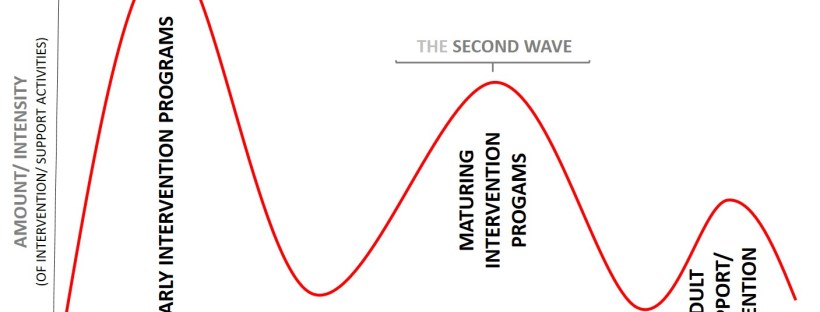
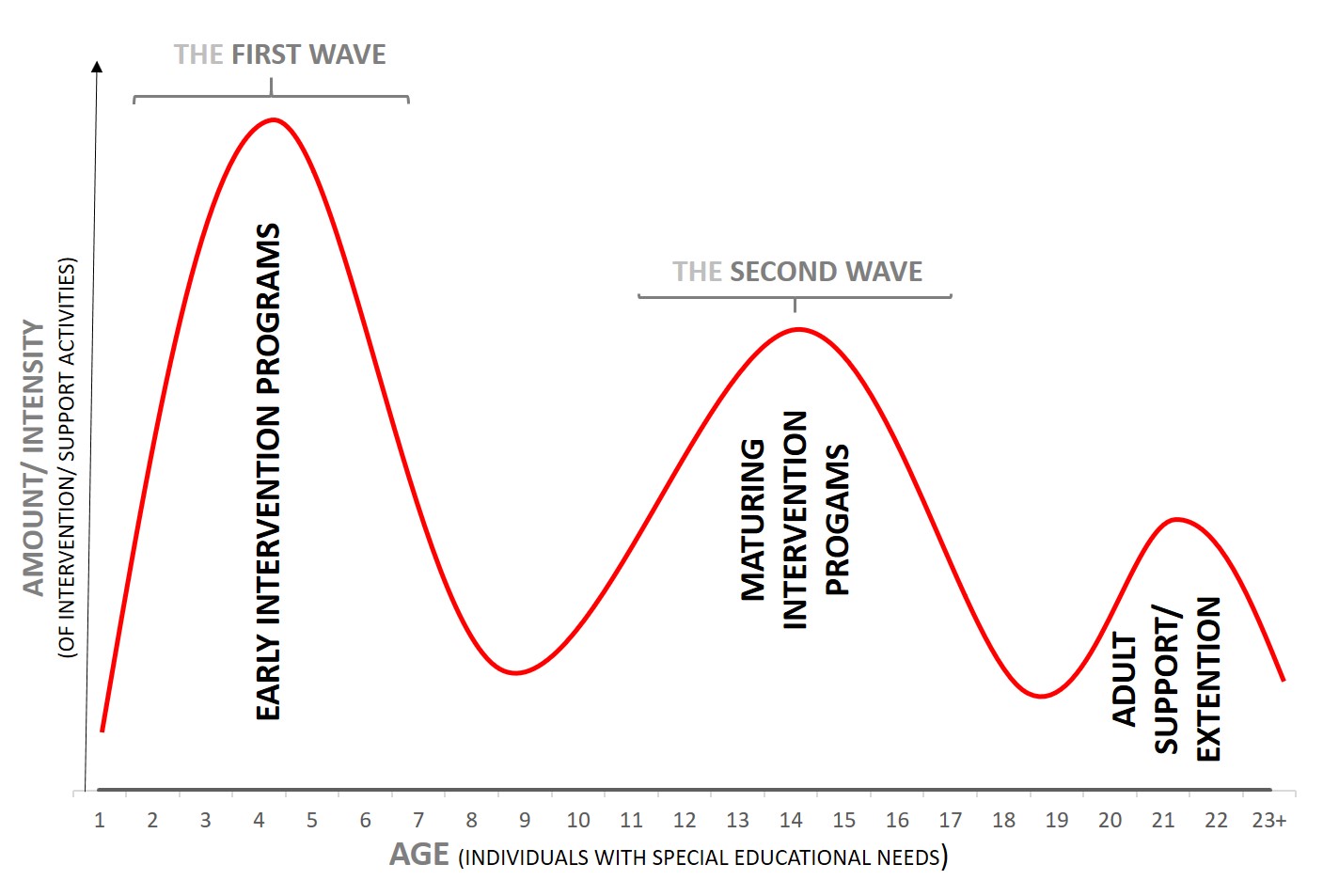
Between the ages of 2-4 years old you most likely noticed that your child does not respond or develop in sync with their same aged peers. Intervention activities aimed to aid physical, cognitive, communicative, self-help, and behavioural development may have been recommended by your pediatrician. Early intervention activities start at diagnosis and usually lessen when they child begins regular school, with some training continuing throughout childhood.

You may think that was it for your intervention efforts. You have a few more developmental stages to consider for intervention.

I am here to encourage you to think of the period between 12-17 years old as the,  “Second Wave” of intervention. At this time your child, typical or atypical, will go through a lot of change, and similarly to early childhood there is significant developments during these years. As parents and professionals working with teens with different educational needs, the second wave provides a new chance to explore the opportunity for change and positive development. It is important that we honour the struggle that all teens face, and support them accordingly. The Second Wave of intervention needs to meet these children at the stage of development that they have now achieved, not as a simple add-on to, or repeat of,  the original early intervention plans.

Changes during the teen years.

The teen years are a significant developmental period of internal change for an individual. Together with the growth of body and hormones there is significant development in the learning capacity of teens. This is extremely well detailed in Frances Jensen and Amy Ellis Nut’s fantastic book, “The Teenage brain”

From a neurological perspective, the teen brain is seen as only 80 percent mature. The finer connections in the brain are yet to firmly established, and the brain is a time when it is more open to learning and being excited. The neurons in the brain are well connected at the back of the brain, the centre of sex and excitability, but not well developed for the frontal lobes, the centre for rational thought, self-awareness, generating insight, assessment of risk and danger, abstract thought and planning. Jensen likens the teen brain to a sports car that is all revved up, with nowhere to go.

During this time teens are also expanding their knowledge base. It is a period of great flexibility, with windows for great development of learning. However, the open brain is more open to dopamine, the neurotransmitter that makes us feel good and drives us into a, “gotta have it” type of state. If you have your teen responding to situations in a FOMO style of anxiety, you know what I’m writing about.

Put this all together and you have a teenager – highly excited, easy to learn, find it difficult to explain themselves, difficult to stop an activity, irrational under pressure, and not able to see another person’s perspective  very well. And this is for, so called, typical, teens!

Additionally, the adolescent developmental period is one when behavioural and psychiatric issues develop. The general theory is that the onset of such issues may be created with the changes in body chemistry. Therefore, we see issues such as anxiety, depression, self-identify and body image develop during the teen years. Dysregulation of emotion can become common. The atypical teen is as, if not more, susceptible to these mental challenges. Additionally, for some atypical teens conditions, such a epilepsy can suddenly begin in the teen years.

And then there is puberty itself and all that new hormones introduce into and onto the teen: genitals, periods, a desire for physical stimulation (aka masturbation), voice changes, breasts, hair – everywhere – and the new hygiene requirements attached to much of this. You may still think of your teen as a child, but they certainly don’t look like one anymore.

On top of significant internal changes, the atypical teen faces significant changes in their external life. They may be at high school and surrounded by many typical teens, and viewing many behaviours – romantic, personal, oppositional, defiant, illegal – you may have wanted them to avoid, but this is not possible

All of this requires a new intervention plan – one based on their age and the launching pad that the teen years represent. For many children with special educational challenges, they grow into their challenge rather that grow out of it. Rather than trying to change them to fit the world, we have to help them be who they are going to be, but still be able to have a place in the world.

Elements to be considered in the SECOND WAVE of intervention.

The second wave of intervention is different from Early Intervention (ie the first wave) in many ways. Firstly, this wave coincides with the teen years and all the opportunity for growth, and challenge, that those years represent. Secondly, the focus moves away from a deficit model of the child to a strengths model can really help your child.  This is described in detail in another blog from our team , (htps://reddoorhongkong.wordpress.com/2019/04/02/lost-in-the-language-of-intervention/).

Part of this change in focus is to work less areas that your child can not keep up with their same age peers, unless those skills are considered essential life skills, and spend a greater proportion of time turning their splinter skills into academic success, and hopefully career options.
seond wave graphic

Lastly, I recommend that your efforts for your  teen focused training towards new essential behaviours and to revisit some behaviour management issues from the past. These include new and updated behavioural expectations, social and emotional support, relationship advice, academic support, learning about learning, independence and understanding of the self. This really helps your child develop essential skills that may help them build connections and friendships for the future.

Areas of training: There will be some behaviours that were cute when your teen was a child may be perceived extremely negatively now that they look like an adult. For example a young boy’s fascination with girls with blonde hair may seem cute, or even charming, when they are a toddler. When they are 6ft tall, very few people will find amorous fascination acceptable, or cute. We need to help these teens navigate the teen and adult rules of engagement around expected behaviour, conversation topics, expressing themselves, etiquette, personal reputation and dressing appropriately, personal space, and personal hygiene, as well as sexual urges. Many of these topics benefit from some peer-to-peer work, discussion and explicit instruction.

Counselling/Emotional sensitivity: It is extremely important that atypical teens are given the opportunity to learn about and express their emotions. After all their experience in the world is very different from ours, or that of other teens. They are more likely to be ostracized, bullied, or overwhelmed. Yet at the same time like many teens they appraise values such as “independence” and “having friends” as important. So we need to help counsel and guide teens to navigate the world of belonging, the importance of a growth mindset, self-acceptance, mindfulness, self-advocacy, resilience, emotional understanding and regulation.

Relationship navigation:  Friendship is a major need of all teens, although the intensity of relationships may differ. Our kids need to learn the basics of making, and being a good friend to another teen. They also need to be able to distinguish a good influence on them, from a poor. Some atypical teens are being bullied by the very people they consider “friends”. During teen years romantic interest will also be piqued. One needs to learn the expectations and restrictions around interpersonal romantic relationships. This is particularly true for those teens who are poor at reading social cues so may come on a little strong, and risk complete rejection. 

Explicitly learning what doesn’t come naturally: Many teens with special educational needs have difficulty is executive function (learning how to learn, how to think) and theory of mind (understanding how other people see the world differently from you) are sometimes easier to train in the teen years, rather than to children, because of the expectations of all teens are explicit around these topics. Teens passionately learn to express their opinions confidently, and listen to those of others. Performing on tests, and comparison of marks, can be a mixed blessing. Knowing that you didn’t do as well as a classmate on a test can open the door to discussion on your learning practices. Whilst we may have explicitly taught  our kids that, “it’s okay to ask for help”, we may need to update this to include the comment, “but try to do it on your own first”.

Cognitive development: remains important: Some atypical teens may have subjects that they are extremely good at (splinter skills), as well as areas that they perform less well in. As teens age, specialisation allows them to drop some topics that hold no interest or remain too difficult and focus on those skills that may help them form success stories, future studies, or even a career. Some topics – specifically basic math, and English, remain essential skills that require continuous learning within age appropriate contexts. It insults the teen to perform reading comprehension around topics or stories aimed at young children. I encourage children with SEN to take on learning communication training – persuasive text, expression, vocabulary banks, as a lifelong education plan.

Independence: Independence is the reward of the teenage years. All of the teens I have worked with over the years see Independence as a positive trait, even if they are not, yet, capable of many aspects of independence. As the parent of a child with special educational needs I have occasionally found offering independence very challenging – what if she gets lost, what if something bad happens. My own daughter has navigated getting home from school when she lost all her money, dealing with flirtations by weird men, and having to ready herself for an exam which we had recorded on another date. In every challenge she was stressed, but responded. In the exam, she actually passed! Independence can, and must be trained.

I am Me: The last special area that is to be considered within the Second Wave is appreciation of the self. This is not just part of the emotional growth that needs to be undertaken during the teen years, this is understanding your unique position in the world., what you contribute, what you want to contribute and how you are different from others. When our children with disabilities are young children we may focus on trying to fit in. In the teenage years this can change. Their strengths become a pathway to the future. Their quirks may become how they are to be defined. To quote a phrase from the fantastic book about being different, Wonder, “Why try to blend in, when you were born to stand out”?

I hope you found this detail of the Second Wave helpful. If you have any questions about the Second Wave, and your child, feel free to contact us via angelaw@reddoor.hk to see how our team of psychologists can help frame support for your child.

#specialeducationalneeds #earlyintervention #teens #autism #relationshiptraining #socialskills #reddoor #theoryofmind #executivefunction #splinterskills #secondwave  

Useful books

Frances Jensen and Amy Ellis Nut – The Teenage Brain

John Donvan and Caren Zucker – In a different key

Tony Attwood and Temple Gradin (and others) – Aspergers and Girls

Delia Samuel – Against the odds

Barry Prizant – Uniquely Human: a different way of seeing autism

Tony Attwood – The complete guide to Asperger’s Syndrome.

Blythe Grossberg – Autism and your teen

Liam Dawson – Teens therapy: The mental emotional and physical challenges with teenagers.

Travel into better mental health

One of the unfortunate side effects of the COVID pandemic is that our homes became our workplaces, and for many hours of work became without boundaries. Use your time away to disconnect from your job, and also some of your social media habit. Write that out of office message and mean it. If you like to check emails determine that you will only do it once a day, not constantly. Allow your workplace to miss you for a change. Taking some time away from devices especially your phone is extremely good for you. It helps create more space for you to be creative again. Look at the time you spend on your time by checking your screen time and your first 3 apps that you use, can you get those numbers down over your holiday. Set yourself a limit and see how you do. Consider reading more on this issue. My personal recommendations include the books, “How to break up with your phone” by Catherine Price, and “Digital madness” by Nicholas Kardaras.

Any digital detox could also include gaming consoles for teens as well as time on social media apps – particularly Instagram and snapchat.

Take time to connect – in the right way.

Often holiday time is family time. When you slow yourselves down from your busy day to day activities, you can build more special memories together. Make sure that you are not racing from one Instagram-able event to another. Really connect with your partner and your children. Ask them about their favourite books, films etc. Take time to get to know your family again.

Rest.

Please make sure that take a break if you need it. Rest. Your body will thank you for you.

Reset

Consider what has been working well in your life and what you could do during your time away to help you improve your health. Some light exercise, more fruits and vegetables might be great choices. Watch your alcohol consumption whilst you are away. The occasional celebration is great, but takes it toll on your body and your mind.

Reflect.

If you can consider journalling over the break. I often tell client that journalling is a free form of therapy. For more information on journaling see some of our articles on this topic.

Build memories.

Try something new, see something new. We are really a collection of our experiences, not the things that we have.

I hope you get to get away this summer. And if you do, invest in your mental health.

The benefits of using a thought log.

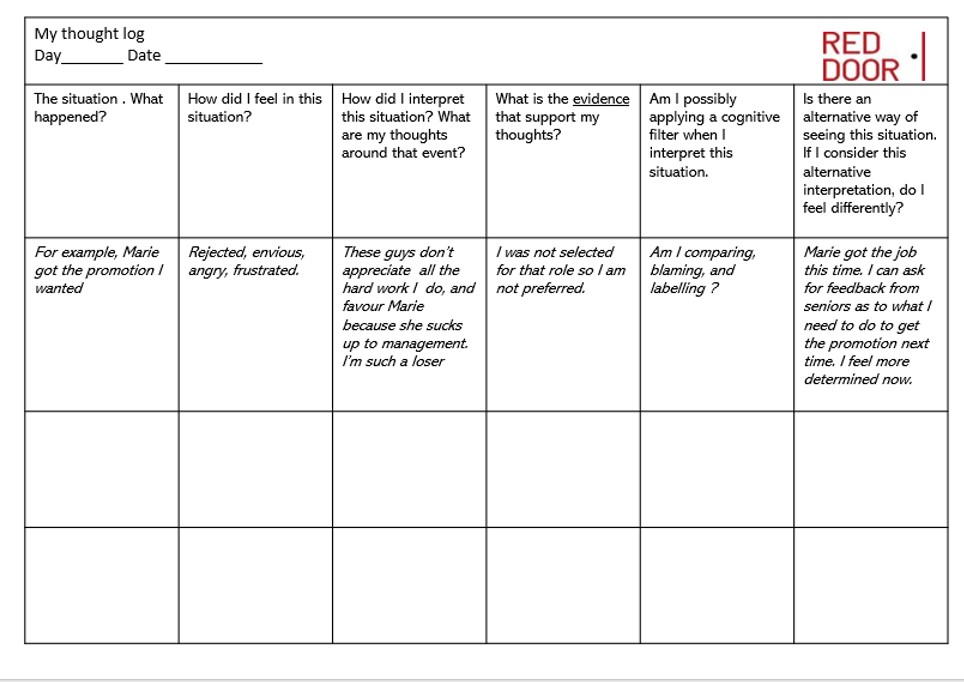
Sometimes in therapy we ask clients to capture their thoughts so that they can better examine how they are interpreting events in their lives..

Our thoughts influence our feelings, which in turn, effect our behaviours (responses). If your thinking is not rational then the feelings and behaviour may be out of whack.

Our thinking can be influenced by forces such as cognitive filters (see article link below) and cognitive bias, we need to be constantly reviewing our thoughts so we respond constructively to situations rather than react in negative ways.

To help you challenge some of your thoughts process one useful way is to write down your thoughts in a thought log. A thought log helps you organise your thoughts and the events that stimulated these thoughts and the consequences of those thoughts. By capturing and examining your thoughts you can see how they influence your behaviour

Many times, your thoughts and behaviours are unhelpful to you. Events, are not as you think they are. Reflecting on your thoughts, and reactions allows you to consider different ways to interpret situations and potentially change your behaviour.

Forms like this are often used in CBT therapy. Sometimes they ask you to capture them, sometimes they also have segments to dispute them. A typical thought log will help you capture notes about the situation, your thoughts, the evidence in support of your thoughts as well as alternatives.

If you have been reacting to situation in a manner that you consider unhelpful or potentially unhealthy, a thought log might be a great first step to helping you capture what is happening between your thoughts, and your behaviour.

Read more about Cognitive filters and how they influence your thoughts at the following link:

Mindfulness: Creating Your Corner of Calm

Did you know that the average person has between 12,000 to 60,000 thoughts per day and that most are negative and repetitive? Thoughts that drag us back into the past or thrust us right into the future. All this internal noise and motion can leave us feeling exhausted and stuck. On top of that, life has become more pressured and stressful for many, and technology has made it even harder to find the off switch. What if there were a way to manage those thoughts and distractions so that we could be less bogged down and more focused and worry-free? Imagine if we could train our minds to be our allies instead of that obstacle to getting stuff done. That power and possibility, indeed, lie within us.

You may have heard of mindfulness but are dubious about the concept. You may be intrigued but cannot envisage being still or silent. Or like many others, you may have dabbled here and there but ultimately struggled to find the time and maintain the habit. It can feel intimidating, even fearful for some to know where to start or what to do. The good news is the more you practice, the easier it gets, and the benefits accumulate. Just as you can build your muscles in a gym, you can train your mindfulness muscle. And it’s high time we approach mental fitness the same way we do our physical health.

So, if you’re seeking a greater sense of inner calm and a way to live more fully and consciously, then mindfulness may be just the practice you need. In this blog, we’ll explore the power of mindfulness and share practical tips and techniques that you can incorporate into your daily routine. So, let’s take a deep breath, let go of any distractions, and begin our journey towards greater mindfulness.

What is Mindfulness?

It is a scientifically backed practice that originated in Buddhist philosophy over 2500 years ago and was popularized in the West by U.S. Professor Jon Kabat-Zinn as a treatment for stress. Everyone can benefit from the positive and calming effects of mindfulness, not just those with mental health concerns. It is a state of awareness that comes from purposefully paying attention to our thoughts in the present moment without judgement. It’s about being curious and is the antithesis of being on autopilot. When we’re mindful, we engage our senses deliberately and we take in things we can see, smell, hear, touch, and taste.

What are the benefits of Mindfulness?

  • Mindfulness can reduce anxiety and depression
  • Mindfulness can be used to manage stress
  • Mindfulness can improve learning and memory
  • Mindfulness can improve decision making
  • Mindfulness can boost creativity and problem-solving
  • Mindfulness can improve our ability to focus
  • Mindfulness can help to regulate our emotions
  • Mindfulness can improve our relationships
  • Mindfulness can help us let go of automatic negative thoughts
  • Mindfulness can increase self-acceptance

Practices to assist mental decluttering and induce a sense of calm

These relaxation exercises can be practised independently anywhere and anytime you can spare 5-10 minutes. Some will resonate more than others so do experiment and find what suits you best. The positive effects can be felt instantly, and the ease of practice and benefits increase with frequency and consistency of practice. So, what are you waiting for?

Meditation

This practice takes the form of a voice guiding you through meditation or listening to a backdrop of soundscapes, white noise, or healing music to relax your mind and senses. The practice of stillness allows you to gain inner peace, break the cycle of reactivity and enhance your overall well-being. Meditation can be performed seated, on the floor or a chair, or even lying down. Once you have found your quiet spot and sorted out your posture, you can choose an anchor such as your feet on the floor, hands on your lap, sounds, or your breath. Some may prefer to keep their eyes open and have a visual focal point such as a candle. There is a plethora of tools now available to assist you given the surge in popularity of this practice. Similarly, there has been an explosion of well-being apps in recent years. Apps such as Calm, Headspace, and Insight Timer can help you cultivate a daily practice. The latter app is a favourite of mine in connecting you with thousands of teachers that cater to different tastes. The YouTube channel, Great Meditation, is another great resource with simple accessible meditations where you can select a male or female voice according to your preference.

Breathing Exercise

One of the most common mindfulness practices, this technique involves controlled breathing that helps to release any stress and tension, calm your mind, and aid emotional regulation. Also known as Diaphragmatic or Abdominal Breathing. Once you are seated comfortably, you can lower your gaze or close your eyes. Bring your awareness to the breath as you inhale through your nose and exhale out through your mouth. You can place your hand on your belly to check it is being engaged – it should rise as you inhale. It helps to visualize any tension leaving the body as you breathe out. This practice may be better suited to those who are not so keen on guided meditations. Breathwrk is a popular app that is focused purely on breathing exercises.

Informal Mindfulness Exercises

An informal approach that adopts the core principles of mindfulness meditation and one that can be easily integrated into your everyday activities. In essence, the objective is to bring your thoughts to the present moment and focus on a chosen stimulus whilst connecting with your senses.

  1. Select an activity that forms part of your daily routine such as brushing your teeth, having a shower, cooking, eating or walking.
  2. Focus on the sensory experience of your actions through movement, taste, touch, smell, sight, and sound.
  3. For example, as you brush your teeth, take note of the sound as the brush hits your teeth, the feel and temperature of the foam, and the smell and taste of the toothpaste. Also, notice the water and foam draining down the sink whilst observing the movement of your arms and hands.
  4. Acknowledge any thoughts that arise without dwelling on them and bring back your attention to the activity.

Body Scan / Progressive Muscle Relaxation (PMR)

This is a practical technique that strengthens the mind and body connection. It may be particularly helpful in cases where anxiety is manifested in muscle tension. This practice involves observing any physical sensations in your body as you scan from your toes to the top of your head. It is best practised by lying down with your eyes closed but can also be done seated. As you move through the body, slowly tense, and relax each muscle and body part. Pay special attention to any areas of tightness or discomfort and release any tension or stress that you may be holding. If you have any physical injuries, skip the affected areas, and avoid practising after heavy meals.

Imagery or Visualization

Visualization is an effective way to relax the mind and body that helps to alleviate stressful thoughts. It is a powerful technique that involves immersing yourself in the full sensory experience of a particular scene or favourite place such as a beach or the mountains. This exercise can be accessed through guided meditations or done independently and is a skill that can be learned. Anytime you feel stressed or overwhelmed, you can simply take a mental vacation to your happy place and return to your day feeling refreshed. Due to its highly calming effect, it could also be incorporated into your bedtime routine to promote better sleep.

5-4-3-2-1 and 3-3-3 Grounding Techniques

These grounding techniques synchronize the mind and body, bringing you back to the present moment by fully engaging the senses. They are effective in countering anxious thoughts and are prized for their simplicity as they are easy to remember and can be practised anywhere.

  1. 5-4-3-2-1 or 5 senses grounding technique – name 5 things you can see, 4 things you can touch, 3 things you can hear, 2 things you can smell, and 1 thing you can taste.
  2. 3-3-3 rule for anxiety – look around your current environment and name 3 things you can see, 3 sounds you can hear, and move 3 parts of your body or touch 3 things.

Mindful Colouring

This is another mindfulness exercise and form of art therapy that is enjoyed by both adults and children. Both calming and relaxing, it helps to reduce any anxious and unhelpful thoughts in addition to improving mood, focus, and concentration. These highly intricate designs can take the form of mandalas, geometric patterns, fauna, and flora and can be downloaded and printed from multiple online sites. Alternatively, there are plenty of colouring books available too.

Self-reflective Practice – Journalling

This mindful practice is beneficial to implement at either end of the day in a quiet spot and helps to promote increased awareness and understanding of yourself. Journalling aids the release of emotions and can be a cathartic process. The practice involves writing down your thoughts and feelings in a non-judgmental way and allows you to recognize any triggers and identify any negative thoughts or patterns. The idea is to write whatever comes to mind though prompts are available if this feels too overwhelming. If you are averse to traditional pen and paper and have a preference for the digital format, Day One is a highly-rated app that you can explore.

Incorporating mindfulness practices into your daily life can have numerous physical and psychological benefits. Whatever your chosen technique, the key is to approach these practices with an open mind and a non-judgmental attitude. Even if you can only spare a few minutes at a time, your mind and body will thank you for it, and it will influence how you appear the rest of the day. So, why not give it a try and discover the transformative power of contemplative practices for yourself?

#mindfulness #meditation #mindfulnessexercises #mindfulliving #mindbodyconnection #anxietyrelief #wellbeing #relaxation #selfcare

About the author: This week’s blog is written by Tanya Knott. Tanya works with adults and teens and focuses on the following areas in her practice: Life transitions. Career coaching. Grief. Anger management. Stress management. Anxiety. Depression. Sleep issues. Individual relationship issues. Mindfulness.

Tanya is a counsellor and psychotherapist at RED DOOR. Her practice is informed by 15+ years of HR and recruitment experience and evidence-based techniques such as CBT and Mindfulness. She is deeply passionate about helping those who feel lost or overwhelmed when faced with uncertainty or challenging life transitions. By guiding her clients to develop greater self-awareness, she helps them identify tools and coping strategies to better navigate any challenges that life may bring.

Contact the RED DOOR reception to set up an appointment with Tanya. reception@reddoor.hk or message 852-93785428

Other blogs on Mindfulness, Journalling and Colouring

Break free from the prison of SHAME.

So many people are living in a psychological jail created by a sense of shame. Shame doesn’t have to dominate how you feel about yourself, and the decisions that you make. Break free from the prison of shame.

Shame is a complex, painful experience that most of us experience at some point in our lives. It is characterised by the mental distress, often together with unpleasant feelings within your body including feeling like you have knots in your stomach, chest pain, lumps in the throat, and heated skin, when you feel you have done or are wrong in a situation. There are usually accompanying negative intrusive thoughts such as, “I am bad or messed up”.

When our shame becomes chronic, it can take over our identity and our energy to live fully. When we experience this type of shame, we are steeped in the fear of being ridiculed, diminished or feeling flawed. Whatever, we feel ashamed of, at its foundation is an unconsciously belief of inferiority or being unacceptable – even being unlovable. I call these our root shame beliefs – they include thoughts such as:

  • I am unlovable
  • I am dirty
  • I am disgusting
  • I am inferior
  • I am a joke
  • I am a bad person
  • I am a fraud
  • I deserve to be punished
  • I am nothing

Shame is a common denominator in low self-esteem, high reactivity, perfectionism, intimacy issues and co-dependency. Shame traps us. Shame breaks us.

There are different types of shame – some is attached to situations, when you break an norm or expectation, or existential shame, when you come to realise something about yourself (e.g. you drink too much). When shame internalised/toxic shame it becomes especially problematic. Internalised/ Toxic shame is when you believe that something is fundamentally wrong with you. Often this is the result of external experiences or commentary.

Shame is different from guilt. Guilt is about a specific behaviour or fear of a punishment, whilst shame is about feeling that something is unacceptable about us. When we feel shame, blame is never far behind.

Some cultures place a particularly high value on reputation, face, honour and one’s contribution to their community. In such societies, shame may be used as a tool to modify the behaviour of a member of the community. In some cases, if a ‘wrong’ can not be corrected a traditional expectation may even include suicide.

If shame has been shaping your experience, we want you to know that you CAN move out of those associated experiences of being disconnected, rejected, diminished and reduced.

What are people ashamed of?

People are ashamed for a variety of reasons. In therapy we see shame from which we try to free our clients. Often, as people who care about our clients, we wish we could help them see that they should NOT be ashamed of the things they are ashamed of. Shame is rarely fair or even rational.  Shame destroys our sense of self, and our feeling of acceptance, unnecessarily.

People feel ashamed about:

  • Their appearance
  • Their culture, ethnicity
  • Their addictions (drinking, drugs, gambling)
  • Their mental health
  • Their sexuality
  • Their identity
  • Financial troubles or status
  • Their learning challenges
  • Their marital status – particularly if they have been forced into divorce
  • Being rejected by their family of origin
  • Being in an abusive romantic relationship

Defence mechanisms against shame.

We respond to shame in a number of maladaptive ways. Have you been using these techniques to maintain or avoid dealing with your shame?

  • Denial/ Repression – we refuse to believe what has happened or bury it because we or others think it is unacceptable. This can lead us to become easily triggered as we mask our sensitivities. Paradoxically we try to make a stimulus have no impact, but instead we can become hypersensitive to trivial criticism that we worry could reveal the source of our shame.
  • Projection – when we project, we disown our unacceptable feelings, thoughts or qualities onto someone else. Sometimes we blame another person before we think they can judge us.
  • Self-Pity victimisation – sometimes we really are victims, but we can also portray ourselves as a victim as way to avoid growth. It is rare, but some adults provoke abuse from others in order to receive the punishment they believe they deserve as part of their shame.
  • Withdrawal – we can force ourselves to live in the shadows so that others can’t see the source of our shame. Introverts are more likely to follow this approach.
  • Avoidance/ Addiction – When we have strong shame we may choose to self-medicate to escape the negative feelings and thoughts associated with our self-hatred.
  • Contempt – sometimes we make use arrogance as a defence. Using and inflated sense f ourselves to avoid our feelings of inferiority.
  • Envy – we can compare ourselves to others and blame them for our situation.  For example, “I have to be this way because those other people have all the resources and I have none”
  • Oversharing – when we asked about our circumstances we share the whole story, including all the ugly details of our experience because we feel obligated or compelled to share our shame.
  • Acting out in anger or aggression – aggressiveness may become intensified if we believe that another person stimulates our self- judgement. We may become vindictive, physically aggressive, or passive aggressive.

A way out of shame.

Shame makes us silent, defensive, hypersensitive, combative, forced to live in denial or anger. The opposite of shame is also part of the cure for shame. The opposite of feeling shame is being self-accepting, being compassionate to yourself, accepting that perfection is not ideal or realistic, being forgiving of your problems and shortcomings, understanding that progress is made in consistent effort (i.e. resilient), and being connected to people rather than treating yourself as if you deserve punishment.

Easier said than done, I hear you say.

In counselling we recommend a number of techniques and have sessions focused on various recovery practices. Some that I particularly recommend are quietening your inner critic, creating an inner champion, and reflective journalling to help you recover.

Whilst you can do this work on your own, using some of the books listed as recommendations to this article, working with a counsellor will probably be more efficient. A counsellor can help frame questions to help you better see your shame traps, and navigate the practices that maintain your shame, as well as help you prioritise activities that could help.

Shame reducing exercises

Shame makes us silent, defensive, hypersensitive, combative, forced to live in denial or anger. The opposite of shame is also part of the cure for shame. The opposite of feeling shame is being self-accepting, being compassionate to yourself, accepting that perfection is not ideal or realistic, being forgiving of your problems and shortcomings, understanding that progress is made in consistent effort (ie resilient), and being connected to people rather than treating yourself as if you deserve punishment.

Easier said than done, I hear you say.

In counselling, we recommend a number of techniques and have sessions focused on various recovery practices. Some that I particularly recommend are quietening your inner critic, creating an inner champion, and reflective journalling to help you recover.

Whilst you can do this work on your own, using some of the books listed as recommendations to this article, working with a counsellor will probably be more efficient. A counsellor can help frame questions to help you better see your shame traps, and navigate the practices that maintain your shame, as well as help you prioritise activities that could help.

Recovery from shame.

When we explore how people react to shame, we can summarised that, in response to their shame, people move against people, away from people, or move towards people. Moving towards people means being vulnerable, showing love. In order to be able to be vulnerable and show love we need to free ourselves from the power we have given our shame.

Quieten your inner critic

In order to free ourselves from shame, you will need to quiet your Inner Critic. Each of us has an inner critic, who often picks away at our sense of self, building a kingdom of shame. In session we will often confront a client’s inner critic so that they can, often for the first time, realise that they are feeding themselves a series of unhelpful and poisonous thoughts. This inner critic maintains your shame. The inner critic writes excessively long to do lists of “should” in response to your reaction whatever you are ashamed of.

Remember Many of us give a full stage and podium to our inner critic, but little air time to soothing words of self-affirmation of our inner champion. Remember the words that you say to yourself can build you up or strip you down. If you are suffering from negative self-concept you need to feed yourself positive words. The thing you are ashamed of, is probably not really that shameful. You need to change the record that plays in your head. Remember nothing changes, if nothing changes.

I often encourage clients to name their inner critic, usually with a name that I dislike. Mine is called Kevin, simply so I can say to myself, “Shut up Kevin,” whenever I find myself in a labyrinth of self-criticism. This quietens the critic AND makes me smile. You need to then work on its antithesis – the inner champion or cheerleader.

Engage your inner champion.

Engage your inner champion/ cheerleader.  creating a character or component inside yourself whose role is to be the champion you need. This voice needs to help you accept your shame and turn your vulnerability from something to hide from to something we can be proud of. There is a reason that the movement towards acceptance of the LGBTQ+ community is called PRIDE.

When deciding what your inner champion might need to perform in support of you, consider the opposite elements of shame. This key inner voice needs to help you stay connected to the world, be compassionate, feel pride in yourself, help you to be resilient, accept that you are imperfect being and that, that, is okay. Self-acceptance is a priority.

For example, your inner champion could:

  • Encouraging you
  • Give you empathy
  • Supporting you when you feel unfairly treated
  • Help to build your self-esteem
  • Help you to feel empowered
  • Validating your feelings
  • Talk to you  positively about our looks, feelings, experiences
  • Understand that when people judge people like you, it demonstrates their problems, not ours.
  • Helping you identify and regulate your emotions
  • Help us face up to our responsibilities rather than feel “less than” because of parts of us we don’t accept

Your champion is going to respond to the demands of your inner critic – using self compassion and acceptance, and even forgiveness to free us from the tyranny of should that the critic will list for us to live under. We can sometimes explore these internal dialogues by using journals.

Using journal pages and prompts to help you break free from shame.

I am a proponent of journaling. I see it as an essential component of self-therapy. I’ve attached a link to an article about journaling to help you better appreciate the benefits of journaling at the end of this article.

The creative process of journalling allows all of your voices to be expressed on the page. Internal self-dialogue, is much more clear when captured on paper. I prefer prompted journals as an empty page can be daunting.

Exercise series 1: Let your shame speak

In this series of journal pages, you will give your shame a voice to allow it to express the thoughts associated some of your fundamental shame beliefs. For example, you write your response to a root belief that you hold within your experience of shame. You can know what your root belief is by reading each of the common shame root beliefs and feel in your body the one that gives you the biggest response. We have created these pages for your consideration.

Step 1: Let your shame speak –responding to a root belief

Step 2 Separate the shoulds based in fact from the shoulds that are based in shame

Step 3 Imagine an alternative future

Step 4 Create a rebuttal.

Exercise series 2: Reprogramming messages from the past.

Step 1: Identify messages from your youth that have come to affect you and your perception of yourself. Think about the messages that your friends or family, or culture, impressed upon you when you were young. List these out.  These might include

  • Be nicer
  • Don’t be so sensitive
  • Don’t act crazy
  • You are a psycho
  • Act like a lady
  • Don’t be so stupid
  • Be nicer to people
  • You are lazy

Step 2: What was the impact. Did you feel embarrassed or humiliated by these messages. How are you allowing them to affect you as an adult?

Step 3: Have you turned these messages into a tyranny of should that your inner critic reminds you of regularly. Does it seem fair that you are so tough on yourself?

Step 4: Consider listening to your inner champion instead. Are these messages needed or helpful to you? If you were showering yourself with self-compassion and protecting yourself, would you listen to these messages and the tyranny of should any more?

Try these activities to help you work through your shame. Sometimes it is hard to be objective when you are looking at and within ourselves. You can consider working through a counsellor to help you find pathways through tough spots, when you get stuck, or find some elements too painful. A good counsellor can help you move through the shame reduction process, and break you free from the thoughts that have been keeping your trapped.

About the Author: Angela Watkins is the lead counsellor at RED DOOR. Angela helps adults, teens and families break through emotional road bumps. You can feel better. To contact Angela for an appointment email angelaw@reddoor.hk.

Other blogs about Journaling:

Useful books:

Darlene Lancer (2014) Conquering shame and codependency: 8 Steps to freeing the true you

Rebecca Mandeville (2020) Rejected, shamed and blamed: Help and hope for adults in the family scapegoat role.

Hilary Jacobs Hendel (2018) It’s not always depression: Working the change triangle to listen to the body, discover core emotions and connect to your authentic self.

Brene Brown (2007) I thought it was just me: Women reclaiming power and courage in a culture of shame.

Stephen Guise (2015) How to be an imperfectionist.

Understanding your Mother Wound – Repair is possible.

The term mother wound is used by psychologists to describe the emotional pain or trauma that can be result of a difficult or disruptive relationship with one’s mother. You do not need to have had “bad” parents, or a history of trauma, to acknowledge that a part of you feels wounded from how interactions with your mother have left you feeling incomplete or unloved.

Many people identify that they have experienced a lack of emotional validation from their mothers. Individuals have a plethora of reasons to be unable to provide emotional care for their children. Whilst this creates pain in the children of these mothers, this article is not about blaming that parent.

It is unfortunate that you did not have the type of parent that you needed, and deserved. You can stay stuck in that pain, or consider looking at how to heal that hurt.

Healing the mother wound is about actively providing the care for yourself to heal what remains. In the same way that if someone accidentally cut you with a knife, it does you better to pay attention to treating the wound than shouting at the weapon that caused the injury.

You may feel angry because of the perceived failings of your parents. I encourage you to talk through that anger with a professional. You do not have to forgive or forget. That said, this venting, whilst cathartic, does not completely heal the wound. Blaming your current status on other people might feel good, but you will still need to actively work on a repair for yourself. This probably feels unfair. An alternative way to look at it would be to say that you are seizing the reigns of your future and will do the work to deliver your future, rather than waiting for someone else to do the work for you (not possible) or stay stuck in the past (in which case repair rarely occurs).

Understanding your mother wound

Take a moment to reflect on your relationship with your mother. Think about how that relationship affects you today. Did you feel loved and secure? Were you let wondering if you were good enough? Did you need to act in a role that didn’t allow you to be a child? Did your needs take second place to the needs of other family members? Were you labelled as lazy, crazy, a troublemaker? Write these observations down so that you can reflect on this commentary later. Recognising the ways that your past experiences affect your present can help you begin to heal.

Some of the symptoms and signs that you have as a consequence of having a mother wound can include:

  • Perfectionism
  • Low self-esteem
  • People pleasing (being a Yes-person)
  • Poor personal boundaries
  • Self-sabotaging behaviours
  • Problems with being assertive
  • Difficulty caring for your needs
  • Idol worshiping other people
  • Being conflict avoidant
  • Difficulty regulating your emotions, feeling over emotional
  • Constant feelings of shame and guilt
  • Trouble in interpersonal relationships including fear of abandonment, difficulty trusting people and/or co-dependency
  • A sense of emptiness.
  • Lack of confidence to parent your own children
  • Difficulty accepting responsibility for your role in situations
  • Vulnerability to addiction or self-medication
  • Regular negative self-talk

What can you do to heal your mother wound?

The following activities will help to heal your mother wound. Whilst you can do these alone, these tasks are often more effective when performed in collaboration with a counsellor. Counsellors are trained to help frame questions in a constructive, reflective manner that helps clients to focus on the feelings and their responsibilities rather than noise and excuses, additionally they can help you to feel safer, and more calm, during these painful explorations.

Reflections and recognise An important first step is to understand how your past is affecting your present. We listed a series of symptoms in the section above. It is important for you to consider particular instances where you have demonstrated these behaviours so that we can consider what thoughts, reactions, or triggers are occurring in those situations.

Let me give you an example. A client recently told me a story about a recent frustrating her interaction with her boss. In the recount, Janice (not her real name), was annoyed that her boss had not yet repaired the air conditioner in the classroom where Janice teaches thirty 5-year-olds. Janice identified that she was angrier about the air conditioner than she felt was logical. Knowing Janice well, as well as her history with a mother who often dismissed the impact of events in Janice’s early life, I asked if her current reaction could be related to feeling ignored by her mother when she had made bids for emotional validation as a child. Suddenly Janice’s overreaction made sense. Janice was reacting not only to her boss’s current inaction, but to a repeated, old wounded belief, that she was not important enough to be listened to, a mother wound.

If you have overreacted to a situation, do not stay locked in the shame you might feel about it. Be curious. Could the present actually be reminding you of the past? We call this type of reaction a trauma response. It is usually attached to a traumatic event, but isn’t always. If certain circumstances remind you that you feel ignored, dismissed, labelled unfairly, or mocked, it may be as part of your history, and pain from your childhood.

Throughout the recovery from a mother wound, and especially at this time, journalling your thoughts is particularly helpful. Start writing some helpful prompts that can start your ability to reflect on these situations. Here are some prompts which might help.

Pick one symptom that you suspect may be attached to experiences from your childhood. When did you start to notice this behaviour in yourself? What could have happened in the past that planted the seeds for this behavioural choice? If you could, magically be rid of this problem, how would your life be different?

Pick one symptom that you suspect may be attached to experiences from your childhood. What are the benefits to you of feeling this way, or performing this behaviour? What does it mean for you as an adult to be experiencing this behaviour/ feeling? Are you ready to consider changing this behaviour/feeling? Do you know how?  

A key component of recovery from the persistent challenges from a mother wound involve the essential element of re-parenting. Re-parenting involves creating a character or component inside yourself whose role is to be the parent that you need. That role is sometimes refered to as your Inner Parent.

Counselling provides a objective, yet non judgmental way to look at yourself and how you interact with the world. All of us can benefit from the process of self-exploration which is an essential component of the counselling processing.

When deciding what your inner parent might need to perform in support of you, it will be helpful for you to consider what you want/wanted your parent to do in their role as parent.

For example your inner parent could:

  • Encouraging us
  • Calming us
  • Taking care of our basic needs
  • Organising our health checks
  • Supporting us when we feel unfairly treated
  • Help to build your self-esteem
  • Looking after your safety
  • Validating your feelings
  • Nurturing you
  • Helping you identify and regulate your emotions
  • Help us face up to our responsibilities
  • Prioritise us over other people

When you write a list of these activities you can use it to start to set an agenda of what your Inner Parent needs to provide for you. The questions that remain is how can you achieve these goals. Talking this through with a counsellor, or close friends will be a great place to start.

Do yourself a favour – write the agenda of your inner parent today, and start re-parenting yourself tomorrow.

In order to set up a compassionate inner parent for success, you will need to quiet your Inner Critic. Each of us has an inner critic, who often picks away at our sense of self, building a kingdom of shame. In session we will often confront a client’s inner critic so that they can, often for the first time, realise that they are feeding themselves a series of unhelpful and poisonous thoughts. I often encourage clients to name their inner critic, usually with a name that I dislike. Mine is called Kevin, simply so I can say to myself, “Shut up Kevin,” whenever I find myself in a labyrinth of self-criticism. This quietens the critic AND makes me smile.

To help recover from the emptiness we may feel from the way we were raised we need to practice self-compassion and self-validation. Being kind to yourself is an active process. Many of us give a full stage and podium to our inner critic, but little air time to soothing words of self-affirmation. Remember the words that you say to yourself can build you up or strip you down. If you are suffering from negative self-concept you need to feed yourself positive words. You need to change the record that plays in your head. Remember nothing changes, if nothing changes.

Look up self-compassion workbooks in Amazon to start building and enterprise of exercises to help you. Or talk to your counsellor who can help create a customised programme around your needs and messaging.

The practice of mindfulness and mediation to create a greater generalised sense of calm so that you can better observe your reactions to situations and be curious and more reflective over your behavioural responses. Working with a mindfulness trained coach can help you better notice and react to situations that trigger you.

Utilizing healthy creative practices can help you reflect on emotions and create a vision of your future with the help of your Inner parent. Creative expression of ideas, feelings and conerns decrease stress and anxiety, increase feelings of calm and help develop self-awareness. Engaging in creative endeavors is good for your mental health. For example, you can use colouring, painting, needlecraft, clay work and writing to express yourself.

For those of you who know me, you will know I am a fan of reflective journalling. Journalling allows your internal dialogue to be played out on the page. If you use journal prompts you can better capture your thoughts to be expressed on a particular issue or worry. Its harder to start journalling from a blank page.

Some journal prompts that might help you could include:

When was the last time I was truly kind to myself. How did I feel when I was looked after by myself?

Am I able to allow myself to “parent”? If not, what thoughts and concerns are holding me back?

What kindness or support could I provide for myself that would make a big difference in my life?

If I had to compare the amount of time that a listen to my inner critic rather than my inner parent, what would the balance look like? What could I do to make the ratio of air-time better for my mental health?

Lastly, be patient with yourself and your healing journey. You may want to rush to be whole again. It might be better to change one small thing at a time, so that you can reflect and re frame your world around the small changes that could be made. Allow yourself time to grow , after all that’s what a good parent would do.

About the Author – Angela Watkins is a psychologist and counsellor helping teens and adults recover from hurt and shame. Angela helps clients make the changes that take back their control of their lives. To book an appointment contact angelaw@reddoor.hk

Helpful books about the mother wound and reparenting:

Larry ALLEN (2023) Unearthing the mother wound: Healing and growth for a happier life

Maria CLARKE (2022) Healing your wounded inner child

Natasha LEVINGER (2023) Healing your inner child: Re-parenting yourself for a more secure and loving life.

Other articles you might find helpful: 

Changing your thinking:

https://reddoorhongkong.wordpress.com/2024/10/06/change-the-view-challenging-your-thinking-filters/

about writing a journal

https://reddoorhongkong.wordpress.com/2023/06/08/troubled-by-your-thoughts-try-journalling/

breaking free from narcissism

https://reddoorhongkong.wordpress.com/2024/01/11/breaking-free-from-narcissistic-manipulation/

when parents and children become estranged

https://reddoorhongkong.wordpress.com/2023/04/10/when-families-break-up-parent-adult-child-estrangement/

Career Insight: Re-entering the job market after a career break

Career breaks have become increasingly common, with 62% of the global workforce having taken time out from employment at some stage, according to LinkedIn data. A gap that so many have previously taken pains to conceal is now out in the open and recognized by LinkedIn. Since 2022, the employment-focused social media platform has included “career break” as a profile category, which has helped to normalize the experience. Thankfully, the perception of taking a break is shifting, no doubt assisted by the great leveller that was the coronavirus pandemic.

Despite reduced stigma, countless doubts and fears can consume individuals contemplating a return to the workforce. Irrespective of whether a break is voluntary, such as extended maternity leave, or otherwise, as in the case of redundancy or trailing spouses, the struggles can be much the same.

We discuss some of the common feelings and challenges that can paralyze and prevent you from moving forward while also considering action that you can take, not to mention the positives that can also be gained from this period.

What you might be experiencing:

Sense of overwhelm and lack of direction

The prospect of job hunting can feel daunting and overwhelming when you don’t know where to begin. There are also different levels of anxiety, which may be correlated to how long you have been out of the market. For example, 6 months or a year may feel relatively tolerable to some, whereas 5 or 10 years would comparatively induce a lot more fear. You may be struggling to make sense of your purpose. Sometimes, it is easier to start with or have more certainty over what you don’t want to do as opposed to knowing what you want to do. For instance, you may have done some reimagining during your break and now wish to reposition yourself but do not know where to start or how to go about making the necessary changes. Jumping into the unknown can be terrifying, and following through takes both strength and courage. Connecting with a counsellor may help you find some of the answers to those deeper questions as you navigate this life transition so that you can move forward with confidence and a clear direction.

Lack of confidence and loss of identity

You may have lost sight of your former professional self after being away from the workforce for so long. This may trigger feelings of self-doubt and affect your confidence, given one’s identity can be so bound up in work. You might be thinking, who’s going to hire me or what do I have to offer? Although you may now feel irrelevant, life experience is invaluable. Part of the fear can be attributed to the stigma attached to a break, though that perception is now weakening. Don’t overlook any experience you may have gained, such as through volunteering, or any contributions you may have made to your community during your break, despite these being unpaid. These experiences enhance your profile and differentiate you. Maximize your potential by recognizing the gains and giving yourself credit.

Imposter syndrome and self-limiting beliefs

Career gaps can breed insecurity and cause you to question your skills and viability as a candidate, and uncertainty surrounding the job search can further amplify any fears. Focusing on your weaknesses can lead to procrastination, and fear of rejection can prevent you from even applying for jobs. You may have already applied to a few jobs and had some knock backs. However, looking for a job is a full-time job, it isn’t meant to be easy, nor does it happen overnight. It is easy for negative thoughts to spiral if you do not actively check and challenge them. To silence that inner critic, it is important to gather evidence, reflect on your career, review your accomplishments, note any highlights or promotions you’ve received, and note any transferable skills for those contemplating a pivot. Don’t downplay your achievements; try asking friends or family what they see in you to gain another perspective.

Steps you can take to better understand yourself, recognize your potential, and find meaningful work:

Pause and seek help

Take a moment to recognize and acknowledge your emotions. Confide in your loved ones. There is no need to go it alone; whether you are needing to offload or obtain advice, things will feel less intense and overwhelming once you start to voice and breakdown your struggles and concerns. It isn’t easy jumping straight back in after a break, so it’s perfectly normal to experience some discomfort. Enlisting the help of a counsellor could be beneficial to process any emotions, bounce thoughts, and find tools to better cope with the uncertainty of the job search process.

Reframe your thinking and reflect on your strengths and values

There can be benefits to taking a break in that it allows you to reset and gain perspective and clarity. Take the time to evaluate whether you are on the right path; consider what worked for you in your former chapter and what didn’t. What are your priorities, and have these evolved over time? Do you now wish to explore new opportunities? Think about what motivates you versus what drains you; what is important to you? It can be helpful to define your core values, as if your career is misaligned, you are likely to feel disengaged and unfulfilled.

Similarly, recognizing your strengths should direct you towards a job that is more rewarding and enjoyable. Reflect on what differentiates you from others and what skills come easily to you. You may be interested in taking a psychometric test such as the Gallup Clifton Strengths Assessment to uncover more of your unique attributes and learn how to optimize your potential. If you are seeking to pivot into a new career or are in a new market (country), what transferable skills do you have? Do you need to reskill or upskill? How can you make your profile more compelling to potential employers? We’re often so critical of ourselves and have our personal blind spots, so speaking to a friend, a career coach, or a recruiter could prove enlightening.

Put yourself out there and tap into your community

Create a plan, and rather than focusing purely on the outcome, think about what small steps you can take to move you closer to your goals. Talk to people and network; go to industry events; gather information; and gain insight into market trends and gaps. Let people know that you are thinking about returning to work and reconnect with former colleagues or acquaintances in your chosen field. You never know what leads, introductions, or ideas you might get, and this engagement and process of discovery is likely to revitalize you. Connect with headhunters, a career coach, your alma mater, update your CV, and optimize your personal branding – ensure your LinkedIn profile is marketing your expertise to allow for direct approaches.

Lastly, manage your expectations and be realistic about what you can achieve and your timeframes. If you harness your network, you are likely to find a job much quicker than you can on your own. And remember when you get rejected, try, try again.

About the Author:

This  blog is written by Tanya Knott. Tanya focuses on the following areas in her practice: Life transitions. Career coaching. Grief. Anger management. Stress management. Anxiety. Depression. Sleep issues. Individual relationship issues. Mindfulness.

Tanya is a counsellor and psychotherapist at RED DOOR. Her practice is informed by 15+ years of HR and recruitment experience and evidence-based techniques such as CBT and Mindfulness. She is passionate about helping those who feel lost or overwhelmed when faced with uncertainty or challenging life transitions. Through guiding her clients to develop greater self-awareness, she helps them identify tools and coping strategies to better navigate any challenges that life may bring.

Contact the RED DOOR reception to set up an appointment with Tanya. reception@reddoor.hk

#careerbreak #careerchange #jobsearch #anxiety #counselling #careercoaching #perseverance #strengths #gallup #cliftonstrengths #reddoorcounselling

Warning signs: when to consider couples’ counselling.

warning signs

Can couples counselling save your marriage?


Whilst most counsellors would like to say an unequivocal “YES” to this question, reconnection is very dependent on the couple, the history of their relationship, the degree of contempt in the relationship, the commitment of both parties to try to work at the relationship, and of course, the involvement of other parties.


When couples come to me for counselling the first diagnostic that I look for is the “sign of life”. We’re these people happy together once? If they were happy once, and both believe this, this is a promising sign of life and hope for the relationship. There will still be a lot of work, but you cannot make something that was never good into something great, but you can, again, like someone who you once loved.


The reality of couples counselling is that some couples  come to counselling after a serious disruptive act – such as having an affair, long standing contempt, and the echo of other significant life events (death of a parent, loss of work).  Whilst walking back from those challenges can be accomplished, it may be better to consider counselling when there are warning signs, rather than war wounds.


You are having the same argument again and again, for more than 6 months. Sometimes these arguments are a cover for other, even more complicated issues. Counsellors can help couples learn to communicate more effectively, and also dissect underling issues.


You live separate lives from one another. If you feel like you are more like flatmates than life mates. The process of counselling may help you build positive shared goals and set rules of engagement to help you reconnect Sometimes marriage partners feel determined, because of past hurst (inside or before the marriage) to express their independence from their partner. Counselling may help you face and resolve the opportunity to reconnect and enhance your shared feeling of like, and love.


You want different things out of life from your partner. Once upon at time you may have been best friends, and shared everything. As we grown, partners can become disconnected, especially as children enter the equation. A love relationship requires investment. People can change, and you may believe different things, but could an remain connected. A counsellor could help you navigate your shared values and help build better connectivity.


Intimacy is lacking. Intimacy is not just sex. All affection – hand holding, touching, kissing, and sex, matters. Couples counselling can help partners describe and discuss the reasons behind their challenges to intimacy.


You or your partner is tempted to have an affair. Relationships can be significantly damaged by disruption to expectations of exclusively. Even harmless Facebook flirting with ex-partners. Couples counselling can help individuals connect and consider their needs of their ego, and their current relationship.


Trust has been broken. Trust is the foundation of a healthy relationship. When we do not trust our partner, we may try to build defences around ourselves and these compromise our future of the relationship in our relationship. Trust is an essential, yet fragile, component of relationships. Counselling can help couples explore reasons to trust (or not) and their own personal values and viewpoints that compromise their barriers to trust in the future.

Counselling can help couples reconnect. When choosing a couple counselling options you will find different modes and options. At RED DOOR we are the only provider in HK to provide the Conjoint therapy of Couples Counselling.

The advantage of Conjoint therapy in Couples Counselling. The model we use at RED DOOR. At RED DOOR we use the conjoint couples therapy approach. In Conjoint therapy two therapists work with the couple during couples’ sessions and then one counsellor will meet with you for any one-on-one sessions. This is an advanced method of couples therapy. Since there are two therapists in the room there is less chance of either of the partners feeling blamed, or favoured. If you have felt that any previous couple therapist sided with you, or your partner, you will appreciate the objectivity and inclusion that this model supplies. There are a number of therapeutic options available in the conjoint model including pairing vs individual counsellors , role play and modelling of problems and techniques, as well as  break-out sessions within couples sessions (which is helpful if one client becomes flooded, or some negotiations are required) . This model also keeps the therapist moving sessions forward constructively. Often if sessions become heated much of a therapist’s attention is moved towards “traffic control”. Traffic control whilst necessary, is not the goal of therapy. Therapy is to help blockages in communication and find the right tools and skills to help remedy the problems. Having a second therapist on hand helps keep the therapeutic goal on track. In conjoint-couples therapy you each have someone who understands each of your perspectives in the room. The team of counsellors work with you, and together to formulate a plan to understand and overcome the challenges in your relationship. At RED DOOR, we use a Gottman informed approach, but will also include emotionally focused therapy, CBT and narrative therapy tools. Because two therapists are involved there are cost implications. At RED DOOR we try to manage this by asking each of the therapist to reduce their standard fee for the sessions.

If you don’t feel ready, or your partner will not go to counselling, you might consider reading relationship building books

I personally like Gottman & Silver, “The seven principles for making marriage work” and M. Kirshenbaum’s “I love you, but I don’t trust you”. For some quick ideas to reconnect, please see our blog on making your relationship better:  https://reddoorhongkong.wordpress.com/2019/02/14/make-your-relationship-better/

Best of luck keeping your relationship on track. Please remember the words of American relationship psychologist Barbara De Angelis , “Marriage is not a noun; it’s a verb. It isn’t something you get. It is something you do”.

#reddoor #couples #relationships #trust #mentalhealthessentials

How to (really) get over a break up

If you’re reading this you are likely in the throes of grief and struggling to move on from an ex. Perhaps they’re always on your mind. Perhaps your days are clouded by their absence. Maybe you can’t stop yourself from scrolling through their social media, or messaging them. Possibly you still dissolve into tears. Being rejected and the ensuing heartbreak can sometimes feel absolutely unbearable.

But it’s ok.

You’ll take it step by step, day by day. And you’ll come out the other side. Here’s how:

Why is this so fricking hard?!

There are multiple reasons why this feels like the end of everything.

You’re grieving the future.  AND the life you planned together. You’re grieving the loss of a best friend and companion. The loss of your routine. The loss of security.  You’re having trouble accepting the finality of it all. You’re even grieving the version of the person you thought you’d grow into with them.

You’re experiencing physiological shock. The emotional shock from a breakup causes acute stress, fear and anxiety (thanks to the stress hormones norepinephrine and cortisol being released). This causes symptoms such as having trouble sleeping, digestive  issues, headaches and more. In fact it’s been shown that when we’re going through a heartbreak it activates the same regions of the brain  that are responsible for processing physical pain.

You’re going through withdrawal.  Without the oxytocin hits from our exes, our brains can experience a      withdrawal effect similar to people who are going through drug  withdrawal. No wonder we feel it emotionally and physiologically.

You think you’re an unloveable   –  a  failure. It’s easy to think that being rejected means you meant nothing. That your    ex’s decision means your entire relationship was worthless to them. This is a powerfully destructive story we tell ourselves, and we end up convinced we are unloveable and hold no value. The happy truth is that of course we are loveable and valuable, and people can and will love us. We  can be absolutely worthwhile and still have our partner leave us. That’s life, it sucks and that’s ok.

You’re holding onto false hope.  If only that one (or two or three) problem would resolve! If only one little thing about them or you could change! If only they could see the potential you see! We’re convinced we can persuade them to try one more time. We torture ourselves with hope and the illusion of possibility.

You have nothing else.  Breakups are particularly tough on those who feel they have lost everything, instead of just losing a lover. Those who lack purpose, strong social connections, hobbies, a community and (or) financial security tend to struggle the most.

Counselling can help.

If you find your feelings of sadness, hopelessness and apathy are overwhelming you then counselling will be beneficial. For example,  if these feelings start disrupting your daily life (cancelling plans, withdrawing from friends, calling in sick to work) or if you cannot see a way past this (feelings of hopelessness and/or helplessness).

If you also realise your emotional, intellectual, physical and social needs were mostly dependent on your partner, counselling would help you lead a more fulfilling life by building your self-esteem and mapping out how to build a social support network.

The good news

You  won’t grieve on just one occasion. You’ll grieve every time you notice the loss. But processing that pain will bring you closer to healing. Every morning you will wake up with a little less heaviness in your heart.

The good news is you don’t need your ex to recover from this. You don’t need them to give you closure. Infact you may have to accept that they might not give you closure (and you can’t make them). Your healing has nothing to do with your ex. It has everything to do with you, your perspective, your actions, and of course the passage of time.

How to get yourself out of the hole

Firstly…

Accept the breakup and feel  everything!  Cry, scream, sulk and laugh your way through this. It’s proven that talking through a breakup can help expedite the grieving process as long as self-reflection is involved, instead of just pure wallowing. Not accepting a breakup is also not only unhelpful for you, but also disrespectful towards your ex who has every right to do what they choose. As do you.

Next, do the internal work. There is an increasing amount of evidence that states self reflection, and a process known as self re-organisation can help with getting over a breakup. Difficult breakups are usually because we go from feeling the loss of our ex, to believing that their rejection means we and the relationship we shared are now worthless to them. It’s time to let that ruinous story go with some inner work.

Take accountability.  Why did the relationship end? How did you contribute to the issues in this      relationship? What destructive or negative patterns kept repeating throughout? Take control of your thoughts and use them to identify where you went wrong. Maybe you need to look at your attachment style and love      language. Maybe you need to reflect on why some of your destructive patterns keep popping up.

Analyse your relationship  truthfully.   Following on from point #2, ask yourself if your needs were actually met  with your ex. Did you feel free to share your needs, thoughts and      feelings? Did you have shared values? Did you feel lonely? Unheard?   Misunderstood? Did you tread on eggshells? Did you unfairly put all of  your needs on them?

Figure out your ideal relationship.  Map out what a healthy and loving relationship looks like to you. How do you resolve conflict? What do you do together on the weekends? What are  your relationship needs? What are your deal breakers?

Look at your post-break up behaviour.      It is unhealthy to obsess over your ex. This could look like constantly      calling or messaging them, continuing to ask to meet and cannot stop contacting them and habitually viewing their social media. If this sounds  familiar then this is your cue to look at your life and decide to make some  changes. You need to respect your ex’s right to make this decision. You cannot make someone love you or want to stay with you. Secondly this obsessive behaviour is often indicative of a life that is empty. Your ex cannot save you from your life. You need to honestly ask yourself if you are lacking purpose, meaningful friendships and community. Obsession is a way to distract yourself from the agony of accepting the end, but it is destructive and can cause shameful thoughts further down the road.

Create distance from them, and make space for yourself.

Stay busy.  Date yourself! Take yourself out. Try new things. Fill your calendar with      fun things to do with your friends or by yourself. Don’t have a self-care routine? Make one and do it. Make space in your life for the things you enjoy such as returning to old hobbies or starting new ones, or prioritising heading to the gym for the endorphin hit and community atmosphere.

Distance yourself.      Delete or archive emails, photos, messages and phone numbers. Use an  external hard drive if you need to. Put all of this somewhere you cannot  easily access. In this same vein, block their socials and return or throw  out physical reminders. If you can’t stand the thought of this then temporarily move physical reminders into a storage box and put it away. If  you have to contact them, use a mediator.

Ask for help.  Your friends aren’t mind readers. Ask them for help if you need it. Be the one to text first, call or suggest a meetup. Make space for your support system to actually be there. Spread the net wide so as to not overwhelm one person.

Go on an adventure.      An adventure not only provides an exciting break in your routine, but it      removes you from the world where your ex is missing. It can do absolute wonders. Have you ever dreamed of getting to Everest base camp? Doing a  wine tour in France? Going on safari in Kenya? Doing a local camping trip      you never made time for? Spoiling yourself at the spa for a full weekend?   Now’s the time to do it.

Remember

You and your ex could only do the best you could at the time, with the tools you have, at the stage of life you were in. A rejection is not a sentence or a judgment on you, it is more so a reflection on where your ex is at.

Ultimately you do not want to be with someone who doesn’t want to be with you. You deserve far more than that. You deserve someone who chooses you as their life partner and teammate. And who needs no persuasion to do so. When you believe these words you will know you’ve healed.

Step by step. Day by day. You’ll be ok.

This week’s blog is written by Kirsteen Thain. Kirsteen focuses on the following areas in her practice: Self esteem. Body acceptance.  Anxiety.  Relationship issues. Couples counselling.

Kirsteen is a counsellor and psychotherapist at RED DOOR.  Years in the corporate and fitness world informs Kirsteen’s psychotherapeutic style.  Kirsteen’s approach addresses current and situational issues, as well as maladaptive thoughts and behaviours that stem from childhood or previous trauma. Contact the Red Door reception to set up an appointment with Kirsteen. – reception@reddoor.hk

When families break-up: Parent- Adult Child Estrangement.

There are a number of ways that families can break-up. Death of a family member, divorce, rejection of a child by a parent, break ups due to strained adult sibling relationships, and, the topic of this article, parental estrangement by an adult child.

A few years ago I received a text from a parent living in Europe. Mary*. Mary’s son, John*, lives in Hong Kong and Mary was looking for a way to reconnect with him. She detailed that John had asked for them to cease contact, for reasons that, “she knows what she had done”. She supplied John’s email address and requested that I broach contact with John to check if he would be willing to engage in family therapy to reconcile their relationship. (*these are not the real names of these individuals)

I reached out to John to see if he would like to start a discussion about what had happened from his perspective, with a view to considering if relationship recovery could be possible. He was clear in his intent to remain estranged. Reconciliation requires two willing parties.

My attention turned to Mary and providing some of the support that she would require to understand her situation and be able to move forward. One piece of “comfort” I could provide is that parental estrangement from their adult children is a growing trend among families. She is not alone.

The trend for adult children to choose estrangement from their parents might be increasing as individuals value their individuality over group membership (ie staying in touch with family) in modern societies. Adult children, more often do not live in the same town or city as their parents. Isay (2007) suggests that members of society are driven by external safety requirements. In times of war families try to stay together. In times of peace, deliberate estrangement seems to become more likely.

Regardless of the societal factors behind the trend of estrangement, adults today seem to feel more enabled to consider separation from their family of origin.

Estrangement is painful and confusing. You will likely be consumed in a haze of emotions including shock and disbelief, shame, anger, rejection and you will be stressed. It is normal to worry and catastrophise over how bad it can be and how long this can last. Unfortunately, estrangement usually lasts a matter of years, rather than a matter of weeks and months.

“When they are adults, our children, posses the ultimate weapon: distancing. In order to keep from feeling hurt or put down, they just recede from us and get on with their lives”. Isay, 2007, Walking on Eggshells.

Why do adult children choose to distance themselves?

I don’t think that adult children are obligated to maintain a relationship with a parent, especially if there has been a history of abuse in the family. Sometimes parents do very little to cause an estrangement. Sometimes they have done a lot.

“However painful the separation, many adult children report that ending the relationship with the parent was the only way they could find to take control over their own lives” Coleman, Rules of Engagement, 2020.

In researching the main causes that adult children choose to distance themselves from their parents the following causes are the most recorded reasons.

Family therapist Joshua Coleman surveyed 1600 estranged parents and suggests that 75% of the cases that he reviewed were estranged as a result of a divorce between biological parents.

While the revelation of a parent’s affair is a lot for a child of any age to work through, it is especially damaging if the other parent uses the affair to punish their ex by poisoning the children’s opinion of that parent.

Parental alienation Syndrome (PAS) is a major factor driving some children’s decision (including adult children) to distance themselves from a parent. When one party in a divorce engages in parental alienation behaviours (such as listed below) it can create the circumstances where a child (adult or a minor) may choose to distance themselves from their biological parent.

A word of warning to the those parents utilizing alienation activities – when children identify that they have been exposed to such practices, which can happen when they become adults, this can become a reason that they choose to become estranged from their parent that they believe weaponized and manipulated them during the divorce.

Any discussion of reasons why adult children reject their parents has to include the impact of third party influencers. Your child’s romantic partner, or their family may be partly involved in their decision to distance themselves.

If your child is struggling with mental health issues, they may choose to become estranged as part of that condition, or because of their shame attached to their condition. Addicts, particularly if they are not ready to consider recovery, do not like their families to witness their struggle.

If your adult child has felt suffocated or controlled during their childhood they may feel like they have no means to become self determining that involves your parenting style.

Studies have showing that differential treatment – where parents behave more positively toward one of their children (favoritism) can affect the overall well-being of children even after they have grown. Whilst this is only one of the potential causes of ongoing sibling conflict, it may be one of the reasons that sibling conflict can split up the family of origin.

If parents expect their children to mirror their own values and beliefs this can cause particular challenges. Gay adults find it extremely difficult to maintain relationships with parents who are rejecting of their identity. In such circumstances parents will need to consider the price of the reconciliation. They can have a relationship with their gay adult child, or no relationship with their preferred/imagined straight offspring. Differences in viewpoints can break down connection.

Can you reconcile?

When a parent reaches out to facilitate a reconciliation I make no assumption about their guilt or innocence in regard to claims by their adult child. What I want to emphasize is that if you want things to be different, it will require change on the part of the parent. It is important that the estranged parent ties to empathize and understand their perspective of their adult child. This doesn’t mean that you are saying that the adult child is right, you need to consider to stop telling them that their perspective is wrong, or invalid.

It is easy, but not productive to resist the need to empathize or change. You might feel you have done nothing wrong. You might believe that being willing to listen to your child’s version of events will reinforce their immaturity, reinforce the position of other, third, parties, or be used against you. You may even fear that becoming tolerate to your child’s narrative might make you feel bad about yourself. Being vulnerable is sometimes more possible if a family therapist drives the reconciliation process.

In the below graphic we detail some of the elements each party needs to be prepared to commit to in order for reconciliation to be possible:

As I detailed in the case of Mary and John at the beginning of this blog, it takes two collaborative parties to make reconciliation possible. Often a family therapist provides the space and perspective required for each party to be able to express themselves in a constructive manner where their feelings can be managed. Even then success is not guarenteed.

You may therefore need to consider how you will survive the estrangement, whilst you hope that reconcilation may become possible.

How to survive Parent- Adult Child Estrangement.

It is extremely distressing to be cut off from any group, and particularly if your own child decides to distance themselves from you. From my work, and research on this topic I have the following practices that you can consider.

If you are going though any challenge to your mental health, including estrangement from your child, find a support group if possible. Your experience is unique to you, but not uncommon in society. Find a physical or online support group. Google search for parents of estranged adults to see if you can find a forum online or in person.

Empathizing with your adult child is an essential ingredient of reconciliation. Take some time to reflect on their experience. For example – what pain could you acknowledge may have been hard for them. Is it possible that you have dismissed this pain or invalidated your child’s experience? Even if your adult child continues to distance themselves, these reflections may make it more possible for you to forgive them for their choice.

Give your experience a voice. Estrangement is painful. Write about your pain. Try to capture your thoughts so that you can reflect upon them. Write about the shame that you might be experiencing. Challenge if you need to really feel ashamed. Social media paints pictures of families wrapped up together in a loving embrace. Many of those images are fabrications, not reality.

Be careful in any communication with your child. Be careful not to create further reason for estrangement. It may be tempting to lecture your child . It is reasonable to expect you treat you with the kindness and sensitivity that you expect from any other adult, but understand they want to be heard and respected as well. Communicate at a frequency that you are comfortable with. For example you might choose to communicate around significant dates – birthdays and Christmas etc. Consider a letter of amends.

Joshua Coleman recommends that his clients (parents) write a letter of amends to their adult child. This letter shows you care. Such a letter will demonstrate that that you are willing to model reflecting, taking responsibility and offering an apology. This letter can help clarify what you accept and take responsibility for in the parent-child relationship whilst emphasizing that no harm was intended within that relationship. This letter provides proof that you acknowledge that your child is now an adult, and able to make the decision to continue to distance but you would like them to consider an alternative. In writing the letter you can demonstrate that you can take responsibility for yourself, whilst also offering yourself some self-compassion.

Counselling – both regarding the reconciliation, and for yourself will help you frame your emotional state, explore your responsibilities, and consider a path forward. Counselling can help you address the shame and the weight of the stereotype of the pitiful rejected parent.

You will need to spend time, with your counsellor, or on your own capturing your thoughts and ruminations. It is hard to understand what to do, and how to process some of these thoughts on your own.

Whilst you wait for reconciliation, do you not put your life on hold. Make friends, spend time with people.

You decide what you share with other people about the condition of your relationship with your adult child. You can be honest, but economical, about the estrangement with new acquaintances. For example you do not need to explain the whole situation to everyone. If you are asked if you have children, you can simply say, “I have a child but we are estranged at this time”. You do not owe anyone the backstory.

Remember you can survive.

About the author of this article: Angela Watkins is a counsellor at RED DOOR Counselling helping adults, teens and families navigate various mental health challenges including divorce, special educational needs, family relations, romantic relationship challenges, substance dependence, depression, self-harm, and recovery from abuse.

Parent – Adult Child Estrangement books

Coleman, J (2020) Rules of Engagement: Why adult children cut ties and how to heal the conflict [RECOMMENDED]

Isay, J (2007) Walking on eggshells: Navigating the delicate relationship between adult children and parents.

McGregor, S (2016) Done with crying: Help and healing for mothers of estranged adult children [RECOMMENDED]