
 Being made redundant is one of the most stressful events you can experience in your career. Many of us count on our professional image not only for financial security, but as a source of identity. When you loose a job, you loose so much more than the salary that went with that post.
It is an emotional journey. As counsellors, we help professionals navigate the journey, helping them adjust and, eventually, re imagine their futures. Here are some outtakes from what we have learnt helping individuals through this process.
 Redundancy is not a dirty word
There has been a shroud of shame associated with the word redundancy. You may be feeling embarrassed, as if you are not good enough, or that you are not needed. That feeling is not necessary. Most recruiters are familiar with the concept and wide use of redundancy as a common HR tool during hard times. Redundancy decisions are often financial rather than personal. Being embarrassed or shameful, might prevent you from seeking legal advice when it might be of benefit to you. It is your right to fight for the best exit deal you can get. You may feel shame, but don’t let that let you stop negotiating the best deal you can
 Acknowledge what you are feeling
Aligned to the experience of shame are many other feelings associated with job loss including shock, grief, depression, fear, and even anger. It is healthy to accept those feelings rather than reject them as they are experienced. It is a natural cycle of adjustment to move through these feelings. You might consider writing a journal to work your way through these emotions. This will help you capture if you get particularly stuck feeling a particular way.
Family focus
Redundancy can put your personal relationships under pressure. If you are the major breadwinner, you may find that your partner becomes fearful about the future and money. Children, as well, may not understand.
Embrace this situation as an opportunity for your partnership and family to learn to confront a problem together. This stress will pass, but in the meantime you may need to tighten your belt, suspend spending on luxury items. Everyone can help, rather than wait. By modelling partnership and leadership within your family during times facing redundancy, you are modeling how your children see the world of work, and learn about emotional resilience through observation.
 Two important things to remember
Firstly, try to remember that this is a temporary situation. As long as you continue to move forward, any event, including being made redundant, will become simply a page in a chapter of a book.
Secondly, remember that there are two key stages in the progression through redundancy – the first stage is the initial reactive stage. This stage ends when you are able to start accepting what has happened. The second stage is the resolution stage – this is finding a solution to the issue of joblessness and how you are going to approach ending that condition, and when. You don’t have to go backwards, and do the same as you have done before. The future stretches out before you filled with possibility.
 Explore responsibility
Whilst it is not constructive to blame yourself for what has happened if you have been made redundant, it will benefit you to explore what you are responsible for, and what you are NOT responsible for.
For example could you have done more to make yourself essential to an organisation? Would you have been willing to do that in order to keep your job? Did you make enemies that could maneuver against you during downsizing? Could that be avoided in the future? Can you learn from this experience? Now you have done that, consider the role of your previous organisation in your departure.
How much of the responsibility for your redundancy sits with your (previous) employer? Had they ignored the need to find efficiencies in the past? Did they not believe your function was business essential? What could be learnt from this experience?
 You can use this opportunity to re-imagine your future
Given the length of your life span, you might consider changing career completely. It would make sense that you have two to three careers over a 50 year work span.
Maybe consider a complete change of career? If not you can use some pen and paper tools to help brainstorm potential futures for you to consider. In coaching sessions we use eight pronged spider diagrams to discuss at least 8 career change options with clients. We use a large number to help people break out of the restrictions they may have put on themselves. For one of the positions I usually ask the client, “What would you do for nothing?” Once the 8 slots are filled we start further information on what clients would like about each of the opportunities, and how they could make money from those activities. Usually two to three of the options start to look more probable or attractive, or something new can be created from combining 2-3 of the items.
Many of the skills you have already are transferable to another industry. Creativity, ability to write, budgeting skills, and project management skills, can be helpful in a number of different careers. Working with a counsellor or a coach will be extremely helpful with these brainstorming activities.
 Consider the future of work
It may have been a few years since you have had to apply for a job. The shape of the world of work is changing, because of mobility, illness and global interactions. You may need to upgrade your tech skills and your attitude towards the physical workplace. Update your view of your occupation so that you are ready for the future of your job. You might find this blog helpful. https://reddoorhongkong.wordpress.com/2017/08/09/defeating-fo-fow/
Additionally the job search mechanism has changed. You will be encouraged to network so that your world of contacts becomes bigger. For middle and senior executives I want you to consider your view on recruitment experts – headhunters. There was a time professionals waited to see what jobs headhunters could put in front of them. This model of job search is not the only way. Pitching yourself to an organisation can be framed under the umbrella of ‘market research’. Rather than selecting from offers that a recruiter can, or cannot, put in front of you, make the future happen for you. Employers generally respond to evidence of responsibility and pro activity in a positive manner.
 Network
Many people find their next job through their network rather than in response to a job advertisement. Utilizing your network is the way to find the jobs that nobody knows about. If you can apply for the job before it becomes available you have a special advantage. Any meeting of new people may be treated as the first stage of a job interview, so have your ‘elevator pitch’, that is your 2-3 sentence summary of who you are and your differentiation, well practiced. It can be difficult to be positive if your ego has been hurt by your current job frustrations or job loss. It can be tough to be positive. However remember job stress and job loss are not rare or exceptional, just state the facts in a non-emotive manner. You have nothing to be ashamed of – just focus on the positive rather than list your litany of complaints about your previous job.
 Work your way through your anger
It is very common to be resentful and angry if you have been moved out of an organisation. It is really quite possible that you were not treated with respect, or given a chance. It is not fair. That may keep you angry for a while. I get it. I’ve been there. It is in your long term interest to work your way through your anger. The only person it hurts is you.
It is challenging to have been overlooked, or moved against. write your way through these feelings. At some point in time, you will start to feel, “I’m done”.
Seek Help
You do not need to work through the journey of redundancy on your own. Sometimes organisations offer counselling as part of their downsizing plans. If offered, consider it. Talking about your feelings and fears will be extremely helpful. Especially if you feel stuck in anger, or fear seek professional advice how to move forward.You may prefer to do this with an independent expert, not attached to your organisation. A counsellor can help you explore patterns in your past that may have you stuck in your present, and help you move on.
If you want to re imagine your future work with a counsellor or coach who specialises in strategies to expand your career plans. That person needs to understand you, your values and emotional state, your goals and needs, as well as how your strengths can be channeled into new endeavors.
Redundancy is unpleasant to be sure. Whilst it is definitely a PAUSE, remember it is not the END.
————
#careerchange #resiliency #futureofwork #stress #redundancy
About the author: Angela Watkins. Having worked in corporate life for 20+ Angela is familiar with the stresses and strains of work and family life in Hong Kong. Angela started her career as a psychologist and educator. She was attracted into work for corporates for many years, before return to her psychologist roots, and opening RED DOOR in Hong Kong. RED DOOR is a psychology counselling practice operating in Hong Kong.
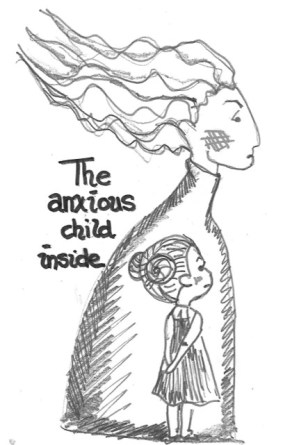 You may have felt that you are powerless over your anxiety. This anxiety dialogue exercise may well help you learn to manage your anxiety during this time.
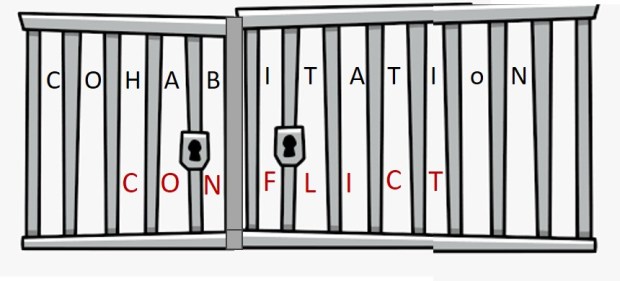 Even if you love your partner truly, madly, deeply, you may find that spending time together, in virtual lockdown, has you feeling more well and deeply, truly mad.
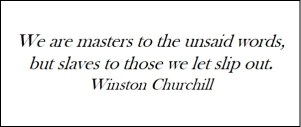 Leave the room. Go for walk. Distract yourself. You don’t need to have a fight that you will possibly regret. The best fight you had, was the one you never had.
 Question 3. Status You: What is your emotional state right now, and will this be the same way you might feel later? If you are tired, hungry, feeling unwell, or coping with pain, you might feel differently after a nap or a visit to a doctor.
 You may like to journal written responses to these questions. Remember, that whilst conflict may be inevitable during increased time together, combat remains optional.
 Women do not need to be the only parent supporting home schooling. Even kids, can step up their level of contribution at this time.
 In the words of Drag Goddess, Ru Paul Charles, “If you can’t love yourself, how the hell are you gonna love someone else?” As a counsellor, I’ve met so many people who dedicated to demonstrating their love of others, but do not seem to demonstrate love of themselves.
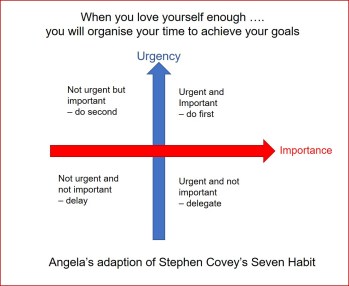 Part of a self-love routine is to set your priorities around your life goals rather than concepts of ‘urgency”. Stephen Covey in this instrumental book, the Seven Habits, outlines a method to help prioritize tasks/activities into quadrants. I have adapted this slightly in the figure on the left. We all understand the concept of urgency. The concept of importance is somewhat trickier to clarify, and you may benefit from talking to a coach our counsellor about this. For a task to be important it needs to help achieve a value for which you want to be recognised. For example, if you want to become a senior leader in your future, you will prioritise those tasks where you have been given the opportunity to shine as a leader over those where you are simply a contributing voice.
 I’ve written extensively about the epidemic of anxiety resulting from the novel coronavirus. A second mental health challenge is created by the stress of working and living with your partner 24/7. Even if you love your partner to bits, does working and living together all day and night, make you want you pull them to pieces?
 START. What one behaviour or habit could you start today that you will be thankful for in two to three years time? Perhaps you might considering undertaking a new area of study. Perhaps start a savings plan for that special vacation that you have been dreaming about. How about trying to eat properly, or commit to an exercise plan. Write down your options and consider which you would be most happy about in a few years time.
 STOP. I’m sure there is a at least one behaviour that you would benefit from LESS of in the New Year. Think about it, write about it. Consider something that you might consider to eliminate this year. Some ideas you might consider are to quit drinking, smoking, explore your propensity to explode in anger, feelings of jealousy, comparing yourself to others, procrastinations, over-eating, your addiction to technology, controlling others, or overworking.
 MEND. Are you holding onto old hurts or disappointments from the past that disrupt your ability to move forward? Is there a rift in an important relationship in your life that you are grieving? Ask yourself could you mend some of these rifts or mend some of those hurts? One technique to think your way through these situation is to journal. (
 ACCELERATE. What positive practices do you engage in that you could accelerate, to your benefit, this year. If you want to be an artist, what commitment could you make this year that could make your dream become closer to reality. Perhaps you could commit to completing one piece of work a week. If you recently started your own business what key resources will you need to commit to getting this business off the ground. Are you working on this as many hours as it needs? Contemplate what activities bring you new clients – either directly or indirectly – and how can you pump up the volume on those tasks? Ideally, you are probably doing so many positive undertakings on a weekly basis, what could you DO MORE with real benefit to your goals?
 LEAVE BEHIND. In the tradition of closing one door, so that another can open, consider leaving something, even someone, behind as the old year ends and a new one begins. Are you involved in relationships that are toxic to you or sabotage your achievement of your goals? Review the people and practices in which you engage, do they hinder or help you? What person or practice could you let go of, in order to let yourself really grow?
 Disagreements are to be expected in any relationship. No two people see situations the same, or have completely the same goals. Resolving conflicts in a positive manner will make your relationship stronger, whilst unresolved battled and long-term contempt can erode your relationships’ chance of survival.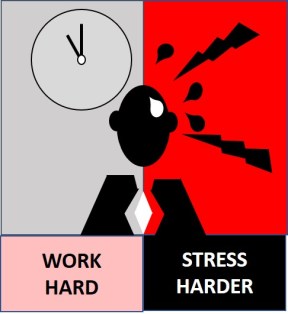


 Start your Red Door Journey