
Challenging authority, testing limits, exploring intellectual, emotional, geographical and physical boundaries are part of the teen experience. It is normal for teens to want to expand their world, including engaging in some risk-taking behaviour, we particularly worry that they may fall into the world of drug use, and get stuck there.
Overnight your, previously, polite happy child may appear transformed into a rebellious, sulking, angry teen. Sometimes these changes are also associated with the development of emotional and behavioural challenges. These problems are not easy to identify, evaluate, and treat. From my perspective, the practice of counselling or psychological intervention is a combination of science, trained skills, and sometimes, a bit of magic.
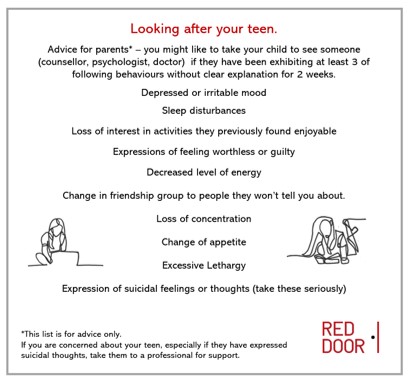
Keep an eye on your teen. In general, we are concerned about teenagers who have been experiencing some of the following feelings for a couple of weeks. This is not cast in stone. If you are concerned about your child – take them to a doctor, psychologist or counsellor to help get support for them, and yourself.
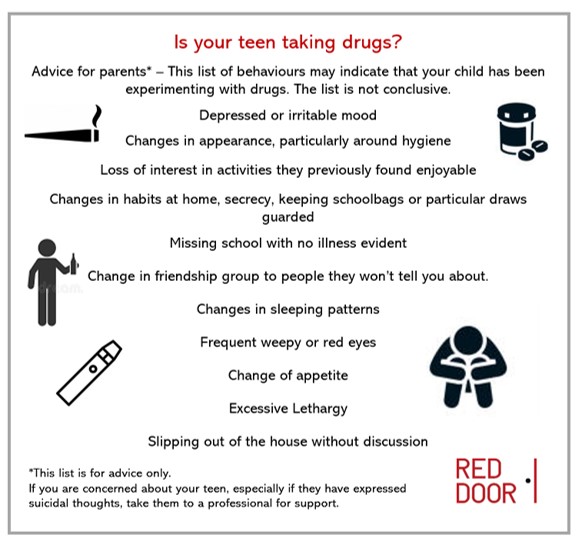
Drug use is one of the many concerns parents might have for their teen. In relation to drug use, you can build from the checklist above, and include a few more signs (detailed in the box). Remember nothing is a firmly established pattern. This list is just for indication.
One sign that I would particularly take care to explore is the keep an eye on the peer group of your teenager. You want to be aware of where your teen is going, and with whom. If your teen has a new friend who is not interested to meet you, and your child will not allow you to check in that friends’ parents, you can consider becoming concerned.
We need to balance a desire to control your child. You don’t need to know everything, but it is okay to know each of your child’s friends’ first and last names and have a contact number or email for their parents.
Whilst some risk taking behaviour is normal for teens, exposure to substances is quite likely for international teens in Hong Kong.
Alcohol consumption is common among teens at international schools in Hong Kong. It is estimated that nearly half the young people in Hong Kong will have consumed alcohol before they are 21(1) If you spend an evening outside in Lan Kwai Fong, Stanley, Cyberport, outside Festival Walk in Kowloon Tong, and in Wanchai (among many) you will see teens who have been drinking. If you attend big outdoor events such as Cockenflap and the Hong Kong Sevens, you will see that teens in Hong Kong do indeed consume alcohol. Many parents hold a fairly relaxed view of alcohol consumption, but I would claim that it is definitely worth keeping a close eye on your child when you know they drink.
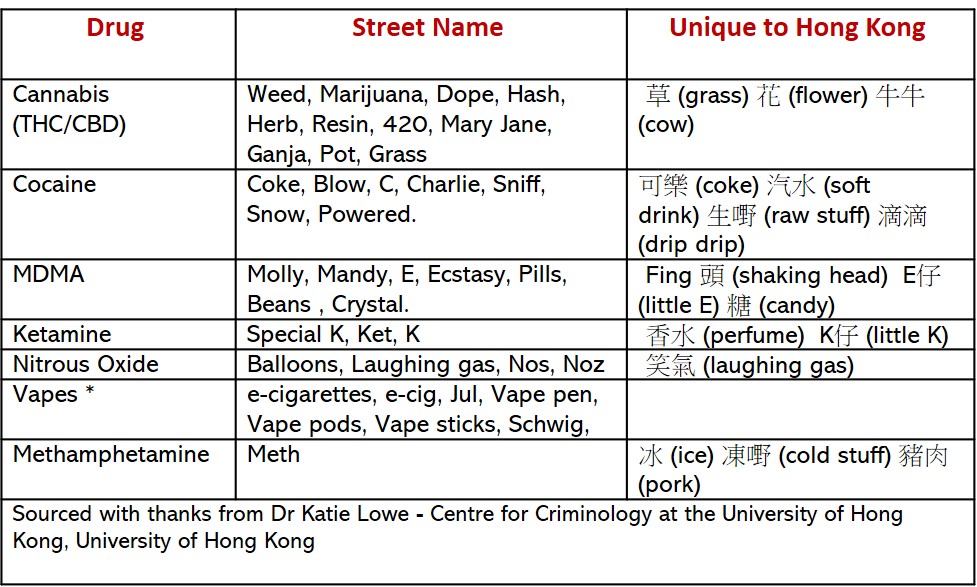
Many parents hold a less accepting view towards drug use. The following substances are some of the drugs that teens in Hong Kong have been known to use.
Most drug use happens in secret. The Narcotics Division of the Security Bureau (1) regularly conducts surveys of school and university level students in Hong Kong checking on tobacco, alcohol and drug use among young people. In a “have you ever” style format measuring if you have consumed over your “lifetime”.
https://www.nd.gov.hk/en/survey_of_drug_use_20-21.html
Their study is subject to a number of methodological tendencies to underrepresent substance use, but its good to have some numbers to talk about at all. According to their lifetime figures 7.4% of under 21-year-olds have consumed tobacco products, 2.5% (17300 students) had consumed drugs and 47.5% have consumed alcohol. Alcohol seems to be the substance of choice for teens.
It’s important that these numbers are underrepresented. Teens do not consider vaping to be the same as using tobacco, but vapes have many of the same health consequences. The survey relies on teens being honest about their substance use, but this is unlikely. Additionally, the survey catches teens at school, not those who have already been exited from the education system, which could leave those teens even more vulnerable to engage in regular or chaotic drug use.
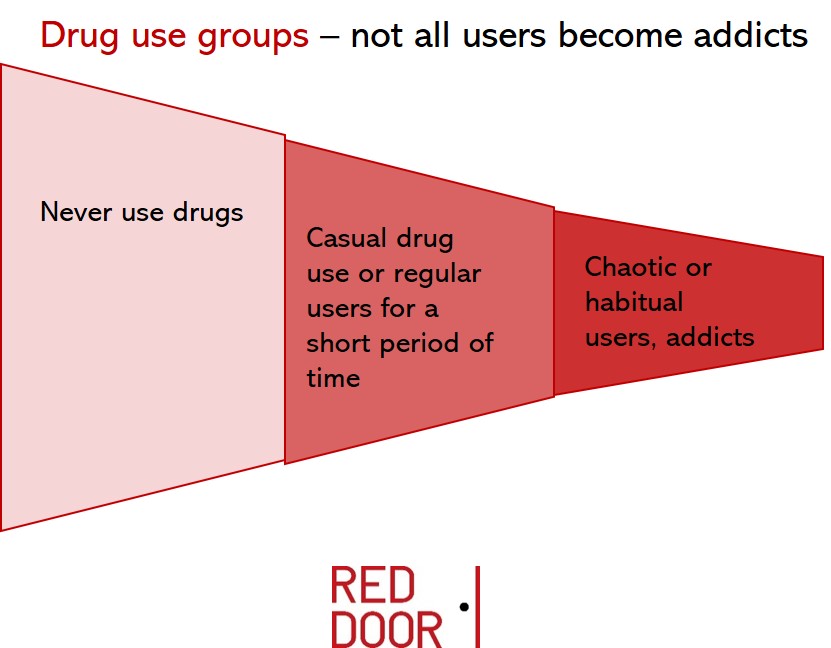
Certain substances are more addictive than others. Certain people are more vulnerable to substances use disorders than others. Whilst no one plans to get hooked on drugs once they have their first vape – no one plans to fall into the gateway of drug use escalation. However, it is important that many people use drugs casually, or use regularly, for a period of time and then stop and don’t use again. Of course, a proportion of those regular users become more chaotic and addicted, and stuck in their use of drugs. Sometimes drug literature divides the world of drug use into non users and addicts. This ignores teens who use, and then stop.
Why do teens use drugs?
Feeling good: Ask any teen using drugs why they use drugs and they will look at you like you have an orange for your head. “They feel GOOD”. When we ignore that drug use feels good, for a while, we address the wrong things in recovery.
All better now: In addition to feeling good, teens often seem to support the self-mediation theory of drug use. Essentially pain or intolerable feelings (including boredom) can be escaped (temporarily) through the consumption of drugs. When we work with teens about these associations we work on 2 aspects – one to improve their tolerance of the pain or feelings that drive their desire to self-medicate. Additionally, we try to get them to look at the new pain/ feelings that the drugs may have introduced. In my experience of working recovery with teens I notice that teens and young adults often experience anxiety that they believe is being treated by their substance choice, but when we explore the relationship more closely, the substance may be maintaining those negative sensations, or even be the instigator or anxiety or depression. I see this with the use of weed and alcohol in particular.
You the man: There are social status benefits to using drugs. My teens tell me., “Every person in my year is smoking weed”. Why would a teen want to be the one who stands out as uncool or not fit. It. There is a lot of peer pressure to use. If your teen is linked into the supply of drugs there is significant social status being associated with being able to “hook you up”. This is part of the appeal for drugs.
Bulletproof: there is a strong belief among teens that drugs are not such a big deal. “Weed is legal in many states or in Canada” you will be told. “I can stop whenever I want to”. Teens do not believe that drugs are a big deal. As a parent, your attitude to drugs can make a significant difference to your child’s use of drugs. Authoritative parents respond to their children’s needs and hold their children to high standards of behaviour, whilst modelling positive mental health practices, are in a better position to help their children.
Please understand I am not supporting drug consumption or endorsing it. I am simply acknowledging that it happens and, to teens, they think it makes sense.
What teens need to know.
Where does this leave us as practitioners and parents? If we can manage our reaction to our teens interest in drugs in a calm and non-judgemental way, we can have much more practical conversations around drugs.
There are many, unhelpful, myths about drug use, including that drug users only come from bad homes, or are bad kids. These judgements do not help us to protect our teens or support them in making better choices.

What does help it to talk with your teen about using substances without being too heavy handed. Notice I used the words TALK rather than LECTURE. Try to appreciate that they are trying to do their best, and have probably been offered, and refused substances many times already. Allow them to tell you what drugs they are exposed to without running into solutions mode. Listen.
That said, here are some points and conversations you might like to lead when you are talking about drug use, and choices to try drugs.
It’s bad: One thing that teens need to know is that substances can cause damage to your ability to learn and to your brain in general. Neuroscientific research indicates that smoking pot is not inconsequential. Whilst one puff may not cause long term memory loss, regular consumption of alcohol and marijuana can affect memory and focus (2). You may need to be prepared for the arguments about how weed is not as bad as alcohol, if it was dangerous, it wouldn’t be legal and such types of arguments. In reality, many legal medications and substances are not good for us. Your teen may point the finger at your use of alcohol or other substances. Are you prepared to model honesty, and a willingness to consider change in your own habits as part of a transparent conversation with your teen? It is valuable for teens to see us trying to review our decisions, look at improving ourselves, and even modelling our own recovery as a way to help them understand that this is possible.
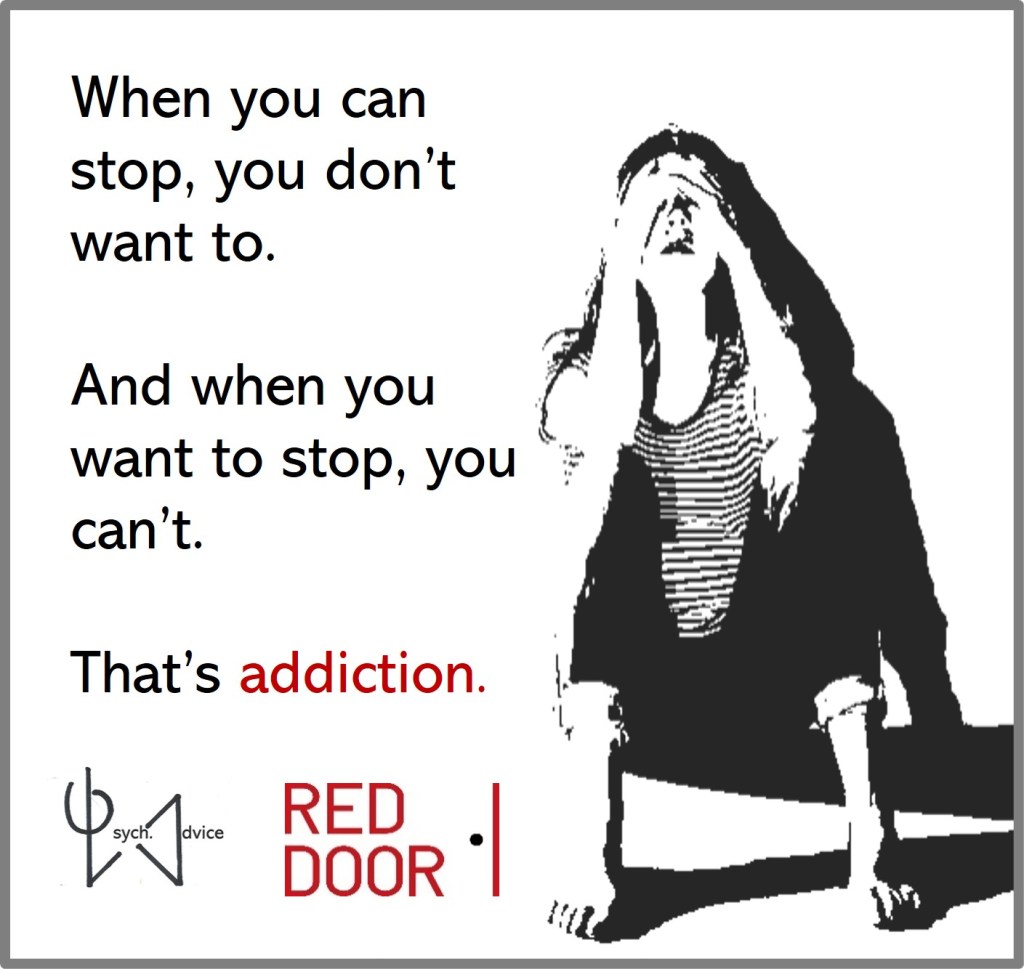
Who knows the risk. Teens do not believe that they are at risk of becoming addicted. No addict ever started taking substances with the view to becoming an addict. We need to be aware of the emotional and familial risks that greater the risk of our teens falling prey to addiction rather than being a casual user. It would be valuable for your to discuss any family history of addiction and other mental health issues (impulsivity, depression, anxiety, anger management).
What else could work (better)?: The medication addiction argument suggests that teens wanting to move away from intolerable feelings drives the craving to use. It is important to discuss with your teen the states and situations that they find intolerable. Is there something else they can do when they experience these intolerable situations. A large part of recovery programs is helping teens find those activities that help them better manage their stress, anxiety, isolation, boredom, and sadness.
Liar, liar: Substances lie to us. In his sober living book, Craig Beck, implies that Alcohol lied to him (3) Alcohol told him that it was thing that made him interesting, that made his boredom go away, that alcohol was his refuge from strong feelings. If alcohol lies to you, then weed completely gaslights you!
Like a gaslighting person, substances seem to build a system of beliefs that undermine your ability to break free from the substance. For example, my clients who use weed often use it because they are anxious. When they are able to stop using weed they realise it was the weed that was making them anxious. Weed doesn’t treat mental illness, it maintains anxiety and sometimes even allows other mental issues to take root. But being addicted to a substance is tricky. Our addictions and preferred substances lie to us.
Talking with our teens about drugs is important and necessary. We may not be able to steer our kids to stay in the never use drugs segment of society, but one use, or even casual use, doesn’t brand them as addicts, beyond hope or as bad people. Holding positive regard for our teens, whilst expecting them to be responsible to reach their best, really does help.
_________
_____
References
1 –https://www.nd.gov.hk/en/survey_of_drug_use_20-21.html
2 The teenage brain – Jensen and Nutt
3. Alcohol lied to me.
 Start your Red Door Journey