Are your emotions turned off?

emotions off

People sometimes seek counselling for emotional numbness – stating they feel nothing, or feel detached from themselves, a sense of boredom about everything that they are involved in, even feeling that they are watching their lives rather than living them.


What is going on? 

Emotional numbness can be a component of depression. The experience of depression varies from person to person. Our usual understanding of depression involves the feeling of sadness. Some other symptoms of depression include feelings of hopelessness, pessimism, emptiness and numbness.  Usually depression involves a person’s distortion of perception and loss of perspective . People may feel something is wrong, but cannot identify what it is, describing it as a general sense of pessimism.

When people experience depression-numbness they don’t feel much at all. They experience life without active engagement.  In my experience, clients who wish to break from this pattern are often men, perhaps because of the process of how the numbness is developed.


Why/ How does this happen?

Emotional numbing is not a deliberate or conscious choice by individuals. Sometime the reason for exists in your childhood. Children may have faced extreme situations and, as a consequence, believe that expressing emotions or sensitivity would be responded to negatively. This protective reflex continues longer than was originally necessary, even when danger or judgement has been removed. It can become a permanent way shielding to feel nothing.


What is a proposed treatment?

The path to numbness is complex, as is the path out. Part of the challenge is understanding personal and deeply seated motivations to avoid the experience of emotions due to a fear to being overwhelmed by feelings. While you may not like the numbness, the alternative may seem terrifying.

Therapists working with emotional numbness will help clients safely identify emotions, experiment with small (safe) doses of emotional identification, which help thaw through the protective shell that has been developed. Clients have to believe there is a benefit to learning to feel again. The benefits are recovering and accepting yourself, learning to love your life, and perchance, to experience true happiness.

If you feel you are struggling with emotional numbness please consider counselling. Be patient with yourself, it does take time to feel again.


#reddoor

#depression

#emotionalnumbness

10 ways to move from GOOD to GREAT

goodtogreat2

Are you wondering how you can improve your performance at work, and your career in general, from good to great? During the season of appraisals and bonus setting, how you can move yourself up the ladder is worth consideration.

Here are our top ten recommendations.

1)      What is your WHY?

Without a clear vision of what you want to achieve, and a proper understanding of your compulsion to accomplish that goal, you may be rowing frantically in circles. Identify your goal and its purpose so you can determine a route to row.  You need to have a plan in place.

Even then, you will need to really love the job and the path. To be the best at what you do, you need to adore the job you do. Otherwise you may not have enough energy to commit to the journey. If you don’t know your WHY or your WHAT you can explore this with a coach or counsellor.

2)      Develop the mindset of a champion

A champion connects his or her capabilities to their passion. What are your strengths that are relevant to your goal? How can you best apply these to distinguish yourselves from others in the workplace?  But don’t stop there.

3)      Practice positive habits

Champions practice self-reflection – looking for ways to learn and improve. Reward yourself for your investment in yourself and your future.  Stick with your commitment to growth. It is not that you won’t fall down, once, twice, or maybe even five times, what matters is that you get up every time and continue on your journey.  Consider alternative ways to solve a problem if your first ideas fail. Remember the words of Voltaire, “no problem can withstand the assault of sustained thinking”.

4)      Hustle for results, then hustle some more. 

Understand what problems your company needs you to solve, and commit to bringing about results which will solve those problems. During your yearly review ask your boss how she/he will know you have been successful in your role. From their response build a plan, the backbone of which is your KPIs (Key Performance Indicators) that you will be measured by and can use to benchmark yourself. Now you know your goalpost, aim for it, and communicate your successful results upward. When you do, acknowledge the support of your team, and your boss, in helping you achieve these results. This highlights you as grateful, as well as focused.

5)      Build a winning team around yourself. 

If you want to be great at what you do, do not model or tolerate mediocrity or laziness from your teammates. Your team is a reflection of you. Surround yourself with people who are strong where you are weak. These people will amplify your impact, and help you with your blind spots. For example,, I’m known for my humorous, accountable, and no nonsense approach to counselling, and my private clients like this approach.  In building a counselling practice, I understand a range of styles are required. Therefore, I have deliberately selected other counsellors for this practice who provide support in gentler manner. When a new client comes to our practice I can offer them the best fit for their personality and circumstance, and offer them a range of counselling styles.

6)      Dissect the anatomy of  success within your organzation

Find the best examples of what you want to achieve and break down the components of others success into steps you can emulate. Are you as committed to your goal as much as they are? I have many successful friends who have been told that others would like to emulate them. They respond: “Are you willing to commit what I have committed in terms of time, money and opportunity cost?”

7)      Seek (constructive) feedback

Seek feedback from colleagues and people you admire and trust, not just through the performance review process, as well as from those whose job may be to manage your expectations. Rather than ask for generic feedback, seek details to the specific elements that could improve your chances of becoming CEO (or whatever title you’d like to achieve). Ask, “how could I better manage my team?” or, “How can I contribute more to the business?”, or even, “Is there anything you think I should be doing in my job, that I’m not”?

8)      Coach yourself to greatness

From the feedback you received set about to become your own super coach rather than beating yourself up with criticism. Being a good coach to yourself involves more than simply assessing performance gaps between desired and current performance. You need to set impact-oriented actions that will help you achieve your overall career goal. An external guide may be helpful at this juncture.

9)      Get out of your own way

Don’t let baggage or resentments of the past hold you back. All of us experience setbacks and receive the occasional critical comment. If you feel debilitated by such comments seek the reason. Are you a perfectionist who is fearful of all mistakes? Can you recognize that these are essential for growth? Are you stuck playing old roles from your past, wanting to prove your father (figure) wrong, or crush anyone who you suspect may betray you? Does criticism send you into a spiral of self-doubt? These patterns of behaviour might work for you occasionally, but prohibit achievement in the long run. Consider counselling to help you escape from self-hindering behaviour or thought patterns.

10)  Consider a change of scene, race in another place.  

You may not be able to get ahead and achieve your career goals with your current employer. If you have followed steps 1-9, and still see no results, consider a change of scene. Consider to move to competitor, or even a change of career. While you may be very good at what you do, it may not be the only thing you will be good at. Greatness may even found in a different occupation.  A counsellor or coach can help you evaluate your strengths and passions, as well as broadening your horizons.

we regularly have blogs on topics related to improving performance and career change. Attached is our popular blog on career change …

Facing career change with courage


#reddoor #selfimprovement #yearendappraisal #promotion #goodtogreat


The best course for divorce – helping women survive the emotional journey

divorce1


Getting divorced is extremely stressful. Regardless if you made the decision to end the marriage or were “left”, the process of divorce involves a gauntlet of emotional experiences, a need to be a savvy negotiator (quite possibly for the first time in your life), patience, persistence and a lot of positivity. As a counsellor, here is what I have learned from helping women through this experience.   While much of the advice I offer here would also be helpful to men, it is written with women in mind.


All over the house

Individuals experiencing divorce are sometimes perplexed and surprized by the extent of disassociation they experience during the process – feeling detached from reality and floating between shock and vulnerability.

One minute you may feel completely numb, the next filled with rage, worry, fear, then hurt and pain so great you feel your heart may actually break. You must accept that this is, unfortunately, a NORMAL part of the process of divorce. You may have anchored a view of yourself, your family and your future on the foundation of your marriage.  When that foundation cracks, you will feel extremely unsteady. Be patient and kind to yourself . Remember, this rollercoaster will finish, so help yourself hold on tight during the ride.


There are minimal short cuts

Many women expect  recovery to be fast, especially since they link the dissociative state with the legal process of divorce. The emotional journey does not end once final papers are signed, although this might bring some temporary relief. If you feel like a victim during this process, ask yourself why and if it is really going to help in the long run.

I recommend that you recall of some other challenges or transition during your life – moving to a new country, the death of someone close – and analyse how  you coped during those times? Explore your armoury of coping strengths and remember, you got through tough times before.

You may feel tempted to run away from the feelings of discomfort until this is “done”.  However, be wary of the pressure your feelings may create. Rushing sensitive negotiations can be a mistake – take the time you need to get the terms you want. If your safety is or has been in danger you need to protect yourself – do not remain in a situation where your physical safety is compromised. Find somewhere to stay.


Direct your dialogues

Sitting down with your lawyer to vent about the unfairness of your soon to be ex-spouse is as pointless as it is expensive. Try to focus your conversations efficiently so you get what you need from the people who can best provide it in a timely manner.

In conversations with your lawyer and financial advisor, keep emotional elements to a minimum. Their jobs are to calculate the most favourable terms for you, and to help exit the legal contract of your marriage in an acceptable (and advantageous) manner.

Discuss your emotional experiences with your friends  – bitching about your ex can be positively cathartic. A counsellor can help you understand how you got to this point, prevent these patterns in the future, and help you build a new foundation for your life. Given the emotional maelstrom of divorce and its aftermath, counselling during divorce is highly recommended. Since you are vulnerable now, it can help keep you as mentally and emotionally strong as you can be, while helping you move forward.


Support, support, support

This is not a time to hide away from the world. You need support. Let your friends help you. Seek support from groups. There is also tangible support, those who can help now that you may be a single parent much of the time. List these resources down on paper,  invite them over, ask for support. For example, if you have children at school, school counsellors can offer some assistance. You may be surprised who is willing to really be there for you.  You do not need, nor is it in the interest of your mental health, to go through the divorce process alone. The first step to accessing support is to ask.


Resist the urge to repeal and replace

While the heady new days of separation might provide fun opportunities to connect with new romantic partners, try not to race forward into a serious relationship. This is a time to find out who you are now, not who you want to be with. While many people use another relationship to give them the strength to finally leave a marriage, statistically the odds of that relationship being successful after three years are not favourable. Feel free to enjoy your new freedom, discover who you are now, and who you want to be. If you fear being on your own, this may be a topic worth exploring further with friends or a counsellor.


A better tomorrow is possible

It might take two, three or, even ten years, but you will feel much better in time.

Divorce is unsettling for many because they don’t know how they will survive outside of their marriage. Finding a financial and personal future is important. Even if you have ample alimony to last the rest of your days (and I hope you do), you will still need to think about what you’ve learned about yourself, who you want to be and what do you want in the future.

Make a list of the attributes that you like about yourself. Have your friends contribute. Pull out that list whenever you have moments of self-doubt. List the things you would like to try, that you felt you were not able to explore inside your marriage – perhaps travel to a new country, take up a hobby or class. Start on a journey to a new you.

If you have trouble seeing beyond today, a counsellor or coach can help to determine and build your strengths and help you to see and realize a different tomorrow.


I hope you find these guidelines helpful. Divorce is hard, and it often gets harder before it gets easier. Be kind to yourself, and remember as the great Gloria Gaynor declared in song, “I will survive”.


___________________________________


RED DOOR offers counselling to individuals who are experiencing relationship troubles, and specifically to people during divorce. We will be introducing a SURVIVING DIVORCE group therapy for women on Monday evenings. This is a therapy group, focused on moving participants actively through the process. A therapy group focuses on the emotional aspects and processes experienced during a divorce and utilizes shared experiences of the group to help each member deal better with the emotional turmoil created by divorce. You will be working on your emotions and thoughts, your reimagining of your future, your current and future mental health in a supportive, and challenging environment together with other women sharing their experiences and learning.

We will host an information session on divorce for women Monday 16 October 2017.  If you would like to join the SURVIVING DIVORCE group, or our information session, please email Angela at angelaw@reddoor.hk. http://www.redoor.hk


The ugliness of Perfectionism

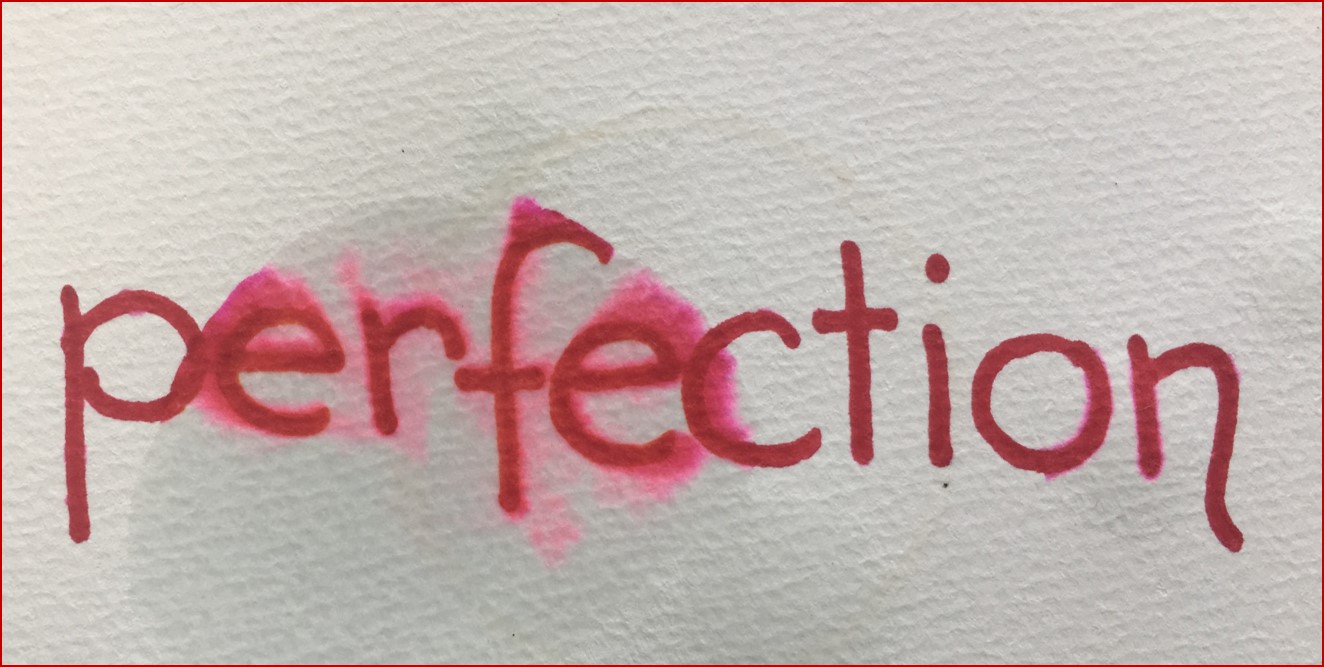
perfection

I recall being told that when asked the standard interview question, “what is your greatest weakness”, the perfect answer is, “I’m a perfectionist”, The intended implication is to suggest that your standards so high that, undoubtedly, any business would be smart to hire you.

Contrary to this common belief, perfectionism and being a perfectionist, leaves one vulnerable to compromised mental health. Many of the numerous negative effects of perfectionism are overlooked due to the perceived benefits and rewards that come as the perceived result of holding high standards. Perfectionists themselves find it extremely hard to abandon these tendencies. Instead, they continue to pursue the perfect experience, often falling short, and then privately berate themselves as failures.

Perfectionism is far from perfect. This is particularly concerning for teens and young adults in our society.

The dark underbelly of perfectionism 

Teenagers today are studying in a highly competitive academic world that emphasises consistent achievement and compares students with their peers. For most, the pressure of academic standards is motivating. However, for those with a high degree of perfectionism, the pressure can lead to extremes of procrastination or an extraordinary effort that may not be justified. Due to a constant fear of failure, perfectionists take an all-or-nothing approach, which can result in paralysis, as an avoidance strategy. This is not uncommon, and remains misunderstood.

Due to an ‘All-or-Nothing’ mindset, perfectionists are unable to realise a middle-ground between two extremes — be perfect or quit. Driven by a fear of failure, the potential risk of mistakes can freeze them in their tracks.

I sometimes meet adults, whom I refer to as 96ers,  who would regularly score more than 90% in exams, who spend the time thinking about the 4-10 marks they DIDN’T get rather than those that they did. This practice reinforces a belief that they are not good enough.

Express not Suppress

For many, perfectionism can be translated not only into their work and aspirations, but also into the way in which they handle emotions. Within the spectrum of human limitations, perfectionists reject typical emotional reality as a form a failure, under the illusion that an unbroken chain of positive feelings is possible.

Furthermore, although uncommon, some perfectionists consider the idea of tormented life, a tortured soul and a wronged victim, as the ideal of the misunderstood perfectionist. Whether a perfectionist or not, there are many people who are taught that it is improper to display emotions. Perfectionism forces suppression and denies individuals the permission to acknowledge and experience ‘undesirable’ emotions… the very experience of being human.

The suppression of depressive thoughts is associated with a worsening of depressive symptoms, as it intensifies the emotions by keeping them fresh and active. This is why it is important to accept and release our built-up feelings, opening us to emotional growth and healthy grieving.

#RelationshipGoals

Within a relationship the media has become a third-party pressure for #RelationshipGoals. The added forces those with perfectionist tendencies to demand perfection from themselves, their partner, displayed through their social media profiles. Perfectionists tend to put so much pressure on themselves and their partner to be ‘perfect’ that they end up far from it. The demands that they put on themselves are often reflected on their partners, which lead to high expectations. As a result, perfectionists often feel disappointed, unsatisfied and resentful in relationships – a potential recipe for disaster – pressuring their partners with constant reminders of inadequacy.

Why is perfectionism difficult to abandon?

Nobody likes to fail, but it is the ability to recognise, understand and accept the reality of failure that allows you to digest it. However, for a perfectionist, the rejection of reality places them in a fantasy world where mistakes can be avoided and success is the only destination. This mindset restricts their desire to change, emphasising the apparent rewards and successes at the end of the tunnel, which are driven by the unforgiving fear of failure and of disappointing others.

Perfectionists cannot see the negative effects as clearly as the rewards, which leads them to cling to their standards and reject compromise.

Further detrimental effects of perfectionism, such as, depression, anxiety and eating disorders, highlight the importance of realising and understanding perfectionism. If you recognise yourself, I urge you to take action so that you can start making changes to become more self-accepting and begin to enjoy the journey. Self-compassion, and being your own champion, are more desirable for you in the long run.

If you would like to break free from your perfectionism prison you might like to consider visiting a counsellor. In counselling the thoughts associated with being perfect can be unpacked and assessed. Understanding the roots of your perfectionism, and the behaviours and thoughts that help you to maintain a perfectionist persona, can help you break free from self-judgement and self-loathing that accompanies the perpetual pursuit of perfection.

If you don’t feel ready, just yet, to address your perfectionist tendencies, consider reading books on this topic. I personally recommend Brené Brown’s The gifts of imperfection,  or Tal Ben-Shahar’s The pursuit of perfect.  Enjoy your journey back from impossibly high standards, embrace today and accept yourself as you are.

_____________

#reddoor #perfectionism #relationshipgoals #imperfection #anxiety #mentalhealth #selfhelp


ADDICTION 101: Breaking Free

addictionFor most people, irrespective of whoever they are and whatever they may have done in their lives, understanding addiction is difficult. People define and think about addiction in very different ways, depending on their experiences and point of view, leading to a vast array of theories about potential causes, and approaches to the treatment of addiction.

Features of addiction include compulsive behaviour, lack of control and proliferation of harm in many, if not all aspects of that person’s life.  Addiction is present in many peoples’ lives, and in a many different forms.  It may be related to substance abuse or compulsive behaviours, and range in strength from mild to severe.   Patterns of addiction can change depending on life stage, and behaviours may be time-limited, intermittent or persistent.

The causes of addiction can be influenced by any number of biological, psychological, social and cultural factors, and are perhaps as unique and individual as the person they concern.  It’s a complex issue and so not uncommon to feel troubled, baffled and frustrated when trying to find ways of dealing with the situation.

The good news is that much can be done to try to improve the situation.  If you think you might be struggling with addiction problems yourself or are worried about someone you know, here are some important things to remember.

You are not alone Help is often available.  Healthcare providers are a good place to start learning about addiction and the types of help that are available.  Healthcare websites will often signpost to additional sources of information.  There may support groups that work in your area, or you may know people that have struggled with addiction in the past.  Talk to as many people as you can, and find out what advice and support can be accessed online and face-to-face. For adults in Hong Kong, support groups exist such a Alcoholics Anonymous, Narcotics Anonymous, SMART recovery. Whilst we don’t have as many groups as may be available in the US or the UK, in response to COVID, many support groups have moved online. If you look online, you may be able to join a support group for your particular addiction or compulsion based elsewhere. .

Share the load.It is important that the person with addiction, and people close to them, acknowledge that there is a problem and work together to find a way of managing the situation in the long and short term. Rather than one person working to solve the challenge, there is a team. Remember there will almost certainly be occasional setbacks and unexpected developments, but don’t give up, accept that the path may not be as you originally planned, but your destination remains the same.   Think about other people who can be of support you at times like this – maybe family members, friends and specialist support groups.  Just as we might surround ourselves with others who have similar addictions as part of maintaining our addiction, think about spending more time with people who have healthier coping strategies and a positive approach to life.  Look around for role models that can inspire you in your path away from addiction.

Manage your expectations –  Don’t be too disappointed if a one-size fits all, simple solution fails to materialise.  In most cases, addictive behaviour will be the result of combination of factors, individual to that person, and will require a holistic and bespoke approach. Your path out of an addictive situation may need to be as unique as you are.

Consider the underlying issues  People may turn to substance abuse, or other unhealthy behaviours, as a way to cope with undiagnosed developmental or mental health conditions, environmental stressors or negative patterns of thought.   Addictive behaviour may be symptomatic of unknown or unacknowledged struggles. It is worthwhile to think about your needs – those that have been met and those that remain unmet – so that you develop a plan that is beyond your compulsive behaviours, but makes you feel more whole and functional in the long run.

Think about potential development opportunitiesMost people will experience a hedonistic rush at some point in their lives, and although like the sensation, will not go on to develop addictive habits.  Evolution equipped us with a need to seek out pleasure and minimise pain, but unfortunately not everyone has the ability to control their behaviour all the time, and in every situation. Sometimes, we all need a little help to develop important coping skills such impulse control and self-regulation. At the very least forgive yourself your past failings, and think about what you would like to do differently in the future. The past is like a distant country with the border closed, it cannot be changed, but your future is yours to determine.

And finally, keep your eye on the prize.  Recovery from addiction may be a long and ongoing process but if successful, more than worthwhile.   Feeling free to enjoy all that life has to offer, and having the confidence to deal with the inevitable challenges, in much better and healthier ways, just might be the best gift you can give to another yourself, and your loved ones.

Suggested links:

http://www.nhs.uk/Livewell/Addiction/Pages/addictionhome.aspx

https://www.healthdirect.gov.au/what-is-addiction

https://www.samhsa.gov/find-help/national-helpline

#reddoor

#addiction

#recovery

#alcohol

#mentalhealthessentials

#mental health 

Future success is no accident. Preparing for the future of work.

Following the COVID-19 impact on the world economy and, as such, the world of work, we expect a number of downsizing activities to increase. Are you ready to shore up your job, or plan for a new career, should the need arise.
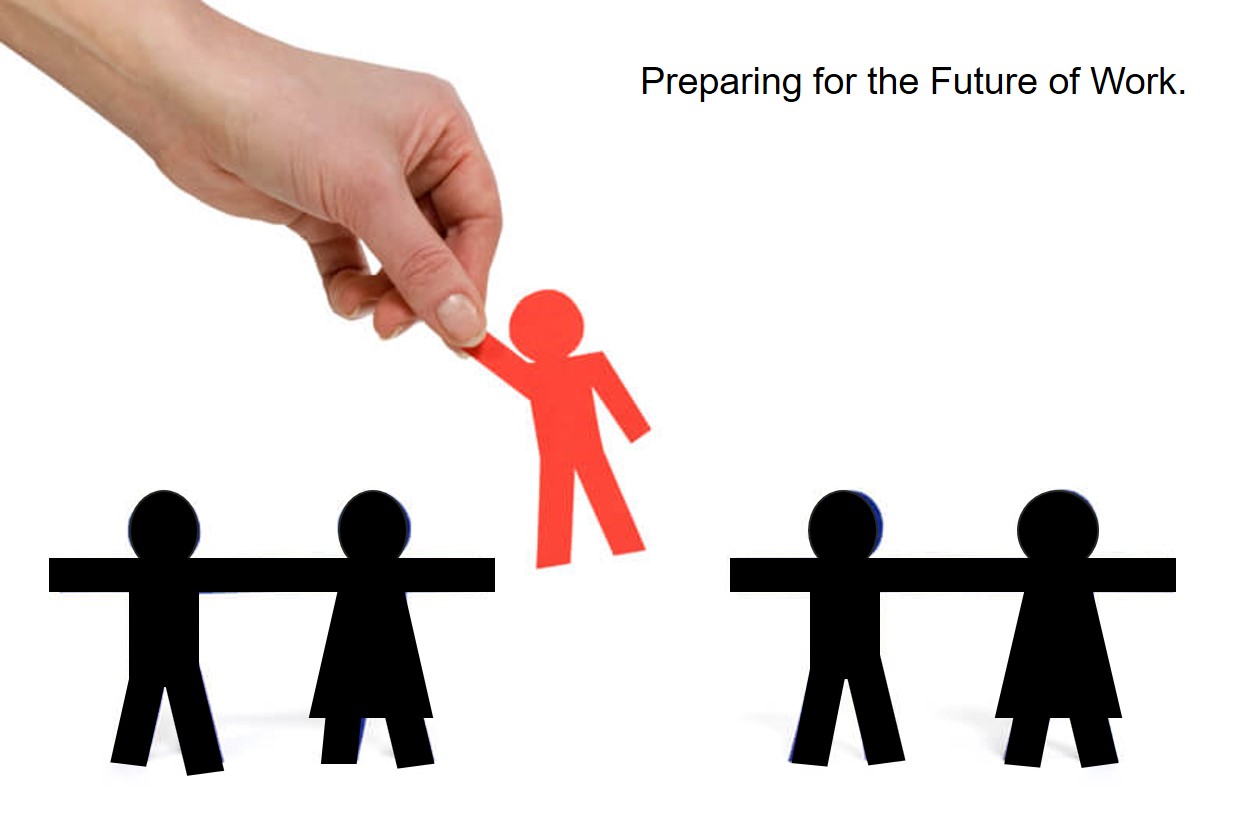
future of workAs psychologists, the team at RED DOOR sat down to explore some of the trends and consider how we can better prepare ourselves, our clients and our children, to face the future of work with courage rather than fear?


The rise of the machine

Within the plethora of reports on the future of work, there is one resounding gloomy forecast – potential future unemployment. Oxford researchers, Frey and Osborne’s 2013 report, “The Future of Employment” explored the likelihood of different professions being taken over by computer algorithms within the next 20 years. They estimate that 47 percent of jobs in the US are at high risk.

Jobs as we know them, may soon to be a thing of the past. Automation of our job functions, potential loss of employment to machines, disenfranchisement and potential loneliness for those who cannot adapt, and difficulty to even secure an initial step into the world work for many young adults, are frequently predicted features detailed in reports of the future of work.

Bloomberg Businessweek rated the job automation risk for hundreds of jobs – another interesting analysis (link at end of this blog) . Many jobs, especially those which do not require university education, are at risk. Even jobs requiring a degree are at risk. For example, whilst Human resources managers may have a less than 1% chance of having their jobs automated, but human resources assistants, the step below manager, are rated as having have a 90% possibility of their job being automated by machine. Many occupations seemingly face significant chance of change – Financial advisors 73%; Marketing specialists 61%, Lab technicians 94%, insurance underwriters 99, and accountant/auditors 94%.  Some professions face smaller risks and these industries may be the preferred industries for tomorrow’s students – some low risk jobs include special education teachers 1.6%; physician surgeon >1%; engineers 1.4%; and CEOs 1.5%. One-job-for-life already is a trend of the past, but soon one-career-for-life may soon be as well.


Human resistance

Psychological research helps us to understand that preparing appropriately for stressful events minimises the negative impact of that stress.   Being mentally prepared is half the battle to beating fear over the future of your work.  It simply boils down to the memorable words of Franklin Roosevelt, “The only thing we have to fear is fear itself”. Once we break down the future of work into potential helpful activities and thought patterns, employees and parents can better prepare the changes ahead.


8 ways to build future success – recession proofing your career path 

1)    Become a portfolio poster child

The concept of a job for life is already in declining, now even one-career-for-life is no guarantee. How are people suppose to come to terms with this new era of uncertainty?

One solution exists in the practice of reframing (turning negative commentary into positive thoughts). For example, in the future most employees may become portfolio style workers, working project by project, in much the same way a freelancer may work today. The difference from today is that this will be the norm rather than the exception.  Change of attitudes can take time, so some of the negative attitudes that society may hold toward work which is project based, discontinuous career paths, periods of unemployment, may take time to change. You are poster child this process of change.  Be brave, don’t be dictated to by out-dated attitudes.

Reframing circumstances will help so that you remain at the psychological helm of your career. Instead of viewing yourself as cast adrift, imagine yourself as the captain of your new enterprise, of the company called YOU. As such every project adds some new skill or learning to your growing corporation. Your new goal establishes YOU into a constantly growing, preferred partner for any project that comes to the market, which is now global rather than local.

Also remember that employers will also be affected by this uncertainty. Employees will have flexibility to “vote with their feet”, and then hit with a big stick if they are unhappy. Every disenchanted employee has a voice as loud as their personal network (virtual and otherwise), and the growth of rating websites such as glassdoor.com which detail employee’s negative (and positive) experiences, will be a growing concern for employers. Soon ratings of employers will be as common as ratings of employees.


2)    Be a brand ambassador for YOU

In a heavily interconnected world, one person can drive significant dialogue, a relatively new phenomenon. In business, we often silence our public personas least we attract negative attention to our employers. As workers become their own brand, their individual voices, capabilities, online personality become important brand elements. We already see avenues such as LinkedIn becoming popular job candidate search engines, and this is set to continue.

In addition to the image that you build online which employers can find, you need to maintain a positive mental framework about yourself and your ability. Building positive self-perceptions is an essential component of resiliency under uncertainty. You may consider reading the work of optimism and happiness researcher Martin Seligman, or thought reframing expert Albert Ellis. These psychologists teach how to change the thinking processes behind your current circumstances and use techniques to help move people out of their self-defeating, self- limiting or pessimistic thought patterns. If you want more help, seek a counsellor, as much of our work addresses this phenomenon.


3)    Net-your-work

It won’t be what you know but who you know that will be important in the future of work. As individual brands, portfolio workers, our networks, virtual and otherwise will be extremely important. It’s time to brush on the key elements of social skills, your best elevator pitch, friends you can lean on, and connections you can learn from. This is not a time to be shy and reticent. Remember you may never meet your employer or co-workers in real life.  The future of work contains risks of loneliness as we become separated from face to face interaction, building your self-esteem and confidence will be extremely helpful, to continue to build positive connections.


4)    Mobilize for mobility

Work environments have become completely virtual. You you may never meet your co-workers on Zoom. Workers will be truly independent of work places. This trend will affect you greatly if you have traditionally made your closest friends within work environments, or you need a lot of hand holding to get achieve project goals. If you tend to make most of your friends at work, start thinking now where you will build future friendships. If you have needed a lot of support and reinforcement there has never been an easier time to find a mentor, virtual or otherwise, get onto LinkedIn and start shopping. It may not be your work boss, as it may have been in the past.

Additionally, platforms for selling work are expanding – see upwork.com; indeed.com; and of course, LinkedIn, now you are part of a global workforce. The world of work is actually becoming bigger.


5)    I before A, rather than A before I.

Much of the reports on the future of work that have been published have highlighted the use of AI (Artificial Intelligence) to replace the work of humans. Much of the hope vested into AI focuses on the eradication of disease and poverty and the conquest of climate change. However even whilst AI is still in its infancy, it not hard to see which direction the wind is blowing in terms of changes to human employment.  Computers will play an increasingly important role in our professional lives, particularly in areas where large amount of data is analysed in order to decide on actions such as medicine, accountancy, marketing, and financial products.

Thomas Friedman, suggests that we need to think of the aspects of Intelligent Assistance (IA) that will be part of our job experience. Embracing this technology is an essential component of securing your job future. Surrender nostalgic perceptions of the “good old days”. Look into your industry and how technology is advancing and enabling, and learn to harness the tech that is being developed to play a role. Taking charge of this change helps protect you from being replaced by technology altogether.


6)    Consider your resilience and motivation.

Friedman suggest that the motivational divide will be a stronger predictor of success in the evolving world of work, rather than the digital divide. The digital divide will decrease as we embrace technology and also it becomes simplified by ‘drag-and-drop’ software. The really important component is motivation, and I believe even more, resilience.

Psychological research into human motivation implies that the highly motivated and lowly motivated  are not driven by the same forces. When we construct measures to address low motivation in the workforce, the result is a workforce which is neutral, not highly motivated. Highly motivated people are driven by internal factors such as desire to accomplish goals, and a drive to achieve more. Hygiene factors such as finances or health care are not enough to drive the highly motivated. What gets you out of bed to get to work now? If you are driven only by your pay check you may look to guides on self-motivation to prepare yourself. If you don’t know where to start a counsellor or a coach may help.

Resilience is an aligned skill to motivation –  you are resilient you are better able to face the stressful slings and arrows that one encounters in a lifetime.  In order to assess your current level of resiliency take our checkup test in the attached blog. https://reddoorhongkong.wordpress.com/the-resiliency-rx-check-in-to-check-up/ . Both resilience and motivation can be taught, to children and adults. Don’t give up.


7)    Commit to becoming a Life-Long-Learner

The question we frequently ask children, “what will you be when you grow up?”, will soon become redundant. Friedman in his latest book, “Thank you for being Late”, suggests that one cannot be a lifelong employee if you do not commit to be lifelong learner. As lifelong learners, we will constantly be reshaping our capabilities and knowledge. We won’t achieve the aforementioned “grow up”, stage. Rather the new question will be, “what career do you plan to tackle first?”

Training and upskilling will be continuous and our careers will change with this. Think about what could help you adapt to the future of work – learning a new language, technology, communication style. Courses are available on key sites such udacity.com and various open university sites, and even specific universities for older individuals such as the University for the third stage: http://www.u3a.org.uk.


8)    Personal performance metrics

The future of work is less about you performing KPIs (Key performance metrics) and more about you achieving your personal performance metrics. Having a well-rounded view of success in work, and life, will be essential in the future.

If financial recompense is your only current measure of success, you may wish to take a moment to think about what really matters and makes you happy.  We need to judge a job, and ourselves, by broader metrics including success at projects, the activities we do in our free time, our sense of purpose, how we contribute to family and society, what makes us happy, what we are passionate about. Work is one element of what you do and you can no longer summed up in a business card.


Ready, get set, go.

The race toward the future of work is already in progress, you can be prepared, so start to tackle this to do list. Fear of the future of work can be overcome. In the immortal words of Mark Twain, “Courage is the resistance to fear, mastery of fear, not the absence of fear”.


angelaw@reddoor.hk; http://www.reddoor.hk

#futureofwork

#motivation

#workfromhome

#resilience

#redundancy

#counsellinginhongkong

#reddoorcounselling

#careergoals

#occupationalstress

#stress


Other great articles about career change

Face career change with courage. You can do it

https://reddoorhongkong.wordpress.com/facing-career-change-with-courage/


Future success is not an accident. Prepare yourself for the Future of Work

https://reddoorhongkong.wordpress.com/2017/08/09/defeating-fo-fow/


How to respond to career crisis

https://reddoorhongkong.wordpress.com/2018/07/11/start-me-up-responding-to-career-crisis/


Work stress – manage stress for Lawyers.


https://reddoorhongkong.wordpress.com/2019/11/27/work-hard-stress-harder-understanding-the-experience-of-stress-among-senior-lawyers-in-hong-kong/


——————————————————–

Further reading

Bloomberg Businessweek article on job automation.

https://www.bloomberg.com/graphics/2017-jobs-automation-risk/

Frey and Osborne’s survey on the future of employment

http://www.oxfordmartin.ox.ac.uk/downloads/academic/The_Future_of_Employment.pdf

McKinsey report on technology and jobs

http://www.mckinsey.com/global-themes/employment-and-growth/technology-jobs-and-the-future-of-work

PWC report on workforce shifts forecasted.

http://www.pwc.com/gx/en/services/people-organisation/publications/workforce-of-the-future.html



The Making of a Focused Mind: The Benefits of Mindfulness

mindfulness

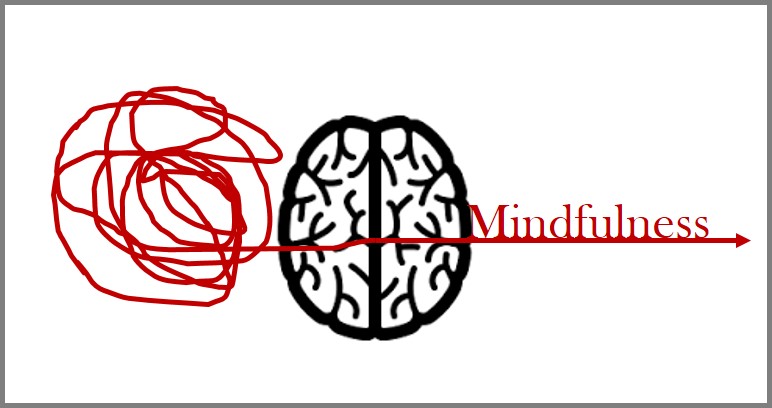
The Making of a Focused Mind: The Benefits of Mindfulness.

When our mind is full and busy, a feeling of calmness seems impossible to achieve.

A peaceful calm mind is more able to creatively tackle the challenges that life presents in our life path.

People have been practicing mindfulness for thousands of years.  Unfortunately, there have been relatively few formal academic studies conducted on mindfulness practiced by teens and children when compared with adults. The handful of studies into the benefits of mindfulness suggest generally positive effects including decreasing anxiety and increasing cognitive performance.  Four reasons to consider mindfulness training for children and teens include Firstly a greater self-awareness and the ability to self-regulation, the development of compassion  and stress management skills and  finally a needed break from screen time and an introduction to a new perceptive . Of course, the development of healthy practices in youth helps prepare individuals for the stress and strains of young adulthood.

Self-awareness and Self-regulation – leading to stronger ability to take charge

Mindfulness helps to develop greater personal awareness. Its practice teaches youth to be more aware of their thought processes and reactions in the present moment. So instead of racing ahead in a negative thought cycle a child is more likely to be able to think in a more removed manner, noticing patterns in their reactions and being able to view situations in terms of their typical reactions and the potential costs and benefits of those reactions in the past. This ‘mindful overview” promotes understanding of being in charge of one own emotions and behaviours. This also encourages children to have a stronger sense of their own responsibility and ability to take charge of situations – including their studies and friendships.

Compassion and the attraction of personal ethics 

The practice of regular mindfulness/meditation can promote compassion. Having the ability to be compassionate with oneself is just as important as being compassionate towards friends and family. Having compassion and empathy is associated with stronger resiliency and emotional intelligence which are now considered very important skills in the job market.  In developing compassion for others and self, children are asked to reflect on their own values and identity. Reflecting on research conducted by the University of Michigan, Dr Michele Borba indicates that having a strong sense of personal ethics is considered an advantage to demonstrate in key university applications and interviews.

Understanding anxiety and stress

During mindfulness practice students are taught to tune in and listen to their bodies, how it feels, where they feel tension, and how to release tension in specific areas. This skill is extremely helpful when understanding how each individual process and holds stress within their bodies. Being mindful of the presence of anxiety and stress in the body is associated with stronger stress management skills during latter years.

The end of a love affair: Breaking children’s devotion to screen time and social identities.

Technology has had a huge impact on the day to day lives of our youth.  Computers, Mobile Phones, iPads, online TV providing 24/7 entertainment, and are altering children’s experiences during their formative years. Today’s youth have access to instant information (and misinformation) which is something particular to this generation.

While ‘screens’ have many benefits they also place new demands on youth that can have negative effects. The developing brains of youth are potentially negatively affected by some issues raised by a frequently or constantly online lifestyle.The practice of mindfulness can help to mediate some of the negative impact.For example, the impact of social media on youth culture and perceptions of self. Mindfulness asks children and teens to experience their reactions to postings and requests and be able to be more reflective of the communication taking place and its worth to them. Whilst screen time increases, face to face interaction, and the ability to manage real world emotions and empathise with others can be reduced. The practice of mindfulness promotes personal understanding and knowledge, and an greater empathy towards others rather than artificial connection.

Additionally, whilst learning mindfulness practice students are challenged to fully experience each moment of their lives, through all of their senses, and to question those instances where they are performing activities which are simply distractions from experiencing life ( for example surfing the net, likes, games etc, which are essentially bubble-gum for the mind). Mindfulness encourages participants to look within and observe what sensations they might prefer to have instead of those experienced (or avoided) during screen time. Awareness of activities and how these activities contribute to our enjoyment of life, is helpful in making a decisive shift to activities with greater life experience impact.

#reddoor

#teenmentalhealth

#mindfulness

#screentime

#anxiety

Walking on sunshine – get the most out of your vacation

How can you build stronger mental health during your vacation.

The RED DOOR team have the following 5 suggestions to help you walk on sunshine during your vacation :

Reduce, reuse, rejoice: Often we simplify our lives when we travel, less things, we reuse and wear items again and again. This time is valuable to consider what is important and how we can create a life involving suffocation by stuff-o-cation. Enjoy having less, and ask yourself, does having things (as many as you have at home) really give you satisfaction, or are you satisfied with less than you expect. It’s a wonderful situation to reflect on. Sometimes in simplifying our stuff, we also find simplicity.

Do more of what makes you happy: Spend time thinking about the things that really make you happy in life. When was the last time you felt happy? Does it involve time with friends, accomplishing a project, sitting and reading a good book, conquering a mountain (or at least a sand dune). Now that you are out of the hustle and bustle of the city, and the associated frenetic desire to be constantly busy, take a moment to list the 5 things that have made you happy, and think about how you are going to increase those instances in your life when you return. Make a plan. Write it down on a postcard, and send it to yourself as a reminder when you get home.

Play, and all its benefits, await: There is something to be learnt from the animal kingdom. Even animals who live in demanding environments, where they compete for food and the opportunity to mate, still find time to play. As children, we inherently understand the need for play, in all its purposelessness. Neurological research indicates that play (in children) is associated with better sleep and brain development. As adults, we have may have rationalised away the need to play, potentially to our detriment. According to research, even for adults, play can boost creativity, improve relationships with people, foster trust, is associated with better mood, and serves as a relief against stress. Break out a colouring book, go outside and run around with your pet, or kid (or both), break out the clay, or set up some board games. See if you can build up yourself, and some positive memories as well.

Say sorry for the things you said in Winter: when the sun is shining and you are relaxed, take a moment to think about things you may regret to have done when you were stressed or feeling under the weather. Can you consider sending an apology to someone you have treated unfairly. Can you even consider forgiving someone who maybe even doesn’t deserve it, simply to move the weight of this situation from your psyche? Sometimes it seems impossible to apologize, or forgive, but ask yourself if holding on to this hurt is holding you up? If you can’t forgive the object of your hurt, then at least spend some time forgiving yourself for wanting a situation to be different that it was, or is. Then, let the sun rise on a new day when you potentially feel “over it”.

Have the greatest summer romance of all. Fall in love with yourself again. Write 5 affirmations a day about things you did WELL during the day, or positive feelings you had. Start a journal entry with “when I love myself, I will …”. Forgive yourself for being human if you made mistakes. Every day is a chance to start a new.

For those of you dashing out of town, have a great vacation, be renewed, get replenished. Enjoy.

If you have feedback on this blog, or would like to learn more about establishing happiness habits, overcoming hurts and learning to care for yourself, please email Angela at angelaw@reddoor.hk

All Write Already! The Psychology of writer’s block.


All write ready

ALL WRITE ALREADY!

“I should write a book about my life”, “I definitely have at least one book in me”. How many times have you heard such statements from friends, or even said them yourself (guilty!).

According to a recent article by the BBC on the future of artificial intelligence suggests, that by 2049 artificial intelligence programmes will be able to generate a potential bestselling novel without human help. You have 30 years to be that unique voice before the proliferation of synthesised selling sensations.

Despite this apparent deadline, most of us cannot, or have not, produced our book. Instead writer’s block, scribe-suspension, author-angst, and poet-procrastination, abounds. There are a few psychological reasons for this, and I wanted to tackle some so that we can all, finally, rise to our keyboards and drown the world with a thousand voices.

The greatest story never told: Psychological elements of writer’s block
The Perfection Inflection:

Writing is perhaps one of the only professions where you don’t need a special licence, training, certificate, or even your parents’ blessing, to perform. All you have to do is write. For those with perfectionist tendencies (and there are many) there-in lies the problem.

The promise of the novel, the untold story, has the potential of being the greatest novel never written. Once you commit to putting words on a page, the bubble if burst. What sits on the page, is now a statement of your capabilities, your values, your standards. It is a reflection of you, and as such, can be judged. We respond by retracting deep to our creative-ego protecting shell, suspending the actual writing so that we can ponder the organic nature of our novel even further. After all, you can’t fail if you don’t try. You can’t be judged on something others have not seen, and therefore don’t really have the intellect to fully appreciate.

I believe that perfectionism is one of the great psychological challenges of our time, it stops people from being all that they can be, and attempting success because of the potential cost of failure. Imagine what you could do if you knew that you could not fail? Then imagine that failing does not matter, because in reality, it often does not. If people are going to judge you, they will do so if you write a book, or you don’t. The only critic that really exists is the one self-embedded in your head that whispers to you, in moments of weakness, that you are not good enough and that if you ‘fail’, you are unworthy, and maybe even unlovable. It’s time for you to put that voice and fear to bed, or even better, into the trash. Just think what you could accomplish if you didn’t need its permission. Quite simply, you don’t.

The Busy Priority :

“If only I had the time to write, but I am just so busy”. I fall foul of this common excuse myself. I am forever busy. Busy sorting out my kid’s school homework and activities, the house, the dogs, the cats, my wardrobe, work, cooking, talking with clients, going to work, coming home from work. So, so busy,that I don’t have the time to write. Does this sound like you? Then stop and perform a brief audit of your time. In Hong Kong in particular “busy” is a commonly lauded badge of honour. We love to be considered busy. But ask yourself, “What am I busy doing?” Once you have a list of the activities in the day, audit them. Do they make you happy? Are you doing too much for someone else? If so, why? No really, WHY? Can you section off 30 minutes a day to sit and write? If not, is it because writing is not important to you? If writing is important to you, and you are important to you, then you can find the time. If you aren’t important to you, come and see me, we need to sort that out! 😉

Defying Discipline:

Having read several articles and books about writing books, the number one predictive skill required to produce a book is, wait for it, writing on a regular basis As Anne Lamott details in her wonderful book, Bird by Bird, a book is the product of producing is one paragraph after another paragraph, one chapter after another. The magic of being a writer, is in the discipline, not the mystery. Can you be disciplined? If so that is wonderful, so get cracking. If you can’t, then that is also interesting. Are you defined as being a rebel against routine. If this describes you, then in a moment of quiet, can you ask yourself, “Why?”. Perhaps it is because you are a free spirit and what to float with the tide, or is there something else underneath the freedom surface. Is this, perhaps another form of perfectionism, the book I won’t write is the best book ever. Unfortunately, the book you don’t write is just that, the book you don’t write.

Ready, steady, write.
And now for the good news. You can move past these barriers by using some of the educational and psychological tools (with OR without the help of a counsellor to help you overcome your perfectionism).

Writing a book is estimated to require 500 writing hours. Even if you write 1000 words a day it will may take a minimum three to four months to produce a 75,000 word book. It’s a daunting task.

Break free from writer’s block.
Set Interim goals and rewards:

Setting small goals, breaking down your writing into smaller components will stop you feeling overwhelmed by the task at hand. Small rewards after every 30 minutes of writing, and every 2000 words will keep you motivated. This is the basis of every successful behavioural star chart, and if you set this system up properly, will help keep you motivated as well.

Limit distractions:

Turn off the phone. No email. Writing isn’t easy (and may sometimes be extremely hard) so force yourself to stay focused until your 30 mins, or 500 words, or whatever your interim goal is, has been completed. Whilst many people think that multitasking makes them more effective, efficiency experts advise do one thing at a time and give it your full focus.

Make it public:

Public posting and sharing of goals has been used in many psychological research studies to increase or decrease specific target behaviours. Make your goal public and you have made a statement that you are willing to measure against your goal. Form a writing club, set goals together, or set up an executive writing board, who you need to report back to regarding your weekly or monthly achievements. This invites supportive pressure into your writing life and schedule. In addition to holding you accountable to your promise to yourself, you will quite possibly receive more from this support than you expected.

Write naked:

Metaphorically, not literally. Write from your soul, do not worry about perfecting your first draft. Just write. No one is watching, no one is judging. You don’t need to show anyone what you have written until you are ready. So often when we start to talk or write the automatic thoughts that we have trained into our psyche start to judge and calculate the potential catastrophes that may occur if things are not perfect. Be naked, write unencumbered, let the words flow, and worry about dressing it up later.

Now hopefully you are ready to start you book. All you need to do is get out of your own way. I look forward to hearing about your progress.

Feedback on this blog, or questions about perfectionism and motivation can be addressed to angelaw@reddoor.hk


#perfectionism

#reddoor

#writersblock

#writing

#mentalhealth

FOMO! Read this now!

FOMO

Gotcha. Don’t worry – it turns out you are not alone. Many people suffer from “Fear of Missing Out” (FOMO). No wonder – thanks to social media, we are constantly being berated: “Subscribe! Keep up to date with the latest! Download the app! You’re missing out! Save money! Make smarter choices! Have smarter kids! Dress better! Eat better. Live longer!”

While social media provides more opportunities to connect to others, it offers so many that we simply cannot manage them all. We each have to give some of them a miss. But some become caught in FOMO, defined as “a pervasive apprehension that others might be having rewarding experiences from which one is absent”, driving a desire for connection that can become self-defeating.

FOMO is a modern disorder, fuelled by social media and such platforms such as Facebook and Instagram, which invite users to look into the lives of others to see what they are doing. The key word is “into” the lives of others – you are not in the picture so you must be left out. You Loser! This also entices us to compare our lives to those pictured.

You begin to feel anxious, questioning yourself. Why am I not doing that? Why was I not invited? Why am I not having those adventures? Why am I not having that much fun? Did I make bad choices in my life? You may feel insecure, inferior, resentful, even envious. In the comparison game, there is always one guarantee, you will lose. You have knowingly entered a game which will consume your self-esteem and fuel potential feelings of worthlessness.

It turns out that FOMO is nothing new, even though the word was only officially added to the Oxford Dictionary until 2013. Consider this: “that he had developed the typical . . . neurosis …namely that Something had happened, or is about to happen, in the next street, and they will not know about it until it is too late …. This haunting fear of of missing a fragment of reality ….” That was written in 1958. Balthazar, Lawrence Durrell, 1958

The result is the same – you are left preoccupied by finding the illusive activity or experiencing that will make you feel alive. Counterintuitively, this may lead to noncommittal behaviour – you don’t want to say yes to the Leasts when the Mosts may invite you to something much more exciting. You can keep your options so open that you may end up with none.

With all this judging, FOMO leaves people comparing themselves to others, making them less fulfilled and satisfied with their own lives. FOMO is a vicious circle because as you chase a future experience, you are missing out on the present. If you are not engaged in your relationships, your life, you really are missing out.

The key to curbing FOMO is simple and two fold. First, stop missing out on what’s right in front of you – the experience you are having right now, even if that experience is a simple as reading this article. You can’t be with your friends and family if you are busily on your device seeing if someone else is doing anything better. Which proves that yes, there really only is only one of you and you can only be in one place at one time. Yes, even you. Second, stop playing the comparison game. Remember that people’s shared social lives are all beauty and no beast. No one is happy, funny and fabulous all the time – even though it may look that way. And don’t let advertisers fool you – nothing you can buy will stop FOMO.

Rather than freaking out – be in your moment. It’s the only one you can’t miss. Cherish it.

And remember – YOLO (You only live once) so live your life in the way that will make you most happy.


#reddoor

#FOMO

#YOLO

#comparison