
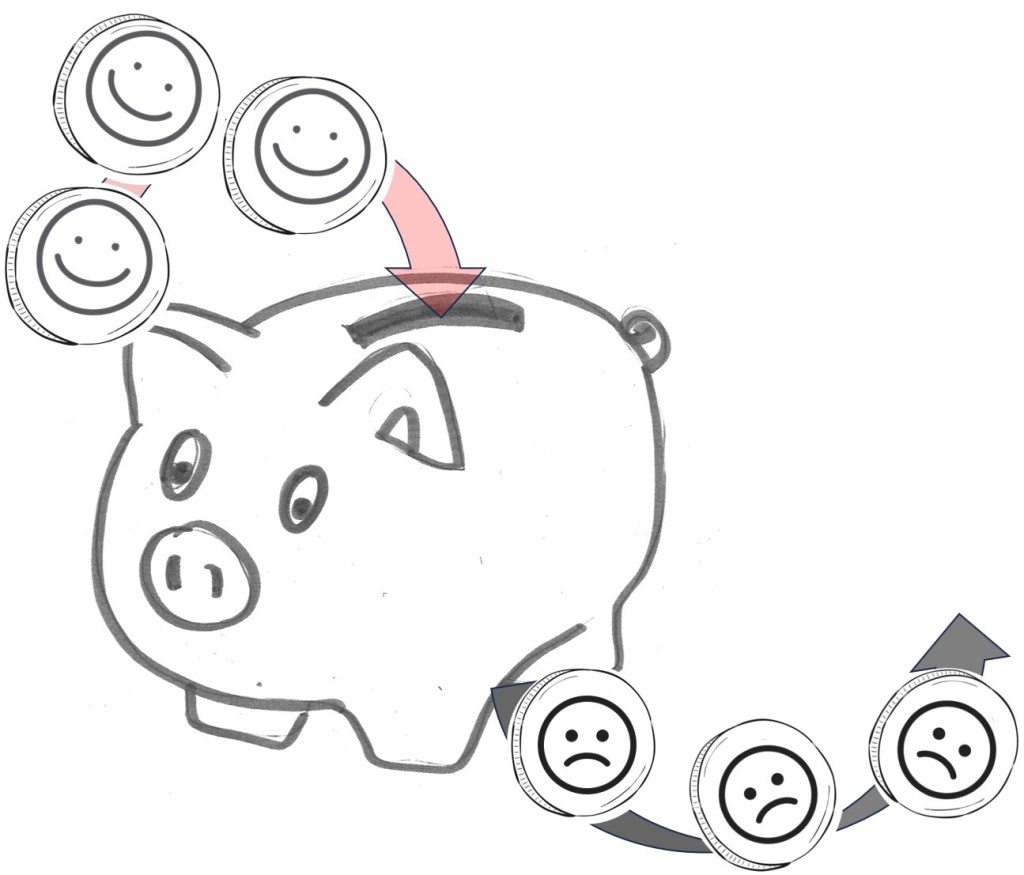
In order to make your relationship last, you need to ensure you have a full emotional piggy bank.
John Gottman, landmark couples counsellor and relationship researcher, studied thousands of couples exploring the difference between happy and unhappy couples. There are some notable differences.
Happy couples engage positively with one another and show interest in each other’s lives. Happy couples are generous in spirit towards towards each other. They try to understand each other’s world. Happy couples spend time together – connecting. When these couples experience conflict they use strategies to stay positive towards each other, see the conflict as an issue for them to resolve (e.g.you and I versus the problem) and work towards resolution.
Unhappy couples don’t do these things.
In couples counselling we often introduce the Gottman concept of the Emotional piggy bank. To help couples better realise the deposits, investments and withdrawals their actions within the marriage represent.
When our relationship’s emotional piggy bank is full, couples able more likely to be able to be generous in spirit towards each other when they encounter tricky situations.
For example. Imagine your partner, John, said he would call you at 3pm to talk about an important topic. The designated time to call comes and goes, with no message or call.
If you have a full emotional piggybank, you might react in such a manner: “I guess that big project John has been worrying about has taken off and he’s lost track of time. I know he cares about me and our issue so I’ll remind him later and we will find a new time to talk”.
Conversely, if your relationship’s emotional piggy bank is running near empty you may have no good will to help you see the situation with generosity. The aggrieved partner in that instance might think: “John did it again. He never cares about anyone by himself. He just expects me to wait by the phone like some loser. Well, not this time!”
An emotional piggy bank needs to run with a healthy balance. You and your partner need to be making deposits, and checking the impact of withdrawals.

How can you make deposits into your relationship’s emotional piggy bank?
The following activities constitute a deposit into your emotional piggy bank:
- Giving and receiving affection from each other. Not just sex.
- Spending quality time with together doing activities that you both enjoy
- Learning about each other’s world.
- Performing acts of kindness for each other – even little things like grabbing a coffee for them in the morning, running them a bath, or buying special snacks that they love for your movie night.
- Expressing gratitude towards your partner for the kindness and support they provide to you.
- Complimenting your partner. Make sure these are authentic and show you have been paying attention. For example, “I really admire the way you acted on your work call. It sounds like your boss is a lot to handle”. Or, “I really like that shirt on you, it goes well with your eyes”.
- Keeping promises that you made is important to help your partner know you can be trusted
- Apologizing when you have done something wrong.
- Giving your partner support when they are having a tough time
You also need to be careful of withdrawals. If you make too many withdrawals or make careless withdrawals from the emotional piggy bank, there may be very little good will in times of crisis.
Some behaviours that harm your relationships emotional piggy bank including:
- Insults and disrespectful comments
- Criticism of your partner
- Avoiding engaging with your partner
- Neglecting your partner
- Brushing of your partner’s kind gestures
- Ignoring the emotional impact of your behaviour
- Shouting or Scolding
- Lying to your partner
- Gossiping about or slandering your partner to others
- Breaking promises you made to your partner
Please note: Aggression of any type – this is much only a withdrawal, this is a threat to the safety of people in your relationships.
What can you do to change the dynamic and build a better emotional piggy bank?
Respond rather than react
Do you find that you react to situations, rather than respond calmly. Often this is because of the manner you interpret situations? Do you later feel ashamed that you over reacted to a situation? Before you react to your partners actions stop and think what response would you later be proud of, versus reactions that you might regret. A counsellor can help you understand your reactive patterns and learn to interpret situations in a more cognitively flexible manner.
Appraise your level of investment
Many couples do not spend enough time with each other, and the emotional piggy bank is empty because they neglect each other, or the relationship becomes focused on day to day functionality, rather than fun or connection.
Are you spending enough time with your partner focused on each other, rather than the kids or an exhaustive to-do list?
A good relationship is an active rather than passive activity. Stop thinking this is the relationship you have, and start taking the action to make it the relationship you want. Firstly, acknowledge that you could be kinder towards each other and start to think of what this might look like. Secondly, think about securing some time to spend together, once a week, or at least once a month.
Spend time getting to know each other
Great relationships are, at their core, great friendships. Remember back to the beginning of your relationship. You probably spent a lot of time asking questions about your partner, and were thirsty for knowledge about how they interpret the world. This curiosity often diminishes with time, to the detriment of your relationship. Be curious again.
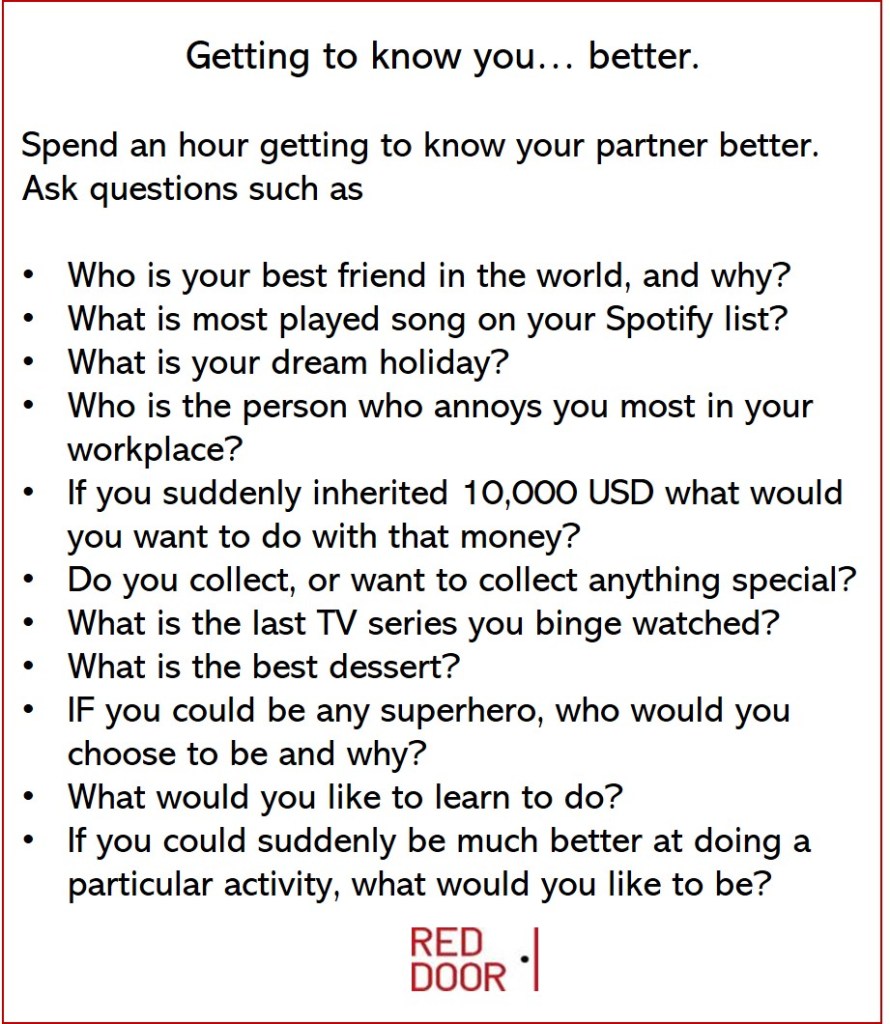
When was the last time you sat down and spent time learning about your partners world. If you don’t know what to ask, the list below is a great place to start.
Practice preferences
People have preferences. Some people like to receive gifts. Other prefer to spend time together. Do you know how your partner likes to receive love? People often give love in the manner that they, personally would like to receive it, rather than checking what their partner wants. This misunderstanding can mean that your kind actions are not
The two following quiz links might help you better understand how your partner wants to receive love, and the type of apology they like to receive. So many people get caught up waiting for the “right” apology, it might be helpful for you to know what your partner thinks are the components of a good apology.
https://5lovelanguages.com/quizzes/love-language
https://5lovelanguages.com/quizzes/apology-language
_________________
About the author. Angela Watkins is a counsellor for individuals and couples working in Hong Kong. If you’d like to improve your romantic relationship consider working with Angela or other members of the RED DOOR team. Contact angelaw@reddoor.hk
#emotionalpiggybank
#relationshipgoals
#conflictresolution
#relationships
#love
#relationshipimprovement
 Start your Red Door Journey