
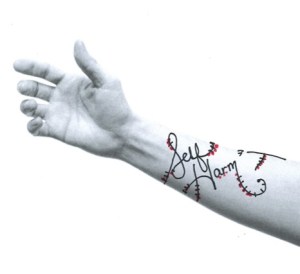
It is natural to be concerned if your teen is engaging in self-harming behaviours such as cutting or burning themselves.
Harming oneself is considered is a serious mental health issue in itself. Self-harm is also often a component of other psychological mental health issues such as clinical depression, dissociative disorders, eating disorders and obsessive-compulsive disorder.
Self-harming as a practice usually starts in the mid teen years, and mayvcontinue for years, if therapy or treatment is not successful.
People who have a history of self-harm sometimes may also develop suicidal ideation (contemplating suicide), although this is not always the case.
Potential causes of self-harming practices can include traumatic events including child abuse, stressors such as bullying, family tensions and living under the perception of extreme pressure. The teen considering harming themselves, may feel lonely, out of control, invisible, and overcome with a deep sense of self-loathing. They are quite likely to have over reactive emotions, to the extent that their reactions can sometimes seem extreme, or such that they seem numb, from previously feeling worries too strongly.
The teenage years can typically be a period of emotional sensitivity which is why self-harming behaviours may emerge at this time. Children who are extremely sensitive, prone to lashing out, have poor impulse control or hold catastrophic perspectives, are more prone to pursue behaviours such as self-harm.
The desire to cut is often in response to emotional situations or the thoughts attached to those situations. The world seems too much, too painful, too difficult. Cutting can be an act of externalising the experience of internal pain, remind the teen that they are alive, or even a punishment for behaviours they judged as shameful. When we treat such teens in therapy, we try to help teens deal with their situation and their emotions, and gain back a sense of emotional regulation, essentially an ability to manage their oversensitive emotions.
Understanding and regulating emotion can be taught. Therapists aim to teach their clients to observe and correctly label emotions, developing emotional literacy. It is important to change the channel internally. Teens can be taught to utilise a non-judgmental internal dialogue to learn to respond to emotionally charged situations in a different manner than they have in the past.
Typical reassurances that parents may engage such as telling kids to stop, calm down, model themselves after another person, exercise more, or “try to get over it/forget about it”, typically do not work well with emotionally oversensitive people. This is because these teens need to first learn how to understand their personal relationships with the world, before assurances and suggestions may make any impact.
Therapy techniques such as DBT (Dialectic Behaviour Therapy) and CBT (Cognitive Behavioural Therapy) can be effective treatment options for teens who are emotionally charged. These therapies are often data based, and help teens learn to read their own patterns of thoughts and behaviours through emotional monitoring, thought logs, and response adjustments. A simplified version of this process is described below.
Emotional monitoring can be taught to both children and adults. There are many tools to help people correctly identify and label emotions. Physical experiences such as tension, butterflies in the stomach, headache, clenched jaw are also detailed. Correctly helping identify the expression and experience of an emotion helps the client associate particular thoughts patterns associated with those emotions, or simply help them notice that they feel emotions they thought they had “lost”. Many teens confuse feeling anxious with feeling angry and hence respond by lashing out, rather than behaviours that may help them calm down.
Thought patterns are essential to associate with certain emotions. These thought patterns may have been learnt over many years and may include catastrophising (this is the worst thing ever!) , negative comparisons (She is so cool, I am such a loser) , mind reading ee my blog on common thinking errors). By catching these thoughts in action. Essentially people are taught to catch these thinking patterns and reflect upon them from alternative perspectives. They may be asked to keep a log of negative events and how they felt about those events so that they can be discussed in terms of creating a more rational perspective on the situation being reviewed.
For example, a bad event will be compared with other events to help the client understand its relative importance. A particular teen may consider getting a “C” grade on a test a major tragedy. That teen could be asked to asked to rate it out of ten, and gives it a seven, the therapist might ask what would be a 10. Typically, a score of 10 may be allocated to a severely traumatic event such as death of a loved one. The therapist then asks, what would be a 9? A nine might be chronic illness or injury. The process continues, and the therapist will ask, “Does getting a C still represent a seven out of ten?” Usually using such perspective tools helps client’s better rate the bad event into a more realistic context.
Once thought patterns and perspectives have been regularly assessed cognitive reframing and discourse can be utilised to create a new set of responses. For example in the case given previously, a teen who performs badly on a test, and may have self-harmed as a punishment of perceived poor performance, can learn to talk themselves about the realistic importance of each grade, the steps that they can take to explain or overcome poor grades, ways to study better. Different behaviours, not cutting or self-harming.
During this whole process (which is greatly simplified here), very little judgement is given regarding the actual self-harming behaviour. That behaviour is attached to a range of emotions and thoughts. Instead of challenging the self-harm behaviour directly, and potentially driving the behaviour underground or increasing feelings of shame around that behaviour, we recommend addressing the root of the problem, and learn better emotional regulation. Emotional regulation, hopefully, leads to a better long- term solution, less shame, and more resilience.
If you have a teen who is self-harming please consider counselling for them immediately. The earlier you start to challenge the underlying emotions, the better.
About the author: Angela Watkins is a counsellor and psychologist working with teens and adults in Hong Kong. To contact Angela email angelaw@reddoor.hk or send a whatsapp to +852-93785428.
#selfharm
#selfinjury
#reddoor
#teenmentalhealth
#mentalhealth
#emotions
 Start your Red Door Journey