Teens and Drugs – some thoughts for HK parents.

Challenging authority, testing limits, exploring intellectual, emotional, geographical and physical boundaries are part of the teen experience.  It is normal for teens to want to expand their world, including engaging in some risk-taking behaviour, we particularly worry that they may fall into the world of drug use, and get stuck there.
Overnight your, previously,  polite happy child may appear transformed into a rebellious, sulking, angry teen. Sometimes these changes are also associated with the development of emotional and behavioural challenges. These problems are not easy to identify, evaluate, and treat.  From my perspective, the practice of counselling or psychological intervention is a combination of science, trained skills, and sometimes, a bit of magic.

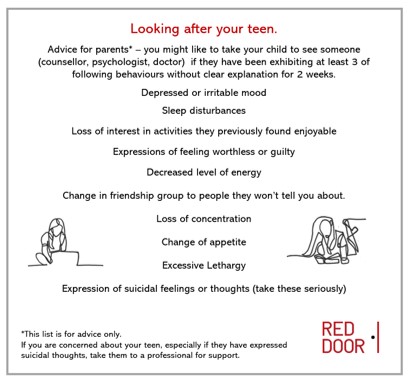
Keep an eye on your teen. In general, we are concerned about teenagers who have been experiencing some of the following feelings for a couple of weeks. This is not cast in stone. If you are concerned about your child – take them to a doctor, psychologist or counsellor to help get support for them, and yourself.
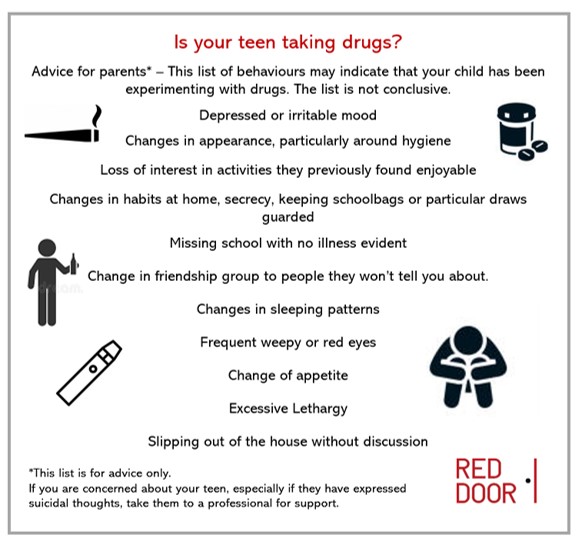
Drug use is one of the many concerns parents might have for their teen. In relation to drug use, you can build from the checklist above, and include a few more signs (detailed in the box). Remember nothing is a firmly established pattern. This list is just for indication.

One sign that I would particularly take care to explore is the keep an eye on the peer group of your teenager. You want to be aware of where your teen is going, and with whom. If your teen has a new friend who is not interested to meet you, and your child will not allow you to check in that friends’ parents, you can consider becoming concerned.

We need to balance a desire to control your child. You don’t need to know everything, but it is okay to know each of your child’s friends’ first and last names and have a contact number or email for their parents.

Whilst some risk taking behaviour is normal for teens, exposure to substances is quite likely for international teens in Hong Kong. 

Alcohol consumption is common among teens at international schools in Hong Kong. It is estimated that nearly half the young people in Hong Kong will have consumed alcohol before they are 21(1)  If you spend an evening outside in Lan Kwai Fong, Stanley, Cyberport, outside Festival Walk in Kowloon Tong, and in Wanchai (among many) you will see teens who have been drinking. If you attend big outdoor events such as Cockenflap and the Hong Kong Sevens, you will see that teens in Hong Kong do indeed consume alcohol. Many parents hold a fairly relaxed view of alcohol consumption, but I would claim that it is definitely worth keeping a close eye on your child when you know they drink.

Many parents hold a less accepting view towards drug use. The following substances are some of the drugs that teens in Hong Kong have been known to use.
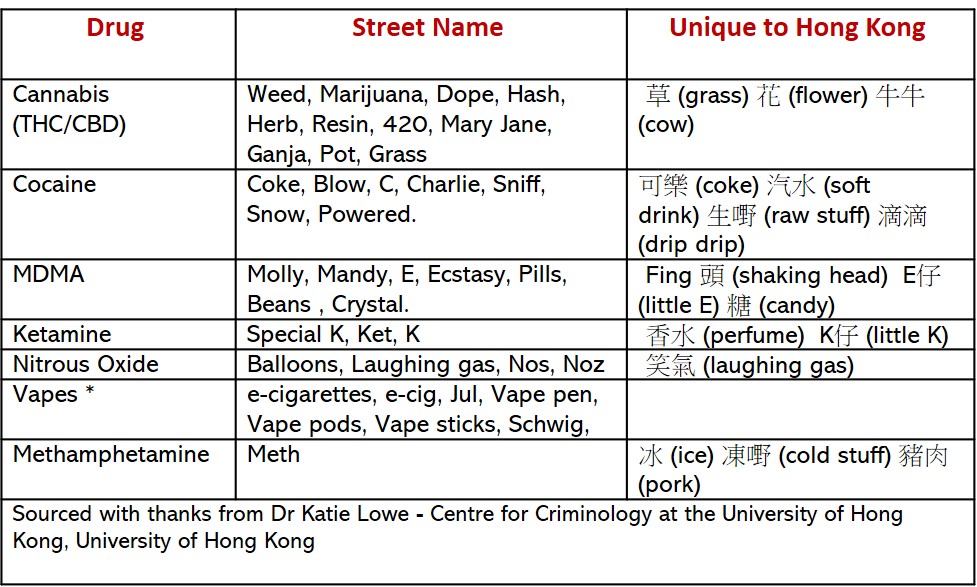
Most drug use happens in secret. The Narcotics Division of the Security Bureau (1) regularly conducts surveys of school and university level students in Hong Kong checking on tobacco, alcohol and drug use among young people. In a “have you ever” style format measuring if you have consumed over your “lifetime”.

https://www.nd.gov.hk/en/survey_of_drug_use_20-21.html

Their study is subject to a number of methodological tendencies to underrepresent substance use, but its good to have some numbers to talk about at all. According to their lifetime figures 7.4% of under 21-year-olds have consumed tobacco products, 2.5% (17300 students) had consumed drugs and 47.5% have consumed alcohol. Alcohol seems to be the substance of choice for teens.

It’s important that these numbers are underrepresented. Teens do not consider vaping to be the same as using tobacco, but vapes have many of the same health consequences. The survey relies on teens being honest about their substance use, but this is unlikely. Additionally, the survey catches teens at school, not those who have already been exited from the education system, which could leave those teens even more vulnerable to engage in regular or chaotic drug use.

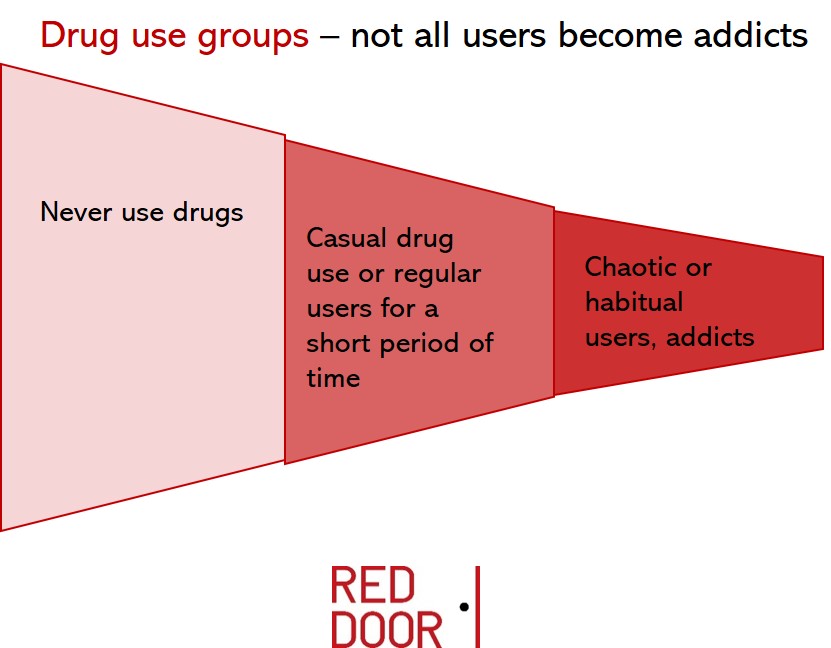
Certain substances are more addictive than others. Certain people are more vulnerable to substances use disorders than others. Whilst no one plans to get hooked on drugs once they have their first vape – no one plans to fall into the gateway of drug use escalation. However, it is important that many people use drugs casually, or use regularly, for a period of time and then stop and don’t use again. Of course, a proportion of those regular users become more chaotic and addicted, and stuck in their use of drugs. Sometimes drug literature divides the world of drug use into non users and addicts. This ignores teens who use, and then stop.
Why do teens use drugs?

Feeling good: Ask any teen using drugs why they use drugs and they will look at you like you have an orange for your head. “They feel GOOD”. When we ignore that drug use feels good, for a while, we address the wrong things in recovery.

All better now:  In addition to feeling good, teens often seem to support the self-mediation theory of drug use. Essentially pain or intolerable feelings (including boredom) can be escaped (temporarily) through the consumption of drugs. When we work with teens about these associations we work on 2 aspects – one to improve their tolerance of the pain or feelings that drive their desire to self-medicate. Additionally, we try to get them to look at the new pain/ feelings that the drugs may have introduced. In my experience of working recovery with teens I notice that teens and young adults often experience anxiety that they believe is being treated by their substance choice, but when we explore the relationship more closely, the substance may be maintaining those negative sensations, or even be the instigator or anxiety or depression. I see this with the use of weed and alcohol in particular.

You the man: There are social status benefits to using drugs. My teens tell me., “Every person in my year is smoking weed”. Why would a teen want to be the one who stands out as uncool or not fit. It. There is a lot of peer pressure to use. If your teen is linked into the supply of drugs there is significant social status being associated with being able to “hook you up”. This is part of the appeal for drugs.

Bulletproof: there is a strong belief among teens that drugs are not such a big deal. “Weed is legal in many states or in Canada” you will be told. “I can stop whenever I want to”. Teens do not believe that drugs are a big deal. As a parent, your attitude to drugs can make a significant difference to your child’s use of drugs. Authoritative parents respond to their children’s needs and hold their children to high standards of behaviour, whilst modelling positive mental health practices, are in a better position to help their children. 

Please understand I am not supporting drug consumption or endorsing it. I am simply acknowledging that it happens and, to teens, they think it makes sense.

What teens need to know.

Where does this leave us as practitioners and parents? If we can manage our reaction to our teens interest in drugs in a calm and non-judgemental way, we can have much more practical conversations around drugs.

There are many, unhelpful, myths about drug use, including that drug users only come from bad homes, or are bad kids. These judgements do not help us to protect our teens or support them in making better choices.

What does help it to talk with your teen about using substances without being too heavy handed. Notice I used the words TALK rather than LECTURE. Try to appreciate that they are trying to do their best, and have probably been offered, and refused substances many times already. Allow them to tell you what drugs they are exposed to without running into solutions mode. Listen.

That said, here are some points and conversations you might like to lead when you are talking about drug use, and choices to try drugs. 

It’s bad: One thing that teens need to know is that substances can cause damage to your ability to learn and to your brain in general.  Neuroscientific research indicates that smoking pot is not inconsequential. Whilst one puff may not cause long term memory loss, regular consumption of alcohol and marijuana can affect memory and focus (2). You may need to be prepared for the arguments about how weed is not as bad as alcohol, if it was dangerous, it wouldn’t be legal and such types of arguments. In reality, many legal medications and substances are not good for us. Your teen may point the finger at your use of alcohol or other substances. Are you prepared to model honesty, and a willingness to consider change in your own habits as part of a transparent conversation with your teen? It is valuable for teens to see us trying to review our decisions, look at improving ourselves, and even modelling our own recovery as a way to help them understand that this is possible.  
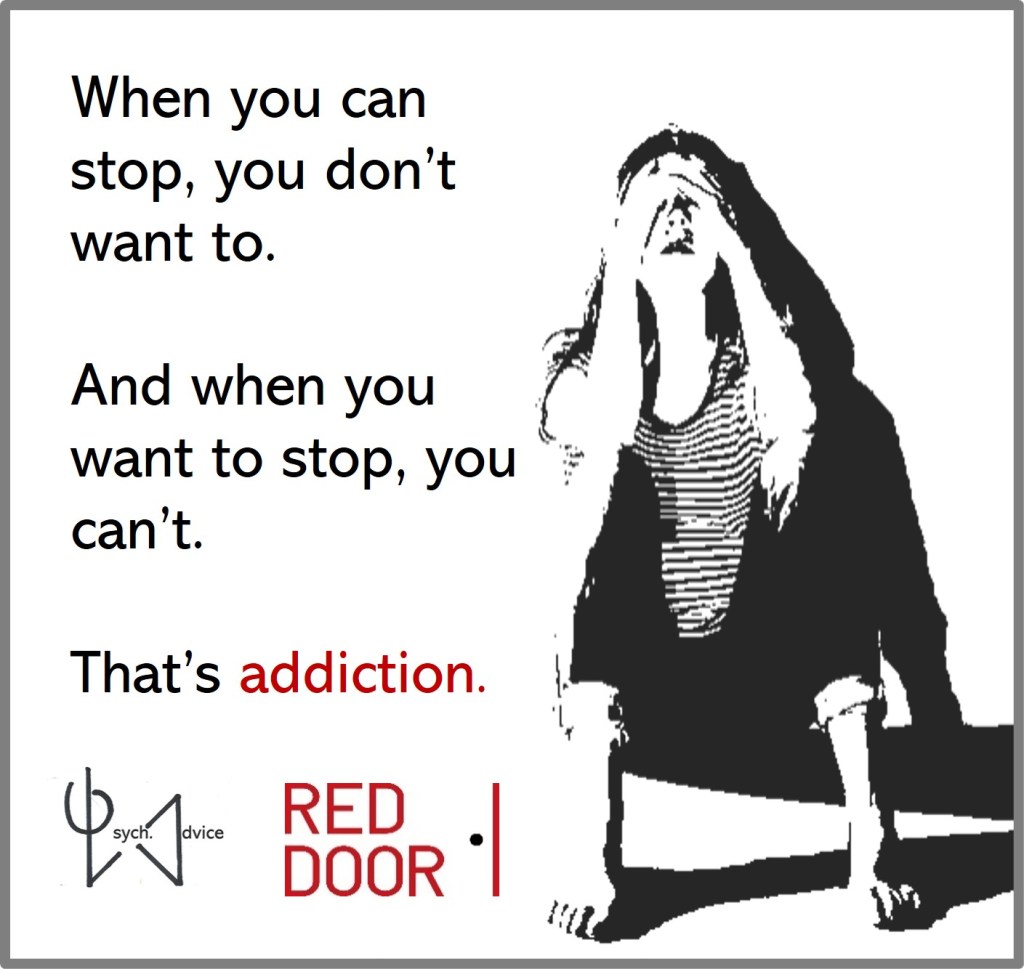
Who knows the risk. Teens do not believe that they are at risk of becoming addicted. No addict ever started taking substances with the view to becoming an addict. We need to be aware of the emotional and familial risks that greater the risk of our teens falling prey to addiction rather than being a casual user. It would be valuable for your to discuss any family history of addiction and other mental health issues (impulsivity, depression, anxiety, anger management).

What else could work (better)?: The medication addiction argument suggests that teens wanting to move away from intolerable feelings drives the craving to use. It is important to discuss with your teen the states and situations that they find intolerable. Is there something else they can do when they experience these intolerable situations. A large part of recovery programs is helping teens find those activities that help them better manage their stress, anxiety, isolation, boredom, and sadness.

Liar, liar: Substances lie to us. In his sober living book, Craig Beck, implies that Alcohol lied to him (3) Alcohol told him that it was thing that made him interesting, that made his boredom go away, that alcohol was his refuge from strong feelings. If alcohol lies to you, then weed completely gaslights you!


Like a gaslighting person, substances seem to build a system of beliefs that undermine your ability to break free from the substance. For example, my clients who use weed often use it because they are anxious. When they are able to stop using weed they realise it was the weed that was making them anxious. Weed doesn’t treat mental illness, it maintains anxiety and sometimes even allows other mental issues to take root. But being addicted to a substance is tricky. Our addictions and preferred substances lie to us.

Talking with our teens about drugs is important and necessary. We may not be able to steer our kids to stay in the never use drugs segment of society, but one use, or even casual use, doesn’t brand them as addicts, beyond hope or as bad people. Holding positive regard for our teens, whilst expecting them to be responsible to reach their best, really does help.

_________

_____

References

1 –https://www.nd.gov.hk/en/survey_of_drug_use_20-21.html

2 The teenage brain – Jensen and Nutt

3. Alcohol lied to me.

https://www.amazon.com/Alcohol-Lied-to-Me-New-Edition-audiobook/dp/B00HWHMWNW/ref=sr_1_1?crid=1TKXAOCEDF0FP&keywords=alcohol+lied+to+me&qid=1677220520&sprefix=alcohol+lied+t%2Caps%2C1312&sr=8-1

Practicing gratitude.

Practicing gratitude will help develop a more positive mindset which will help be more practiced in seeking the pleasing elements of your life, leading to a greater sense of satisfaction in general.

Practicing gratitude regularly, either through journaling or keeping a gratitude jar, helps to develop the habit of gratitude. When we practice gratitude regularly, we start to mentally contrast negative news stories and voices around us, looking for the positive element rather than amplifying the negative.

Practicing gratitude is associated with a stronger immune system, as well as more positive emotions and happiness. Its easy to be grateful over the big things, a bonus, the birth of a child, and a promotion.

The real benefit for individuals in practicing gratitude over the smaller things – a sunny day, a successful cake, a kind gesture from a friend, technology that works without trouble. That is where the magic happens. Practicing gratitude helps us to build a bank of positive elements in our lives to review when we feel like we have nothing positive to live for, or be happy about.

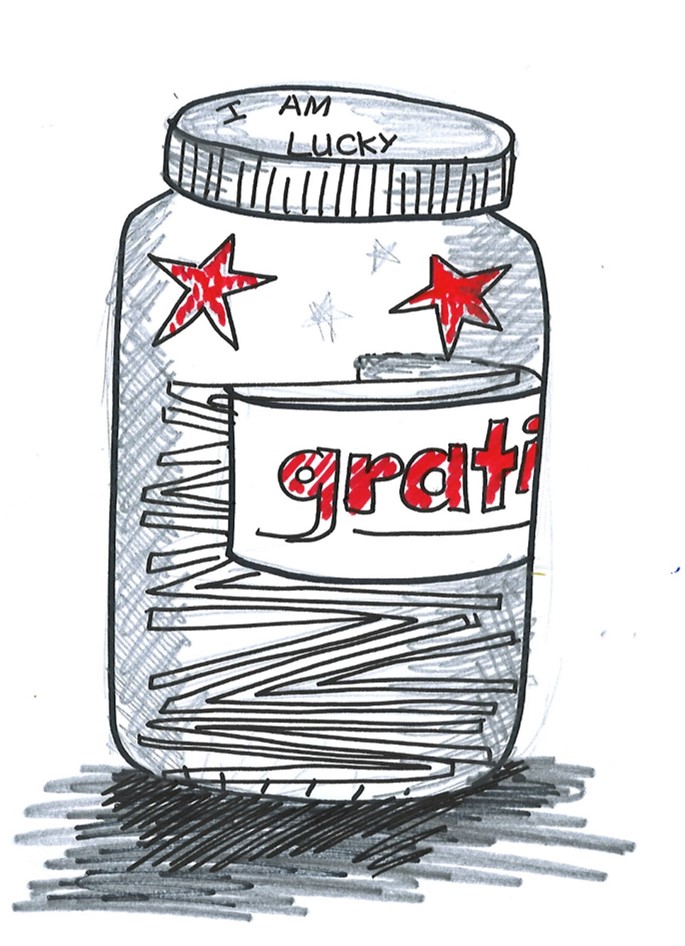
Consider the following exercise – the gratitude jar.

I particularly like this exercise because both adults and children can use it Take a jar and label it your gratitude jar. If you have children, you might like to decorate this jar with stickers and plastic gemstones. Once the jar is “complete” you can start to fill it with daily comments of things that you are grateful for. In moments of despair, or even as a weekly mental retreat, take out all of the notes and remember the things you have to be grateful for, and the darkness or negativity can be pushed aside.

Your thoughts shape your worth.

The term self-esteem is a broad construct. When we explore a person’s self-esteem we measure, in general the positive regard that they hold for themselves, including the acceptance of one’s weaknesses, one’s strengths and a perception of your equality to others.

Individuals that have positive, not over inflated, self-esteem are more compassionate to others, able to forgive their own mistakes, hold themselves more accountable, and set realistic goals. External circumstances do not define their value. In general, they know what they are worth.

In counselling when we see a person with poor self-esteem, we have a lot of work ahead of us. We need to determine the genesis of our client’s self-esteem before we work on creating a customised intervention to improve their self-esteem.

The creation of your self-esteem can be shaped by your thinking style, the messages you received as a child from your family, your current acceptance of how you look, achievements and disappointments in your life, messages received from friends and within romantic relationships, the information that you feed yourself on a daily basis (eg social media) and the challenges that you have been tasked to overcome so far in your life. . Helping clients identify the drivers of their self-concept is interesting, and complex work.

Take a moment to consider your self-esteem. How would you rate your current self-esteem? Positive? Weak? Inflated? You can consider  an online assessment to gain a snapshot of your self-esteem. A simple assessment can be gained via the following link from the anxiety centre website. Take the test. How did you do?  

If your self esteem was positive, well done. You can read on to ensure that you maintain a robust, reflective self- esteem. If the assessment indicated that your self-esteem was weak, could you consider the following reflections and exercises to help you rebuild a positive self- esteem.

The genesis of our self-esteem.

Think about how you were raised, how your family spoke to you, or treated you as a child. Did you feel accepted? Did you readily receive love from your parents? Do you feel you had to perform tasks, or hide parts of yourself, in order for you to feel accepted by your parents? Was your home as safe place for your, or rather a source of fear or chaos? All of those elements will influence the value you give yourself. It is not surprising that children who believe they needed to perform extremely well in tests at school encounter emotional difficulty accepting career development setbacks as adults. These individual’s  “value” is attached to achievement rather than self-acceptance.

The teen years seem to have a strong impact on that adult’s later self-esteem. Success in friendships can help bolster ones’ self-concept. The experience of bullying, teasing or exclusion seem to leave long term scars on ones’ perception of self-worth. “How can I be valuable as a person, if people chose to treat me so badly?”. When our teens encounter such experiences, it is extremely valuable to help them talk out such experiences, potentially with a counsellor if you lack the confidence to manage this empathetically.

An interesting source of nutrients, and toxins, to our self-esteem is the consumption of social media. If one explores the values endorsed by Instagram, women are exposed to a plethora of contradictory positions – have a juicy ass and no butt at all; in order to be valued you should have a boyfriend; but be also be completely ok being single, you should be confident and willing to speak up, but be polite and make people comfortable; be ambitious about your career but also be willing to prioritise the need for rest and time out. Perfection on the internet is not only impossible, it’s insane.

A large component of your self-esteem is attached to how you process the world, and if you are strongly influenced by thinking filters.

How your thoughts influence your self-esteem

It is possible to change your thoughts. A famous psychologist, Albert Ellis, identified a plethora of irrational beliefs that we develop as part of the way we are raised, see the world, and believe in ourselves and other people. These beliefs are like a pair of glasses, which can interfere with the way that we see situations. When we see a situation though faulty filters the result can be self-hatred and diminished self-worth

You can help yourself and remove your faulty filters by creating a constructive dispute with yourself, or even have a counsellor lead this discussion for you. The dialogue will depend on the filters that you use most frequently. Experiencing faulty filters is quite common, if you discover you have been experiencing faulty filters, you can change the view.

Black-and-white-thinking.

This type of thinking occurs when you look at situations in a polarized way – situations, people, activities are either good or bad, nothing in between. Most situations are neither complete disaster or beyond fantastic, often situation have both good and bad aspects. Most people have some attributes that you find challenging, but this doesn’t make these people totally bad or good.

Black and white thinking. When people wear black-and-white-thinking filters they can respond in an inflexible way to challenges – “I didn’t get an A in that test and now my future is ruined “or “I submitted that assignment but I made an error in the first paragraph so the whole article is now rubbish”.

In particular people who have black-and-white-thinking in relation to people find themselves being particularly judgmental towards themselves – seeing themselves as either a winner or a loser in a situation. This can erode their resilience. Every setback can become a tragedy, rather than a minor bump in the road of life.

Shoulding or Musting expectations.

It is irrational to believe that most things are absolutely necessary. Believing that acts should be performed in a particular way, at a specific time, or in an exact order, creates a tyranny of should – a condition where you live life dictated by a list of thoughts which are not really rational.

Whilst everyone has lots of things that they should (or could) be doing, some beliefs are irrational in their detail and in their believed consequences. For example, if everything needs to be perfect, this creates a lot of pressure on a person to perform a task to a (sometimes) unrealistic standard. Believing that you need to be the perfect student, parent, worker, lover, or be in control of all events in your life, be slim and attractive at all times, always be interesting, always have a friction free family – is unrealistic and unrelenting on your self-esteem.

You may start to doubt yourself: feeling like a failure because you can not maintain your own (self-imposed) impossible standards,

You may lose the confidence to start new tasks (procrastination) – too frozen in fear to start a project without already being an expert, or knowing you will be perfect at it.

Jumping to negative conclusions.

We all have the tendency to occasionally jump to conclusions and this may influence our self-esteem. We may assume that someone deliberately performed an activity that hurt our feelings, or event assume and intent to their inaction (e.g. they don’t like me). In these situations, limited information or evidence can be used to support negative conclusions. This may be the case when we fail to get success at work, thinking that others are not supportive, when they are sometimes just too busy or not focused on our priority.

This type of faulty filter can lead to inaccuracies regarding our perception of people and situations. If we attribute our self-worth to the perceived view that we believe that others hold of us, our self-esteem can be impacted.

Overgeneralizing.

Overgeneralizing is a special type of jumping to thinking that involves jumping to conclusions – both negative and positive. Overgeneralizing is often reflected in our language choices – we use extreme frequency terms to describe behaviours – “they ALWAYS forget”, “Things NEVER go right for me in love relationships, EVERYBODY is happy except for me”. “Now that I am separated, ALL my married friends won’t want to see me”. Occasionally we may even do this after a single instance – one rejection letter leading to the assumption “I will never get a job”.

This type of faulty filter can impact our self-worth, especially if we attribute our perception of self to the beliefs, real or otherwise, we believe others have of us.

Personalising.

When we personalise we feel responsible for events or situations that are not our fault, or we assume that those events are our fault. It can lead to us feeling offended when it isn’t necessary. If a friend ignores your text may not mean that you’ve offended them, instead it may mean they are busy. They may not be trying to offend us, or even be having an emotional reaction to something we have done.

Personalization can be a symptom of co-dependency in relationships. I once had a grumpy boss, and many of us who reported to him walked around on eggshells, torturing ourselves over what we had done wrong to upset him. Rather than wasting valuable energy on this worry, it might have been more constructive to let him have his time being grumpy (after all his emotions are his responsibility) and get on with the work that needed to be done.

If you have performed an act, either selfishly or unwittingly, where another person was hurt. You can take responsibility for your role in a situation, and apologize or try to make amends, but leave it to that situation. Whilst we can take responsibility for our own behaviour and thoughts, we do not need to take responsibility for the choices of others. Our own behaviour determines our worth, not the emotional responses of others.

Filtering

People with poor self-esteem often filter information in a way that maintains their poor self-esteem. Imagine you are in a group of people and each is providing feedback on your work. Nine of the 10 people say you did a wonderful job. One person says they thought your contribution wasn’t as good as they needed from you on that occasion. Which do you remember – the 9 positive remarks, or the one negative. That is filtering.

Filtering becomes a threat to our self -esteem if you use this faulty thinking style frequently. In the era of the internet where people can feel more willing to troll other people and say horrible things online, selecting what you choose to believe and reinforce as regards your sense of self, is extremely important. This is especially true for teens who use internet vehicles to test reactions to their world views – and perhaps do not yet have the resilience to rebuff negative feedback.

Comparing

Comparing is such an influential thinking filter on our self-esteem that I have included a full blog on this topic.

COMPARISON: a one-way ticket to Misery

It is common to consider our own attractiveness, status, success, and personal worth relative to others. Comparing oneself constantly can become quite negative, especially when we assume elements about the other person and ourselves. For example, thinking a person who gets a better pay rise than you is an overall better person than you is not only unrealistic, it is unproductive.

Labelling.

We all make mistakes or act foolishly sometimes. When we label ourselves, rather than placing the label onto our behaviour,  we diminish our self-worth. For example, if you made a mistake on a report you could say, “I made a mistake”, or you could label “I’m so stupid”. The latter response does nothing for your self-esteem. Acknowledge mistakes and bad choices as part of life, that can be forgiven.

It is also illogical to label others, on the basis of one inference or observation. One fight with a colleague does not make her a “bitch”. When we label others, we not only diminish them, we provide rationalization for further retaliation, “its okay to do xyz, because she is a bitch”. This is clearly not rational, and can often become prejudicial. Believing in these labels can erode our self-worth, as well as our regard for other people.

In counselling we work to help our clients capture, explore and refute these thoughts. When we start to let go of these thought patterns it is likely we will be able to release ourselves from negative self-talk that impacts our self-esteem.

In the attached blog I provide advice how you can change the channel on some of these thought patterns. Please consider to engage in these reflections and exercises.

If you feelings of low self-worth persist please consider to work with a mental health professional such as you will find at RED DOOR. #selfesteem #catastrophising   #commonthinkingerrors  #faultythinking #blackandwhitethinking  #comparison  

Groundhog day in relationships – having the same argument again and again, and again…..

In the English language, we use the term Groundhog Day to describe a situation in which events that have happened before happen again, in what seems to be, exactly the same way. Repeating, without end. For some people, every day in their romantic relationship can feel like Groundhog Day.

Most couples fight. Especially when they are tired or stressed. Couples may find that they have the same arguments repeatedly. These cycles can be broken by exploring the types of problems involved, the conflict cycles of the partnership, aspects within the communication styles of the couple, and activities that build positive regard within the couple. It’s not easy to stop the pattern, but it is possible.

This article explores the types of problems couples have the how they can overcome their cycle of conflict. Other articles on other aspects that can help your help are embedded at the end.

The Problem itself. Different problems are more difficult to fight about.

You need to spend some time stepping back from your relationship so that you can ascertain what kind of problems you are fighting about and if these problems really can be solved, or rather require more interpersonal respect and understanding, and even appreciation, of your differences in opinion.

When thinking about the types of arguments that you have in your relationship it is helpful to consider if the problem is solvable or perpetual.

“Solvable problems’ are those problems that usually attached to specific situations, for example household chores, timings around events, selecting a restaurant. ‘Solvable problems’ are different from “perpetual problems’ because a solution can be found and maintained and there is not a deeper meaning behind each of the partners’ positions on the problem

All couples have ‘perpetual problems’. These problems are due to more fundamental differences in beliefs or personalities between the members of a relationship. These may be the same issues as some couples may experience as solvable problems, but they are not solvable in your couple relationship. Rather you are likely to return to them again and again. If you feel like you are “spinning your wheels” on a particular problem, it may not just be perpetual, it may also be gridlocked.

The issue many couples struggle with is that perpetual problems are unsolvable. Instead of looking for a solution you may need to explore what is driving you to hold your own position so strongly. Often perpetual issues are about really about  differences in beliefs and/or personalities within the relationship, not the topic being discussed.  

Cyclical patterns in conflict communications

If you are having the same argument repeatedly, always ending in the same outcome, regardless of the number of times you have tried to tackle the issues, you are quite possibly utilizing a negative cycle of conflict communication.

You can identify your type of cycle by filling in the gaps when you ask  yourselves, “When we talk about challenging topics, the more  I _______, the more you _____”.  When performing this evaluation, don’t project your feelings onto your partner. Don’t mindread what your partner is thinking, or why they do what they do. This is rarely, if not never, helpful.

The following three types of conflict cycles are often experienced by couples.

Who is the “bad guy”?

In this model of conflict each of the partners tries to highlight the faults of their partner, in a “You’re the problem, You are at fault” style of communication. This practice usually insights strong reaction in both relationship members, and as accusations fly back and forth, the degree of antagonism escalates.

Each partner is desperate to be “right” and the relationship suffers. If this describes your conflict style, please recognize that if you win not only does your partner loose, the relationship loses. To completely break this cycle of contempt and criticism each partner needs to feel safe to express their vulnerability as part of the fix for the relationship.

Pursue and Withdraw communications

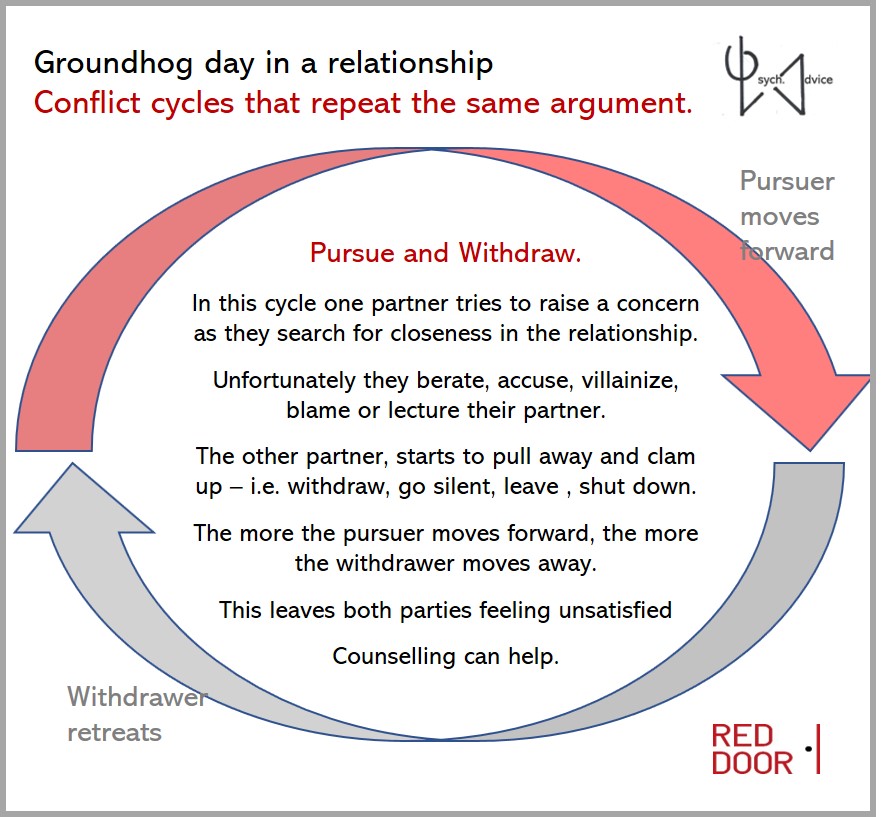
One of the most common patterns of communication in relationships, both heterosexual and same sex, is the pursue and withdraw cycle.

In this cycle one partner tries to raise a concern as they search for closeness in the relationship. Their intention is often to broach a perceived distance in the relationship. Unfortunately they berate, accuse, villainize, blame or lecture their partner rather than create a safe, soft space to discuss the issue.

In response, the other partner, starts to pull away and clam up – i.e. withdraw. They may be anxious and are keen to fix the situation but instead of talking they go silent, leave or shut down.

The more the pursuer moves forward, the more the withdrawer moves away. This leaves both parties feeling unsatisfied. This cycle benefits from outside help, particularly in the form of couples counselling. In a safe environment both parties are encouraged to understand and acknowledge their roles and be willing to share vulnerability to discuss their feelings and desires.

Avoid-Avoid style communications

This is the rarest couple we see in counselling, but the one who most needs couples counselling.

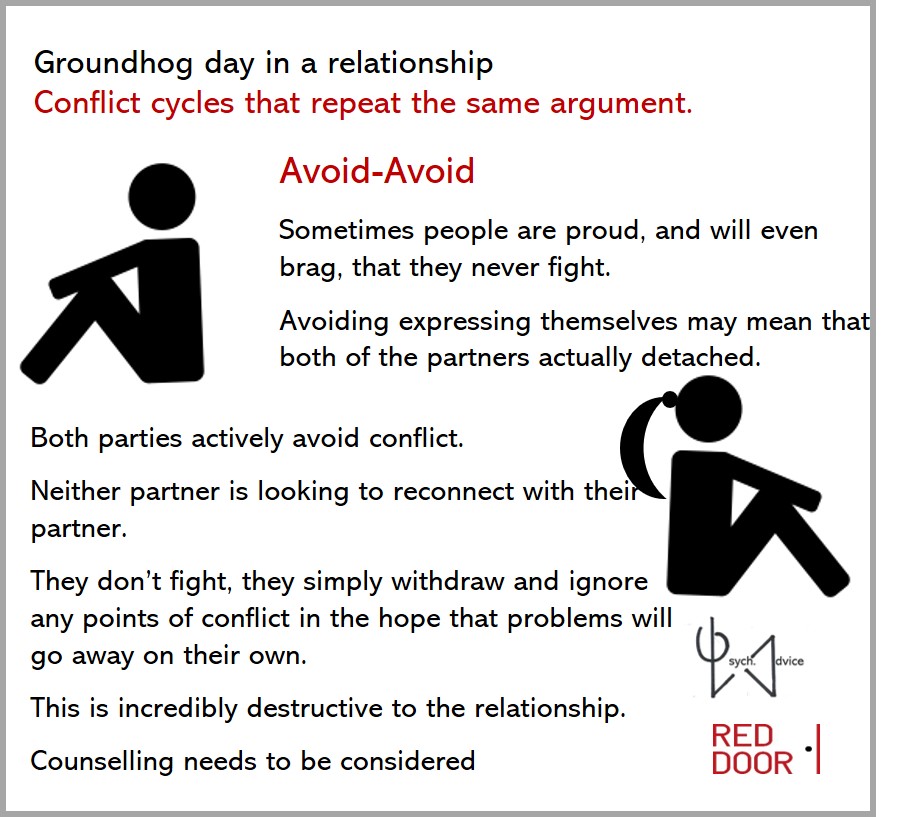
In this model both parties in a relationship avoid conflict. Neither partner is looking to reconnect with their partner. They don’t fight, they simply withdraw and ignore any points of conflict in the hope that it will go away on its own. Unfortunately, this is destructive to the relationship.

Sometimes people are proud, and will even brag, that they never fight. By avoiding expressing themselves mean that both of the partners are checked out and at risk of becoming detached.

Counselling needs to be considered in a safe non-judgmental environment so that potential conflicts can be properly brought to light, feelings and desires explored and validated.

If you are in this model of conflict communications, I would recommend that you use the conjoint couple’s model where there are two counsellors to two clients. This model more actively supports each individual in the relationship. You can read more in the paragraph below.

Do you want to break these cycles in your relationship. First of all observe the pattern. Below we have two other articles on how to communicate and build more positive regard, plus an article detailing great books to improve your relationship on your own. At some point in time, you might like to consider couples counselling. I have included some information on our conjoint couples therapy approach that is available at RED DOOR. We have 4 couple counsellors at RED DOOR waiting to help you break the cycle after other recommended readings blow.

About the author: Angela Watkins is an experienced couples counsellor and counsellor of individuals in Hong Kong. To contact Angela for information or counselling email angelaw@Reddoor.hk

Recommended readings – you might find helpful

The best books you help you improve your relationship.  

The advantage of Conjoint therapy in Couples Counselling.

One of the models we use at RED DOOR.

At RED DOOR we use the conjoint couples therapy approach. In Conjoint therapy two therapists work with the couple during couples’ sessions and then one counsellor will meet with you for any one-on-one sessions.

This is an advanced method of couples therapy.

Since there are two therapists in the room there is less chance of either of the partners feeling blamed, or favoured. If you have felt that any previous couple therapist sided with you, or your partner, you will appreciate the objectivity and inclusion that this model supplies.

There are a number of therapeutic options available in the conjoint model including pairing vs individual counsellors , role play and modelling of problems and techniques, as well as  break-out sessions within couples sessions (which is helpful if one client becomes flooded, or some negotiations are required) .

This model also keeps the therapist moving sessions forward constructively. Often if sessions become heated much of a therapist’s attention is moved towards “traffic control”. Traffic control whilst necessary, is not the goal of therapy. Therapy is to help blockages in communication and find the right tools and skills to help remedy the problems. Having a second therapist on hand helps keep the therapeutic goal on track.

In conjoint-couples therapy you each have someone who understands each of your perspectives in the room. The team of counsellors work with you, and together to formulate a plan to understand and overcome the challenges in your relationship. At RED DOOR, we use a Gottman informed approach, but will also include emotionally focused therapy, CBT and narrative therapy tools.

Because two therapists are involved there are cost implications. At RED DOOR we try to manage this by asking each of the therapist to reduce their standard fee for the sessions. ON some occasions, when we have a suitable counsellor-in-training, we can offer a significant discount.