Let it go, Let it grow: Moving beyond old hurts.

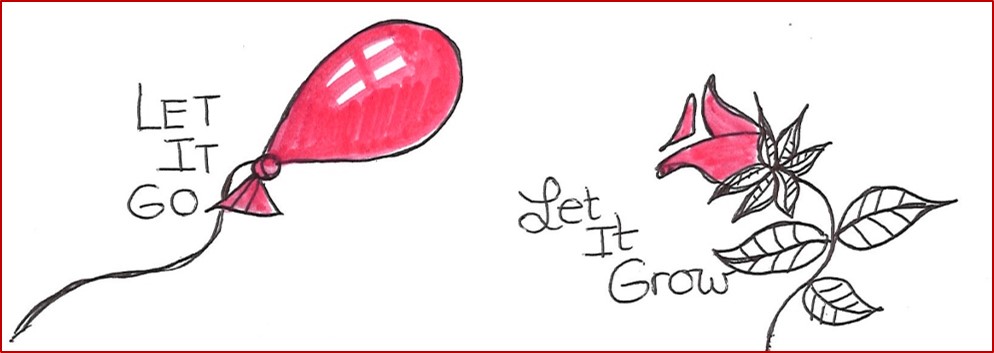
Anytime is a good time to “Let it go” , and as a result, let yourself grow.  


Past hurts and old injustices can keep people stuck in old patterns of behaviour and thought traps. Bad memories can be like emotional quicksand, and can consume your thoughts taking command of your day-dreams, and leave you feeling obsessed over perceived or real losses, betrayals, and inequities.

It is possible, and probably beneficial, to give yourself a “time’s up” mandate. Just as you might join a gym in order to support your commitment to new health behaviours, you can also decide that you will stop allowing old hurts to define you, in order to let new hopes, grow.

This can be easier said than done. Part of the reason that “Let it go”, is so hard is that it is a challenging is that it is not satisfying in itself, without a benefit or alternative activity. Replacing one type of thinking with another, is easier to contemplate than simply asking an active mind to STOP. An active mind wants to remain active. In order to let it go, we need also think about alternative thoughts and behaviours to actively replace old tired traps. Hence, I ask you to consider, let it go, to, let it grow.

There are a mirage of excuses and reasons to hold on to old patterns of thinking. I hear the cry of “COVID” many times from clients as a reason that behaviours, and even thought patterns, can’t be changed. COVID, and many other challenges exist. People have faced uncertainty, the possibility of death, severely restricted travel. This is true. But hanging onto old hurts doesn’t make those realities any better.

Some ways to let go of old hurts, thoughts and harmful behaviours. 

Cease magical thinking.

Magical thinking occurs when you assume patterns of reactions that have not previously been in evidence. For example, if you are thinking, “If I do x then y will happen”. For example, “if I get sick, he will come back and feel sorry for me” or, “If I just collect enough evidence of this betrayal, my family will finally realise they have wronged me.” The relationships that you thought you think you should be having are probably quite different from the ones that you are actually experiencing in real life.

Learn to accept that other people’s bad behaviour is (really) not about you.

It is common to become stuck when people have wronged us. Betrayal is often not about you, it’s more about our perceived “betrayers” desire to follow their desires at your expense. Whilst this feels unfair, and may not be what you signed up for in a work or personal relationship, focusing on the betrayal keeps us stuck in the role of victim. Lots of bad stuff has happened during the pandemic. Many jobs were lost. Much of this is not personal.

Challenge your labels.

Are you stuck playing the role of a victim, or as an unappreciated hero? Check if you are continuing to hold onto a role label that really has not benefit for your growth. For example, if your partner was unfaithful and ended your marriage, think about it are you not a little bit grateful for the end of a marriage that wasn’t working.

For example, think to yourself, “He had an affair which ended the ‘not the best ‘marriage. I have been stuck feeling bitter and as a victim because I didn’t cheat (even when I wasn’t as happy as I wanted to be). The affair gave us both a way out to the marriage whilst allowing me to be the good guy. I wanted that, but now I want more than just that title… “. Choose to thrive.

Check your goals.

You may be consumed with a controlling desire to acknowledged as being wronged. It is possible that you will never receive anywhere near the level of acknowledgement you aspire to. Ask yourself, why do you believe you need this  acknowledgement? Will this make you feel whole? If everyone you could list acknowledged that you were wronged, would you feel complete? Why can’t you be complete without the acknowledgement that you crave? Is that real, or perceived? 

You set your own value, not anyone else. Others do not need to acknowledge that you have been treated unfairly in order for that be true. True for you is true enough. This is a trap that many abused people can fall into. Without the abuse being s acknowledged it can be hard to move on, but it isn’t really necessary. People who have been complicit in your abuse rarely acknowledge that any abuse occurred. If you were wronged, this is your fact, your truth,  and that is enough. Feel it. Own it. Live it. Now you can move toward recovery.

Take responsibility for your role in a situationand no more.

Each party in a hurt played their role, including you. Take some responsibility for maintaining, creating, even exacerbating a situation. Make a promise to yourself that this can end, and you will end it. No situation is one sided. By admitting your careless or harmful actions, this does not automatically cast you as the bad guy. In any hurtful situation any party can be the bad guy, and the victim.


Acknowledge forgiveness, even if only for yourself.

Whilst forgiveness can feel like you are letting a bad guy off, even potentially endorsing their behaviour, there is some benefit to forgive rather than feel angry. Elizabeth Smart who was held captive for 9 months when she was 14 could have hated her captors forever. Instead, she chose to realise that she holding onto the pain and negativity of what had happened to her allowed her captors the opportunity to steal more of her life than they had already dominated. She chose to forgive them and instead focus on her happiness and freedom.

Explore possible rigidity with the power of “YET”. 

Thinking rigid thoughts such as “I can’t do that” will keep you trapped. So will thinking “it is not okay for me to move past this hurt. Add the word YET and this changes everything, suddenly you can’t do this yet, you can’t get past this hurt yet.


Write a ‘let it go’ letter

Write a letter to those who you feel hurt by. For example. “You have wronged me. I didn’t deserve the abuse you have wrought upon me. I’ve been angry long enough. I’m letting go of my feelings of anger, resentment, hurt and betrayal because I don’t need to carry those around with me anymore. I choose not to give you any more of my energy”. You do not need to send the letter. This letter is for you to capture your hurts and thoughts on a page.

Channel your energy into positive change. Let new thought patterns develop.

Transform your narrative

Rather than label yourself as wronged, or as a victim, think about who you are in the story of your life. Are you a survivor? Are you working to make yourself a better person? What are your strengths? How can you be more empathetic and realistic in your view of yourself? You are a work in progress, celebrate where you are going and what strengths you have to get yourself there. Cast yourself in a different role as you have in the past.

Future focus

What is in the future for me? What do I want in my life? What am I choosing for my future? Do not focus on what you leave behind. Imagine the past is like the border of an old country of hurt, and now you live somewhere else, and that border is closed. This doesn’t mean that you can’t look back at old albums from the ‘old country’. Rather continue to acknowledge that you no longer live there.

Get on your DIVA amour
Utilise the amour and weapons of a true diva. Both men and women can utilize this Diva visualisation. Being strong, being clever, continuing a struggle, are values within a cloak of amour that you put on. For me, I celebrate being a diva-hustler, (thank you #Michelle Visage #DivaRules). This means I remain determined to build opportunities for myself and take chances. Other people I’ve worked with have found their diva in other self- visualisations (eg Madame Butterfly, BadAss). The weapons you have to support this Diva-amour are your strengths (your smarts, your friendships, your focus, your commitment, your creativity.)

Write a mantra specifically for  you.

A mantra is a passage that becomes an instrument of the mind. What the mind sets as an intention and belief so that this can to fruition. Phrase this in a positive voice. Celebrate your strengths. Remind yourself of your goals. For example:

I am strong, calm, loved and forceful. When I face a challenge, which will invariably happen, I will draw strength from the people who love and support me, remember all that I have already achieved as a result of my skills, and my commitment to my family, and myself.

I can respond to challenge, I can respond to change, I am more than enough.

Decide to pursue internal love over external anger.

The cure to external anger is internal love. Even if you are still working on accepting yourself, remember that it is OK to be not okay, as long as you are a work in progress. Be kind. Keep working on supporting yourself. That project is never ending.


Gratitude

Being grateful reminds us want we have, rather than focusing on what you perceive may be missing from your life. When we see what we have we learn to that we are more complete than we first realised and have more than enough in life, and even more importantly, we are enough.

I hope you find these activities helpful. If you find yourself stuck in old hurts you can consider to consider counselling to help you let go. All of us need help sometimes, and that is okay. Our team is here to help if you get stuck.

#michellevisage #divarules  #recovery #reddoor #gratitude #mantra #mentalhealthessentials #mentalhealth
A million little things – how we build great friendships and protect against loneliness.

In a recent article in the Financial Times newspaper [1], data insights reporter Federica Cocco warns of a growing epidemic of loneliness for people in the world. Citing ongoing research from the American Time Use Survey, Cocco highlights that people in the US are appear to be decreasing their experience of friends and family who they can count on for support.

In particular older people are more affected than other age groups. Over half the people over 65 years of age spend more than 8 hours of their awake time alone. Cocco also highlights that young women are a growing group at risk of experiencing loneliness, as the percentage has doubled of women spending reporting protracted periods alone (2011-2021: 7-14%). 

Loneliness has been associated with objective social isolation, depression, introversion, or poor social skills. It is a threat to physical and mental health.  Income, education, sex, and ethnicity are not protective against loneliness. Rather than trivialised, ignored or blamed in those who experience this condition, we need to consider how we can protect ourselves and others.[2]

We see the expansion of loneliness in our clinical practice as well. In Hong Kong, and especially after the COVID pandemic, many people have reported the loss of of friends and increased experience of social isolation as part of their current life experiences. We are social beings. We thrive on being emotionally connected to others and function well when we are involved in rewarding relationships. {3, 4]

Although many of us still have friends that we can spend time with, we may also being lack of intimacy in the friendships that we have [3]. It is important to have support, people who you can share your worries and concerns with, and provide us with key support that we need and protect us against social isolation and loneliness.

Developing new valuable friends is a skill that we have to learn as children, but often we need to relearn and revisit friendship making skills repeatedly over our lifespan. – We need to go into friendship making mode when we experience an intimacy gap among our friendships, we have lost many friends, we change our life circumstances (living location, having children, marital breakdown, leaving employment).

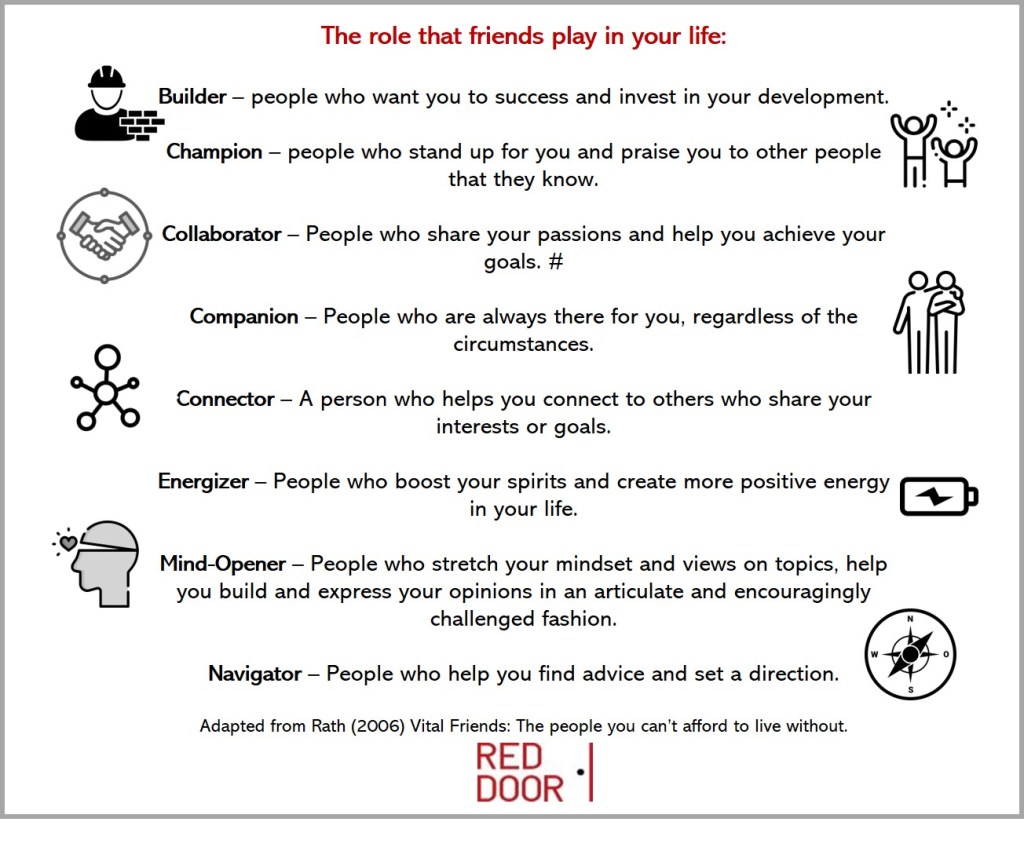
Not only are friendships vital, they fulfill and number of key roles in our lives from championing for our health, connecting us others and helping to challenge your mindset [4].

If you acknowledge that your friendships are not as you would like them to be, in terms of numbers of friends and also depth of friendships we have some recommendations that can help you reboot the Intimacy in your friendships  – frientimacy (Nelson, 2016)

Friendships are the result of combining a number of action/ingredients: consistency of effort, personal positivity, your ability and willingness to be vulnerable, understanding and respecting other people’s preferences, having patience, and reflecting mindfully on what is working/not working in order to determine a future for each friendship. 

Consistency

Consistency is a priority in creating a new friendship. The act of building new, and better friendships, is the accumulation of a million little things rather than a few big events. If you want to build a new acquaintance into a friendship you need to create consistency into the relationship – hence why we become friends with people that we see that they same class or activity each week.[3]  

So, if you are looking to meet and make new friends you will be best placed to attend a regular event instead of a one-off workshop. For example, if you want to make new friends you might consider joining a choir group, sports club, bridge or mah-jong club, or regular support group.

You also play a role in creating consistency in your friendships. If you are invited to lunch and decline, ensure that you protect the consistency of the relationship by offering an alternative catch up opportunity immediately. People drift apart because of lack of sustained effort.

Admittedly relationships still require give and take. If you are constantly offering meet ups, and the other party is not reciprocating, consistency will become difficult to achieve. This highlights the value of the other ingredients needed to create meaningful friendships.

Positivity.

We have all had one friend who has been stuck in a negativity rut and one time or another. Depending on the history, and future aspirations of that friendship, you may need to resist a desire to pull away from such a person. That is because it is very difficult to be around negative people.

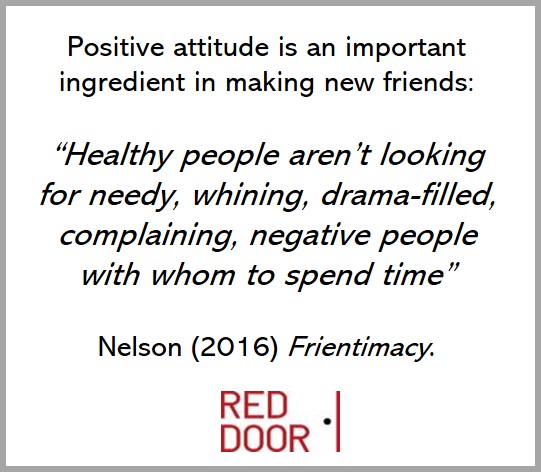
“Healthy people aren’t looking for needy, whining, drama-filled, complaining, negative people with whom to spend time” Nelson, 2016, Frientimacy [4]

Conversely, people are drawn to fun or positive people who help lift the mood at a gathering, or help others feel good.

This doesn’t mean that you need to be over-the-top. People who appear happy all the time appear inauthentic. There is a long range of acceptable emotionality between happy people and negative.

In your relationships with people, you might like to consider how positive and negative you are towards your friends. The Gottmans, the leading marital therapists in the US, state that friendship is the key component of romantic partnerships, and within those that they classify as masters of relationship they share positive action (comments or gestures) to their partner 20 times more than negative comments.

These positive components are not necessarily major investments of time or money, for example nodding when you are listening to a friend’s story is a ‘positive’. Certainly, thanking them for a gift, or their time, or sharing a compliment will spread a feeling of positivity. You could aim for the magic proportion of 5:1 positive to negative action as a starting point. This is be basic ratio that the Gottman’s advise to build positive sentiment in a relationship. [5]

What is a negative element? Obvious verbal criticism, unkind mocking or being caught gossiping will hurt your friends. But it is often small actions that can bring negative element into a friendship such scrolling through your phone when your friend is talking to you, ignoring their texts, rolling your eyes when they tell you a story [again], repeatedly being unavailable to meet up.  

It’s not enough to spend time, and be positive, you also have to be vulnerable. For some people this is difficult.

Vulnerability

When we share vulnerability we are expressing that we are not perfect, we are real humans with feelings, dreams, aspirations and disappointments.  Some individuals find it extremely difficult to share vulnerability, challenges or hurts with another person, possibly because of past trauma or broken trust. By avoiding vulnerability, they keep people at arm’s length. This messages to the receiver that I will spend time with you, but not intimate details of my life. If you want deep friendships rather than acquaintances, you need to let people in.

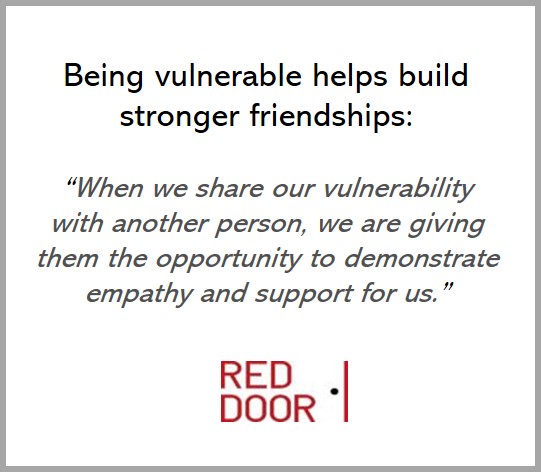
When we share our vulnerability with another person, we are giving them the opportunity to demonstrate empathy and support for us. Empathy and support within a friendship are the glue that hold it together. After all everyone will have encounter challenges in their life – when changing jobs, experiencing a break up, dealing with difficult co-workers. Friendships are extremely valuable during periods of personal challenge.

I warn you against too much vulnerability too soon. Sharing too much, too soon, and too often can be overwhelming to your audience. Vulnerability as an ingredient needs to be timed and measured carefully. Share vulnerable content only after you have meet with a person 4-5 times and watch their reaction. If they demonstrate empathy, your sharing has helped to deepen the relationship. If they don’t show caring, then it might be that you have overshared or that they are not able/willing to have vulnerability as part of your friendship.

Additionally, you may want to spend the early days of your new friendships to look for red flags about the person, and within the friendship. Individuals who want to take advantage of you, or seem to want to, or do not respect boundaries around your time, relationships, and safety, are not good for you. Go back and find someone new to enjoy a friendship journey with.

Understanding, and appreciating, differences

We are all have different values and priorities. Understanding the world of your friend as well as their communication preferences will help you to build better relationships. Intimacy can be built when people feel understood.  Don’t just focus on being interesting, be interested.

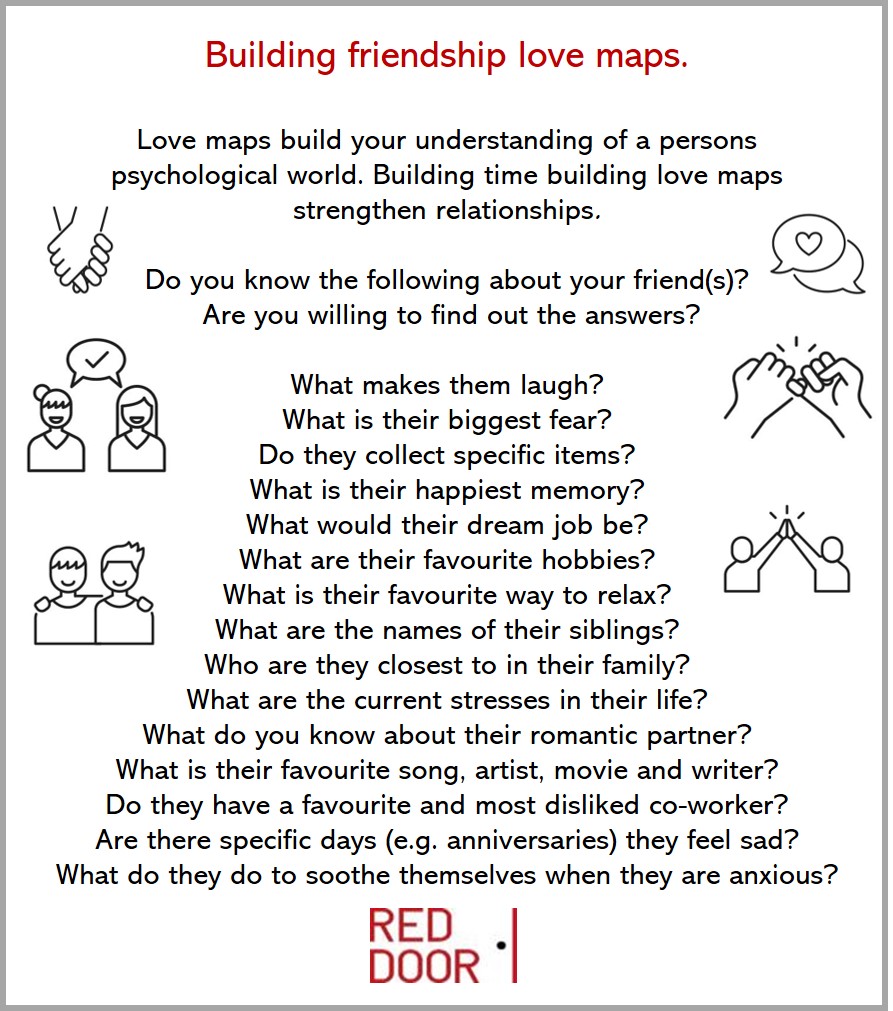
In order to better understand your friends’ build and understanding of their world you can engage in activities that expand your understanding of their world. The Gottmans use love maps to help build back understanding, appreciation and trust into relationships. We have expanded some of their questions to create a friendship love map starter list of questions.

See our picture of  a few questions you might like to know the answers to. Having conversations with your friends about what matters to them indicates that you are interested in their lives. Give it a try.

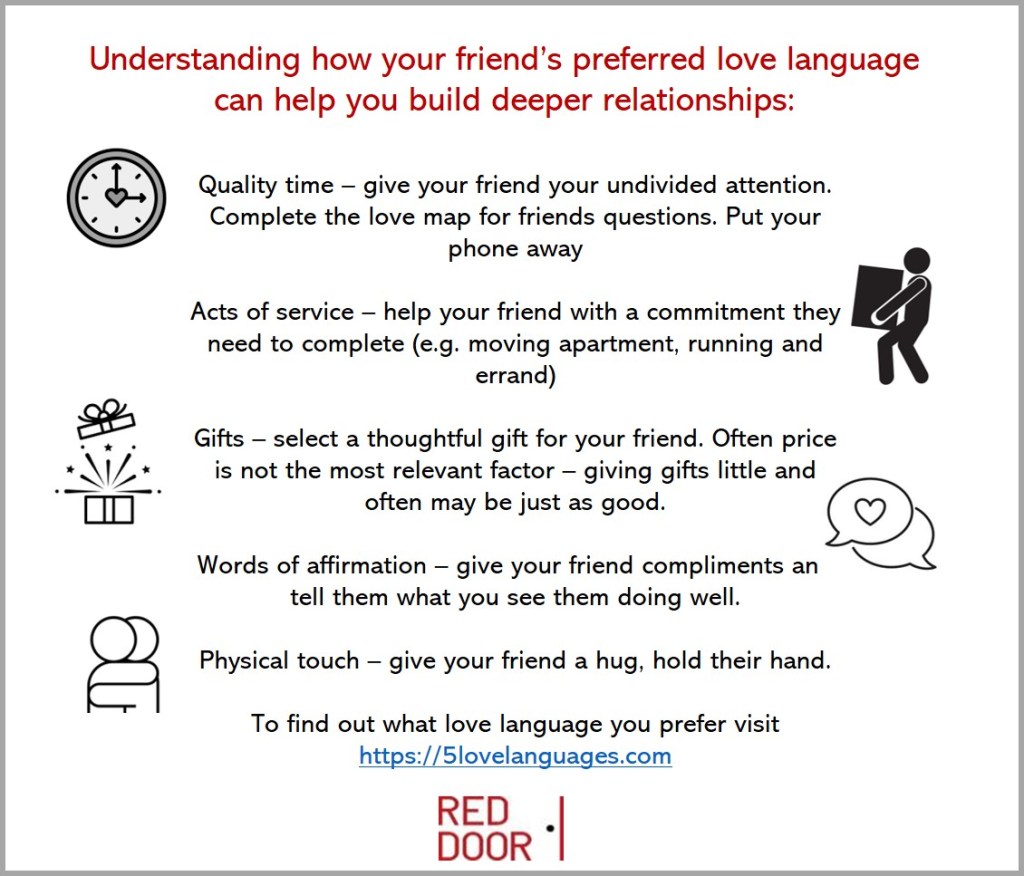
A set of questionnaires that we use  in couples therapy that are also applicable to building good friendships include understanding your friend’s love language and their apology language (see https://5lovelanguages.com). When we respect our friends’ love languages we better connect with them. Understanding that your friend values acts of service means that you will build a stronger relationship helping them with a house move, rather than buying them a box of chocolates to celebrate the mo

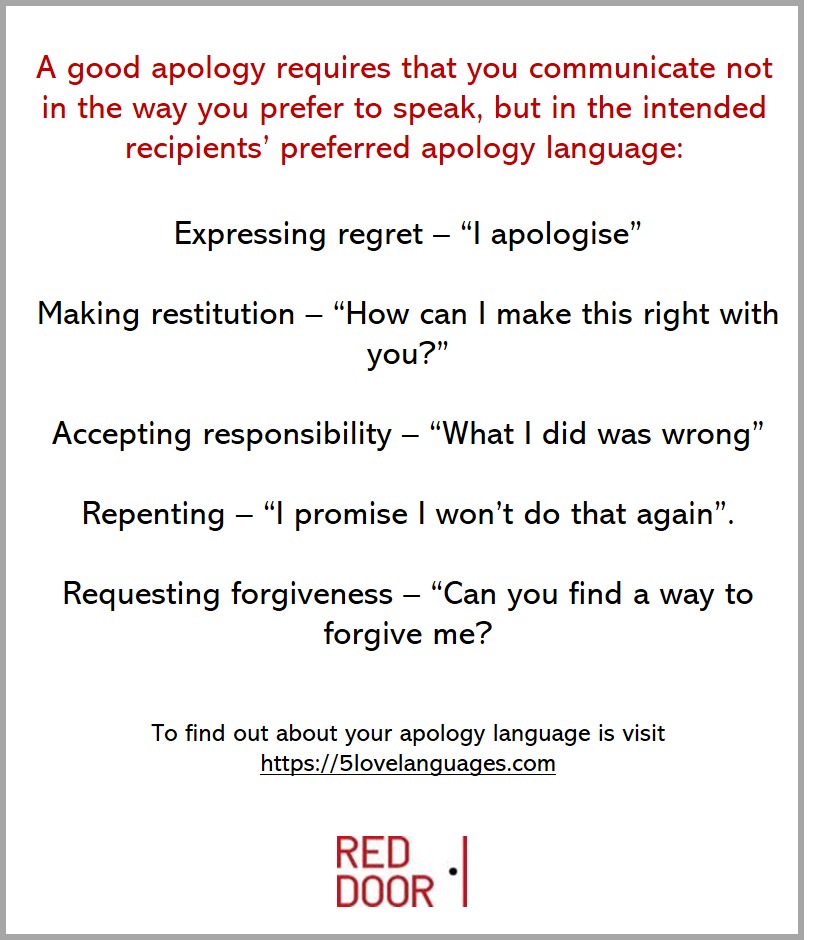
Building better friendships requires expanding our ability to mend fractures in the relationship that can possibly lead to breaks.Friends have disagreements. Apologising to your friend in their preferred apology language, also helps mend the relationship when disconnections. We have a tendency to communicate in our own preferred language rather than the preferred language of our recipient. If your friends’ preferred apology style is different from yours, your apology may feel insincere or incomplete. To learn more about your, and your friends’ apology preferences visit  https://5lovelanguages.com.

Most people have more than one preferred apology language so you might consider combining the language around your friends preferences – for example if your friend prefers restitution and repenting you might apologise by saying to them, “I promise I won’t do that again, and ask can you tell me how I can make things right with you.”

Patience

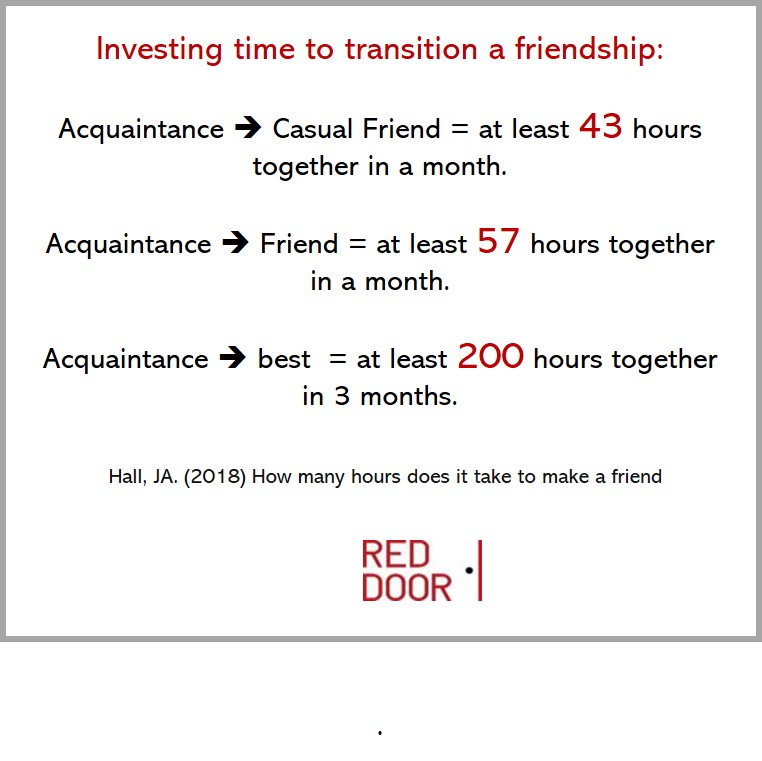
In studying how long does it take for college students to make and secure friendships Hall (2018) [6] suggests the following. The chance of classifying a person as a casual friend rather than simply acquaintance occurs for most students after they have spent over 43 hours together. Casual friends transition to “friends:’ after at least 57 hours together within a 3-week period. Best friends, or good friends take longer. Over a 3-month period an investment of over 200 hours is required.

What can we learn from Hall’s analysis. Basically, it supports the prediction that value of time spent together is a predictor of friendship and friendship closeness. Taking this investment approach to friendships can help us decide if we have really put in enough effort to secure a friendship. Are your expectations realistic? When we desire new deep relationships it can be uncomfortable to understand that friendships take time.

Reflect what is working, and what isn’t before you audit.

New friendships, and building deeper friendships, take time, consistency, vulnerability, understanding, and positivity. Even then you may feel that the relationship is not working for you.  It is quite possible that you become impatient with potential friendship candidates converting to becoming friends.

Ambiguous loss is the term used to describe the grief you have for someone who is still alive, including a relationship which seems to be fading or not delivering as it uses to. It is healthy to audit your relationships to consider if reinvestment could save them, or a mismatch in timing or values is now so considerate that perhaps you would be best to invest your time in another friendship instead – ie audit.

Before you cast a new, or even and old friendship, aside – reflect on the following considerations.

Reflections:

  • People have a bias to overestimate what they give to a relationship, and underestimate the efforts of others. Could you be operating under such a bias way of evaluating your friendship?
  • Do you know what you want from this friendship, and have you made this clear(er) to your potential friend?
  • Am I over-giving and not receiving enough back from this friendship? If so, is this you offering too much or them not offering enough? Could this be changed?
  • What traits do I admire about this person? Do I want to still have access to those traits or offerings. Consider exploring what type of friend they are according to the Rath “Types of friends” graphic. Do you have other people in your life who provide this trait/skill?
  • Is your friend going through a tough period in their life when they can not be a great friend to you? Can you consider to have a more “one-sided” relationship for a specific period, but make it clear that, this is not a permanent status.
  • Am I willing to break out of my comfort zone and usual way of operating in order to make this friendship better? If you are not, are you willing to accept the consequences of “doing what you have always done?”

If you acknowledge that your friendships are not as you would like them to be, in terms of numbers of friends and also depth of friendships the recommendations we have included here could help you make new connections, rebuild old connections, and reinvigorate your friendship base. You don’t need to be alone if you don’t want to be –invest in your connected future.  

References.

[1] Federica Cocco Are we ready for the approaching loneliness epidemic? FT.com 25 November 2022. https://www.ft.com/content/c3aef690-b5a5-4f0d-9da5-2bf4c560c4f4

[2] Gerst-Emerson, K;, and Jayawardhana, J (2015) Loneliness as a public health issue: The impact of loneliness on health care utilization among older adults. American Journal of Public Health, May . 

[3] Nelson, S (2016) Frientimacy: How to deepen friendships for lifelong health and happiness. Seal press.

[4] Rath, (2006) T. Vistal Friends- the people who can’t afford to live without. Gallup Press.

[5] Gottman J and Silver, N (2013) What Makes Love Last?: How to Build Trust and Avoid Betrayal. Simon and Schuster

[6] Hall, JA. (2018) How many hours does it take to make a friend? Journal of Social and Personal Relationships. Volume 36(4) page 12788-1296.