
The Western world has a lot to apologize for when it comes to bereavement. The traditional Western approach to accepting death is not particularly emotionally realistic. This has, possibly been exacerbated, by the way we have had to deal with death during the pandemic.
Our approach to dealing with death can makes dealing with bereavement harder for some people. Conventional advice may actually be making it harder for you to come to terms with the loss of a loved one.
For example, you may have been told, that you will soon “Get over it”/ Getting over our grief, or achieving “closure” seems to be positioned as the objective. This is not healthy.
As counsellors we see clients come to us trapped in their grief over the passing of loved ones, angry at their own impatience that they just can’t get past these feelings.
Each person’s grief is unique and depends on their personality, the relationship with the deceased, the quality of death (sudden, long, quiet, violent), the emotional style of the bereaved, their mental health, and the social and cultural perspectives on death and the afterlife. In short, your path of bereavement is your path. Its OK to not feel OK. It is OK to continue to miss someone. Of course, we may need to also be functional whilst we grieve, but rushing “recovery” is not only unhealthy, it is unrealistic.
Make the most of deathly rituals
The use of rituals at the time of death may help or hinder the experience of grief. The formal funeral common in the western world is a far cry from the Maori Tangihanga – a three-day grieving ritual with gathering, storytelling, beer and tears-a-plenty. The same could be said of the Irish tradition of a merry wake. These highly emotive celebrations lament death and mourning as a rite of passage, normalising the expression of pain. It is not somber, quiet and with restraint. All emotions are explored and experienced. Giving ourselves sufficient time to acknowledge a death has occurred helps us better process the impact of that person’s passing
The Mexican celebration, the Day of the Dead invites the departed to revisit the earth and join their families. The Chinese traditionally improve the afterlives for their loved ones by burning paper objects such as iPads, new clothes and even cars so that their ancestors are nice and comfortable. These rituals keep the departed loved, remembered and, most importantly connected to the living.
Because of the covid pandemic many individuals did not even have our usual, even inadequate, rituals to help us start the grieving process. We say goodbye to loved ones via the internet, or not at all. We have witnessed an onslaught of death as a consequence of COVID, each body representing the broken hearts of many who were robbed of a final, loving and respectful “goodbye”. We do not have a measure of the collective impact of this grief. In counselling, we face each case, one by one, or occasionally in workshops.
Connect to the echo of your loved one.
Staying connected to those who have passed helps people to continue to grieve. You don’t have a specified period to complete grief, like it is a quest within a game.
In her wonderful book for children, “The Invisible String”, Patrice Karst reminds us that we remain connected to the dead through our shared love and remembrances. Rituals and celebrations are a great way to maintaining connectivity.
Staying connected to the memory of a departed loved one, can provide comfort. For example, celebrate a loved one’s birthday with their favourite food or wine, or enjoying one of their activities, continues to keep you connected to those who have died.
In counselling we can use a utilize a variety of ACT and psycho dynamic therapy techniques to help you accept, repair or resolve the features of your relationship with your departed loved one. If you find your grief more than you can take, it is OK to talk to a qualified professional. If you think it would help, seek out a bereavement workshop, or support group*
Remember dead does not mean forgotten.
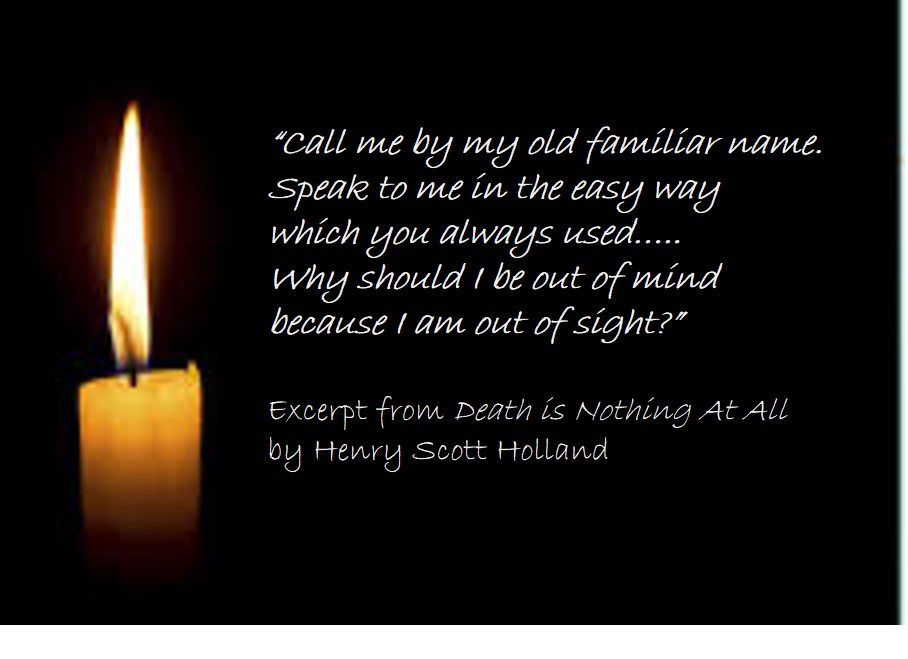
In the poem Death is Nothing At All by Henry Scott Holland, reminds us that whilst our loved ones have left our physical world, we need not forget them, or ignore them.
Death is nothing at all.
I have only slipped away into the next room.
I am I and you are you.
Whatever we were to each other,
that we still are.
Call me by my old familiar name.
Speak to me in the easy way
which you always used.
Put no difference in your tone.
Wear no forced air of solemnity or sorrow.
Laugh as we always laughed
at the little jokes we enjoyed together.
Play, smile, think of me, pray for me.
Let my name be ever the household word
that it always was.
Let it be spoken without affect,
without the trace of a shadow on it.
Life means all that it ever meant.
It is the same that it ever was.
There is absolutely unbroken continuity.
Why should I be out of mind
because I am out of sight?
I am waiting for you,
for an interval,
somewhere very near,
just around the corner.
#Bereavement
#CopingwithDeath
__________________________________________________________________
Angela Watkins is a psychologist and counsellor at RED DOOR Counselling in Hong Kong. Her current clinical work focuses on all aspects of family life – including bereavement. Angela has been listed as HK’s best therapist by LIV magazine.
 Start your Red Door Journey