Where is the Love?

Welcome to our new blog series, Love Matters, where counsellors Angela Watkins and Elizabeth Wu explore the complexities of relationships and love. Both Angela and Liz specialise in helping individuals navigate their romantic lives, with Angela also serving as a practising couples therapist.

In this inaugural column, we delve into the question on many people’s minds: Where do we find love? This topic frequently comes up in both our professional and personal interactions. To better understand the landscape of modern romance, we reached out to individuals who have successfully found love. Interestingly, we discovered that only a handful had entered new relationships in the past year, most of whom were under 25.

The majority met their partners in real-life situations—at school, through shared hobbies, or via mutual friends—while only about 9% connected through dating sites or social media. With these insights in mind, Liz and Angela will discuss their perspectives on:

  • The fun and challenges of online dating
  • New events designed to facilitate matchmaking
  • Dating at different ages and the goals you might consider

Join us as we navigate the journey of finding love in Hong Kong!


Angela: Welcome to the first in our Love Matters series where Liz and I talk about matters of love and romance.

In our recent research, we asked for basic feedback from people regarding romances that had begun recently. Thirty people responded; most were young—under 25—with some over 45. There wasn’t much in between. In chatting with people about the results, I found few individuals aged 25 to 40 who had found love in the past year. Are we living in a love desert?

Liz: In our city we have long work hours, dense schedules and high housing costs—that constrict time and energy for dating. Recent data shows an increasing never‑married population, with a modest female surplus in Hong Kong, which can intensify the perception of competition.

Seeing the little results of love in our research may not be evidence that new love is absent, but it can also reflect sampling – who we asked, where they spend time, and how visible their relationships are.

In therapy, I pay attention to how narratives of scarcity shape our behaviour – are we grasping anxiously or avoiding the chase altogether? Neither can helps us choose well. I’d rather help you expand contexts where genuine contact can happen and strengthen your capacity to recognize and grow a good bond when it appears.

Angela: When we looked at where people found love, the majority (62%) found their partners in real-life situations—particularly through aligned activities, such as attending the same university or sharing hobbies, and also via friends. Why do you think this is?

Liz: We attach through repeated, low pressure contact—classrooms are a great example of that. Hobby groups are also great – for example, there’s been a rise in running clubs which became popular during and after COVID which has been cited as a good source to find matches. In a city that can be so hectic at times, aligned activities slow us down. They let people see each other across different moments—tired, excited, collaborative—which reveals true character better than an online profile. If you want to give love a chance here, design your week to include recurring communities, not just one‑off events.

Angela
Aligned activities allow you to take things slow and digest the relationship bit by bit. You don’t necessarily have to rush things.
What role do friends play in this?

Liz: Friend introductions are great because they can pre-vet the other person beforehand. A thoughtful introduction carries “earned data” – your friend already knows your values and blind spots and can reality check early projections. They are walking endorsements for the both of you. That said, curation is important. You shouldn’t introduce simply because two people are single, you should only introduce when there’s healthy alignment in life stage, values, and availability. While apps can feel transactional, friends can advocate for the connection, highlighting positive traits about each person to the other.

Angela: If you trust a friend, they can provide advice on your relationship standards. Do you think I’m being too particular about certain things, or is it not a good idea to have high standards?

Liz: Feedback can work when it’s invited and specific. If a friend genuinely wants perspective on standards, offer it kindly and specifically—what’s a value‑based non‑negotiable versus a preference that can be more flexible? Unsolicited advice, despite you meaning well, can sometimes do more harm than good. Dating can make people feel vulnerable, so approach with care.

Angela: I’m thinking about our recent discussion on the concept of “shreking.” To me, shreking is about accepting things that aren’t necessarily your usual standards, allowing yourself to have different experiences. It’s not just about settling for less; it’s about questioning whether your standards are holding you back from enjoying life. Do you think shreking means accepting someone below you?

Liz: I don’t like the term “shreking” because it brings in hierarchy – showing someone is above or below someone else, like love is a market with rankings. For me, the real differentiator is looking at attachment styles and whether someone is secure or insecure, rather than looking at their appearance or resume.

Sometimes choosing outside your usual type can be growth, you interrupt a previous pattern that didn’t bring you safety. If you can look beyond the superficial and ask, “Are we moving more towards security for both of us?”. If it is, then that to me that is an upgrade, not a downgrade.

Angela: Let’s talk about online dating. From our brief polling results, about nine and a half percent of our lucky, successful daters have met their partners on our online dating platform, such as Bumble, Tinder, Grindr, or even Instagram.

Its definately popular as a way to meet people. Just not as, potentially successful as meeting people in real life situations. What do you think? Do you have an opinion on online dating?

Liz: For me, apps are just a tool; it’s not really a magic wand that can get you what you want. Here in Hong Kong, many people have busy lives and hectic schedules, so it’s a good way to expand beyond your circle—beyond what your friends, hobby groups, or ex-classmates can introduce you to. It can be hard to meet someone organically in Hong Kong.

With an app, both people already know what their intentions are. But it’s a double-edged sword; there can be an element of dehumanisation. You can amplify projections—I’ve seen people swiping, thinking things like, “Oh, he looks like an F-boy,” or “She looks high maintenance.” It’s very easy to profile people, but you know how it feels when you get profiled as well.

It can all get exhausting and overwhelming, my advice is to just remember it as a tool, limit the number of people you are speaking to, and move promising off apps to in person meets before the fantasy flattens.

Angela: I recently went down a Reddit rabbit hole looking at comments about people’s experiences with online dating. It’s clear that many would prefer to be in a room together, able to look around at all the available options instead of swiping one by one on profiles on an app. People seem to want want the opportunity to move around and look for partners without making immediate decisions. Many comments mentioned that online dating feels like a lot of admin, which doesn’t sound romantic at all.

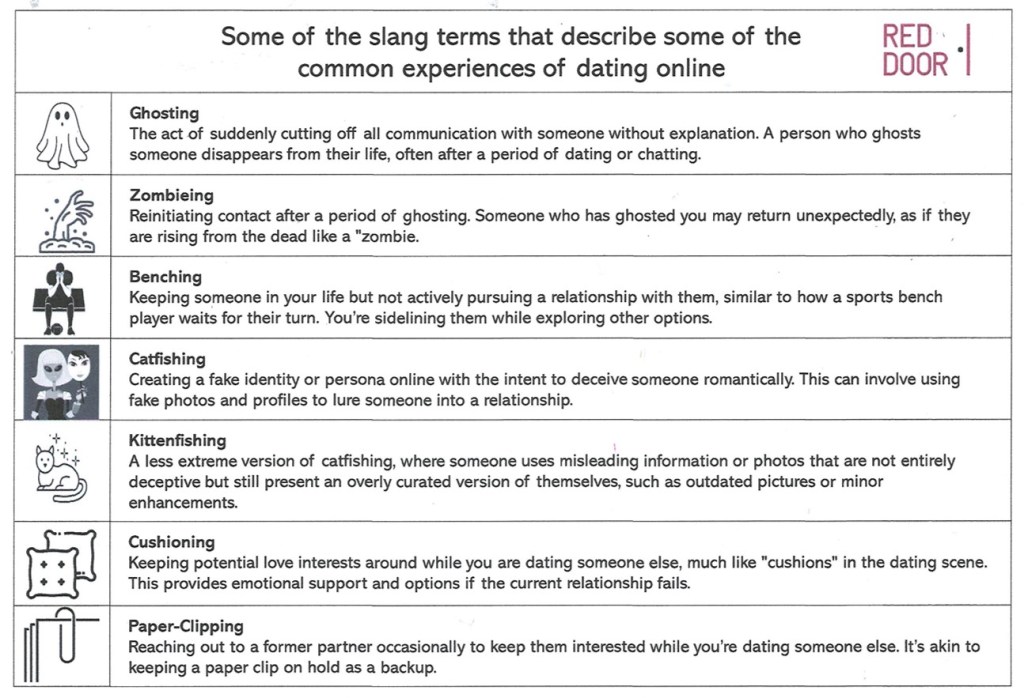
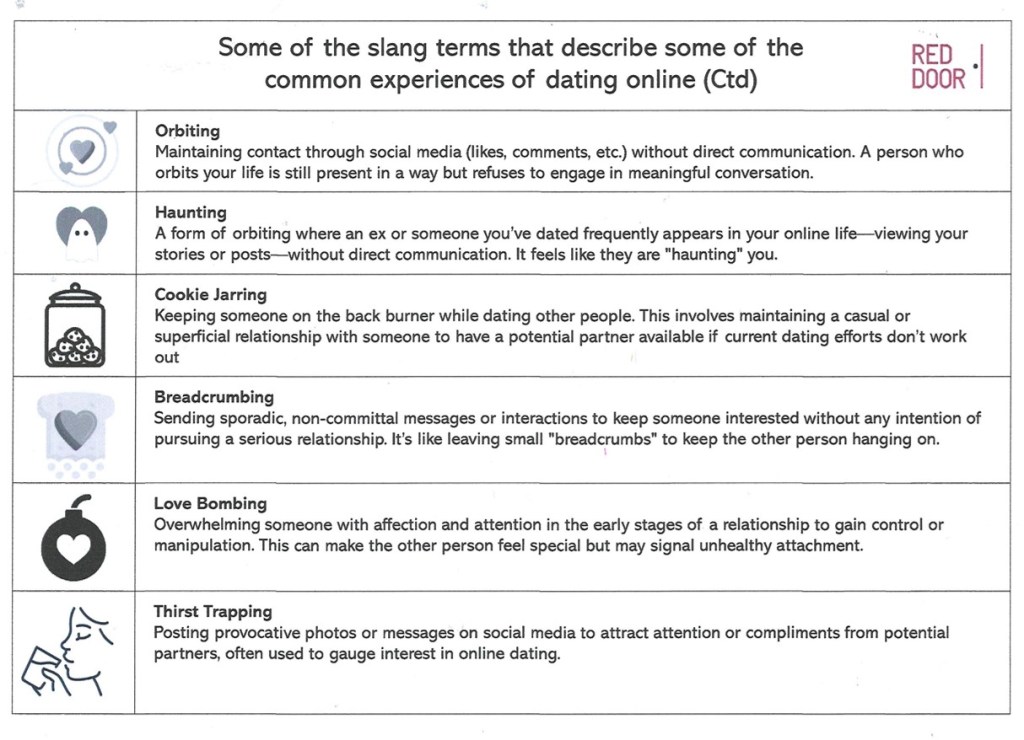
Online dating is definitely different from in-person dating, particularly in terms of the experience. A whole range of slang terms has evolved in response to online dating, which I’ll include as a call-out diagram in this document. Among this plethora of terms are expressions like ghosting, zombieing, and breadcrumbing.

Some behaviours that happen online don’t carry the same meaning as they would in real life. For instance, if someone completely stops talking to you and avoids you—i.e., ghosts you—it’s common to wonder if you’ve done or said something wrong. However, being ghosted on online platforms is extremely common, and it doesn’t mean the same thing. Understanding that online dating is a different world, with different expectations is helpful.

Many of my clients are women over 40, and for them, the online dating platforms require understanding that this medium is very different from real life. Additionally, people often fake their profiles. It’s common to engage in “kitten-fishing,” which involves telling small lies about yourself, such as your height or interests.

For this reason, many women find online dating a difficult platform to emotionally navigate – from learning who someone really is, to understanding the “new norms” around interaction frequency and styles, to trying to interpret another person’s intentions. Many of them express that they cycle on and off dating websites because they find the practices, and adjustments, too lexhausting.
Liz: Two truths can coexist at the same time: online dating being admin heavy, and many couples still meeting there.

We need to be mindful of whether this is fun or too much admin. With the rise of digital culture, we’re texting all day, sending emails on our phones, keeping up with friends on Instagram, Facebook, and other apps. It can be overwhelming to text someone while also replying to your friends’ memes on Instagram and your boss’s WhatsApp messages.
I know people who are genuinely interested in forming connections, but they find it hard to reply because they may have limited time during their breaks, and it can start to feel like an obligation. I completely understand being “left on read” due to what’s happening in real life.

To protect your nervous system, also take appropriate breaks from the apps. Give other people the benefit of the doubt, ghosting is common and rarely personal. It’s more about low confrontation exits and it does not determine your worth.

I think another legitimate concern is scams. Beyond catfishing, financial and crypto‑investment scams have been on the rise in Hong Kong. I advise that if you match with someone, try to arrange an in-person meetup or at least have a call—what I call a “vibe check call”—to ensure that this person is who they say they are. Meet up in public spaces and tell a friend about your date. Also avoid financial talk or “urgent favors” early on, slow is safe.

Angela: I agree with you completely, especially regarding the importance of moving from online to in-person interactions within a specific timeframe. It’s important not just for verifying that people aren’t scamming, but also to determine if they’re genuinely interested in meeting someone rather than just collecting potential flirtations.

Do you have an advisable timeframe for pushing for an in-person meetup?


Liz: My advisable time frame is usually within one or two weeks. The reason is that many people in Hong Kong are often travelling and there are numerous holidays. If you match with someone and can’t see them within the next 14 days due to travel delays then maintain a light, non-intense contact and set a concrete plan upon return.

Angela: Liz, I know you have your finger on the pulse of new trends arriving in this city. Are there any new ways you’ve heard of that people are using to meet new potential partners?

Liz: A recent example was an event at Soho House Hong Kong on Feb 5, where they hosted an event called “The Ultimate Wing Session” – they had friends pitching where each person had 3 minutes to prove their friend is a great catch. That is a creative event that comes to mind.

Otherwise, old‑school matchmakers exist here too, but do your due diligence – look for clear fees, refund policies, how they verify candidates, and what data they actually have in your age range and interest field. 

Angela: I have unfortunately heard stories about matchmaking scams that have existed. If people want to try matchmaking services I would try to search to see if anyone you know has a had a positive experience of such a service.

So, let’s talk about different age groups. When we tackle the question, “Where is the love?”, I imagine that different ages have different goals and challenges depending if you are under 25, or in your 30s, or 40s or old.

I remind my young adult clients that it’s unlikely they will marry the person they are currently dating. With this in mind, they don’t have to rush their relationships You don’t need to be on the “relationship escalator,” driving one stage of a relationship to the next. Take your time figure out what you like, what do don’t like, learn from mistakes what you do not want to repeat, be open minded that different partners all make different contributions to a relationship. You can go out to Lan Kwai Fong, attend different events, and meet people on apps or at your university. You have lots of energy and can spend this time discovering what you like and what your type is. Essentially, have fun.

Liz: 100%! I completely agree—for early adulthood, having fun should be the focus. You’re learning attachment patterns in the field – how you pursue, how you pull away, and how you repair. There is no need to rush the relationship “escalator”. Try different contexts and types. Pay attention to how you feel in your body around different people – are you more yourself or more performative/anxious? 

Angela: As people get older relationship expectations change. Additionally it can sometimes feel like there are not a lot of suitable options for you to date. I know you work with many women in their 30s, what recommendations do you have for them?

Liz: For women in their 30s, some may feel more pressure because of the biological clock around fertility. Having this clock can compress choice, and compression can breed insecure attachments. Expand time where you can. For example, if parenting is important to you, consult early on options – research on egg freezing and IVFs – so you are less dominated by your reproductive timeline.

Angela: I agree. It seems to me that many clients in their 30s, feel a lot of pressure from the expectation of the relationship escalator – distinct steps that people feel the need to rush through in a linear fashion to reach some mythical “happily ever after. First, you meet someone, get to know them, live together, get engaged, get married, and then have a baby. This linear progression is perhaps not for everyone, and it might even be healthy to step back and, instead, audit your life and ask, “What do I really need?” In terms of a biological clock, even with technology there is pressure. At some point you might need to ask yourself would you rather have a romantic relationship or have a child? W Perhaps you won’t be able to have both, and it might be necessary to consider what truly matters in your concept of a successful life.

It is important to consider whether we are being too adherent to a certain list or escalator in life. I think you can miss out on people. Sometimes, clients who are quite particular—who aren’t just women—have a shopping list of what their ideal partner should possess.

Liz: I see that too. If someone has too many criteria on their list, like requiring an Ivy league graduate who meets specific height and job expectations, it can be limiting.

I invite clients to separate non-negotiables rooted in values, for example, kindness under stress or desire for kids versus strong preferences that are nice to have e.g. specific heights, working in a specific industry.

Then ask yourself “does my list mirror my own availability”? People who meet many high‑status criteria often also seek partners with certain qualities. Consider those and build those in yourself.

Angela: For women in their 40s, do you think there are specific pieces of advice to consider? These women may have been married previously, and now be separated or divorced. They could even have children and be solo parenting.

Liz: For women 40s and beyond, beyond apps, they could explore volunteering opportunities or join various social groups. There are many communities within Hong Kong to choose from, choose one that reflect your lived values. The key variable is repetition, recurring contact that lets character show over time.

Angela: I really like the idea of expanding your network of activities because engaging in different pursuits is one of the best ways to meet people. The reality is that if you stick to the same routine, you’ll keep encountering the same people. If you want a bigger dating pool, go where the “fish” are—find activities that interest you!

When I meet with our Iron Fairies group (for women going through divorce in Hong Kong), I find that they particularly learn the nuances of online dating versus offline dating the hard way. It often seems that the pool of possible partners is quite limited. So, good questions to ask yourself include: what does companionship look like for you? What does a good life look like for you? Where do you find joy? If finding a new partner doesn’t seem possible, does that mean you’ve failed?

There are many questions that need to be asked to determine what a good, satisfying life looks like. If a partner is part of that vision, then is Hong Kong the right place to look for one? I always encourage my clients to form a supportive group and go out to clubs together—not necessarily to meet people, but to enrich their lives. After a divorce, your world can feel very small, especially since many experiences’ exclusion from their regular social circles. It’s important for them to form new groups to explore new adventures.

Liz: Those are all valid questions to help gain perspective. After experiencing divorce, the focus should be on re-expansion. Rediscovering who you are and what a satisfying life looks like for you. There are many forms of companionship beyond a romantic one too. When the romantic pool feels small, you can also enrich the ocean you swim in – clubs, studying a new course, traveling. Ironically, people often meet new partners when busy building a meaningful life that would be good with or without a partner.

Angela: It’s vital for each of us to be good at being single. Yes, being good at being single is important. If you want a wider network, including potential partners, diversify your friends, hobbies, and explore different apps and events. The more “eggs” you have in various baskets, the more opportunities you create for new abundance. That would be my final advice. Be in a relationship because you choose to be, not because you have to be. Makes sure you a good at being single. When you are looking for love, make sure you build a network to help you meet several people in real life. If it starts online, move a meet up to the real world as soon as you feel that would be possible.

What would your main advice be Liz?

Liz: I would say to run on two tracks in parallel. On the one hand, build a life that feels rich even if love arrived later – get involved in your community, there are body based ones like run clubs and yoga, meaning based like volunteer work, and creative based like ceramics and art-jamming. Find activities that has recurrence to let attachment happen. Do the inner work, therapy can help you notice unhealthy patterns and learn repair so you can feel more secure with yourself as you go on this journey.

On the other hand, date with intention. Understand what your values are and what your non-negotiables are. If you go on the apps, try to meet your match within one to two weeks. No endless pen-pals. Involve your circle and see if there are some introductions to be made.

Also, don’t seek dating advice from AI . AI can be useful for light brainstorming, but it can’t read your history or cultural context. Generic advice can miss red flags or push you toward choices that aren’t right for you. Trust your own instincts, real life friends that know you, and if helpful, a therapist over online predictions
 
Most of all, hold onto hope. You don’t need to be perfect; you just need to be consistent and brave. In the search for love, you don’t need a lot of yeses, you just need one good mutual yes at the end of the day.

*******************************************************************************************

We hope you enjoyed this conversation with Liz and Angela as part of our Love Matters series on how to have more fulfilling relationships. If you would like to contact Angela or Liz for a session please email us at reception@reddoor.hk or whatsapp +852-93785428.

For other articles about relationships that might be of interest see below.

What You Can Do If Your Divorce Involves Financial Abuse

Divorce is often an emotionally challenging process. For some, it can become even more complicated when financial abuse is involved. Financial abuse is a form of control and manipulation that can leave victims drained, confused, and vulnerable—making the divorce process even more difficult. It may have existed throughout the marriage or only surfaced during separation. Unfortunately, many women in Hong Kong struggle to fund their divorce due to financially abusive behaviors by their ex-partners. Knowing what steps to take is essential.

What Is Financial Abuse?

Financial abuse occurs when one partner uses money or financial resources to exert power and control over the other. During divorce, these tactics can escalate, hindering the victim’s ability to achieve financial independence or protect their assets.

Common tactics of financial abuse include:

  • Withholding money or access to funds to prevent one party from leaving or maintaining control
  • Controlling all financial decisions, even after separation
  • Stealing, hiding, or manipulating assets
  • Refusing to pay shared debts or expenses
  • Sabotaging credit scores or financial opportunities to limit future borrowing or employment options
  • Using money demands as leverage in family matters—e.g., withholding access to children unless paid for holidays or other demands

Recognizing the Signs of Financial Abuse During Separation or Divorce

Be alert for these warning signs:

  • Sudden changes in access to bank accounts or funds
  • Neglect or refusal to pay shared bills
  • Lack of awareness about joint financial details
  • Manipulation or withholding of financial information
  • Feeling intimidated or threatened regarding money matters
  • Demands for financial arrangements tied to child care or visitation

Awareness of these signs is the first step toward taking action and protecting yourself.

How to Protect Yourself During Divorce — 10 Essential Considerations

If you suspect or know you are experiencing financial abuse, consider these steps to safeguard your financial well-being:

1. Gather Financial Documentation
Start collecting all relevant records—bank statements, tax returns, pay stubs, property deeds, loan documents—as early as possible. Store copies securely, in a safe physical location or encrypted digital storage inaccessible to your partner.

2. Open Personal Financial Accounts
If you share accounts, consider opening your own bank and credit accounts. This helps establish your own financial independence.

3. Seek Legal Advice
Consult with a lawyer experienced in divorce and financial abuse cases. A knowledgeable lawyer can guide you on protecting assets, understanding your legal rights, and pursuing remedies if abuse occurs.

4. Develop a Safety Plan
If you feel threatened or unsafe, create a safety plan that includes emergency contacts, a safe place to stay, and steps to take if your situation escalates. Never hesitate to prioritize your safety and that of your children.

5. Document Everything
Keep detailed records of agreements and communications with your ex-partner. Save emails, texts, or messages threatening your finances or demanding inappropriate arrangements. Share these with your lawyer, especially if protective orders are necessary.

6. Secure Your Financial Future
Work with legal counsel to ensure a fair division of assets and debts. Engage a financial advisor to understand your financial standing and plan ahead. Consider consulting a career coach or counselor about building a side income or expanding your vocational skills to foster long-term independence.

7. Limit Shared Access
Change passwords and restrict access to shared accounts. Avoid sharing sensitive financial information unless absolutely necessary, especially during legal proceedings.

8. Consider Protective Orders
In cases of coercion or control, requesting a protective order can provide legal safeguards. While lawyer fees may seem high, they often offer the best approach to balancing your needs and securing your rights.

9. Focus on Your Future
Despite the difficulties, actively work toward a new, secure future for yourself and your family. Support from legal professionals, support organizations, and mental health counselors can make this journey more manageable.

10. Seek Support
Divorce is tough, and facing it alone makes it harder. Reach out to friends, family, or support groups. In Hong Kong, RED DOOR’s Iron Fairies offers therapeutic support specifically for women going through divorce, helping them find healing and empowerment. For more about Iron Fairies, check out the related blog links below.

About the author: Angela Watkins is a counsellor and psychologist working out of RED DOOR Counselling Hong Kong. Angela runs the Iron Fairies, Hong Kong’s therapeutic support group for women going through divorce.

Other blogs you might find useful

The Emotional Piggy Bank: Building an enriched relationship

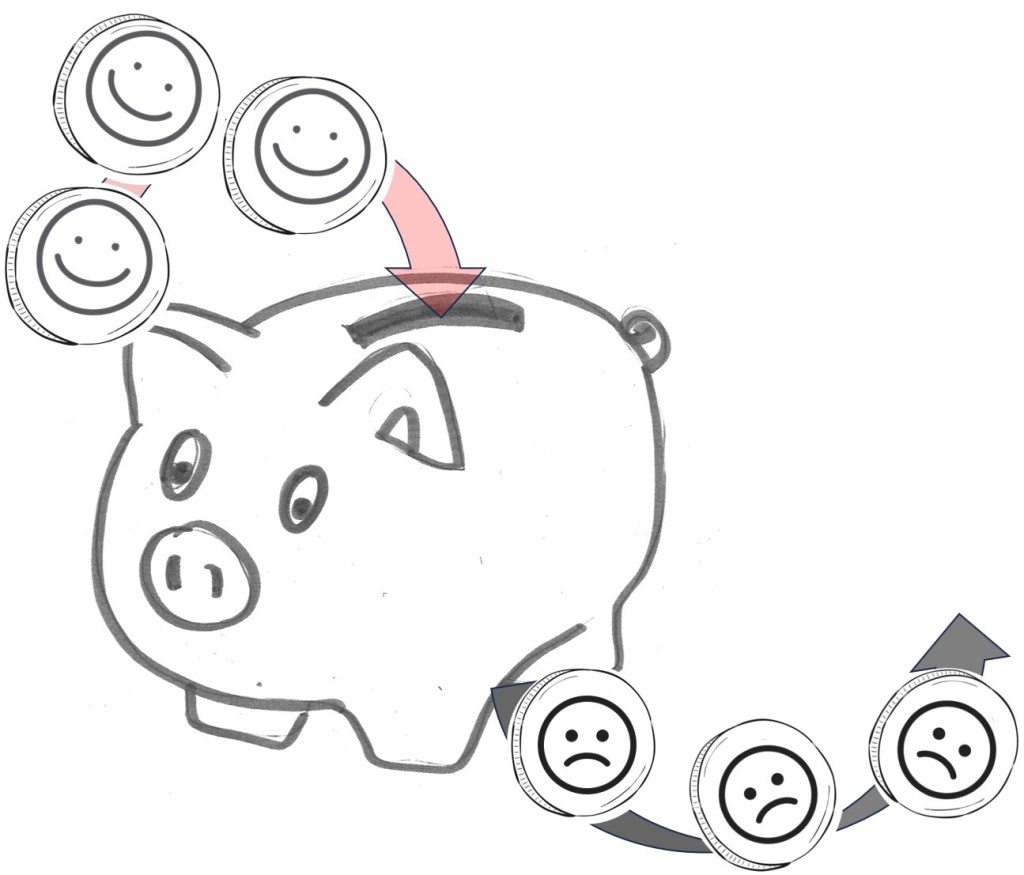
In order to make your relationship last, you need to ensure you have a full emotional piggy bank.

John Gottman, landmark couples counsellor and relationship researcher, studied thousands of couples exploring the difference between happy and unhappy couples. There are some notable differences.

Happy couples engage positively with one another and show interest in each other’s lives. Happy couples are generous in spirit towards towards each other. They try to understand each other’s world. Happy couples spend time together – connecting. When these couples experience conflict they use strategies to stay positive towards each other, see the conflict as an issue for them to resolve (e.g.you and I versus the problem) and work towards resolution.

Unhappy couples don’t do these things.

In couples counselling we often introduce the Gottman concept of the Emotional piggy bank. To help couples better realise the deposits, investments and withdrawals their actions within the marriage represent.

When our relationship’s emotional piggy bank is full, couples able more likely to be able to be generous in spirit towards each other when they encounter tricky situations.

For example. Imagine your partner, John, said he would call you at 3pm to talk about an important topic. The designated time to call comes and goes, with no message or call.

If you have a full emotional piggybank, you might react in such a manner: “I guess that big project John has been worrying about has taken off and he’s lost track of time. I know he cares about me and our issue so I’ll remind him later and we will find a new time to talk”.

Conversely, if your relationship’s emotional piggy bank is running near empty you may have no good will to help you see the situation with generosity. The aggrieved partner in that instance might think: “John did it again. He never cares about anyone by himself. He just expects me to wait by the phone like some loser. Well, not this time!”

An emotional piggy bank needs to run with a healthy balance. You and your partner need to be making deposits, and checking the impact of withdrawals.

How can you make deposits into your relationship’s emotional piggy bank?

The following activities constitute a deposit into your emotional piggy bank:

  • Giving and receiving affection from each other. Not just sex.
  • Spending quality time with together doing activities that you both enjoy
  • Learning about each other’s world.
  • Performing acts of kindness for each other – even little things like grabbing a coffee for them in the morning, running them a bath, or buying special snacks that they love for your movie night.
  • Expressing gratitude towards your partner for the kindness and support they provide to you.
  • Complimenting your partner. Make sure these are authentic and show you have been paying attention. For example, “I really admire the way you acted on your work call. It sounds like your boss is a lot to handle”. Or, “I really like that shirt on you, it goes well with your eyes”.
  • Keeping promises that you made is important to help your partner know you can be trusted
  • Apologizing when you have done something wrong.
  • Giving your partner support when they are having a tough time

You also need to be careful of withdrawals. If you make too many withdrawals or make careless withdrawals from the emotional piggy bank, there may be very little good will in times of crisis.

Some behaviours that harm your relationships emotional piggy bank including:

  • Insults and disrespectful comments
  • Criticism of your partner
  • Avoiding engaging with your partner
  • Neglecting your partner
  • Brushing of your partner’s kind gestures
  • Ignoring the emotional impact of your behaviour
  • Shouting or Scolding
  • Lying to your partner
  • Gossiping about or slandering your partner to others
  • Breaking promises you made to your partner

Please note: Aggression of any type – this is much only a withdrawal, this is a threat to the safety of people in your relationships.

What can you do to change the dynamic and build a better emotional piggy bank?

Respond rather than react

Do you find that you react to situations, rather than respond calmly. Often this is because of the manner you interpret situations? Do you later feel ashamed that you over reacted to a situation? Before you react to your partners actions stop and think what response would you later be proud of, versus reactions that you might regret. A counsellor can help you understand your reactive patterns and learn to interpret situations in a more cognitively flexible manner.

Appraise your level of investment

Many couples do not spend enough time with each other, and the emotional piggy bank is empty because they neglect each other, or the relationship becomes focused on day to day functionality, rather than fun or connection.

Are you spending enough time with your partner focused on each other, rather than the kids or an exhaustive to-do list?

A good relationship is an active rather than passive activity. Stop thinking this is the relationship you have, and start taking the action to make it the relationship you want. Firstly, acknowledge that you could be kinder towards each other and start to think of what this might look like. Secondly, think about securing some time to spend together, once a week, or at least once a month.

Spend time getting to know each other

Great relationships are, at their core, great friendships. Remember back to the beginning of your relationship. You probably spent a lot of time asking questions about your partner, and were thirsty for knowledge about how they interpret the world. This curiosity often diminishes with time, to the detriment of your relationship. Be curious again.

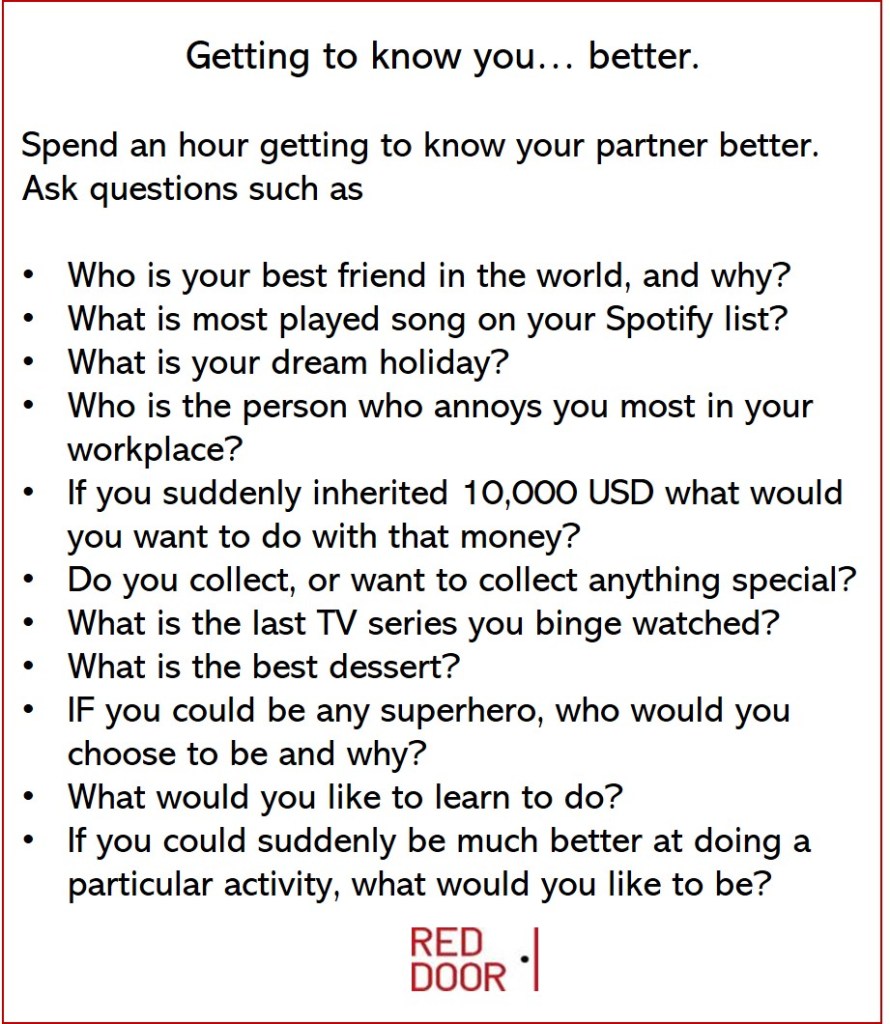
When was the last time you sat down and spent time learning about your partners world. If you don’t know what to ask, the list below is a great place to start.

Practice preferences

People have preferences. Some people like to receive gifts. Other prefer to spend time together. Do you know how your partner likes to receive love? People often give love in the manner that they, personally would like to receive it, rather than checking what their partner wants. This misunderstanding can mean that your kind actions are not

The two following quiz links might help you better understand how your partner wants to receive love, and the type of apology they like to receive. So many people get caught up waiting for the “right” apology, it might be helpful for you to know what your partner thinks are the components of a good apology.

https://5lovelanguages.com/quizzes/love-language

https://5lovelanguages.com/quizzes/apology-language

_________________

About the author. Angela Watkins is a counsellor for individuals and couples working in Hong Kong. If you’d like to improve your romantic relationship consider working with Angela or other members of the RED DOOR team. Contact angelaw@reddoor.hk

#emotionalpiggybank

#relationshipgoals

#conflictresolution

#relationships

#love

#relationshipimprovement

Redefining yourself after divorce

Divorce will change you. Some of the changes will be completely out of your control, especially in the early, chaotic days of a split. As you adjust to the process of divorce you have increasing opportunity to take more charge of some of the change that comes with divorce, riding the tides of change towards a new you, that is stronger, and maybe better than the one who started the divorce process. Would it feel better to know that you can come out of the process stronger than you went into the process?

Academic research on divorce indicates that whilst most people find the process of divorce difficult, they feel they become better versions of themselves after divorce.

Here are some of the waves of change that you may surf to your advantage during the divorce process.

Changing the “We” to “Me”

Married couples are often identify, and are identified, as a unit. If your marriage ends, are you still who you were? Many individuals find understanding who they are, even what they like, very difficult as a single individual. Much of this journey of self understanding may be long overdue and difficult because, for years, individuals may have neglected their own needs in order to be “the best partner they can be” in order to support their romantic partner’s needs or ambitions. When they marriage is declared to be over, you need to move your focus back to who you are, and who you could become.

Start with some of the basics. What do you like? What do you not like? List out your favourite foods, from your favourite things to do? Ask yourself, are these really your favourite things and activities or are your choices a reflection of who you have been in your relationship? If you don’t know your favourites, don’t be discouraged. It simply means that the exploration of finding out who you are, and who you want to be, might be a little more complicated. I advise you to consider a couple of sessions with an experienced divorce coach or counsellor who can help you find a path back to you you use to be, and who you’d might like to become.


Remember, you get to write the narrative of who you will be now. The process of defining what you would like to represent, what you would like to achieve, even what you would like to avoid or stop will lay out the first step, knowing where you want to be. Then we just need to start thinking further about how to get you there.

Write down for yourself:

1)What do I stand for? 2 What do I like about myself. 3) W are my key values and how can I live by them (this is where a counsellor can really help) and 4). What practices or attributes about myself would I like to leave behind?

Grieve

Spend some time allowing yourself to grieve. The end of the hope you had in the relationship. Grieve for the image of the family that you feel you once had.

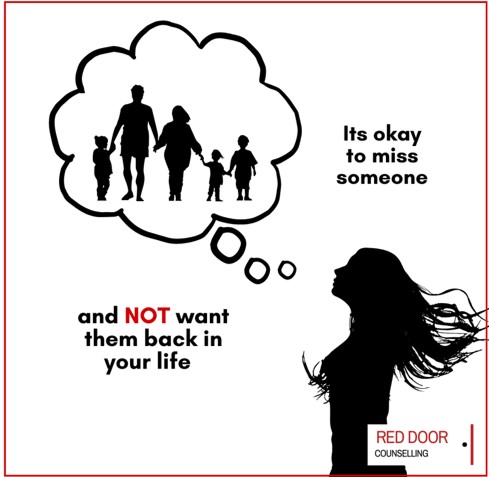
Its okay to miss the “picture perfect” image you once held of your marriage and your family. It is especially hard when the internet if flooded with images of families celebrating happy times together. Please remember that many of those snapshots are not a real reflection of what is going on within those families.

Whilst you are entitled to your grief, try not to stay trapped in it. You can start to romanticize how things were, and how things “should be”. We tend to hold on to outdated stereotypes of marriage and family. There are many types of families and you need to start focusing on making the new version of your family into something that is healthy, robust, and rewarding. If you get too stuck in your grief for what you think you have lost, you may forget to build something new, different, and rewarding in a way that works for you as you evolve.

People miss the sense of belonging that family helped them feel. They forget that often that feeling of belonging came at at cost, or that the sense of belonging was fleeting. You can create a feeling of belonging again, you just need to start by letting go of the image of a “idealised marriage” or “perfect family” that you were holding on to.

Start something new

Many individuals may have taken a career break inside their marriage and as a consequence, feel out of practice in the world of work and with modern technological skills required to be part of the modern work force. Much of our identity is associated with our role as “stay at home parent”. Even if you want to remain a stay at home parent, I would advise you to start to learn something new as part of the divorce process. Not only can you update your academic knowledge, learning any new key skill will give you opportunities to meet new people, and regain confidence.

Embracing a new exciting change may feel unsettling as well as positive. That is normal. Remember, nothing changes if nothing changes. You don’t need to consider a change of career or taking on a full academic degree, consider taking up a new hobby, or a practical course, even changing some of your daily habits.

Taking care of yourself

Learn how to take care of yourself. Start by learning to talk to yourself kindly. For some individuals, critical acrimony has become familiar territory within their imploding and increasingly hostile marriage. Start by practicing being kind to yourself.

Every day, look at yourself in the mirror and say something kind to yourself. Stop the litany of “You should”, or “You didn’t” internal commentary. Start congratulating yourself for keeping your cool each day. Praise yourself when you complete a challenging task, even if it was replying to a rude email with a polite response.

Complete the phrase, “If I loved someone a lot I would do ________, _______ and ________, for them” Now consider doing those activities for yourself.

Build strong networks

Friendships and contacts are essential to help you navigate divorce. It is quite possible at the beginning of the divorce process that you had very few, many no friends who are divorced. Meeting other divorced parents and individuals will save you a lot of leg work, and provide, hopefully a few good shoulders to cry on during tough times.

Good friends help you get through divorce. Great friends become your family during, and after.

One group that, if you can find, will make a significant difference is a divorce support group. Support groups for individuals going through divorce help normalize some of the process, remove feelings of isolation, help you handle your feelings of shame or regret. If you are in Hong Kong, you can join the Iron Fairies. Information about the Iron Fairies is in one of the links below (See becoming a groupie).

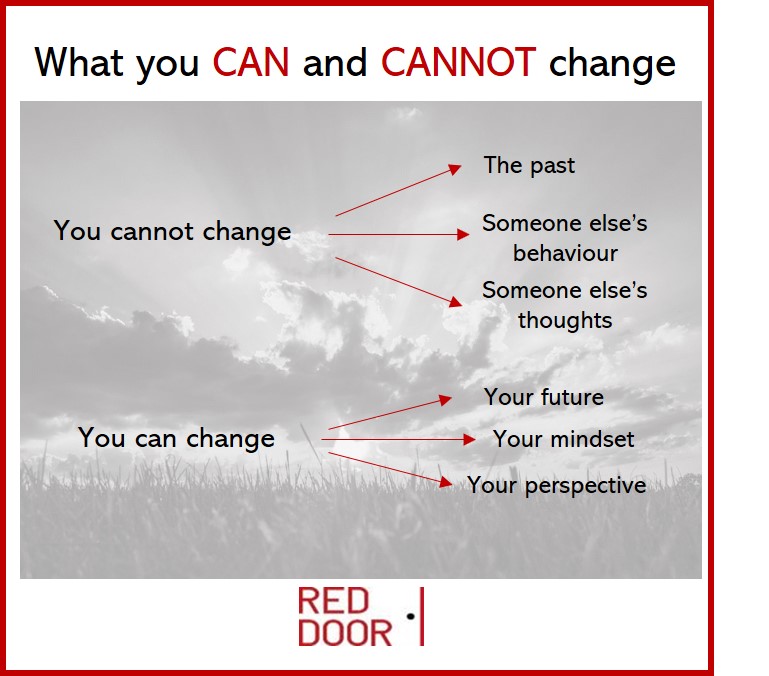
Understand what you can and cannot change

This is a life lesson that is one of the toughest to accept in life, and from divorce. You can’t turn back time. Sometimes your ex-partner will become exactly the type of parent you would have liked them to be before you had to start to divorce. They may have been fairly absent before the divorce was decided and then, because of teh process they are seemingly in contention for “parent-of-the-year”. This can be very confusing. This may even tempt you to contemplate reconciliation.

You can’t change the past, the affairs, the hurtful words, the resentment. You can work to forgive that behaviour, so that it doesn’t keep you trapped in your anger. Letting go of the pain is a gift that you give yourself. You and your partner could, undoubtedly, have been better people before and during your divorce, but you don’t have to hold onto that if it doesn’t suit you.

Let go of your preferred divorce narrative

It can feel very important that others know that this divorce was “not your fault”, that your partner was to blame for the breakdown of your marriage. You won’t get to control all the messaging around the breakdown of your marriage, so please be prepared that some people may have a completely different view of the breakdown of your marriage than you would like them to have. Whilst you have the right to try to challenge this, within safe and sane parameters, it will be most healthy for you to appreciate that you won’t always get to control the story that is told. What is important is the values that you continue to live everyday.

What is comforting is that that most often, lies become apparent eventually. Please appreciate that this can take several years.

Consider your relationship with yourself and intimacy

Your marriage may have been your main source of touch and reassurance. If it breaks down you may want to consider how you could get your physical needs met. One mistake would be to jump into a new relationship very quickly. Its okay to have needs, think about how you could get those met without returning to your ex, or running into a new relationship before you are ready.

Divorce will change you. It may feel as if it could even break you. You can survive this emotional journey, and even possibly become the best version of you, you were scared to become inside of your marriage.

About the Author.

Angela Watkins is a counsellor and psychologist who has spent the past 9 years guiding people through the emotional journey of divorce. In Hong Kong, Angela leads the Iron Fairies, a therapeutic support group for women going through divorce. For information about counselling with Angela and the Iron Fairies contact her at Angelaw@reddoor.hk.

Other blogs you may find interesting regarding the process of divorce:

If you want to find out more about group therapy whilst going through divorce, and the Iron Fairies therapeutic support group:

If you are trying to decide if you should stay or leave your marriage:

If you are starting the divorce process and want to avoid some common pitfalls:

If you have a friend going through divorce, and you want to be a good support to them:

Should you stay, or should you leave?

If you are experiencing challenges in your relationship, you may ask yourself, ” Should we split up?”

In essence, the decision to end a relationship is up to the people involved in that relationship. In a relationship involving two people, both people have the right to decide if a relationship is over. It takes two committed people to continue a relationship, but only one, wanting to leave, to end it.

If you are wondering if a relationship is, or should be over, here are some considerations you might like to think about:

1. What is the level of legal commitment attached to your relationship?

Is your relationship a casual relationship, a long-term commitment, or a marriage? Do you have children together? Do you have shared assets such a property together?

When you are married, or have shared assets, there is a legal element that needs to be considered when contemplating the ending of your relationship?

Whilst friends may give you advice in these situations, I strongly advise you to seek legal advice on matters that have legal consequences. It may not, in the long run, change your decision to stay or leave, but it help the conditions around which you agree to stay, or the planning around how or when you might leave.

2. Are both parties equally committed to the relationship?

Quiet quitting is not just a workplace phenomena. Is one person in your relationship demonstrating lack of interest in the relationship? Have you asked your partner if they can step up their level of commitment within your relationship, only to be pawned off with a weak, “Ill try” empty promise?

Do you believe that the level of commitment that you request from your relationship is a fair expectation? How about your partner, do they agree that your request is, in principle, a fair request?

As a counsellor I have seen many couples who struggle with unmet expectations, from how often each partner will look after children, to how many phone calls a week you can expect when your partner is travelling for work, for example. When you have a mismatched expectations, you may need some support to help navigate the negotiation.

If you have a partner who is not willing to commit to a level of attention within the relationship, and maybe you need to recognised that this is now your reality and address that this may not change. If your partner does not engage in the relationship as you would like, you have to decide will you settle for less than you’d like, or would it be helpful to end this relationship so that you can, in time, find a relationship that meets your expectations? Do you deserve better that you are getting? Are you hanging on in hope that things will change, when signs indicate that change is not coming? is the relationship over, but just not yet, finished? Could it be revitalized, and if so, could you consider help to explore how to make such changes possible? Continuing to have the same argument over commitment probably needs external help to resolve.

3. Is your relationship a habit rather than a partnership?

It is worth while considering if your relationship has become a habit, rather than a partnership with shared goals. Do you and your partner have time dedicated to being together, or do you operate more like friends or flatmates, simply coexisting with individual lives.

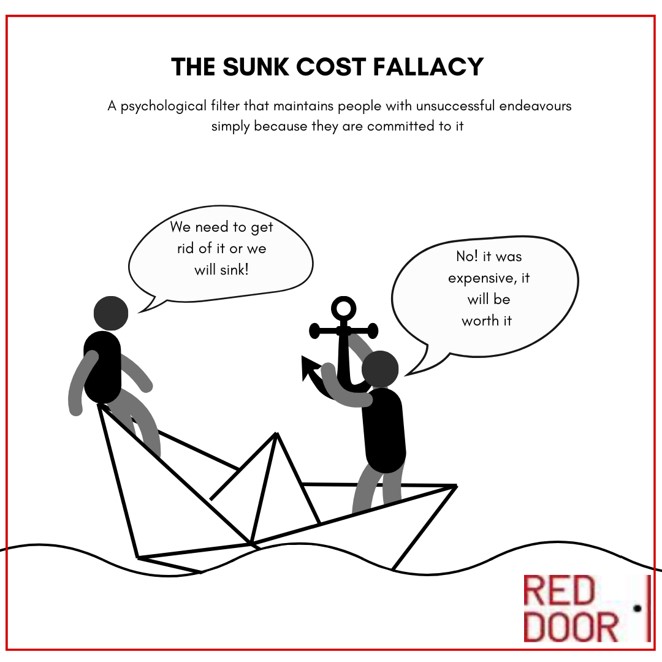
If that is the case, as yourself is this the type of relationship you think you want. Individuals stay in relationships simply because they have already invested years in that relationship. This viewpoint is often referred to as the sunk cost fallacy. The sunk cost fallacy is a psychological filter that maintains people within unsuccessful endeavors simply because they’ve committed resources (often time or money)  to it. This ignores the understanding that things will not change by magic, especially in relationships. 

An unsatisfactory relationship will remain unsatisfactory unless something significant changes. Normally that type of change involves couples counselling.

4. Is your relationship safe?

People can find it hard to leave unsafe relationships. Relationships where coercion, aggression, or manipulation are key elements are unsafe for one, maybe both, parties. Its difficult to face the reality that you have ended up in a situation that you may find shameful. What is worse is to stay in a relationship where your physical or psychological safety is threatened any longer than you have already. If you are willing keep a track of all instances where you have not felt safe, and share these details with someone you trust. Talk to friends, or a professional, about your experiences.

I would ask you to consider the question, “Would you be more safe outside of this relationship, living on your own, when compared to what your life is like in the relationship in the past 6 months?” If the answer to that question is yes, then you might want to think about taking a pause in your relationship so that you can have some time to reflect on this question, your safety, and your future.

5. Is your relationship healthy?

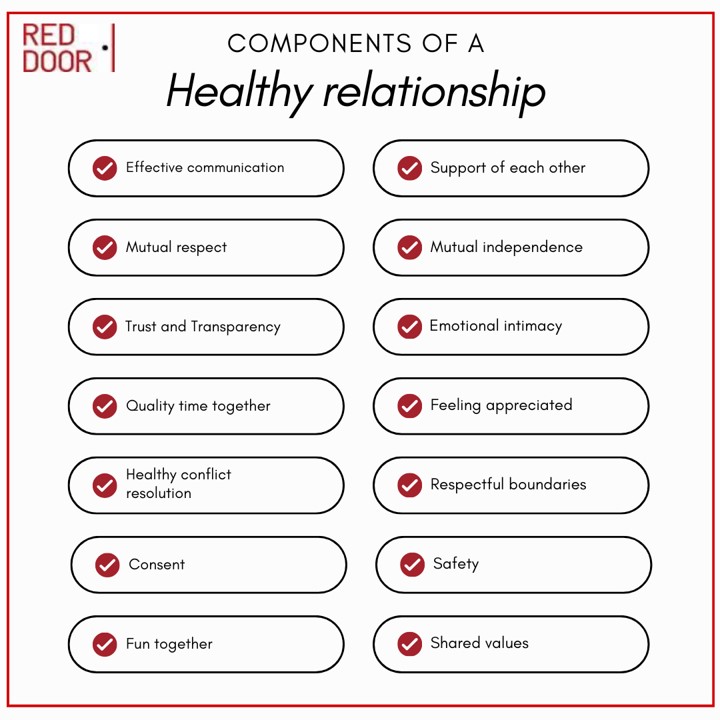
Most individuals have their own point of view regarding what constitutes a healthy relationship. It is worth taking a few minutes to write down what practices you believe are essential within a healthy relationship. Any relationship, not just your own. Think about the relationships you have experience of – your parents relationships, the relationships that you witness with your best friends.

Take this list and look at your own relationship. How does your relationship measure up? Are the areas where you score your relationship unfavorably, possible to change? With or without help? Whilst a relationship that doesn’t meet a checklist on healthy criteria is not necessarily a sign to call it quits, your audit can help you decide what needs to change in order for your relationship to be worthy of you staying.

6. Are you staying for someone else?

Sometimes a marriage is over, long before it is finished. Many couples stay together for the sake of the kids, not for their own individual satisfaction. If this is the state of your marriage, you are not alone. Some commentators in the divorce advisory space estimate that at least one in three marriage continues for the sake of the children.

If this describes you, have you contemplated what the alternative would look like? Have you sought advice on what a divorce or split could look like in terms of assets and expectations? Are you ready for a split once your child reaches the age of 18, or is the decision to stay for the kids, simply you avoiding the question of marital split in general?

7. Are you afraid to be alone?

I run a special support group for women going through divorce, the Iron Fairies. I fondly remember the words of one Iron Fairy about the topic of loneliness:

“I was so frightened to leave my marriage because I was scared of being alone. What I didn’t realise at the time is that I was alone in my marriage. No body came and sought me out. I may now be single, but I so much less lonely than I was in my unhappy marriage.”

We hold onto certain fears and stereotypes of what relationship split might look like. Shame. Forecast images of being destitute. This is not often the case. What I’ve learnt from years of working with women going through divorce is that many of them are often much happier once their divorce is complete. Much more than they expected at the outset.

Don’t stay in a relationship because you are afraid to be alone. You can work to build a network and support. Things can be better.

The decision to stay, or leave a relationship is deeply personal. Only you can decide. But also acknowledge if this is a decision you are avoiding, at cost to yourself and your future.

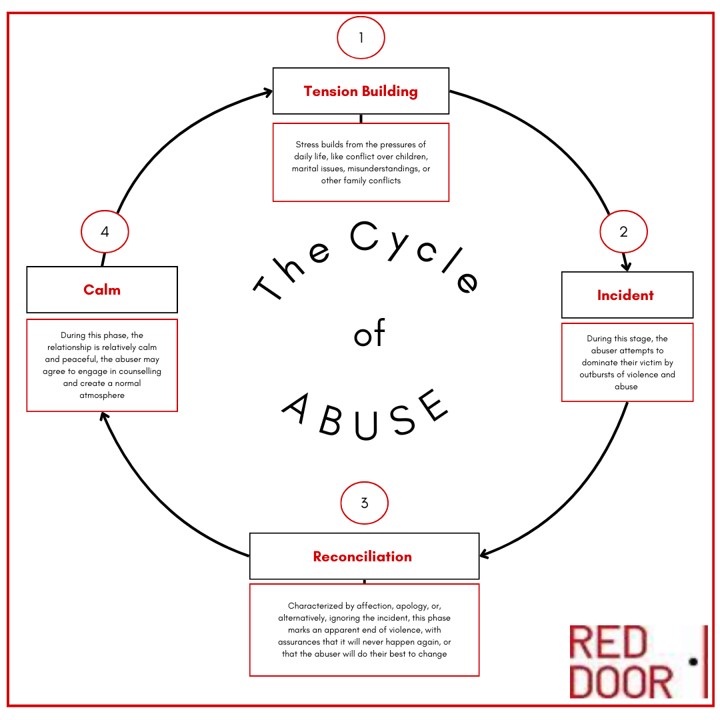
#relationships #relationshipbreakup #cycleofabuse #sunkcostfallacy #marriagebreakup #marriagerules #relationshipcommittment #breakup #leavingarelationship #leavingamarriage

About the author: Angela Watkins is a counsellor working out of RED DOOR Counselling Hong Kong. Angela is a couples’ counsellor as well as counsellor of individuals.

Divorce Missteps

Over the past 7 years I’ve supported a lot of individuals, particularly women, as they proceed through divorce. As a relationship counsellor I also work to help couples who wish to avoid the divorce process. I’ve learnt a thing or two about what makes the ending of a marriage better, or worse, for the parties involved. Its hard to watch people make mistakes in this journey, choosing actions that often make emotional recovery harder in the long run. If you are willing to learn the mistakes to avoid, here are some of  missteps that we encounter in helping navigating the divorce process.

Misstep 1: not being aware of your rights

Seeing a lawyer is expensive. However not knowing your rights in a divorce is a potential landmine. Without decent legal advice you run the risk of receiving careless and incorrect information about what you can negotiate in a divorce. Do not be threatened by your ex that, “We don’t need to use lawyers, we can just do this ourselves”. Often such statements precede unfair negotiations. Knowing your rights is your right, and is a must.

Misstep 2: Accepting divorce advice from your ex-partner instead of a professional

I’ve lost count of the number of times I encounter clients who accept what their ex-partner tells them what they are entitled to in a divorce. Your soon to be ex-partner does not get to define what your divorce outcome will look like.  This is particularly an issue in codependent relationships where one partner is used to listening to the advice or demands of their romantic partner without challenge. Seek legal advice. An initial consultation should suffice for you to better understand what you are entitled to fight for, and if it is in your interests to do so.

Misstep 3. Not considering or committing to couples counselling

As a couples’ counsellor we often encounter couples trying to decide if they should divorce or stay together. Counselling can help repair your relationship, in certain circumstances and it looks good to the court if you have tried to repair your relationship.

If you are BOTH willing to do the work, relationships CAN recover.

Relationships cannot recover when there is an ongoing affair or one party is continuing the divorce process at the same time as the counselling process. You can’t amputate a leg and reattach it at the same time. Coming to counselling to collect dirt on your partner does not work. Experienced couple counsellors will see through those tactics, and will often call them out. Counselling is used to see if sincere recovery can be made.

Misstep 4. Telegraphing your wants instead of negotiating.

It may sound contradictory to not communicate what you want out of your divorce. It is important that you don’t show “all your cards” until you are ready to make a deal.

The process of divorce is essentially a negotiation. In any negotiation you want to know what your adversary wants, before you let them what you want as part of your divorce settlements.

It may seem tempting to explain, “I just want a basic settlement and full custody of the kids”. But if you do this, you will have just told your ex what matters to you most. Do yourself a favor. Learn about negotiation skills, as if your life depended on it. Because your lifestyle going forward, does. I particularly like the teachings of Chris Voss on negotiation, and have clients who have used the Chris Voss negotiation techniques to break the patterns of fruitless negotiations that they had fallen into.

Misstep 5: Jumping into a new relationship too quickly.

The feelings of rejection often associated with divorce can be extremely painful. It can be tempting to avoid those feelings by jumping into a new relationship as fast as possible. This is a misstep.

Firstly, you need to heal from your previous relationship, not simply avoid the pain. I know this sucks.

Secondly, the impact of a new relationship can influence your negotiations in your divorce. If you have a partner who could be assumed to be paying some of your rent may impact your financial settlements.

Thirdly, children may be negatively impacted by your new relationship. It can be tempting, if you’ve fallen in love with another person, to rush into playing “happy families” with your children and your new partner. You chose your new partner. Your children didn’t. Sometimes children see the new partner as the reason for your marital breakdown, even if this wasn’t the case.

Resist the temptation to involve your new partner in your children’s lives, and even better, take a break from dating in the early months of your divorce.

Misstep 6: continue the conflict communications rather than seeking distance.

If you have had a relationship that has been full of conflict, and if you are used to constant conflict, you might be tempted to continue your continual arguments throughout your divorce process. I would argue, that it might be wise to explore an alternative to constant fighting.

If you had got along with your ex-partner, you probably wouldn’t be divorcing them. The declaration to divorce, can mean that you can STOP fighting. It takes only one party to stop fighting. Just stop. This might mean blocking your ex-partner, so that you don’t communicate with them, except through your lawyers, or only via slower communication channels such as email rather than immediate messaging platforms such a WhatsApp.

Involving your lawyers in all of your interpersonal conflict is a double-edged sword. You may need to use your lawyer to tell your partner to stop harassing you. But if you want the fighting to stop, you have to also agree to stop communicating with your ex-partner. Using third parties or apps to communicate such a parent coordinator person or app (such as the Family Wizard) can help break the cycle of conflict communication.

Misstep 7: Triangulation of children

It is very tempting to involve your children in your divorce. Bringing your child into divorce understanding or negotiations happens fairly often. After all, you are hurting and it would be helpful to you if they can see how much pain your ex-partner is causing you. This is a mistake. Your child is entitled to continue to enjoy their parental relationship without your experience influencing their view of their parent.

You don’t win if you turn your child against their other parent. All that happens is that your child loses. They lose the impact of that parent in their life, rather than the impact of your ex-romantic partner on you. They may begin to feel responsible for your emotional state – a reversal of the parent child relationship. Additional triangulation does not pay often pay in the long run. As children mature they will start to observe and appraise your behaviour throughout your divorce.  Later on, children do not appreciate the perception of being manipulated during divorce and this can be one of the reasons that they become estranged from their parents when they grow into adulthood.

You don’t have to hide your pain from your child. Be mindful not to involve them in understanding your pain to the extent that they feel obligated to champion of you. It isn’t fair. It isn’t healthy, for your children. They deserve to have two parents to love if this is being offered.  

Misstep 8: Allowing others to define your value.

Those going through the divorce process can feel diminished. Their marriage is over. This often feels bad, and it is common to feel feel like you have “failed”. Your ex-partner may extend those feelings of failure by telling you that the reason your marriage failed is because of your personal “failings”. They may even feel entitled to judge your competence as a parent.

Most of the women in our support group have been told that they are bad mothers. In every case I’ve encountered such accusations appear grossly misplaced. For those vulnerable individuals, being judged so harshly by their ex-partner can really be a blow. Remember these commentaries are often a  tactic to make you feel bad, and not based in reality. Especially the reality of your children.  You need to know your value, financially and personally.

It is time for you to know your value for yourself. Your value as a person is NOT determined by your ex, or anyone else besides yourself. Its time for you to work on you, so that you know who you are. Don’t let anyone else attempt to define your value. This is an area that people often seek counselling to help them overcome.

Misstep 9: Bad habits lead to compromised ability to cope, and vice versa.

Habits help build your health and over the long term determine how well you can navigate the divorce process. Regular self-medication, especially through alcohol, will erode your ability to cope. Conversely taking a positive approach to habits and your health at this time will be extremely helpful. Exercise, rest, sleep, eat healthily, all of these will help you better survive what is an incredibly stressful life event.

Misstep 10: Doing it alone.

Whilst many people feel ashamed that divorce is happening, the worse thing you can do is feel ashamed and remove yourself from support.

Even I have been delightfully surprised by the amazing value of group support during divorce.  Iron Fairies, our therapeutic support group for women going through divorce is seen as an amazing resource by all of the active members. Each of the women in the Iron Fairies is navigating their own divorce journey, and may feel trapped by their personal struggles, but at the same time, understand the challenges faced by other women, and amazingly suggest creative pathways forward for others, even when they feel ‘stuck’. Being able to help others, reminds group members that we all feel undone sometimes and that we can eventually navigate through these very uncomfortable circumstances. Having a friendly group to vent to can be extremely cathartic, especially if one of the expectations of that group is that you will continue your journey forward, at a glacial or racing pace.

Misstep 11: Wrongful resource allocation

There are a number of resources that you may involve in your divorce journey including a financial adviser, a lawyer, an accountant, a counsellor, a mediator, your family, a support group, and friends. It will be an expensive waste of time to use your lawyer as your counsellor. At a typical cost of USD 1000 per hour, you want to use your time consulting your lawyer as cleverly as possible. Save your crying time for friends, a support group, or a counsellor.

Additionally, divorce is a topic that many people have experience of, and have opinions about. Legal advice from friends can be completely wrong. They have no real obligation to ensure that the action or information they give you is in support of your rights. Please check your legal position with legal professionals.

Misstep 12: Allowing drama to impede or knock you off course.

It is quite possible that you ex will try to get you to delay or even stop the divorce process. Not because they want to reconcile, but because they want to delay or derail the divorce process for their own personal, and sometimes, financial ends. It takes quite a while for people to decide that they need to divorce their partner. Once this decision is made, please try to keep the divorce process moving forward.

You ex may try to delay you by making deals or threats such as, “Let’s meet and see if we can work this out between ourselves”, or, “If you proceed with the divorce I will do x, y, z.”. Ex- partners may try to derail the process by blowing up bombs to distract you from the momentum of divorce. For example, they may accuse you of having affairs, or acting in harassing fashion, or even being a poor parent. Don’t fall for these distractions if they are unfounded.

Once you have made this difficult decision to end your marriage, move steadily towards the exit. You can master the change that needs to happen, rather than allowing your ex-partner’s agenda to master you.

You CAN survive the divorce process. Especially if you avoid some of the pitfalls that make the journey more challenging.