The Emotional Piggy Bank: Building an enriched relationship

In order to make your relationship last, you need to ensure you have a full emotional piggy bank.

John Gottman, landmark couples counsellor and relationship researcher, studied thousands of couples exploring the difference between happy and unhappy couples. There are some notable differences.

Happy couples engage positively with one another and show interest in each other’s lives. Happy couples are generous in spirit towards towards each other. They try to understand each other’s world. Happy couples spend time together – connecting. When these couples experience conflict they use strategies to stay positive towards each other, see the conflict as an issue for them to resolve (e.g.you and I versus the problem) and work towards resolution.

Unhappy couples don’t do these things.

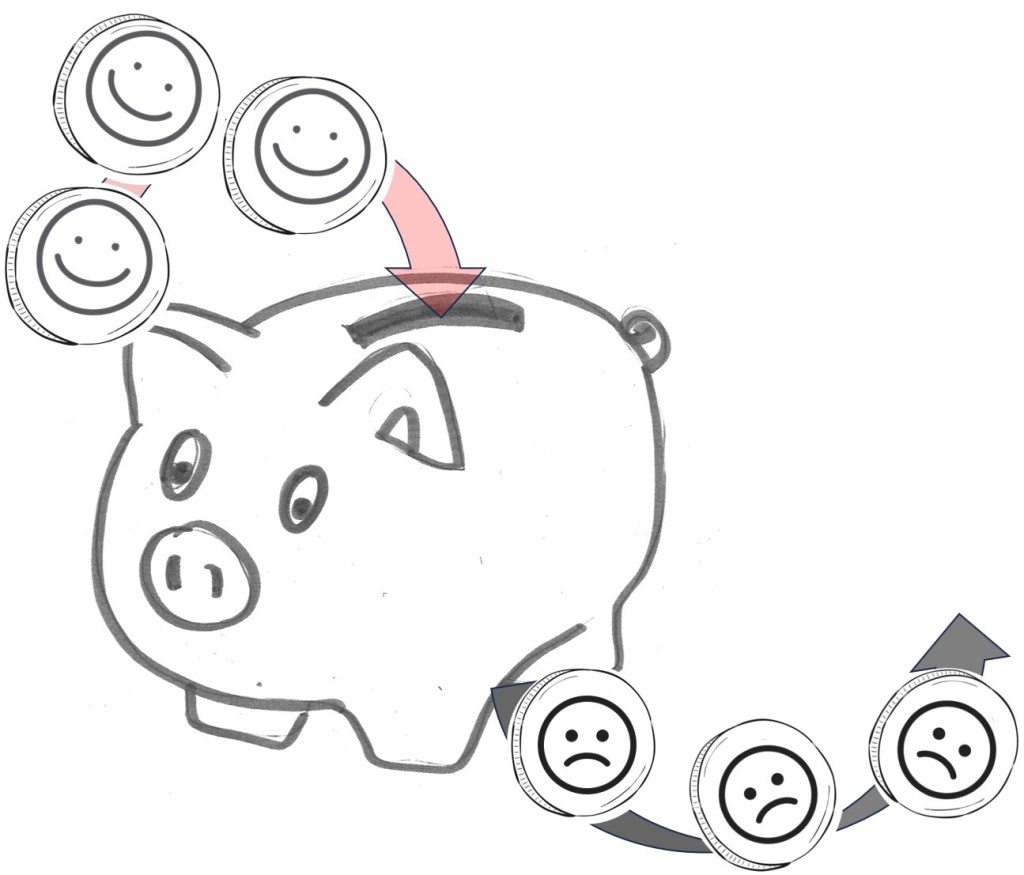
In couples counselling we often introduce the Gottman concept of the Emotional piggy bank. To help couples better realise the deposits, investments and withdrawals their actions within the marriage represent.

When our relationship’s emotional piggy bank is full, couples able more likely to be able to be generous in spirit towards each other when they encounter tricky situations.

For example. Imagine your partner, John, said he would call you at 3pm to talk about an important topic. The designated time to call comes and goes, with no message or call.

If you have a full emotional piggybank, you might react in such a manner: “I guess that big project John has been worrying about has taken off and he’s lost track of time. I know he cares about me and our issue so I’ll remind him later and we will find a new time to talk”.

Conversely, if your relationship’s emotional piggy bank is running near empty you may have no good will to help you see the situation with generosity. The aggrieved partner in that instance might think: “John did it again. He never cares about anyone by himself. He just expects me to wait by the phone like some loser. Well, not this time!”

An emotional piggy bank needs to run with a healthy balance. You and your partner need to be making deposits, and checking the impact of withdrawals.

How can you make deposits into your relationship’s emotional piggy bank?

The following activities constitute a deposit into your emotional piggy bank:

  • Giving and receiving affection from each other. Not just sex.
  • Spending quality time with together doing activities that you both enjoy
  • Learning about each other’s world.
  • Performing acts of kindness for each other – even little things like grabbing a coffee for them in the morning, running them a bath, or buying special snacks that they love for your movie night.
  • Expressing gratitude towards your partner for the kindness and support they provide to you.
  • Complimenting your partner. Make sure these are authentic and show you have been paying attention. For example, “I really admire the way you acted on your work call. It sounds like your boss is a lot to handle”. Or, “I really like that shirt on you, it goes well with your eyes”.
  • Keeping promises that you made is important to help your partner know you can be trusted
  • Apologizing when you have done something wrong.
  • Giving your partner support when they are having a tough time

You also need to be careful of withdrawals. If you make too many withdrawals or make careless withdrawals from the emotional piggy bank, there may be very little good will in times of crisis.

Some behaviours that harm your relationships emotional piggy bank including:

  • Insults and disrespectful comments
  • Criticism of your partner
  • Avoiding engaging with your partner
  • Neglecting your partner
  • Brushing of your partner’s kind gestures
  • Ignoring the emotional impact of your behaviour
  • Shouting or Scolding
  • Lying to your partner
  • Gossiping about or slandering your partner to others
  • Breaking promises you made to your partner

Please note: Aggression of any type – this is much only a withdrawal, this is a threat to the safety of people in your relationships.

What can you do to change the dynamic and build a better emotional piggy bank?

Respond rather than react

Do you find that you react to situations, rather than respond calmly. Often this is because of the manner you interpret situations? Do you later feel ashamed that you over reacted to a situation? Before you react to your partners actions stop and think what response would you later be proud of, versus reactions that you might regret. A counsellor can help you understand your reactive patterns and learn to interpret situations in a more cognitively flexible manner.

Appraise your level of investment

Many couples do not spend enough time with each other, and the emotional piggy bank is empty because they neglect each other, or the relationship becomes focused on day to day functionality, rather than fun or connection.

Are you spending enough time with your partner focused on each other, rather than the kids or an exhaustive to-do list?

A good relationship is an active rather than passive activity. Stop thinking this is the relationship you have, and start taking the action to make it the relationship you want. Firstly, acknowledge that you could be kinder towards each other and start to think of what this might look like. Secondly, think about securing some time to spend together, once a week, or at least once a month.

Spend time getting to know each other

Great relationships are, at their core, great friendships. Remember back to the beginning of your relationship. You probably spent a lot of time asking questions about your partner, and were thirsty for knowledge about how they interpret the world. This curiosity often diminishes with time, to the detriment of your relationship. Be curious again.

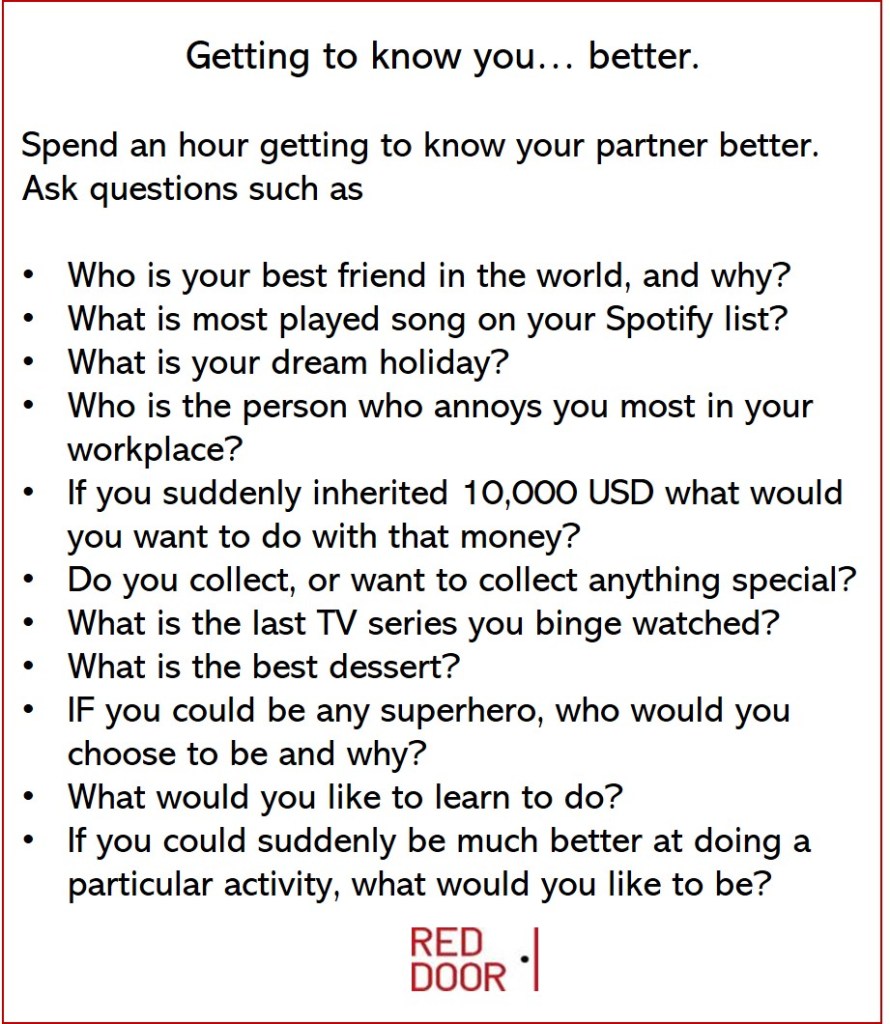
When was the last time you sat down and spent time learning about your partners world. If you don’t know what to ask, the list below is a great place to start.

Practice preferences

People have preferences. Some people like to receive gifts. Other prefer to spend time together. Do you know how your partner likes to receive love? People often give love in the manner that they, personally would like to receive it, rather than checking what their partner wants. This misunderstanding can mean that your kind actions are not

The two following quiz links might help you better understand how your partner wants to receive love, and the type of apology they like to receive. So many people get caught up waiting for the “right” apology, it might be helpful for you to know what your partner thinks are the components of a good apology.

https://5lovelanguages.com/quizzes/love-language

https://5lovelanguages.com/quizzes/apology-language

_________________

About the author. Angela Watkins is a counsellor for individuals and couples working in Hong Kong. If you’d like to improve your romantic relationship consider working with Angela or other members of the RED DOOR team. Contact angelaw@reddoor.hk

#emotionalpiggybank

#relationshipgoals

#conflictresolution

#relationships

#love

#relationshipimprovement

Redefining yourself after divorce

Divorce will change you. Some of the changes will be completely out of your control, especially in the early, chaotic days of a split. As you adjust to the process of divorce you have increasing opportunity to take more charge of some of the change that comes with divorce, riding the tides of change towards a new you, that is stronger, and maybe better than the one who started the divorce process. Would it feel better to know that you can come out of the process stronger than you went into the process?

Academic research on divorce indicates that whilst most people find the process of divorce difficult, they feel they become better versions of themselves after divorce.

Here are some of the waves of change that you may surf to your advantage during the divorce process.

Changing the “We” to “Me”

Married couples are often identify, and are identified, as a unit. If your marriage ends, are you still who you were? Many individuals find understanding who they are, even what they like, very difficult as a single individual. Much of this journey of self understanding may be long overdue and difficult because, for years, individuals may have neglected their own needs in order to be “the best partner they can be” in order to support their romantic partner’s needs or ambitions. When they marriage is declared to be over, you need to move your focus back to who you are, and who you could become.

Start with some of the basics. What do you like? What do you not like? List out your favourite foods, from your favourite things to do? Ask yourself, are these really your favourite things and activities or are your choices a reflection of who you have been in your relationship? If you don’t know your favourites, don’t be discouraged. It simply means that the exploration of finding out who you are, and who you want to be, might be a little more complicated. I advise you to consider a couple of sessions with an experienced divorce coach or counsellor who can help you find a path back to you you use to be, and who you’d might like to become.


Remember, you get to write the narrative of who you will be now. The process of defining what you would like to represent, what you would like to achieve, even what you would like to avoid or stop will lay out the first step, knowing where you want to be. Then we just need to start thinking further about how to get you there.

Write down for yourself:

1)What do I stand for? 2 What do I like about myself. 3) W are my key values and how can I live by them (this is where a counsellor can really help) and 4). What practices or attributes about myself would I like to leave behind?

Grieve

Spend some time allowing yourself to grieve. The end of the hope you had in the relationship. Grieve for the image of the family that you feel you once had.

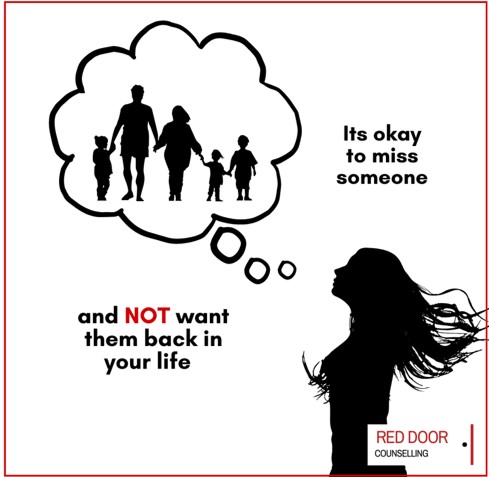
Its okay to miss the “picture perfect” image you once held of your marriage and your family. It is especially hard when the internet if flooded with images of families celebrating happy times together. Please remember that many of those snapshots are not a real reflection of what is going on within those families.

Whilst you are entitled to your grief, try not to stay trapped in it. You can start to romanticize how things were, and how things “should be”. We tend to hold on to outdated stereotypes of marriage and family. There are many types of families and you need to start focusing on making the new version of your family into something that is healthy, robust, and rewarding. If you get too stuck in your grief for what you think you have lost, you may forget to build something new, different, and rewarding in a way that works for you as you evolve.

People miss the sense of belonging that family helped them feel. They forget that often that feeling of belonging came at at cost, or that the sense of belonging was fleeting. You can create a feeling of belonging again, you just need to start by letting go of the image of a “idealised marriage” or “perfect family” that you were holding on to.

Start something new

Many individuals may have taken a career break inside their marriage and as a consequence, feel out of practice in the world of work and with modern technological skills required to be part of the modern work force. Much of our identity is associated with our role as “stay at home parent”. Even if you want to remain a stay at home parent, I would advise you to start to learn something new as part of the divorce process. Not only can you update your academic knowledge, learning any new key skill will give you opportunities to meet new people, and regain confidence.

Embracing a new exciting change may feel unsettling as well as positive. That is normal. Remember, nothing changes if nothing changes. You don’t need to consider a change of career or taking on a full academic degree, consider taking up a new hobby, or a practical course, even changing some of your daily habits.

Taking care of yourself

Learn how to take care of yourself. Start by learning to talk to yourself kindly. For some individuals, critical acrimony has become familiar territory within their imploding and increasingly hostile marriage. Start by practicing being kind to yourself.

Every day, look at yourself in the mirror and say something kind to yourself. Stop the litany of “You should”, or “You didn’t” internal commentary. Start congratulating yourself for keeping your cool each day. Praise yourself when you complete a challenging task, even if it was replying to a rude email with a polite response.

Complete the phrase, “If I loved someone a lot I would do ________, _______ and ________, for them” Now consider doing those activities for yourself.

Build strong networks

Friendships and contacts are essential to help you navigate divorce. It is quite possible at the beginning of the divorce process that you had very few, many no friends who are divorced. Meeting other divorced parents and individuals will save you a lot of leg work, and provide, hopefully a few good shoulders to cry on during tough times.

Good friends help you get through divorce. Great friends become your family during, and after.

One group that, if you can find, will make a significant difference is a divorce support group. Support groups for individuals going through divorce help normalize some of the process, remove feelings of isolation, help you handle your feelings of shame or regret. If you are in Hong Kong, you can join the Iron Fairies. Information about the Iron Fairies is in one of the links below (See becoming a groupie).

Understand what you can and cannot change

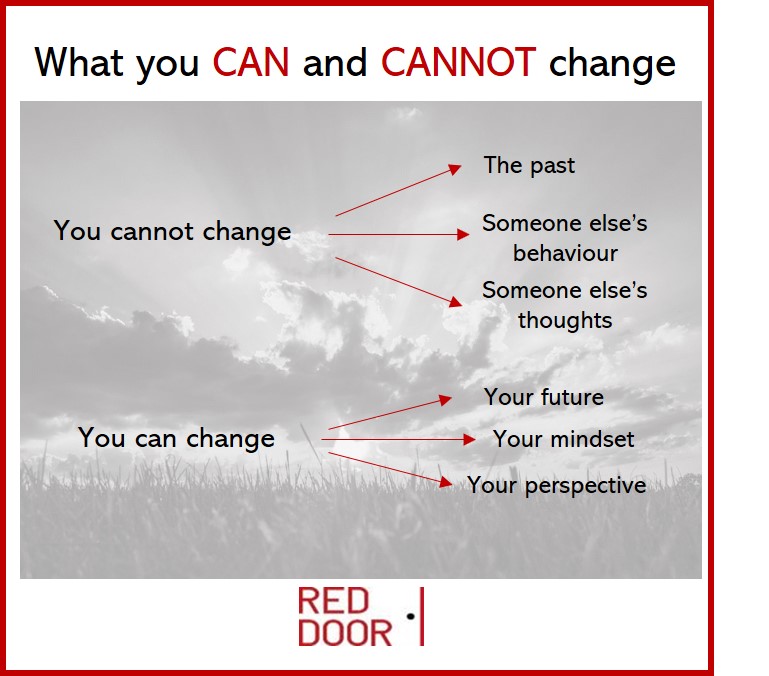
This is a life lesson that is one of the toughest to accept in life, and from divorce. You can’t turn back time. Sometimes your ex-partner will become exactly the type of parent you would have liked them to be before you had to start to divorce. They may have been fairly absent before the divorce was decided and then, because of teh process they are seemingly in contention for “parent-of-the-year”. This can be very confusing. This may even tempt you to contemplate reconciliation.

You can’t change the past, the affairs, the hurtful words, the resentment. You can work to forgive that behaviour, so that it doesn’t keep you trapped in your anger. Letting go of the pain is a gift that you give yourself. You and your partner could, undoubtedly, have been better people before and during your divorce, but you don’t have to hold onto that if it doesn’t suit you.

Let go of your preferred divorce narrative

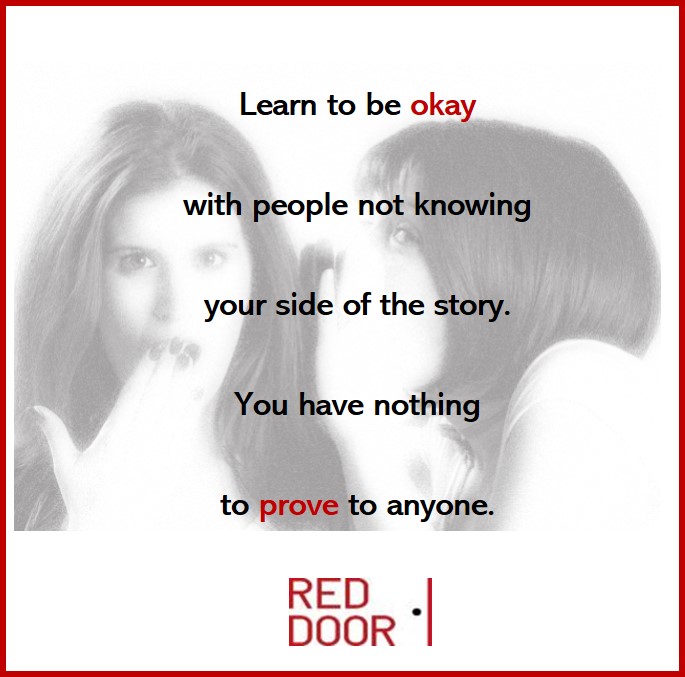
It can feel very important that others know that this divorce was “not your fault”, that your partner was to blame for the breakdown of your marriage. You won’t get to control all the messaging around the breakdown of your marriage, so please be prepared that some people may have a completely different view of the breakdown of your marriage than you would like them to have. Whilst you have the right to try to challenge this, within safe and sane parameters, it will be most healthy for you to appreciate that you won’t always get to control the story that is told. What is important is the values that you continue to live everyday.

What is comforting is that that most often, lies become apparent eventually. Please appreciate that this can take several years.

Consider your relationship with yourself and intimacy

Your marriage may have been your main source of touch and reassurance. If it breaks down you may want to consider how you could get your physical needs met. One mistake would be to jump into a new relationship very quickly. Its okay to have needs, think about how you could get those met without returning to your ex, or running into a new relationship before you are ready.

Divorce will change you. It may feel as if it could even break you. You can survive this emotional journey, and even possibly become the best version of you, you were scared to become inside of your marriage.

About the Author.

Angela Watkins is a counsellor and psychologist who has spent the past 9 years guiding people through the emotional journey of divorce. In Hong Kong, Angela leads the Iron Fairies, a therapeutic support group for women going through divorce. For information about counselling with Angela and the Iron Fairies contact her at Angelaw@reddoor.hk.

Other blogs you may find interesting regarding the process of divorce:

If you want to find out more about group therapy whilst going through divorce, and the Iron Fairies therapeutic support group:

If you are trying to decide if you should stay or leave your marriage:

If you are starting the divorce process and want to avoid some common pitfalls:

If you have a friend going through divorce, and you want to be a good support to them:

Good at being single.

I often think about single hood. It seems that society fluctuates between positioning singledom as a piteous position, to selling it as an almost toxic positive psychological mountaintop, which feels as fake as the piteous position feels wrong.

Antonyms for single include “unpartnered” and “unpaired”, and even “on the shelf”. In a world full of movies, love songs, and novels which telegraph that our goal in life should be to find “the one” to be with as the ultimate accomplishment, it is no surprise that we are often not very good at the alternative.

Because of these modern myths, some people choose to stay in relationships for the wrong reasons, and one of those reasons is fear of being single, like it is something bad. They choose this path in response to the negative rep being single seems to hold. I’ve even heard teenagers gossip with each other saying, “Its no surprise she hasn’t got a boyfriend” in a manner than connotes the superiority of relationshiped over single. It’s almost as if being single implies that there is something “wrong” with you. Surely, time spent by yourself, uncoupled and working towards your goals and individual identity is as, if not more, important than being in a relationshiop? Therefore I want to challenge the harmful stereotypes of being single. Don’t just be single, be GOOD at being single.

Being single and independent could be the most valuable time of your life. Not just when you are a young adult, but also later in your life, when you find yourself “uncoupled”. People can find themselves suddenly single in midlife. It may not have been your intention to be single again, and that can feel unfair. We can hold onto that sense of unfairness, but it doesn’t help us. Being single is the time we learn who we are, and can be a great time for personal growth.

If you are single, I want you to be good at being single.

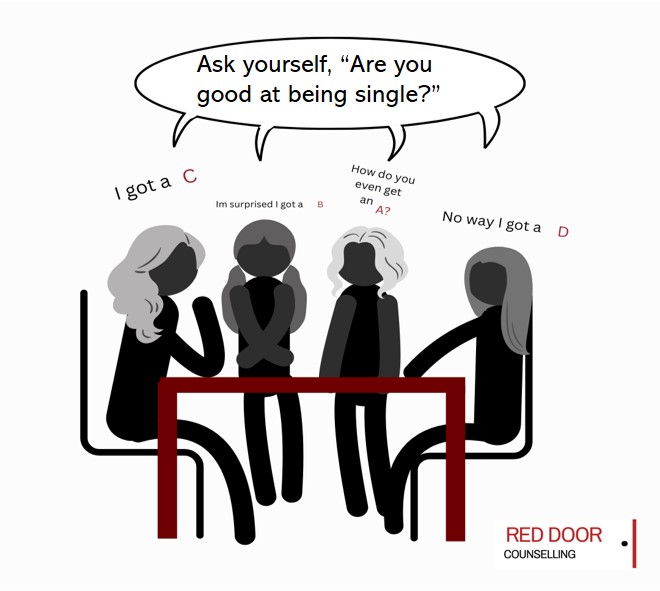
Are you good at being single?

I want to challenge you to give yourself a grade for how good you are at being single. Let’s use the old fashioned grading system, moving from A plus to D minus. For the sake of this exercise lets say a C is the basic pass. C minus is actually a close fail. What grade do you give yourself?

Take this discussion up with friends. Discuss the grades you give yourselves. Do you agree with the grades your friends give themselves? Do they agree with the grade you gave yourself?

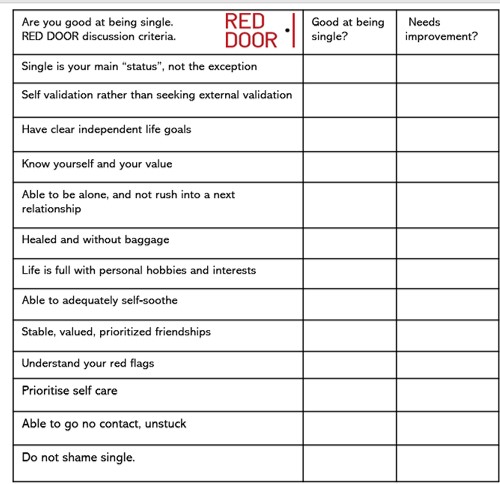
Think about the criteria that you used to calculate your grade.

I’ve been toying with what makes people good at being single for a while. I work with teens, young adults and divorced women in my practice, and I have up with the following criteria that I think you could consider.

Criteria you might use to assess if you are “Good at being Single”?

Understand Single as a destination, not a pit stop

Ask yourself, are you single more than you are in relationships, or mostly in relationships. Being single is not only a status update between relationships, it can be a time of significant self investment. Single is not just a status you survive until you are in your next relationship, it is a destination on its own, with dedicated goals. If you have hardly ever been single for more than a short period of time, you are probably not good at being single.

Understand your sources of validation

When you are good at being single you will work to provide validating messages for yourself, rather than seek validation from external sources, particularly a romantic partner. Self-compassion and self-validation are essential to be an independent, complete and competent adults.

Its time to learn to accept yourself – imperfection is actually great. Consider if you fixate on being perfect. People who are perfectionists often compare themselves to others – which often leads to feelings of inferiority and reinforce external sources of validation over internal sources of validation.

If you have trouble with this criteria, talking to a counsellor may be of help to acquire this skill.

Have direction in your life

Being good at being single means that you have a personal career plan and hold yourself responsible to achieving those goals on your own.

The contrast, not being good at this aspect of being single, means that you are possibly rotating around another persons plan for your plan for the future. A man is not the plan. Even if you are likely to be a trailing spouse, you need to have a life and plan of your own.

If you don’t have your own goals in life this is a topic you can take up with a counsellor or career coach. Setting your own goals is liberating.

Know your self – Know your value

If you are good at being single you will have spent, and be spending, significant time knowing who you are, what you stand for, and what are your values. Being single is a time when you are focused on growth and understanding yourself.

If you are not so good at being single you may not know who you are, what you stand for, when you aren’t in a couple. This could mean that you are co-dependent.

Able to be alone

Being alone is not the same as being lonely. I have a woman, lets call her Mary, in our divorce support group who summed this up beautifully:

“I was scared to leave my marriage because I feared being alone. What I didn’t realise was that I was desperately lonely in my relationship. Everyone assumed I was okay because I was with my partner. To be honest, when I left my marriage I was alone, but significantly less lonely.”

Can you be without a romantic relationship for a significant period of time? Some people seem to jump from one relationship to another. There is a mass of commentary on what is a suitable time between relationships. Here are some general guidelines that might help.

  • You actually END one relationship before you have started your next relationship.
  • If your relationship lasted 3-6 months you could take at least 3 months before you consider another relationship. Remember being single should be the main status, not a temporary status.
  • If your relationship lasted 6 months to 18 months, consider a break of at least 5 months.
  • If your relationship is 2 to 5 years take at least 6 months to spend on yourself.
  • Between 6-10 years – take a year.
  • Over 10 years take at a month for every year.

Manage the baggage, own your healing

A primary goal of being single is planned self development. One aspect of this is understanding yourself in relationships. Do you know what hurt are left from your relationship? Have you actively engaged in healing those pains and learning whatever lessons need to be and lessons that need to learnt. Have you taken responsibility for your role in the successes and failures in that relationship?

Those who are not good at being single avoid this hard recovery work. You could simply blame your ex-partner for all the problems in the relationship. You may avoid healing yourself and auditing the relationship appropriately, and therefore repeat patterns in relationships or carry your baggage forward into future relationships. Healing is hard work, but its good work.

Full life versus life, “on hold

People who are good at being single have a full rich life including having hobbies, goals, and activities that are not completely dependent on other people’s participation or acceptance.

Individuals who are not good at being single, may only take up new hobbies when they are between relationships or have hobbies that are performed only with their partner. These might even be the hobbies of their partner, that they have taken on, instead of choosing hobbies for themselves.

Able to self-soothe

Being able to soothe yourself rather than depend on your partner as your “rock” is a healthy behaviour. Self-soothing techniques used by good at single individuals may include writing letters (that you do not send), journalling, talking to friends, self talk, or engaging in therapy.

If you are not good at being single you might continue to use your romantic partner as your soothing source, even when that relationships is over.

Friendships are a stable priority

Single does not mean unsupported. Successful single people have solid friendships that remain a priority regardless if you travel, if you are dating, or if you take on a significant personal or work project. You don’t need to see your friends every day, but they know they can rely on you to turn up every week or month, as you say you will.

People who are not good at being single use their friends as entertainment or a buffer between relationships. When this person finds a new love interest, their friends are about to be ghosted.

Red Flag assessment

Those individuals who are good at being single understand that they may have ignored red flags in their relationships in the past, so seek advice, from friends and, even therapists, about the flags that you may routinely miss or ignore.

For example, selecting to pursue unavailable partners IS a red flag that you choose to ignore. Rewriting the narrative around episodes of being treated badly by partners may have been a red flag that you have chosen to ignore. This ignoring of warning signs is almost like you have been gaslighting yourself to stay in situations that may not be in your best interests. For example, I’ve heard the clients say “I know that he slept with another girl, but it wasn’t his fault. That girl made it happen“. Whilst relationships can recover from infidelity, blaming third parties is not a healthy repair and doesn’t immunise your relationship from future trysts.

How can you see the red flags you previously ignored?

Mostly your good friends know what you have ignored or rewritten in relationships in the past, and may have even tried to tell you that this could change. But you also dismissed them because, quite simply you didn’t want to listen.

When you are good at being single, you will seek your friends thoughts on past and potential partners, and, even more importantly, listen to, rather than rebuff, their observations. Of course they can be wrong. But maybe, so can you.

Or you can ignore the red flags, and continue to go to the circus.

Prioritise regular self care

Successful at single people look after their health consistently. How you look and feel is a priority to you and you will engage in regular self-care activities.

People who are not good at being single hit the gym only to find a new partner, or create their “revenge body” now that they are single. When they are in relationships they may even prioritise care for their partner over fulfilling their own self-care needs. You need to show love and commitment to your care regardless of your relationship status.

Leave the past in the past – becoming unstuck.

In order to move on, and to be whole in your single hood, you must first let you of your past relationships. Ideally you have gone “no contact” with your ex. This is the only way to really put your past behind you. Some situations are particularly challenging to let go of your past relationships. Some situations, such a divorce with a co-parenting partner, make no contact difficult or impossible. However, you need to try to minimise contact even in those situations. The great break up book, “Getting past your break-up” by Susan Elliot helps identify some of the ways individuals choose to stay entangled with their ex.

Methods you might have used to minimise contact. Ask yourself honestly if you are maintaining a relationship with an ex. Audit how often you contact them or respond to their messages. Be honest. Is all that contact needed?

Susan Elliot (2009) details 7 common excuses that individuals use to keep in contact with their ex- partner. I’ve added some personal thoughts on what you might like to do if your are using these excuses:

  1. Wanting to be friends: When a relationship ends each individual needs to do the work to lose their couple identity. Just because your ex wants to be friends doesn’t mean that you should. If you even contemplate a friendship, go no contact for a few months and then review this from a perspective of a healed person, rather than a hurt one.
  2. Seeking closure: Obviously when relationships end we need to grieve. Sometimes people believe that they need answers to questions in order to move on. This is unrealistic. You don’t really need the answers. Additionally, you may never really get an answer, you may just get excuses or lies. You don’t need closure. The only way through grief, is to grieve.
  3. One more thing to say or do: You may just need to ask x, or explain y, before you let go. No, you don’t. Often a person’s behaviour has communicated all that needed to be said, but you’d rather hear a script that keeps you engaged or attached to that ex-partner. If your ex-partner routinely let you down then their behaviour said it all – they can’t or won’t be a regular source of support for you. If they suddenly started seeing someone else, you don’t need to know what was wrong with your relationship. You were not their priority, or they didn’t want to be monogamous. You don’t need to know, “what you did wrong”. Their behaviour indicates their choices. They do not need to explain themselves, their behaviour has already done this. That IS who they are. It is quite likely that you need to work on developing self-compassion and learn to self-validate so that you can self-soothe better in this situation. This does not require attachment to your ex-partner.
  4. Reconciliation is a possibility: Staying attached to someone in the hope that your relationship could be rekindled is choosing to engage in a form of self-torture. Sometimes ex-partners say that reconciliation is possible as a means to maintain your engagement with them. They may still want the benefit of the support that you have provided to them in the past, but do not want to have reciprocal responsibility. A break should be a break. If someone wants to get you back, let them experience the full loss of the relationship for a few months. During this time do the work to help yourself recover including grieving the relationship and being good at being single.
  5. Returning stuff: Return stuff is your ex wants stuff desperately. If they don’t, then throw the stuff away. If you really want something back, as, but also understand that you might not get it back. Stuff is stuff. It is not love.
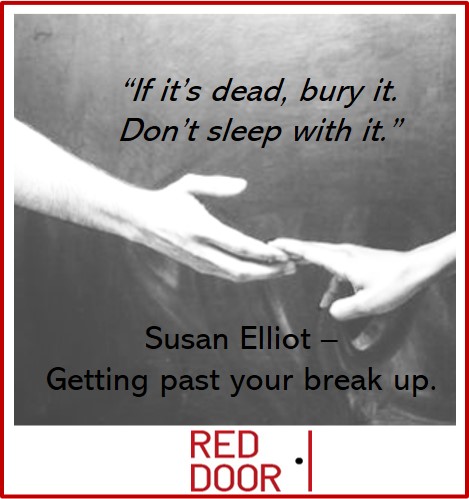
  6. Lusting: Continuing a physical relationship when you end an emotional relationship is confusing, and probably harmful to your mental health. Susan Elliot writes, “If it’s dead, bury it. Don’t sleep with it.”
  7. We run in the same circles: Maybe you are at the same school, are co-parenting children together, have attached careers, or have shared friends. This can make complete no-contact difficult. You can still work to minimise contact. Negotiate to split up resources – don’t go to the same club on the same day, don’t have chats that are not focused on the children or a shared project, and don’t triangulate friends into the dissection of your relationship. Keep your lives as separate as possible.

Shaming single

We must all work towards the mythology and stereotypes around shaming singlehood. Being in a relationship is NOT superior to being single. Catch yourself, and others, implying that being single is wrong, or that something is wrong with women who are single.

Having worked in the area of counselling individuals going through divorce for over 8 years, I am well aware of how much others like to gossip when marriages break up. Stop yourself, and others doing this. It only maintains the wrongful belief that divorce is a shameful condition.

A special word for those who are, “Suddenly Single”

When people have been married for a long time, being single again is a major adjustment. From my experience people often have poor sense of self, compromised self-concept. Be compassionate with yourself – it will take you a while to “find yourself” again. Do the work. Grieve the relationship. Find some great sources of support. Counselling can help. If you are in Hong Kong, join the Iron Fairies support group for women going through divorce. You are not alone.

Where to from here?

How did you do once you looked through our criteria of what it takes to be Good at being single?
What can you do now to make yourself a complete person without a relationship. You can still enjoy being in a relationship, but be so because you choose to, not because you are afraid of being single. Any belief that single is less, or wrong, stops now.

About the author:

Angela Watkins is a counsellor and psychologist working with adults and teens in Hong Kong. Angela is a couples counsellor and counsellor for individuals. Angela runs the Iron Fairies – a therapeutic support group for women going through divorce in Hong Kong. For a session with Angela or to find our more about relationship work, contact Angela at AngelaW@reddoor.hk

#single #singlehood #breakup #divorce #split #independence #love #selfcompassion #brokenheart

Should you stay, or should you leave?

If you are experiencing challenges in your relationship, you may ask yourself, ” Should we split up?”

In essence, the decision to end a relationship is up to the people involved in that relationship. In a relationship involving two people, both people have the right to decide if a relationship is over. It takes two committed people to continue a relationship, but only one, wanting to leave, to end it.

If you are wondering if a relationship is, or should be over, here are some considerations you might like to think about:

1. What is the level of legal commitment attached to your relationship?

Is your relationship a casual relationship, a long-term commitment, or a marriage? Do you have children together? Do you have shared assets such a property together?

When you are married, or have shared assets, there is a legal element that needs to be considered when contemplating the ending of your relationship?

Whilst friends may give you advice in these situations, I strongly advise you to seek legal advice on matters that have legal consequences. It may not, in the long run, change your decision to stay or leave, but it help the conditions around which you agree to stay, or the planning around how or when you might leave.

2. Are both parties equally committed to the relationship?

Quiet quitting is not just a workplace phenomena. Is one person in your relationship demonstrating lack of interest in the relationship? Have you asked your partner if they can step up their level of commitment within your relationship, only to be pawned off with a weak, “Ill try” empty promise?

Do you believe that the level of commitment that you request from your relationship is a fair expectation? How about your partner, do they agree that your request is, in principle, a fair request?

As a counsellor I have seen many couples who struggle with unmet expectations, from how often each partner will look after children, to how many phone calls a week you can expect when your partner is travelling for work, for example. When you have a mismatched expectations, you may need some support to help navigate the negotiation.

If you have a partner who is not willing to commit to a level of attention within the relationship, and maybe you need to recognised that this is now your reality and address that this may not change. If your partner does not engage in the relationship as you would like, you have to decide will you settle for less than you’d like, or would it be helpful to end this relationship so that you can, in time, find a relationship that meets your expectations? Do you deserve better that you are getting? Are you hanging on in hope that things will change, when signs indicate that change is not coming? is the relationship over, but just not yet, finished? Could it be revitalized, and if so, could you consider help to explore how to make such changes possible? Continuing to have the same argument over commitment probably needs external help to resolve.

3. Is your relationship a habit rather than a partnership?

It is worth while considering if your relationship has become a habit, rather than a partnership with shared goals. Do you and your partner have time dedicated to being together, or do you operate more like friends or flatmates, simply coexisting with individual lives.

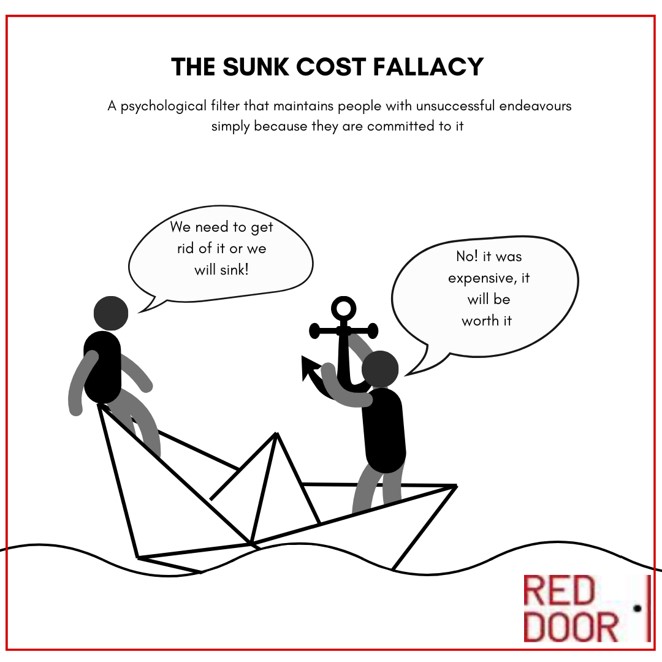
If that is the case, as yourself is this the type of relationship you think you want. Individuals stay in relationships simply because they have already invested years in that relationship. This viewpoint is often referred to as the sunk cost fallacy. The sunk cost fallacy is a psychological filter that maintains people within unsuccessful endeavors simply because they’ve committed resources (often time or money)  to it. This ignores the understanding that things will not change by magic, especially in relationships. 

An unsatisfactory relationship will remain unsatisfactory unless something significant changes. Normally that type of change involves couples counselling.

4. Is your relationship safe?

People can find it hard to leave unsafe relationships. Relationships where coercion, aggression, or manipulation are key elements are unsafe for one, maybe both, parties. Its difficult to face the reality that you have ended up in a situation that you may find shameful. What is worse is to stay in a relationship where your physical or psychological safety is threatened any longer than you have already. If you are willing keep a track of all instances where you have not felt safe, and share these details with someone you trust. Talk to friends, or a professional, about your experiences.

I would ask you to consider the question, “Would you be more safe outside of this relationship, living on your own, when compared to what your life is like in the relationship in the past 6 months?” If the answer to that question is yes, then you might want to think about taking a pause in your relationship so that you can have some time to reflect on this question, your safety, and your future.

5. Is your relationship healthy?

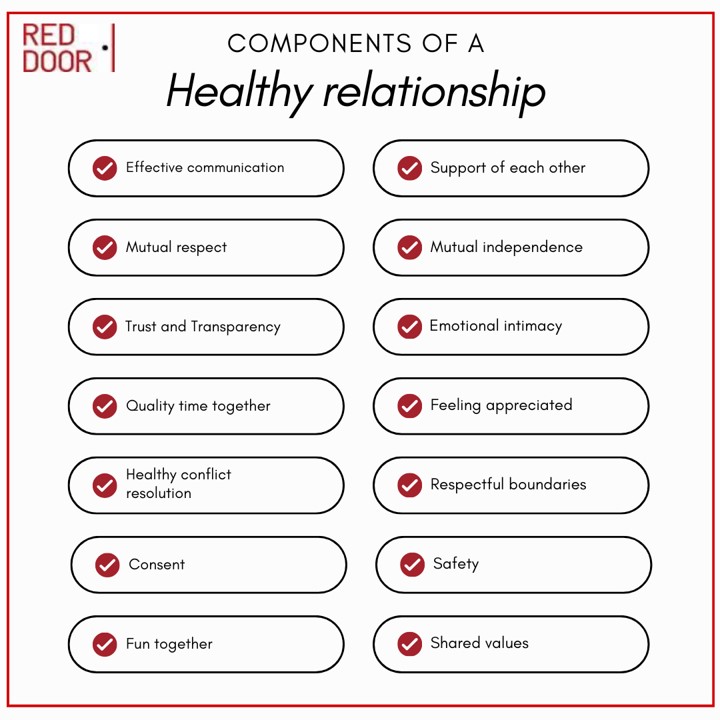
Most individuals have their own point of view regarding what constitutes a healthy relationship. It is worth taking a few minutes to write down what practices you believe are essential within a healthy relationship. Any relationship, not just your own. Think about the relationships you have experience of – your parents relationships, the relationships that you witness with your best friends.

Take this list and look at your own relationship. How does your relationship measure up? Are the areas where you score your relationship unfavorably, possible to change? With or without help? Whilst a relationship that doesn’t meet a checklist on healthy criteria is not necessarily a sign to call it quits, your audit can help you decide what needs to change in order for your relationship to be worthy of you staying.

6. Are you staying for someone else?

Sometimes a marriage is over, long before it is finished. Many couples stay together for the sake of the kids, not for their own individual satisfaction. If this is the state of your marriage, you are not alone. Some commentators in the divorce advisory space estimate that at least one in three marriage continues for the sake of the children.

If this describes you, have you contemplated what the alternative would look like? Have you sought advice on what a divorce or split could look like in terms of assets and expectations? Are you ready for a split once your child reaches the age of 18, or is the decision to stay for the kids, simply you avoiding the question of marital split in general?

7. Are you afraid to be alone?

I run a special support group for women going through divorce, the Iron Fairies. I fondly remember the words of one Iron Fairy about the topic of loneliness:

“I was so frightened to leave my marriage because I was scared of being alone. What I didn’t realise at the time is that I was alone in my marriage. No body came and sought me out. I may now be single, but I so much less lonely than I was in my unhappy marriage.”

We hold onto certain fears and stereotypes of what relationship split might look like. Shame. Forecast images of being destitute. This is not often the case. What I’ve learnt from years of working with women going through divorce is that many of them are often much happier once their divorce is complete. Much more than they expected at the outset.

Don’t stay in a relationship because you are afraid to be alone. You can work to build a network and support. Things can be better.

The decision to stay, or leave a relationship is deeply personal. Only you can decide. But also acknowledge if this is a decision you are avoiding, at cost to yourself and your future.

#relationships #relationshipbreakup #cycleofabuse #sunkcostfallacy #marriagebreakup #marriagerules #relationshipcommittment #breakup #leavingarelationship #leavingamarriage

About the author: Angela Watkins is a counsellor working out of RED DOOR Counselling Hong Kong. Angela is a couples’ counsellor as well as counsellor of individuals.