
My relationship with autism is both personal and professional. I earned my first master’s degree in developmental and educational psychology in the 1990s, and since then I’ve worked across psychology in educational, organisational, and practice settings. I first conducted research with autistic people in 1991 — little did I know then how much of my life would be dedicated to understanding autism.
In the early 2000s my professional interest became personal: our first child, Alex, was diagnosed with autism at 18 months. Even with my training and research experience, I felt like a novice — a parent desperate to help my child navigate a diagnosis that often felt intangible and unpredictable. I knew so much, and yet I felt I didn’t know enough.
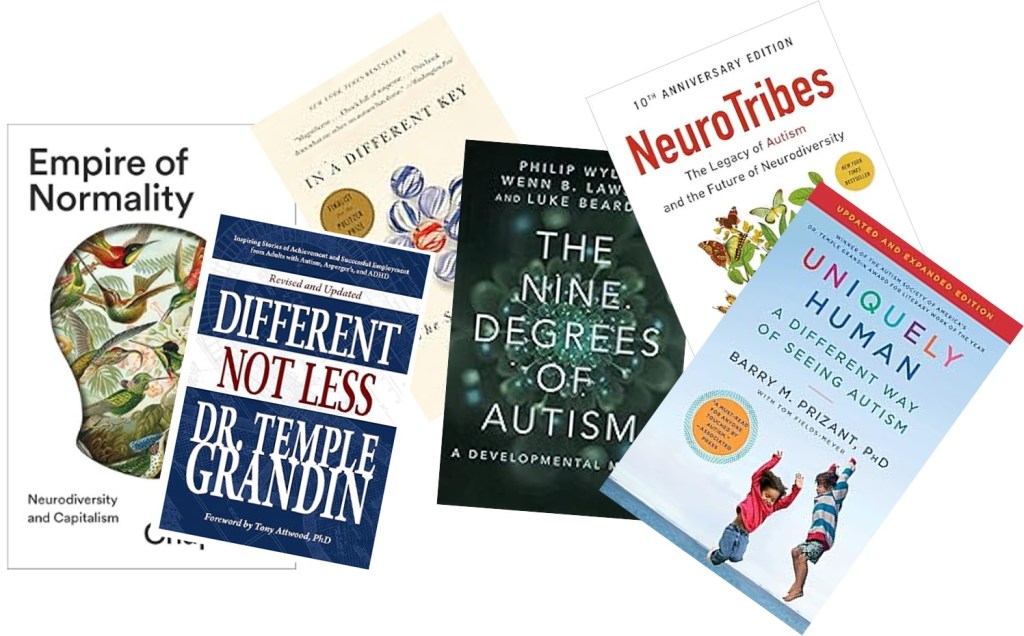
Today I run a psychological practice focused on building positive mental health for both neurotypical and neurodivergent individuals. After 30 years of learning and working in this field, I want to share what I consider the best books first books on autism that a person can read. If you are just starting your journey to becoming knowledgeable about autism, I considered these the recommended reads. If I’ve missed a favourite of yours, please drop me a line — my contact details are at the end of this post.
Understanding autism -your first 6 reads.
The Nine Degrees of Autism (2021) — edited by Philip Wylie; series editors Wenn Lawson & Luke Beardon
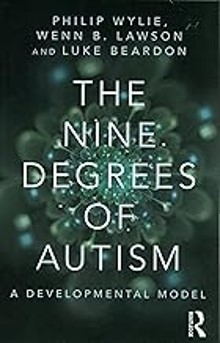
The Nine Degrees of Autism presents an updated fresh and positive, developmental framework that maps nine distinct stages experienced by autistic people — from pre‑identification and early challenges through diagnosis, shifts in self‑image, and ultimately toward self‑acceptance and wellbeing. Each chapter focuses on one stage, combining expert analysis, personal perspectives and practical insight. The model is also applied to other “hidden” neurological differences (for example, dyslexia, dyspraxia and ADHD).
I consider this essential reading because this book:
• Offers a strengths‑based, developmental lens.
• Practical stage‑based framework for tailoring supports.
• Combines expertise and lived experience.
• Supports mental health and self‑understanding.
• Applicable across settings and beyond autism.
In a Different Key (2016) — John Donvan and Caren Zucker
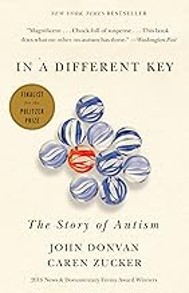
In a Different Key is a well‑researched narrative history of autism that blends investigative reporting with personal stories. It traces how autism was discovered, diagnosed and treated over the past century and follows families, researchers and advocates to show how medical practice, public policy and social attitudes shaped the lives of autistic people.
I consider this essential reading because this book:
• Provides historical context to distinguish enduring findings from past misconceptions.
• Humanises autism through vivid personal accounts, building empathy and understanding.
• Tackles major controversies (diagnostic shifts, institutionalisation, treatment practices and the neurodiversity movement) with balanced, nuanced reporting.
• Synthesises scientific, social and policy threads in clear, accessible prose for non‑specialists.
• Equips readers — families, educators, clinicians and policymakers — with the context and critical perspective needed to respond to autism more thoughtfully and respectfully.
NeuroTribes (2015) — Steve Silberman
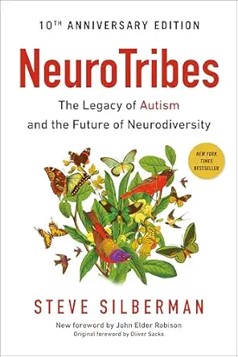
NeuroTribes is a wide‑ranging history and cultural study of autism. Silberman traces the condition from early clinical observation through mid‑20th‑century institutional practices, the rise of diagnostic categories, and up to contemporary research and the neurodiversity movement. The book highlights overlooked figures, suppressed research and the social forces that shaped both scientific understanding and public attitudes toward autistic people.
I consider this essential reading because this book:
• Deep historical context: uncovers the origins and evolution of autism knowledge.
• Challenges myths and simplified narratives (for example, the “refrigerator mother” theory).
• Introduces and popularises the neurodiversity framework.
• Humanises autistic lives through profiles and personal stories.
• Explores policy and care implications with accessible, well‑researched prose.
Uniquely Human (2015) — Barry M. Prizant
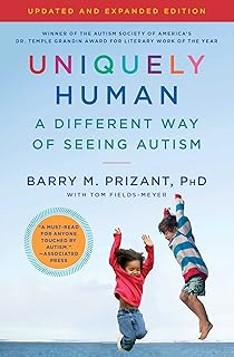
Uniquely Human argues that autism should be understood primarily as differences in behaviour and communication rather than a catalogue of deficits to be “fixed.” Drawing on decades of clinical experience and case examples, Prizant offers a compassionate, practical framework for supporting autistic people by identifying unmet needs behind behaviours and building on strengths and relationships.
I consider this essential reading because this book:
• Shifts perspective from deficit to understanding.
• Provides practical, humane strategies for caregivers, educators and clinicians.
• Emphasises relationships, trust and dignity.
• Accessible to non‑specialists and complements historical accounts with day‑to‑day approaches.
Different Not Less (2020) – Temple Grandin
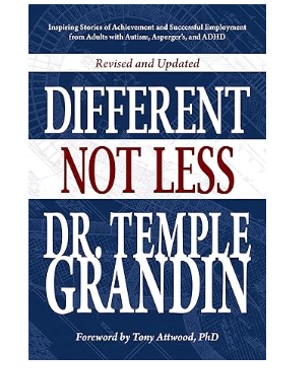
As a psychologist, I consider Different, Not Less by Temple Grandin essential reading for anyone seeking to understand neurodiversity beyond diagnostic labels. Grandin’s collection of personal narratives from adults on the autism spectrum offers an authentic, strengths-based perspective often missing in clinical literature. Her emphasis on ability rather than deficit invites both clinicians and educators to reframe how they support autistic individuals, focusing on practical solutions and self-advocacy.
I consider this essential reading because this book:
- The book bridges the gap between science and lived experience, reminding professionals that empathy and flexibility are pivotal in fostering growth.
- Different, Not Less is not just inspirational—it’s an invaluable tool for developing a more inclusive and compassionate psychological practice
Empire of Normality (2023) — Robert Chapman
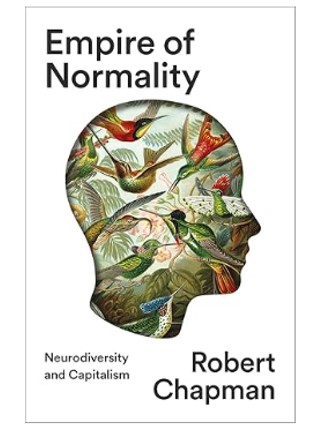
Empire of Normality examines how the idea of the “normal” mind emerged alongside capitalist social structures and how that notion has shaped attitudes toward neurodivergent people. Combining history, political theory and disability studies, Chapman links productivity‑driven capitalism to practices that medicalise, marginalise and discipline bodies and minds, and argues for systemic change toward neurodivergent liberation
Why I consider this an essential read.
• Frames neurodiversity within political and historical contexts.
• Challenges mainstream narratives about normality and productivity.
• Connects personal experience to structural, collective change.
• Valuable for activists, policymakers, educators and clinicians seeking justice‑focused approaches.
I hope you enjoyed my list of essential readings. If you have books you’d like to share for me to include in future reviews drop me a note at my email: AngelaW@reddoor.hk
 Start your Red Door Journey