No single book can help you completely recover from heartbreak. Each of these books may contribute a step in your learning journey: surviving divorce and becoming a new you, especially when used in collaboration with therapy.
Here is some advice from the trenches – Six of the best books are recommended, from the participants of our surviving divorce therapeutic support group, and myself, as their counsellor.
1.He’s history, you’re not. Erica Manfred
An honest guide to getting through the breakdown of a marriage without it costing you an arm and leg – financially and emotionally. This great book is written from first-hand experience. Recommended for women over 40 years old. hand experience good for women over 40 –especially those left by their partner.
2.Crazy time. Abigail Trafford
The break-up of a marriage heralds a year of break down inducing confusion. This book uses real life cases to describe the problems inherent in the marriage and challenges you’ll need to overcome. Recommended for anyone going through divorce.
3.You can heal your heart. Louise Hay and David Kessler.
Grief and loss experts blend affirmations and mindful observations to enable the reader to explore their soul and situation in order to grow and find solace. Recommended if you feel like you’ve lost hope
4.Leave cheater gain a life. Tracy Schorn
Tracy Schorn, aka the chump lady, provides a wealth of advice amidst heavy doses of humour, to help avoid rookie mistakes, disarm your fears and bounce back. Recommended if you have just recently been dumped.
5.Runaway husbands. Vicki Stark
This book explores wife abandonment syndrome, sharing the findings of surveys of 400 women worldwide. If you’ve been abandoned, find the way to turn your loss into an opportunity for empowerment with the information and strategies included in this guide. Recommended for those who have lost long term relationships.
6.The good divorce. Constance Ahrons.
Whilst any divorce is unlikely to be described as “good”, there are some smart decisions you can make, some myths you should abandon, and activities to plan to help your family heal. This book uses the results of longitudinal research and the wealth of knowledge gained as a therapist to help guide the reader through the divorce process. Recommended for parents exploring divorce.
If you are going through a painful break-up, one piece of advice I can share comes from the words of Winston Churchill, “When you are going through hell, keep going”.Here is some advice from the trenches – Six of the best books are recommended, from the participants of our surviving divorce therapeutic support group, and myself, as their counsellor.
Angela Watkins is a psychologist and counsellor at RED DOOR Counselling in Hong Kong. Her current clinical work focuses on adults in the areas of, depression, the experience of divorce, anxiety, perfectionism, career change, loss of direction, burnout, relationship and family challenges, OCD, and parenting special needs children. If you’d like to contact Angela for a session please email angelaw@reddoor.hk
Angela also runs the Iron Fairies group for women going through divorce
In this blog series, Love Matters, Angela Watkins and Elizabeth Wu delve into the complexities of relationships and love. With a focus on helping individuals navigate their romantic lives, bringing in their expertise as therapists that have dealt with individuals experiencing romantic heartbreak as well as couples therapy.
This Episode: Healing heart break
In this months episode, we tackle the profound topic of heartbreak. Romantic breakups can lead to intense emotional distress, including symptoms akin to bereavement such as intrusive thoughts, insomnia, and heartbreak syndrome, which can even impact immune function.
Key Questions We Explore:
How long does the pain last?
Do I really need a romantic partner?
How can one overcome the belief that true love is unattainable?
What do you do when you feel trapped in recurring thoughts about the breakup?
What is the long term impact of heartache on trust?
How can you let go of emotional baggage?
How do we differentiate between healthy caution and protective walls that hinder recovery?
What is one common misconception about heartbreak recovery that you’d like to clarify?
What role does self-compassion play in healing, and how is it different from self-pity?
How can I stop comparing new partners to the one I lost?
When should someone consider therapy instead of leaning on friends for support?
Are there specific milestones that indicate healing?
Question 1 – how long does it hurt?
The hardest part of a breakup isn’t the separation itself but the feelings that follow. Keep three points in mind:
If the relationship mattered, it will hurt.
Trying to rush through grief is unhelpful and usually ineffective.
If you refuse to do the work of healing, the pain will persist.
Allow yourself time to grieve, and take small, intentional steps toward recovery.
It really does depend on the person’s attachment style, the depth of the bond, and the length of the relationship. From what I’ve seen, the acute phase (that initial, most intense period) can last anywhere from one to six months. But the waves, particularly when the connection was a deep one, can ripple on for well over a year. And that is not weakness. That is a reflection of how much the relationship mattered.
Here’s something I think is really important for people to know: heartbreak is not just emotional, it is physically real. Research shows that the brain activates the same regions during heartbreak as it does during physical pain. On top of that, when we lose a romantic partner, we experience genuine neurochemical withdrawal – from dopamine, oxytocin, serotonin – much like an addict going through withdrawal. So if you’re wondering why this hurts so much, it’s because it literally does. This pain is not in your imagination. It has been studied and it is real.
And that matters, because when we understand the biology of heartbreak, we can start to release the shame around it. The more we try to push the pain away, the louder it tends to get. And then the shame sets in, you begin to think “I’m so pathetic, why am I still thinking about them?”, and that shame deepens the wound. The first act of healing is often simply this: permission. Permission to hurt.
You can definitely make your pain worse when you experience shame or get stuck blaming yourself or others.
Question 2: Do you really need a romantic partner?
Many people still want romantic partners, but it’s important to ask whether you are truly ready for one. After a breakup — even before a casual new relationship — ask yourself: “Am I good at being single?” Entering a relationship should be a choice, not a default because you struggle to be alone. If you find you’re not comfortable on your own, you may be seeking a relationship to avoid developing the skills needed for independence. If that resonates, use the post-breakup period to reflect and grow.
We have a RED DOOR blog on becoming “good at being single” which you may find helpful; I’ll link it at the end of this post for anyone who wants to explore these skills further.
I personally believe in the beauty of romantic partnerships, but I also think it’s crucial to separate cultural narrative from genuine desire. There is growing research suggesting that partnership is not a prerequisite for a fulfilling life. We see this in people who identify as asexual, and in people who build rich, meaningful lives through community and deep friendships. Their choice is entirely valid, and it deserves to be honoured rather than judged. We have also seen from research that it is better to be single than to be in a bad relationship. From personal experience, I see that the huge majority are still seeking connection, because humans are predominantly social creatures at the end of the day. But the question worth sitting with is whether that longing comes from genuine want or from a fear of being alone.
And I think that distinction is everything. When you “need” a relationship, you tend to abandon yourself in the pursuit of one. You become willing to bend yourself to keep someone, because you “need” them to feel complete. Versus when you “want” a relationship, you come to it from wholeness – you’re enhancing your life, not filling a hole in it. That’s the difference I try to help my clients find. Having the right skill sets to know how to be good at being single is an important skill to have to avoid quick attachments to unsuitable people.
Many people still follow the “expectation escalator” in relationships — a presumed linear progression from meeting, to exclusivity, to moving in, engagement, marriage and children. Remember, it’s only a model, not an obligation. If the escalator stalls, it is not a failure. Couples can feel shame and grief when their relationship deviates from that scripted path — whether through breakup, infertility or other unexpected challenges — but divergence from the expectation does not negate the value of the relationship or the legitimacy of your grief.
Yes, I think it’s so important to note that the shame around being single isn’t always self-generated. Often it comes from the outside. We still live in a culture that deeply romanticises the couple. The film ends with the kiss. The highlight reel celebrates the ring and the happily ever afters. And we’ve internalised that narrative so thoroughly that it can be genuinely hard to distinguish what we truly want from what we’ve been told we should want.
Also considering it from certain cultural contexts – being half Chinese myself for example, some parts of my family believe women who remain unmarried past a certain age are labelled sheng nu 剩女, which roughly translates to “leftover women”. The stigma is real and it can be crushing. From the Korean side as well, when you are dating they ask you when you are planning to get married, and once you are married they ask you when you plan to have kids. The expectational elevator is driven into you from a young age.
Even in more Western settings, you may have well intentioned people trying to set you up with their single friends, but it can still feel as though singlehood is a problem to be solved rather than a life to be lived.
And that external pressure bleeds into how and why we seek relationships. We start looking for partners not from a place of readiness, but to escape the social noise, to do what everyone else “should” be doing at this age.
What we see in the movies the myth of the happy ever after. But actually, when the wedding bells toll, that is where the work really begins.
It’s how you get through fights, and stressors, and infidelity, and disappointment. How you deal with those challenges together is how you build a romantic life.
Question 3: What is the long term impact of heartache on trust?
When trust has been broken, it can become hard, really hard, to be willing to open yourself up again. And that guardedness makes complete sense. It is a response to the real pain you have experienced. But here is the paradox I sit with in the counselling room: if you never give trust, how can it ever be earned?
There is a difference between healthy self-protection and over-protection – the kind that closes you off so completely that genuine connection becomes difficult. You shouldn’t just extend blind trust to anyone. But trust, at some level, requires a leap of faith. It requires the willingness to be seen, even knowing that being seen carries risk.
The goal isn’t to rebuild trust overnight. It’s to take small, intentional steps toward it – with the right person, at your own pace, and ideally from a place of self-security rather than fear. Trust is rebuilt step by step, and it starts from within.
When trust is broken it can sometimes be rebuilt. In cases of infidelity I ask couples what would help the injured partner feel safe again. A common request is temporary access to a partner’s phone so they can see any third-party contact has ended. In sessions I let that conversation unfold rather than interrupt it; when the unfaithful partner agrees to full transparency you can often feel the tension ease immediately. The request functions as a practical trust-building exercise—trust cannot simply be demanded back to its original level overnight, but small, concrete steps can help restore it.
If you’ve been cheated on and can’t resolve it, you may feel humiliated and worry that future partners will have to prove they’re different. Consider whether it’s fair to expect a new partner to pay for the actions of someone else. Recovery involves working through those fears so you can enter new relationships from a place of healing rather than unresolved suspicion.
Yes absolutely, and just to add another layer for consideration: trust issues in a new relationship don’t have to be framed as a “me” problem. They can be a “we” conversation. You can bring your vulnerability to a new partner and say, “I have some trust wounds from my past, and I’m working on them. When I go quiet or I need reassurance, it isn’t about anything you’ve done, it’s something I’m carrying.” And if that person receives that with care and openness, you’ve already begun building something genuinely real.
That kind of transparency doesn’t just build trust, it builds communication. And the truth is, none of us leave our baggage behind entirely. But we can learn to carry it differently so that it doesn’t become our partner’s burden to manage.
Question 4: How do you leave baggage behind?
In my experience, there are two ways people respond to heartbreak: they either contract or they expand. The ones who contract, they build walls. They become more guarded, more isolated. They protect themselves by making their world smaller. And while that makes complete sense given the pain they’ve been through, it also closes the door to new connection, new growth, and new joy.
The ones who expand use the heartbreak as a catalyst. They grieve the breakup then eventually ask: “Who am I now? What do I want? What has this taught me?” That expansion doesn’t happen overnight, and it doesn’t mean bypassing or rushing the grief. But it does mean choosing to let the experience open you rather than close you.
After a breakup it’s easy to make your world smaller — to ruminate about what happened and why. Try not to romanticise or rewrite the relationship; that idealised version can become heavy emotional baggage.
Reflection is healthy and useful. Ask yourself: who am I now? What could my life look like without that person? Which people are right for me to spend time with, and what healthy practices might support me at this stage?
Use this time to learn about your attachment style and how it showed up in the relationship’s beginning, maintenance and ending. If you have an anxious attachment, for example, consider how those patterns influenced your choices so you can decide whether you want to repeat them.
You may feel wary about re-entering the dating scene — even petrified that the same thing will happen again. It can help to acknowledge the fear and move forward anyway, at your own pace. Remember: you don’t need to rush into a new romance; this time, take the time to choose more intentionally.
I am reminded of real life example that has stayed with me. Someone I know had come out of a long term relationship where her partner has been unfaithful. She’d developed this almost involuntary pattern – whenever her new partner picked up their phone or received notifications; she’d feel an immediate wave of anxiety and find herself trying to look at their screen. It took a while to understand why it was happening. It was wired behaviour trained into her from months of betrayal from her ex.
What shifted things for her was vulnerability. After going through therapy and dating this new person, she said to him honestly “I’m so sorry, I don’t mean to keep looking at your phone. You have done nothing to make me feel insecure. This comes from my past, not from you.”
And his response was extraordinary. He said: “Please look at my phone. I have nothing to hide from you. You are not in that relationship anymore, and you have nothing to apologize for.”
I have watched her grow over time, with her new partner’s security and her own continued work – from anxious attachment towards something genuine and secure. It didn’t happen because she forced herself to stop the behaviour. It happened because she was honest about her wound, and she found someone safe enough to heal in front of. That is what healthy attachment looks like in practice. And for anyone going through this right now, that is the hope. I am overjoyed to see how happy and secure she is in her new relationship and wish them only the best.
Question 5:How do we distinguish between healthy caution versus protective walls that isolate us in our recovery from heart break?
That brings up something I think about with clients: how do you know when your caution is genuinely protecting you versus when it’s preventing you from connection? How can you tell the difference between healthy interpretation and a hard wall that no one can get through?
If a client asked how to distinguish healthy caution from protective walls, I’d start with a simple question: “Are you having fun?” If you’re overthinking every step of a relationship, it’s hard to enjoy it. We date to make connections and share moments, and that becomes difficult when you’re constantly observing and analysing.
Rather than hunting for love, look for friendship first. Ask yourself: do I like this person? Do I find them funny? Would I want them as a friend? Friendship is the foundation of most durable relationships. Don’t rush into romance or put excessive pressure on yourself — let your guard down gradually, enjoy the other person’s company, and resist the urge to chase a label too quickly.
That’s such a great question – “Are you having fun?”. It’s a deceptively simple but powerful question. If there’s ease, laughter, and real curiosity in this connection, trust that. You don’t need to rush it, label it, or analyse it to death. Joy is data too!
Don’t rush to label a relationship. You wouldn’t build a friendship by over-analysing it or demanding a label from the start — you wouldn’t ask an acquaintance, “Are we friends yet?” Instead, reflect on your experience: “I enjoy being with this person because they’re clever or funny.” Relax and let the relationship evolve. Focus on the moments you share rather than definitions. If a friendship deepens into romance, that’s natural — so take things slowly and allow it to grow.
What do you think?
Friendship as a foundation is not just a nice idea, it’s backed by research. The Gottmans’ work consistently shows that deep friendship i.e. genuinely liking your partner, finding them interesting, enjoying their company, is one of the strongest predictors of a lasting, satisfying relationship. So start there. Start with: do I like this person? Is this easy? Am I curious about them?
Now is there a risk that you might like someone more than they like you? Absolutely. But that risk was always there. You were never going to be clever enough to outmaneuver it. And ironically, the more you try to guard yourself from catching feelings, the more likely you are to get them. So just let yourself feel it. Be present. Be curious. The right connection won’t need to be controlled into existence.
Question 6: Is there one misconception about heartbreak recovery that you wish people understood?
The biggest misconception I see is the belief that healing should be linear. People expect that once they’ve had a good week, the hard weeks are behind them. And then something happens – a song, a memory, a moment – and suddenly they’re crying again, and they feel like they’ve completely undone their progress.
But healing is not a straight line. It is a spiral. You may revisit the same pain multiple times – the same memory, the same question, the same ache – but each time you do, you are approaching it from a slightly different place. You are going deeper, not backwards. Even when it doesn’t feel like it, you are spiralling upwards.
Please hold on to that image, the image of you spirally upwards rather than a straight line. It gives you permission to have hard days without shaming them. It lets you trust the process.
A common misconception about heartbreak is that it follows a fixed timeline. Rushing through the process usually means you haven’t truly acknowledged the loss, while holding on can mean you’re romanticising the relationship and staying stuck. Recovery isn’t measured by a set timeframe; it’s cyclical and individual. Allow yourself to grieve properly, notice when old patterns resurface, and trust that healing unfolds in its own time.
Question 7: How can I stop comparing new partners to the one I lost?
Comparison is another form of rumination. Your mind is trying to solve the unsolvable question “How do I get back what I lost?”. It can sometimes try a shortcut like finding someone who looks, sounds, or feels enough like your ex that you might get to rewrite the ending. It’s your grief searching for a redo.
And you know memory can be such an unreliable narrator. We tend to remember the best moments in vivid color and the most painful ones in faded gray.
When we compare new people to an ex, we may not be comparing them to a real person at all. We sometimes end up mourning a fantasy rather than a reality. And that fantasy cannot be competed with, because it was never entirely real to begin with.
No one can ever win that comparison, because it isn’t fair and it isn’t really about them.
If you find yourself comparing new people to your ex, take some time to reflect. It’s hard — and unfair — to compare anyone to the “real” version of an ex because we usually hold either a romanticised or a villainised image of them. The truth is often a mix of both, which makes comparison impossible and unhelpful.
Comparison is a fast track to misery. Instead of asking whether someone measures up to your past, try asking what this new person offers that might be interesting or different. They may open a completely different pathway for you — and that can be a positive thing. Allow new relationships to be their own experience rather than repetitions of the old one.
Try to put down the measuring stick entirely. Ask instead: Who is this person? What do they bring that is entirely their own? The best thing a new person can offer you is difference, a new way of seeing, a new kind of connection, a new story you hadn’t yet imagined for yourself.
Question 8:What role does self-compassion play in healing from heartbreak, and how do you think it’s different from self-pity?
Self-pity wallows. It says, “Poor me. Why is this happening to me?” It keeps you fixed in place, looking inward with despair. Self-compassion, by contrast, is active. It says, “This hurts. What do I need right now?” And research has shown that self-compassion speeds up healing.
It’s common to see people in therapy room who understand their pain but are completely unable to feel kindness toward themselves. They can explain the breakup, name the dynamics, identify their patterns, then in the same breath they say, “I’m so pathetic. Why am I still thinking about them?” and then go into a negative spiral.
Self-compassion is saying to yourself: “This is one of the hardest things a human being can experience. My pain makes sense. This is not weakness, this is being human.” And then, gently, asking what you need to form an action plan.
My tool for practicing self-compassion is quite simple: ask yourself “What would I say to my best friend if they were going through this?” And then say that to yourself. We are almost always far kinder to the people we love than we are to ourselves, and you deserve that same kindness.
I really love that. It’s important to distinguish between self-pity and self-compassion after heartbreak. Think of self-pity as being stuck in neutral — you’re grinding the wheels, ruminating and not moving forward. Self-compassion, by contrast, is like shifting into first gear: you acknowledge the pain, treat yourself kindly, and begin to move forward slowly and constructively. Practising self-compassion helps you own and process the hurt in ways that support genuine healing.
Question 9: When do you think someone should seek therapy over a breakup rather than rely on their friends for help?
If your heartbreak is affecting your ability to function in life then you should seek therapy. If your grief is pouring into your work, if it is affecting your daily habits like sleeping and eating, and you find yourself withdrawing from the people who care about you, then please reach out for help.
And if you are having thoughts of self-harm or suicide, please seek professional help immediately. That is not a place to navigate alone, and there is no shame in needing that kind of support, only courage.
I like the idea of seeking help when you have experienced “contagion” — heartbreak often spills over and affects other areas of your life. If heartbreak is affecting your work, sleep, mood, or relationships beyond the breakup, or if you feel stuck despite support from friends, it’s a good sign to seek professional help.
Counselling with an experienced relationship therapist is particularly helpful when you notice the same painful pattern repeating. If you find yourself saying, “I did this again,” or “I keep falling into the same trap,” a therapist can do more than offer sympathy: they’re trained to recognise patterns, explore the underlying needs or beliefs that drive them, and help you make different choices going forward.
Friends can be supportive and may help you spot some patterns in your relationships, but therapy offers a structured space to explore those patterns more deeply and work towards lasting change. Friends inevitably respond from their own experience and perspective, which can sometimes be unhelpful or limit the objectivity you need. A therapist provides focused, non-judgemental guidance tailored to your history and goals, helping you understand root causes and develop new ways of relating.
Even with the people we trust most, we can still carry shame. There are things we don’t say to friends because we worry about being judged, or because we’ve already said it ten times and feel embarrassed to say it again. The therapy room is designed to hold the things you haven’t been able to say anywhere else.
It’s a space to be fully vulnerable, and in that vulnerability to begin to reclaim your agency and your sense of self-worth. Beyond the emotional support, a skilled therapist has something friends simply cannot offer: the years of clinical training to help uncover roots and patterns to understand why you have chosen the path you’ve chosen, and to honestly explore whether those choices have been serving you.
Friends mean well, but they often respond from their own frame of reference — “oh, that happened to me too” or “when I did that…” — which can be comforting but limited. A counsellor or psychologist brings a broader framework, such as attachment theory, and can help you see how long‑standing patterns shape your responses and how you might choose to act differently.
Choose therapy if you want to do the deeper work of understanding and breaking repeating patterns, or if your heartbreak has “contagion” effects — disrupting your sleep, mood, health or work. In those cases, talking with a skilled professional can provide the focused, non‑judgemental support you need to heal and move forward.
Question 10: Are there milestones that mean you are healed after a breakup?
Healing doesn’t mean all the hurt has vanished. It means you’ve done the work to learn from the relationship that ended. View relationships as pathways to a better you and reflect on what you discovered about yourself. Do you still struggle with trust, and if so, is that something you need to address rather than expect a future partner to fix? Are you repeating past patterns or rushing into relationships too quickly? Would you be better suited to a different kind of partner or a different way of relating?
If you can answer these questions honestly, make changes where needed, and enter new relationships from a place of greater self‑awareness rather than fear or avoidance, you are moving toward genuine healing.
I do think working with a therapist at this stage is helpful. Because before you re-enter the dating world, it’s worth slowing down and getting intentional. Ask yourself: what would it feel like to open my heart again? What would trust look like? What would I want a relationship to feel like, not just what I want it to look like from the outside?
Readiness is important, because we underestimate how often people return to dating before they’re truly ready, not because they’re foolish but because the loneliness or social pressures are real. But if you haven’t done the work of identifying your own patterns, you are likely to repeat them. You may seek a familiar even when the familiar has hurt you.
Do the work, understand what a genuinely good relationship looks like to you. You deserve nothing less and you can find it.
If I were young again — in my teens or early twenties — I’d ask the friends I trust what I’m doing wrong in relationships, and I’d actually listen to their answers. If someone has proved themselves a true friend, they’ll point out patterns you might miss. They might say, for example, “You always go for the same type of person,” and that’s worth hearing. It’s easy to cling to one trait — like the joke about someone only being interested because a partner is “six‑five” — but that single quality rarely tells the whole story. If you repeatedly choose the same type, ask whether that trait is really serving you, and be willing to challenge your preferences when friends raise honest observations.
We hope you enjoyed this conversation with Liz and Angela as part of our Love Matters series on how to have more fulfilling relationships. If you would like to contact Angela or Liz for a session please email us at reception@reddoor.hk or whatsapp +852-93785428.
For other articles about relationships that might be of interest see below.
Where can you find love if you’ve been looking for:
As a therapist, I’ve noticed an increasing concern among my clients about the impact of Artificial Intelligence (AI) on their job security. With continuous discussions surrounding AI and its potential to automate various roles, it’s natural to feel anxious about your future employment prospects. If this is causing you distress, allow me to offer some guidance on how to approach this evolving landscape with a balanced perspective.
Stay Informed, but Manage Your Exposure
Just as we saw during the COVID-19 pandemic, sensationalized projections can dominate conversations and media coverage. If news about AI is overwhelming you, consider moderating your consumption. While it’s important to stay informed, denying the reality of technological advances is unhelpful. Embracing technology, regardless of your age, is crucial. Familiarizing yourself with what AI can and cannot do will empower you to navigate these changes.
Shift Your Perspective on AI
You may possess more agency in this situation than you realize. As part of our therapeutic dialogues, I encourage you to break down your daily tasks. Identify which aspects of your role AI could assist with, and which uniquely human skills you need to retain or develop to maintain your importance in your field.
Become Proficient Through Education
In today’s job market, gaining proficiency in AI technologies is essential for staying competitive. While there are numerous AI certification courses available, it’s crucial to approach them with discernment. Many programs make lofty promises, such as “In one week, you’ll be unrecognizable,” but these claims often come from less reputable sources and may not provide the depth of understanding required.
To navigate this landscape effectively research course providers, read reviews, and incorporate practical learning into your education of AI
By taking a thoughtful approach to education, you’ll be better equipped to harness the power of AI in your career, enhancing both your skills and job security in an ever-changing environment.
Recognize Unproductive Worry
Catastrophizing—expecting the worst possible outcome—is a common cognitive distortion, particularly in uncertain times. This pattern can lead to excessive distress and anxiety. As a therapist, I encourage clients to challenge these thoughts by reflecting on how many situations have resolved positively in the past. Focusing on realistic outcomes instead of seeking reassurance can help mitigate anxiety.
Identify What You Can Control
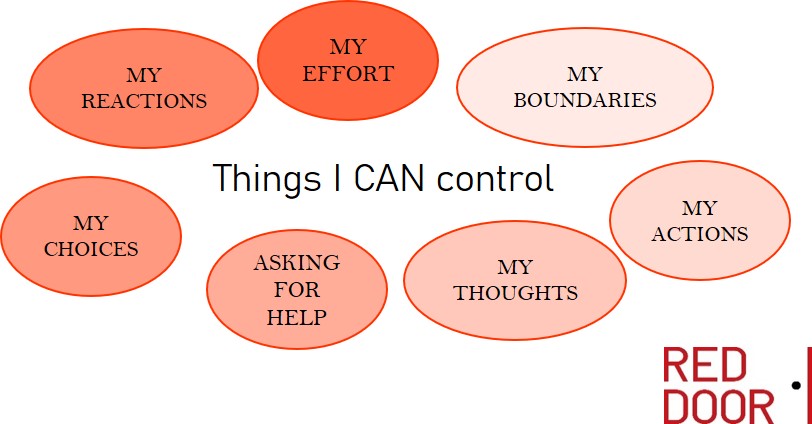
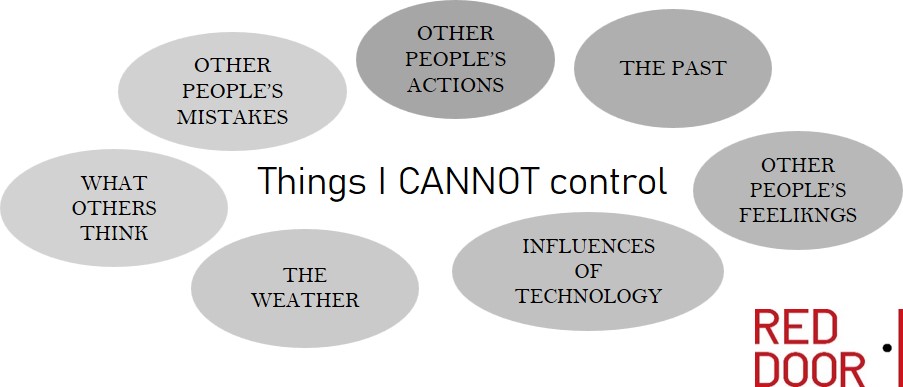
It’s crucial to discern what you can and cannot control about your career path. This understanding fosters a sense of empowerment and acceptance. By recognizing your sphere of influence, you can create a clearer action plan that enhances your readiness to face potential challenges.
Explore more AI-Resistant Professions
Research indicates that certain professions are more resistant to AI. However, it’s essential to recognize that nearly all jobs are likely to be affected in some capacity. For instance, I transitioned to counselling over a decade ago because it was believed to be less vulnerable to automation. Even in therapy, a field often regarded as AI-resistant, many individuals seek guidance from chatbots.
While these tools can provide some value, we must acknowledge their limitations, particularly regarding the genuine human connection and empathy that are integral to effective therapeutic relationships. The role of a therapist involves not just the provision of advice but also emotional support, understanding, and the ability to navigate complex human emotions—areas where AI still falls short. I write more about this in my blog signalling a warning against AI bots as therapists.
To enhance your resilience against AI influences, consider integrating the following elements into your job description:
Engage in Creative Projects: Participate in activities that nurture creativity and showcase your ability to think outside the box—attributes that AI typically struggles with.
Develop Interpersonal Skills: Cultivating relationships and high-touch skills enhances your value in the workplace.
Build Your Personal Brand
Finally, developing a strong online presence, particularly on platforms like LinkedIn, is crucial. Showcasing your skills, experiences, and thought leadership will not only enhance your visibility but also highlight your adaptability in an evolving job market. Ensure that your profile is up-to-date and engaging, reflecting your professional identity authentically.
Explore Entrepreneurial Ventures
If you have concerns about AI affecting your role, consider exploring entrepreneurial opportunities. Initiating a side project or small business can serve as a meaningful outlet for your skills and create additional income sources that may not be affected by AI.
Network Actively
Expand your professional network both online and offline. Connecting with colleagues and peers can provide essential insights, support, and potential job opportunities that may be more insulated from AI advancements.




 Start your Red Door Journey