
Can we truly move on without forgiving? When healing from a hurt, the inevitable question arises: Is forgiveness a possible component of this process? Mental health professionals define forgiveness as a conscious, deliberate choice to let go of resentment or vengeance toward those who have caused us harm.
You may have experienced betrayal in business, friendship, or family. You might have been bullied, physically harmed, or emotionally hurt by someone’s actions. Often, forgiveness can seem impossible to offer.
The Importance of Forgiveness
Psychologists promote forgiveness as a vital part of healing, a way to lighten the emotional burden you carry. Forgiveness is fundamentally for yourself, not for anyone else. Even if you recognize its importance, taking that step may still feel daunting.
Note: You are not obligated to forgive after a crime of violence. In such cases, prioritizing your self-forgiveness may be more important than forgiving others. For instance, discussing forgiveness in the context of sexual assault with a counsellor can be beneficial, but it should never feel like an obligation.
What Forgiveness is NOT
Understanding what forgiveness is NOT can clarify the process:
Forgiveness does not mean:
Forgetting the harm done.
Excusing or justifying the offender’s behaviour.
Reconciliation with the offender.
Denying that the hurt occurred.
Minimizing your pain or emotions.
Reinstating trust in the offender.
Viewing yourself as weak.
Allowing the offender to win by your suffering.
Why forgive?
Holding onto grievances can cost you mental peace of mind. Think of forgiveness as a gift to yourself. Empowering your offender by dwelling on the past can keep you stuck in suffering. Remember, holding someone accountable for their actions is not the same as blaming them for how you feel.
By releasing bitterness and resentments, you’ll no longer feel bound to the negative emotions associated with them. Acknowledge that you have the power to choose how you feel about a situation.
If you believe that forgiveness is indeed possible, let’s explore a step-by-step process to achieve it.
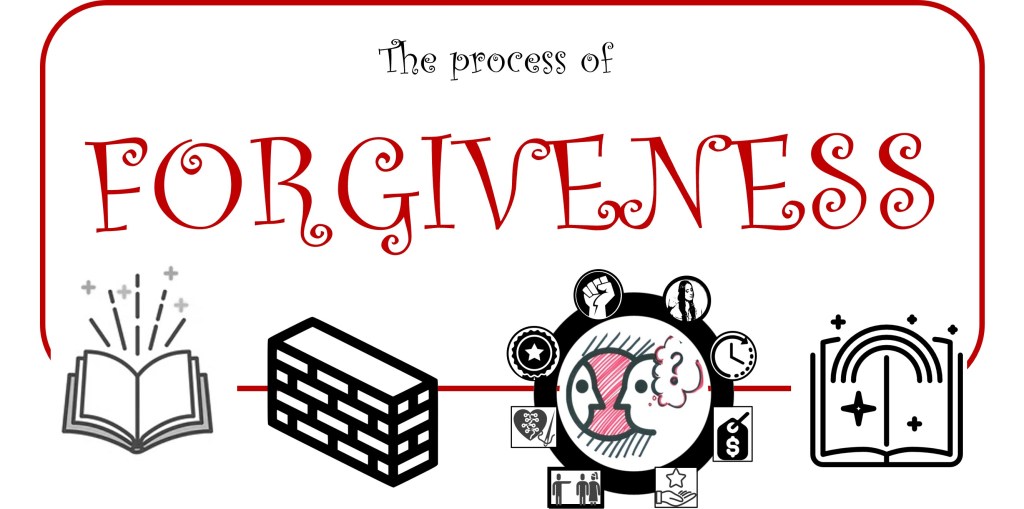
The Process of Forgiveness
Understanding that forgiveness is a journey can be liberating. There are four steps in this process, each requiring time and reflection on your situation and reactions.
Step 1: Detail Your Narrative
Write down the story of your grievance. This will help clarify not only what happened but also when, how it made you feel, and what you think the offender intended.
Reflection Prompts:

What makes this difficult to forgive?
What happened, including dates?
How has this made you feel?
How did it change your expectations of the offender and others?

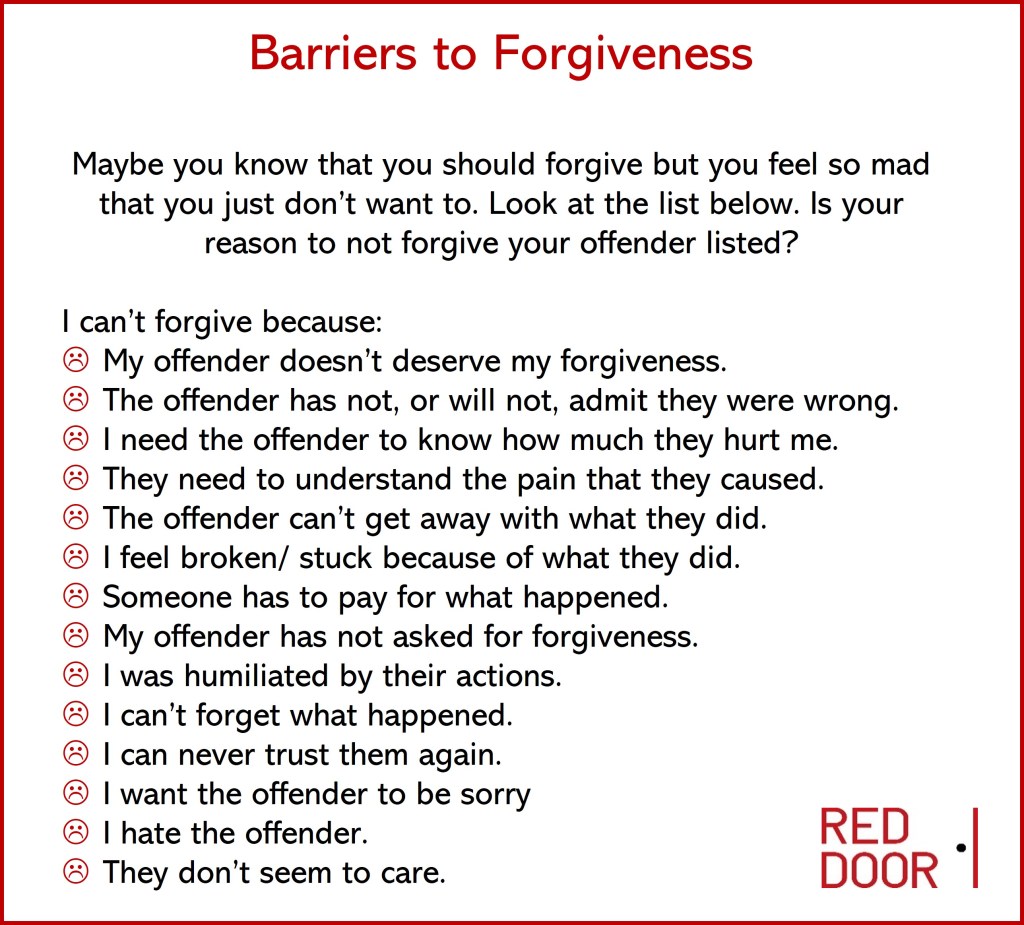
Step 2: Identify Your Barriers to Forgiveness
Recognizing the barriers that prevent forgiveness is crucial. Keep track of your reasons not to forgive alongside your narrative. Reflect on the following:

Step 3: Reflections: Questions for Forgiveness
Ask yourself the following questions to reassess your pain and consider moving beyond it:
The following 8 reflections can be tackled in any order, and as slowly as you like. To rephrase the famous quote of Chinese philosopher, Lao Zi , “When I let go of what I am, {when I think about how I am being}, I become what I might be”.
1.Am I taking this too personally?

Consider if the offender’s actions were truly meant to harm you or if situational factors played a role.
The fundamental attribution error is the tendency for people to over-emphasize dispositional, or personality-based explanations for behaviors observed in others while under-emphasizing situational explanations. At the same time, explaining their own behaviour one may have a tendency to allow a greater emphasis on situational elements.

2. Is it time to forgive?
Reflect on whether the grievance still affects you and if you’re ready to forgive.

3. What price do I pay for not forgiving?
Contemplate the emotional and mental costs of holding onto the hurt.

4. What benefits could I gain from giving forgiveness?
Consider how forgiving could lead to personal growth and emotional freedom.

5. Consider who needs to be forgiven?
Sometimes, forgiving yourself is the most important step.

6. How do I perceive forgiveness?
Reassess your beliefs about forgiveness and consider if they limit your ability to forgive.

7. What does winning look like for me??
Visualize what a positive outcome from this situation would be, independent of the offender.

8. What is within my power?
Acknowledge that you can control your feelings and the outcome of your healing journey..
Step 4: Re-write your narrative.

Once you’ve explored your grievance from various angles, rewrite your narrative. Empower yourself by recognizing that the offender’s actions may have been selfish rather than malicious. Remember, your obligation is to yourself and your emotional well-being.
If you find it challenging to move toward forgiveness, consider discussing your feelings with a counsellor. Give the forgiveness process a try—it can be applied to multiple offenses and may help you find the freedom from the heaviness of holding a grievance.
Give the forgiveness process a try. You can try it with multiple offences. You may find the freedom you seek from the heaviness that holding a grievance is weighing on you.
About the author
Angela Watkins is a counsellor and psychologist working out of RED DOOR Counselling in Hong Kong. Angela helps teens and adults overcome trauma, anxiety, learning and relationships challenges. To contact Angela for a session contact her at Angelaw@reddoor.hk or WhatsApp on +852-93785428
 Start your Red Door Journey