Have you ever questioned your relationship with alcohol? It is a common question as part of your resolutions for a new year.
Have you ever made rules for yourself in regard to your drinking behaviours? For example do you find you promising yourself ” I’ll only drink wine, nothing stronger” or “I’ll only have 3 drinks max before I go home – no more”? Has anyone close to you asked you about your drinking volume or behaviours? Do you ever wonder if your drinking is getting out of your control? Many people do. You are not alone.
From time to time, it is healthy to reflect on the aspects of your life which are working, and are not. Take a moment to think about if your drinking is making your life better, or is possibly a contributing factor in making your life experience, worse.
When people look at their relationship with alcohol they often consider taking a break. Taking a break is a great idea. I recommend a month rather than a week. If this sounds an overwhelming request, read on.

Perhaps you don’t feel confident to break up, or perhaps you think you really need alcohol in order to be you (ie a co-dependent style relationship). Its actually very common for people to be concerned about their drinking. Catherine Gray, in the book, The unexpected joy of being sober, suggests that that one third of regular drinkers are worried that they drink too much, but only half of those who worry actually do something about their drinking behaviour.
It isn’t your fault if you are confused or even ashamed about your relationship with alcohol. You have been tricked, entangled, and trapped, in that relationship. Advertising and society treat alcohol as a social lubricant when it is more of a social charlatan, suggesting it is the route to a good time, rather than communicating the reality of alcohol as silent poison which destroys more relationships than it creates. The harmful use of alcohol is a global problem as alcohol is a major risk factor in health and social issues such as violence, accidents, child neglect, absenteeism and mental health issues.
How do you know if you have a drinking problem, not just a drinking habit?
The following is NOT a diagnostic test, but includes some of the types of questions that would be used for a formal diagnosis of substance abuse issues. Please answer Yes or No to the following 10 questions.
- In the past year have there been times when you have consumed more alcohol, or drank for a longer period, than you had originally intended?
- In the past year, has your drinking interfered with your relationship with friends, family or work colleagues?
- In the past year, have you missed work, or key appointments on a few occasions because of alcohol consumption the night before?
- In the past year, have you wanted to cut down your drinking amount or frequency and found yourself unable to do so?
- In the past year, have you blacked-out as a consequence from drinking alcohol?
- In the past year, have you lost personal items such as your keys, or wallet, whilst you were inebriated?
- In the past year, have you missed work, or key appointments on a few occasions because of alcohol consumption the night before?
- In the past year, have you noticed that your tolerance to alcohol has increased, and you now need to consume more alcohol in order to feel it’s effects?
- In the past year, have you found yourself in situations where you may have compromised your personal safety, or the safety of others, as a consequence of consuming alcohol
- In the past year, have you started to experience some of the symptoms frequently labelled as alcohol withdrawal, when you are not drinking including shaking, experiencing a racing heart, sweating more than usual, nausea, or trouble sleeping?
Scoring: How many questions did you answer with a “YES” response? If you answered 3 or more with a YES, then I recommend you consider to break-up with the booze, if only for a short period (3 months), and possibly longer. You can break free of the shame of that you can feel when alcohol dominates your life, and decisions, and you want to feel and act differently. You CAN put that shame behind you and live a better life. Consider some of the books and resources listed below.
If you want to take a break there are a number of options for you to consider – from books, to online resources, to face to face support. There are a number of resources that can help you give up for a week, a month, a year, or longer.
Books that could help:
There are a number of books that support breaks from alcohol, of any period. In my opinion the books sharing the experience of the author seem more compelling, and less judgmental than some of the more academic books. I have included both styles of books in the following list. Many of these books are recommended by online support groups. These books can easily be found from online book retailers.
This Naked Mind – Annie Grace

It is easy to understand why this book is a best-seller. This book explores links links between the unconscious and conscious mind to help create motivation for change. The techniques used help readers explore their relationship to alcohol, so that giving up reminds you that you are embracing regained freedom rather than focusing on what you fear you might be missing out on. I would recommend this as a first book to read if you are considering any kind of break.

The Unexpected Joy of Being Sober – Catherine Gray
Another popular best-seller, the unexpected joy is a well written memoir with extremely practical advice and insights. Gray provides information to help you staying sober for 30 days, and abstinence beyond . There is a great Facebook page attached to this label online.
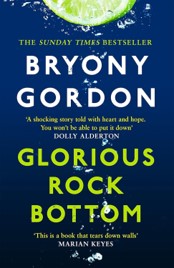
Glorious Rock Bottom – Bryony Gordon.
Bryony Gordon recounts her lived experience of quitting and recovery from alcohol and cocaine addition. Simply put she describes her journey as, “I stopped drinking because I wanted to start living”. A raw and heartfelt account of her movement into and out of the shame of her addiction. Whilst the truth hurts, it also heals.
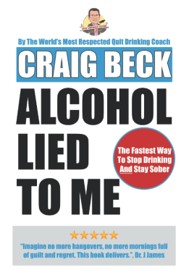
Alcohol Lied to Me – Craig Beck
Craig Beck was a highly functional, “2 bottles of wine a night” drinker. From the outset, he looked like he had his drinking under control, but that wasn’t his reality. Craig Beck has written a treasure trove of quit drinking books and has programmes attached to his model. The process starts with exploring misconceptions that we hold about alcohol.
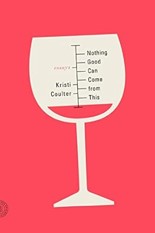
Nothing Good Can Come from This – Kirsti Coulter
This memoir of one woman’s journey to sober, provides a sometimes funny, and worrying, commentary on women and their problematic love relationship to alcohol.

Girl Walks Out of a Bar – Lisa Smith
Another recover from alcohol focused memoir, this book explores cases of individuals who have been successful career wise, but struggled in their relationships with alcohol. Lisa Smith provides a real, emotive take on her experience of recovery. One of the most common excuses people use to keep drinkings, is that they are still able to, successfully, hold down a job.
Push off from here – Laura McKowen

This personal account of alcohol recovery is a deep dive into the 9 messages that McKowen need to hear, learn and accept as part of her journey to sobriety. For each of the 9 messages McKowen recounts how she came to assimilate each of the key learnings. This is a helpful book to help you understand that its not your fault, but what you choose to do is your responsibility.

Almost Alcoholic – Robert Doyle & Joseph Nowinski
A fairly academic book written by clinical psychologists. This book outlines the problematic drinking behaviour which does not reach the level of diagnostic classification, outlining the cost of their drinking and providing practical cessation and limitation guidelines.
Sober Evolution: Evolve into sobriety and recover your alcoholic marriage – Matt Salis
Part lived experience, part advice, Matt Salis details his journey to sobriety and through marriage repair. A loving relationship and alcoholism can not co-exist. This is the reason that there is a 50% divorce rate for alcoholic marriages. Salis does not hold back. His message, for people who have out of control relationships with alcohol you have three choices: quit now; quit later; or drink yourself to death. Salis doesn’t sugar coat the reality of how difficult and shameful it feels to not drink when you associate with your regular drinking friends. Additionally marriage recovery is not automatic – there is still work to do. Salis, though, thinks it is well worth it.
Drinking: A love story – Caroline Knapp.
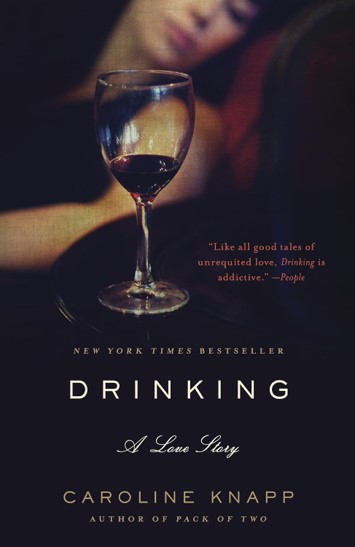
“I drank when I was happy and I drank when I was anxious and I drank when I was bored and I drank when I was depressed, which was often”.
Caroline Knapp exemplified the phrase “high functioning alcoholic”, until she didn’t. Like many others, her ability to work well delayed her decision to quit. This is another great lived experience book that may motivate you to explore your relationship to alcohol. Knapp, had been able to follow her own rules around drinking, and therefore avoid the consideration that she might have a problem. Through starting to explore her relationship with alcohol she realised that booze had become a great love affair, and like other affairs, it was not actually helping her be the version of herself she wanted to be..
Online and in Person support groups
Alcoholics Anonymous http://www.aa-hk.org
With more than 35 meetings a week in Hong Kong, this is the most famous alcohol recovery programme on the planet. This 12 step program includes all the great milestones of change management including support groups, mentoring, personal exploration and no judgement. Some people have reservations about elements of AA, but there is no denying the good that AA tries to do to support people recovering from problems with alcohol.
SMART RECOVERY https://www.smartrecoveryinternational.org/meetings
SMART recovery is an alternative to AA, and doesn’t involve the attachment to higher power which some people find hard about the AA process.
SMART RECOVERY is a global community of 3000 support groups in which participants meet weekly to help each other overcome the life challenges caused by any addiction (to drugs, alcohol and behaviours such as gambling). Using SMART (Self-Management and Recovery Training), they find the power within themselves to change and lead fulfilling and balanced lives guided by a science-based and a 4 point programme focused towards building the motivation to change, be able to manage cravings of addiction, managing the thoughts and behaviours attached to addiction and lead a balanced life. You can connect with Smart Recovery on Facebook and On Instagram.
One Year No Beer – http://www.oneyearnobeer.com.
One Year No Beer is a cessation programme that provides paid for support alcohol-free challenge options for one month, 3 month and 1 year programmes. Boasting over 55,000 members and plenty of tales from successful challenge completers, you can sample OYNB content on their Facebook page first to see if this is a good match for you. Many of the OYNB members take on positive health challenges aligned to their break from drinking, with added potential health benefits.
The alcohol experiment – http://www.alcoholexperiment.com
Attached to the Naked Mind platform, this 30 day free program (beyond that there is some cost) provides groups, mentors and advice how to move away from alcohol. Currently there are 35,000 users, and many success stories.
LifeRing – https://lifering.org/
LifeRing is a worldwide, peer-led community dedicated to helping individuals achieve freedom from alcohol and non-medically indicated drugs. Their approach centers on personal empowerment encouraging individuals to develop and strengthen their relationship to a sober self, creating to help maintain abstinence. Groups available online.
Face-to-face therapy: Counselling
You may start your exploration of your relationship with alcohol in a relationship directly with a counsellor familiar with addiction recovery. Sometimes individual counselling is a nice complement to support groups. Therapeutic alliance, ie how much you feel you fit with your counsellor, is a major factor in the success of your therapy, so shop around to find the right fit for you. RED DOOR offers addiction counselling for alcohol and substance misuse. If you’d like some more questions about the RED DOOR offering feel free to contact reception@reddoor.hk or WhatsApp 852-93785428.
About the Author.
Angela Watkins is a counsellor and psychologist working out of RED DOOR Counselling in Hong Kong. Angela has an interest in helping families and individuals with anxiety and depression. Sometimes drug and alcohol consumption is a component of those emotional challenges. You can feel better. Come in and talk to someone about it.
#reddoor #alcohol #alcoholdependence #alcoholrecovery #alcholicsanonymous #thecabin #oneyearnobeer #alcoholexperiment #thenakedmind #theunexpectedjoyofbeingsober #alcoholliedtome #girlwalksoutofabar #smartrecovery #pushingofffromhere #soberevolution #gloriousrockbottom #almostalcoholic #nothinggoodcancomefromthis.
 Start your Red Door Journey