
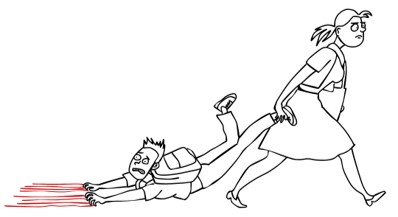
Probably every parent has encountered a morning when their child refuses to go to school. We try to convince our child to get their acts together, and get ready for school. Sometimes it works, sometimes it doesn’t. This is usually very stressful for parents. Now, imagine this happens every day.
What is school refusal?
School refusal is made up of a persistent pattern when a child is reluctant to attend school and remains at home and the parents know about this absenteeism. In most cases the child has had an episode which accompanies their refusal – including expressed fearfulness, throwing temper tantrums, or presenting with somatic illnesses, which possibly disappear when they are allowed to stay at home. Most parents have usually attempted to secure the child’s attendance at school and are not, initially at least, supportive of school absence (Heyne et al, 2013).
From an academic research perspective, school refusal requires a pattern of absence, adding up to above or near 10% of school days (Havik & Ingul, 2021). It is different from time missed from school due to truancy. Truancy involves absence without the parents awareness or consent (Heyne et al, 2013).
Before the COVID pandemic, school refusal occurred at a rate of 1 in 25 kids. It is suspected that since the since pandemic there has been increased absences in schools and growth of the number of children missing more than 10% of school days (Havik & Ingul, 2021).
School refusal poses a serious threat to a young person’s development because it affects their learning and achievement, places the youth at higher risk of dropping out of school completely, it places the youth at risk of becoming socially withdrawn, and can place the young person at greater risk of later mental health issues and/or developing other anti-social style behaviours (Henye et al, 2013; Havik & Ingul, 2021). So its not just a missed learning issue.
And as any parent will tell you, it is not just the child that is affected. School refusal can be a source of family stress and conflict (Henye et al, 2013).
Why does school refusal occur?
Looking at the academic research about school refusal we can identify the features about the refusing child, their family home, the school and the greater environment that may drive this behaviour.
About school refusers
School refusal occurs when stress within the individual exceeds support, when the risks to self are greater than resilience, and the factors that promote non attendance outweigh the factors that encourage attendance (Havik & Ingul, 2021).
Individuals refusing to go to school may have heightened fear of failure, low self-efficacy, and physical illness (Maynard et al, 2018).
Children’s anxiety is often a factor in their absence from school (Totsika et al, 2024). Anxiety disorders are present in about 50% of clinic referred youth exhibiting school refusal (Maynard et al, 2018). School refusal might be about avoiding school because it provokes such negative feelings such anxiety, depression, and distress (Havik & Ingul, 2021). For younger children the presence of separation anxiety may be a key component in their refusal to attend school (Roué et al, 2021). The correlation of mental health factors such a anxiety and depression may be a precursor or a maintainer of the refusal behaviours. Because of the mental health aspects, and the complication of understanding what is motivating a situations, versus what is maintaining a situation, professional help from a psychologist or experienced counsellor is paramount to support children displaying school refusal.
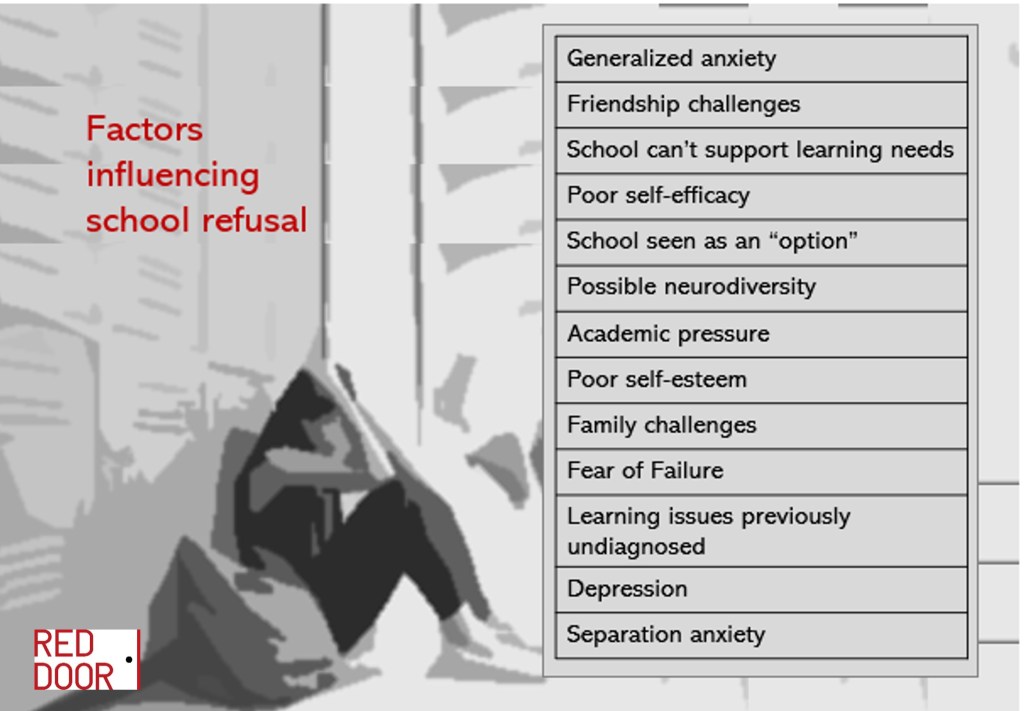
There is also the possibility that some of these emotional experiences are actually indications of underlying learning issues finally being brought into the light of day. Many children with learning issues find it possible to fake some form of learning progress, until the content that they are learning becomes too complicated for their compensation style behaviours or skills to fake learning any more.
Children who are neurodiverse – including those with dyslexia, dyscalculia, dysgraphia, ADHD, ADD, and autism – have a particular vulnerability to school refusal. It is suspected that in addition to internal anxiety and fears over failure, that school refusal may be due to a mismatch between the child’s needs and the schools ability to accommodate with appropriate learning adaptions (Totsika et al, 2024). Additionally, neurodiverse children may be more at risk of social exclusion at school, a school factor which drives school refusal (Totsika et al, 2024).
Age is an individual factor determining the severity of school refusal. Adolescents may see return to school to be solely determined by them rather than collaboratively with parents (Heyne et al, 2013) Teenagers are also more likely to be more physically capable of resisting parental efforts to return them to school. Therefor older children tend to present with more complicated cases of school refusal to treat, and cases with younger children are often easier to treat successfully (Heyne et al, 2013).
It is important to also consider what is happening after school has been avoided. School refusal might be about avoiding school in order to pursue another tangible reinforcements outside of school. For example children may be refusing to go to school in order to stay in bed, talk to friends outside of school (in different time zones), and to engage in gaming (Havik & Ingul, 2021).
What might be happening at home
School refusal might be about avoiding school to gain attention from others, particularly parents. Havik and Ingul (2021) suggest this might be the root of use of somatic illness as a method to refuse attendance at school. Other researchers highlight that family factors such as divorce of parents, individual parents mental health challenges, general family dysfunction and parents feeling overprotective of their children may be components of a child’s desire to refuse school attendance (Maynard et al, 2018).
This highlight the needs of professionals, and the school, to understand the home environment when attempting to build a school attendance plan to overcome lost learning as a consequence of school refusal (Roué et al, 2021).
School factors
The school itself may be a part of the school refusal puzzle. School factors include bullying, the structure of the school, and the level of schooling (Maynard et al, 2018).
The older the child, and the age of children in the school, the more complicated school refusal treatment can become:
“Socially and academically, the secondary school environment is more demanding than the primary school environment. This together with increasing importance of academic performance, peer influences, and identity formation during adolescence, can make it more difficult for school-refusing adolescent to overcome school refusal, relative to a school-refusing child”.( Henye et al, 2013)
School refusal might be about avoiding school to avoiding evaluation situations (Havik & Ingul, 2021) . Very academically aggressive curriculum may be more pressure than some children can bear. Additionally, schools may not be designed to meet the holistic needs, or learning needs of all of their members (Havik and Ingul, 2021).
The social world at school is also a challenge. Schools have a lot of difficulties managing bullying and exclusion and compromised relationships between children/ teens can be a factor in school refusal (Havik &Ingul, 2021; Henvik et al, 2015). Many teenagers in Hong Kong experience exclusion, and want to miss school as a reaction to their social difficulties at school.
In the wider environment
Societal pressure towards academic pressure may be a component in school refusal (Maynard et al, 2018). Pressure to perform well at school is common in Hong Kong, and is a factor in school engagement, and many other mental health challenges (Chyu & Chen, 2022).
During the COVID pandemic many individuals worked from, or studied from home. As with work, it it seems like the relationship with school became optional. This is not just affecting children, teachers also seem to feel this way (Havik & Ingul, 2021).
How do counsellors treat school refusal?
School refusal requires treatment, not just a plan, because of all the intricate forces that create the behaviour and perpetuate it, including ongoing mental health challenges. (Maynard et al, 2018). One element I want to highlight to parents is that school refusal treatment usually requires an evolving plan needs to involve the child, the parents and the school, and may take several weeks to implement successfully.
Counselling is recommended for school refusers. Family therapy is promising to help resolve school refusal (Roué et al, 2021). Cognitive behaviour therapy (CBT) styled treatments are usually recommended (Heyne et al, 2013).
A plan around sessions and discussion by a counsellor with a child or teen who has been refusing to attend school might include the following:
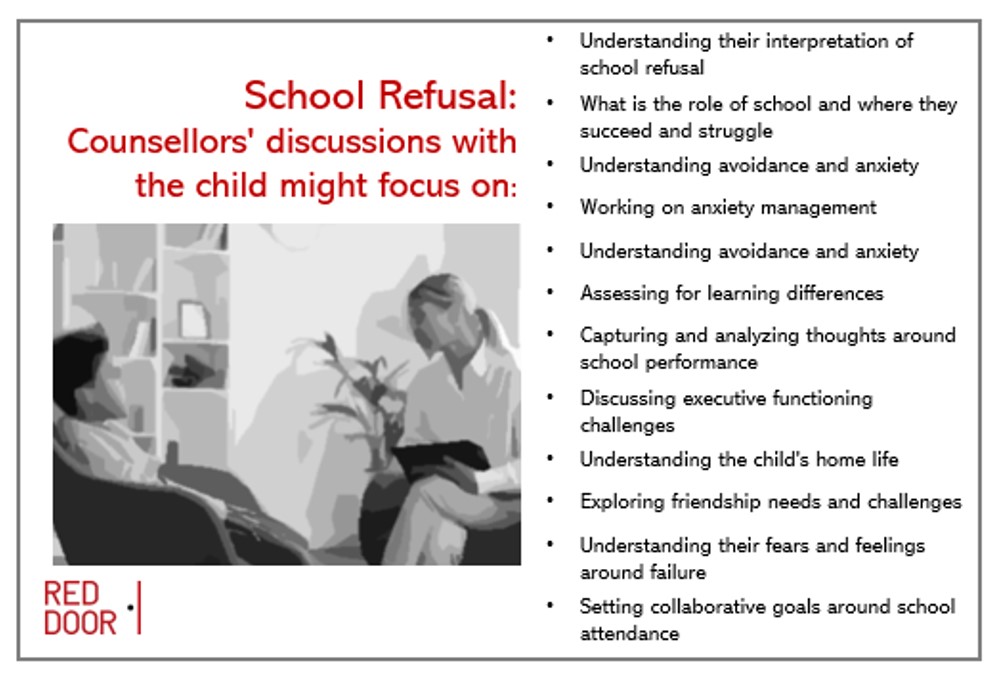
Similar discussions need to take place with parents.
School refusal has a major impact on families, and may stretch a parents’ vulnerability. Additionally, the degree of commitment of school personnel toward children with school refusal largely depends on their parents’ attitudes (Roué et al, 2021). Programmes need to have sessions including parents or family therapy sessions so that all concerns, barriers, learning and scheduling accommodations to discuss with the school, and the goals can be agreed. Family or parenting sessions could cover understanding the reasons and impact of school refusal, developmental expectations of the child, understanding what reinforces school refusal in the home setting (Maintenance), helping build new communication tools within the family, Helping parents build new responses to school refusal signals and behaviours and improving overall family dynamics (Heyne et al, 2013; Roué et al, 2021).
Counsellors may also work with the school, and family, to help explore the school’s ability to coordinate and organise around the requirements of the child at school including flexible scheduling, looking at means to overcome lost learning, help build in structures to support for anxiety, and build strategies around social difficulties the child may have been experiencing (Heyne et al, 2013). Unfortunately schools are organisations with limitations and sometimes accommodations can not be made, but many do as much as they can. In the end, sometimes a change of school may be required.
Special consideration for parents of school refusers in Hong Kong
In Hong Kong the typical school calendar is 190 days, so if thresholds to consider school refusal a problem is are usually around 10% of school days on offer, 19 days of missed school would be considered indicative of a school refusal problem.
Every day you encounter a school refusal issue, you might like to put the school refusal behaviour in context to this overall threshold. It isn’t just one day. Ask yourself, “If my child had to repeat a whole year if they miss 10% of the days, would you allow your child to stay at home?”
Remind yourself, and your child, what makes school worth attending and considering. Listen to your child, and see if you can summarize their arguments back to them. Remember, they might not want to tell you the whole story that they are struggling with learning of friends. Try to get to the bottom of what is going on, and consider professional help, such as a counsellor, to achieve this.
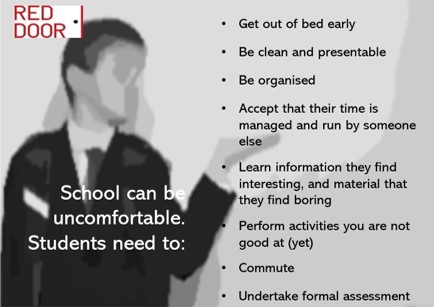
Please appreciate, some aspects of the school experience are uncomfortable. Think about what you want your child to become use to, rather than avoid, in the list of elements about school that can be difficult for them. Ask yourself you are able and willing to help your child navigate what they find uncomfortable.
Are you willing to make your child’s requests to stay home uncomfortable in different ways? Ask yourself are you willing to remove any excuses for them to stay home? For example, unless they are sick, the child can’t stay in bed all day. Would you be willing to remove their access to devices so that gaming to talking to friends online is not an option? Can you sit with your child whilst they do their schoolwork at home?
Schools in Hong Kong, do try, but probably need to do more, about bulling and exclusion. There is an attitude, especially among teenagers that they should be able to navigate these delicate social troubles on their own, without adult intervention, and we may need to assess if this is wise.
For neurodiverse kids school life may include exclusion and and bullying. This is not okay, but is quite common unfortunately. What supports exist at the school help your child navigate social situations? Some of these resources may be outside of school. For example, Red Door hosts a social social skills programmes on Saturday mornings, and many of our students consider that group of individuals their safe group of friends, rather than relying on school for close friendships.
Schools may find supporting your learning differences too difficult. Explore what they can and can’t do. Perhaps school may not be perfect, but it may be good enough for some of the time. Also consider what external supports could help to lighten the expectation on the school? This would also require schools to be more flexible on their attendance parameters. You may want to think changing school, but not before you have secured another spot for your child. Learning support spots at schools in Hong Kong are highly sought after, and limited.
One last note, treating school refusal can take time. Parents naturally want quick results, but this doesn’t happen immediately. I highly encourage you to seek the imput of an experienced counsellor or psychologist to help. I hope this article helps you better understand some of the nuances of refusing to go to school
About the author. Angela Watkins is a psychologist and counsellor working our of RED DOOR Counseling in Hong Kong. Angela works with children and families on a range of issues, including school refusal. To contact Angela email angelaw@reddoor.hk
References to this article.
Chyu, E.P.Y; and Chen, J-K; (2022) Associations Between Academic Stress, Mental Distress, Academic Self-Disclosure to Parents and School Engagement in Hong Kong. Front. Psychiatry, 14 July 2022
Havik, T; Bru, E; and Ertevåg, SK (2015) School factors associated with school refusal and truancy – related reasons for school non-attendance. Soc Psychol. Edu. Vol 18:221-240
Havik, T; & Ingul, J. M. (2021) How to understand school refusal. Frontiers in Education.
Heyne, D; Sauter, F.M.; Ollendick, T.H. Van Widenfelt, B. M.; and Westenberg, P. M. (2013) Developmentally sensitive cognitive behavioural therapy for adolescent school refusal: Rationale and case illustration. Clinical Child Family Psychology Review.
Maynard, B. R.; Heyne, D; Brende, K. E; Bylanda, J. J; Thompson, A. M; Pigott, T. D. (2018) Treatment for school refusal among children and adolescents: A systematic review and meta-analysis. Research on Social Work Practice. Vol 28(1).
Roué, A; Harf, A; Benioit, L; Sibenoni, J, and Moro, MR. (2021). Multifamily Therapy for Adolescents With School Refusal: Perspectives of the Adolescents and Their Parents. Frontiers in Psychology. June 2021.
Totsika, V; Kouroupa, A; Timmerman, A; Allard, A; Gray, K.M; Hastings, R.P; Heyne, D; Melvin, G.A; and Tonge, B. (2024) School attendance problems among children with neurodevelopmental conditions one year following the start of the Covid19 Pandemic. Journal of Autism and Developmental Disorders; Vol 54, 2998 -3007.
 Start your Red Door Journey