
If you have been feeling down, find out how to best manage the hormones that help us be happy.
Four hormones are associated with senses of happiness, pleasure and contentment. If you have been feeling low, you might like to explore if you are stimulating the production of these hormones in ways that improve your health. There are some lifestyle changes that can influence the release of these hormones, and hence how you feel.
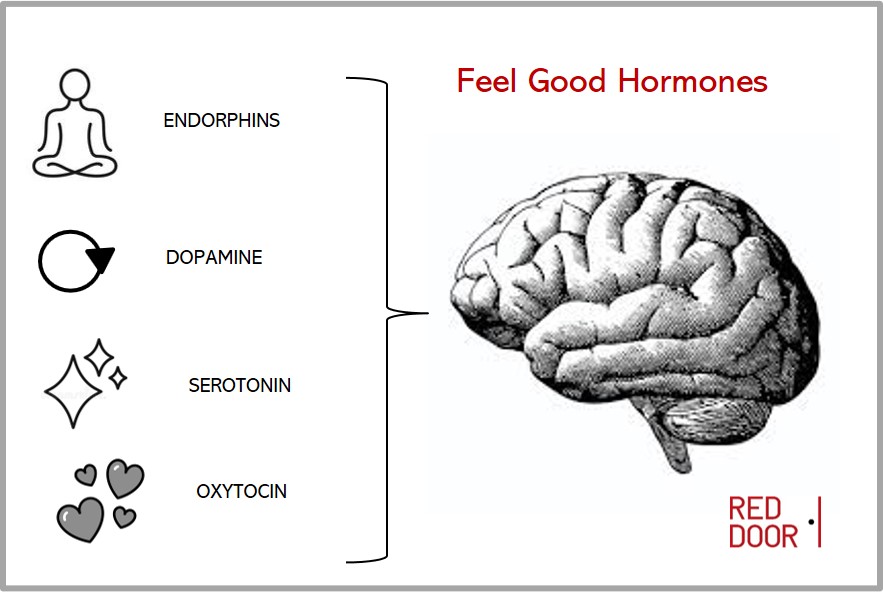
Hormones are chemical messengers, which, once released into your bloodstream, control many bodily functions, including how you feel. There are four hormones associated with feeling good: Dopamine, Serotonin, Endorphins and Oxytocin.
Dopamine is the hormone most associated with the feeling of pleasure and reward systems we set up in our brains. Pleasurable activities including eating, shopping, winning a game, sex can create a dopamine rush. Other substances can hack the production/ suppression of dopamine including drugs and alcohol, which can lead to addiction.
Dopamine plays a role in many bodily functions including mood, heart rate, movement, pain, blood vessel function, and sleep. One of the central tenants of Dr Anna Lembke’s book, Dopamine Nation [1], is that addiction associated with tech, gaming, drugs, and alcohol not only stop us from feeling good, because they hijack the dopamine cycle, they also mess with these other bodily functions such as mood, attention, sleep and sensations of pain.
If you are struggling to feel good, it has been suggested that you may need to go on a dopamine detox, take a break from activities that have hijacked dopamine production and utilize the activities that help manage the production and healthy release of dopamine. These activities include diet, sleep, and calming activities such as meditation and even listening to music.
Tyrosine is a an amino acid that is part of the production of dopamine. As such foods that are rich in tyrosine are recommended as part of a dopamine reset. These foods include chicken, milk, cheese, yoghurt, avocado, banana, pumpkin seeds, sesame seeds, and soy [3].
Ensuring that you achieve enough sleep is important to help keep your dopamine levels balanced. Dopamine both requires sleep, but also helps to establish healthy Circadian rhythms – the daily rhythms that regulate many biological processes [2, 3].
Calming practices such a meditation help to calm the body. Research indicates that individuals who meditate, even for one one hour, experienced increased levels of dopamine [4]. Even listening to your favourite song may increase dopamine levels. Listening to music seems to increase activity in areas of the brain which are rich in dopamine receptors. [5].
If you have been suffering from any form of addiction – to alcohol, to other substances, to food, even to tech – a dopamine detox might extremely helpful for you. To read more about this look into the book Dopamine Nation, which I highly recommend.
Serotonin is the hormone that helps people stave off depression. Serotonin helps regulate a person’s mood, sleep, digestion, memory and ability to learn. [6] Long term depression of often linked to a lack of serotonin which is why most common anti depressants, serotonin and norepinephrine re-uptake inhibitors (SNRIs), aim to increase serotonin levels in the brain.
Besides meditations you can increase your time in sunlight, or workout. Diet may also help to help increase serotonin.
Serotonin levels are stimulated by ultraviolet rays from the sun. Simply spending time outdoors, as little as 15 minutes may change your levels of serotonin [3]. Working out is good for your hormone levels. When you exercise your body releases tryptophan, the amino acid used to produce serotonin [3,6].
Diet may contribute to serotonin production. It is suggested the complex carbohydrates such as vegetables, fruits and whole grains have been suggested to help [3].
Oxytocin can help us bond with loved ones. Its main function is to facilitate childbirth, sexual arousal and it plays a role when we fall in love. This is why Oxytocin is sometimes referred to as the “love hormone”. The release of oxytocin decreases stress and anxiety. The presence of oxytocin helps us feel relaxed. when oxytocin levels are low, people can become depressed [6]
medical treatments aiming to stimulate oxytocin have not yet been demonstrated as successful. Therefore the most promising route to improve your oxytocin levels is through physical touch and exercise. Physical exercise, especially cardio is extremely positive [6]. Touch, even soft touch such as massage may be helpful to improve oxytocin levels [6].
Endorphins are the brain’s pain relief hormone. Endorphins are released when we feel stressed, or are put under strain. In addition to helping individuals with pain, they also essential for stress management and general mood [6].
There are many ways to increase the production and release of endorphins including exercise, sex, laughing, time in sunshine, and meditation.
Exercise, even moderate seems essential to release endorphins. Putting the body under strain, such as that mimicked by exercise helps the body learn to manufacture and release endorphins [3].
People often feel blissful after having sex and endorphins are part of this sensation. They also promote the release of other hormones that are associated with feelings of love [6].
Having a great time with friends and enjoying a good laugh together is joyful. Endorphins are released when we are laughing. So go ahead and organise a gathering with some fun people.
If you have been feeling out of sorts, or a bit blue, I would recommend that you explore the types of activities that stimulate the production of feel good hormones. If your blues persist, please consider therapy or consulting a doctor to help you write a plan to battle your moods. You do not have to suffer alone.
To read more
[1] Lembke, D. (2021). Dopamine Nation: Why our addiction to pleasure is causing us pain. Headline Publishing. London.
[2] Korshunov KS, Blakemore LJ, Trombley PQ. Dopamine: A Modulator of Circadian Rhythms in the Central Nervous System. Front Cell Neurosci. 2017 Apr 3;11:91
[3] Dacre, Ameri. (2023). The dopamine connection: Maximise your potential with sleep, nutrition and brain health.
[4] Kjaer, T.W; Bertelsen, C; Piccini, P; Brooks, D; Alving,J; & Lou, HA. (2002). Increased dopamine tone during meditation-induced change of consciousness. Cognitive Brain Research. Volume 13(2), pages 255-259.
[5] Koelsch, S. (2020) A coordinate-based meta-analysis of music-evoked emotions. NeuroImage, Vol 223, December.
[6] Watson, S (2024) Feel-good hormones: How they affect your mind, mood, and body. Harvard Health Publishing. https://www.health.harvard.edu/mind-and-mood/feel-good-hormones-how-they-affect-your-mind-mood-and-body
 Start your Red Door Journey