
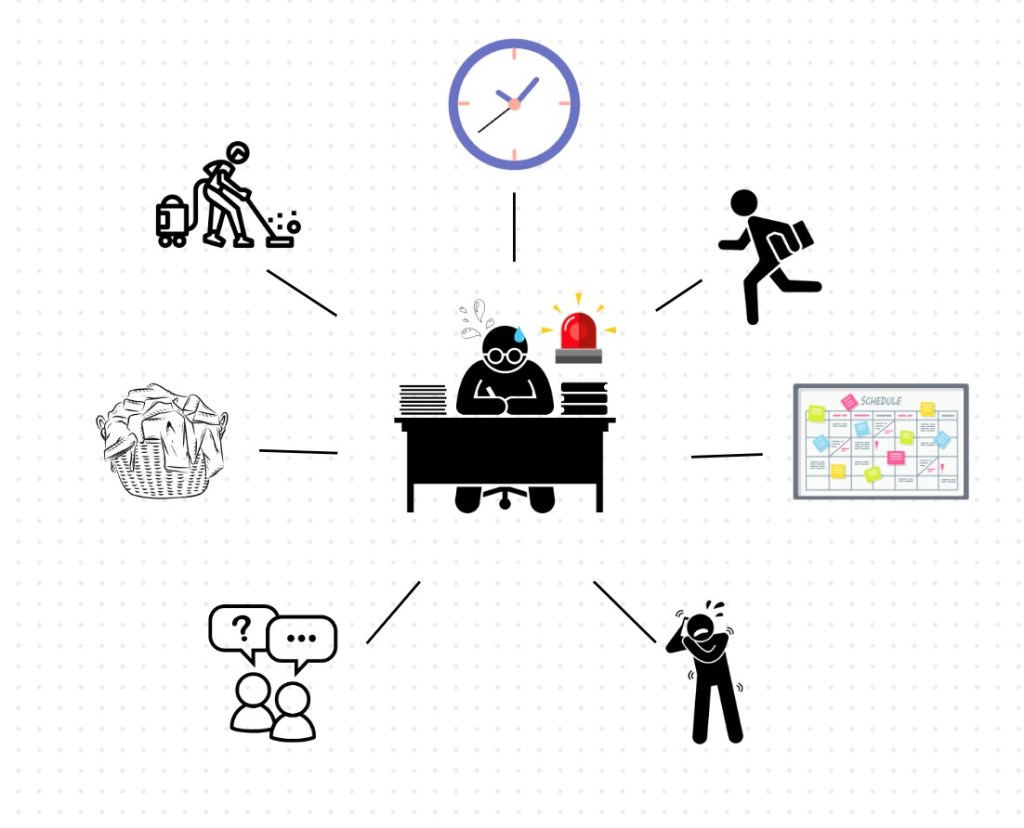
Have you ever experienced the allure of the “busy” temptation? Just as the siren’s call can be hard to resist, the idea of being “busy” can be equally enticing – whether to express significance, escape undesirable tasks, or maintain an image of productivity. This trap of busyness then ensnares people, leaving them in a cycle of constantly needing to appear and declare themselves as “busy.”
In today’s fast-paced society, being constantly occupied is often seen as a badge of honor that people wear proudly, using their busyness to boast about hectic lifestyles. However, some may also utilize the “busy” persona as a form of escapism. It appears some of us cannot get enough of the “busy” character. Does this sentiment resonate with you? If so, you are not alone. The tendency to use “busy” to show off or as a means of avoidance is quite common, more so than many realize.
Employees who were uneasy about their work performance were more prone to exaggerate their busyness and workload to influence how others perceive them (Whillans & Dunn, 2018). But here’s the thing: this desire to appear busy can spin out of control, leading to a vicious loop of constantly feeling rushed. There seems to be a prevailing notion that the busier a person is, the more accomplished they are in life, and people often use the “busy” label casually, even if they are not genuinely occupied. This casual usage can color others’ perceptions of that person’s life, making it appear more vibrant or hectic.
According to Ma (2022), individuals may use busyness as a way to avoid addressing more profound emotional or psychological needs. This constant state of activity can serve as a distraction, helping people feel better about themselves or providing a sense of worthiness and value. In the case of chronic busyness, it’s essential to slow down and reflect on what might be driving this compulsive behavior.
Signs of Busyness Addiction
Nowadays, it’s all too easy to become consumed by an endless stream of obligations and commitments. We find ourselves caught in a whirlpool of busyness, frantically juggling work, deadlines, family responsibilities, and a never-ending to-do list. This “hustle life” that we are chasing can lead us down a path of overcommitment, where the fear of letting others down or not meeting expectations drives us to go beyond our means.
Ask yourself, do you have an inability to say “no”? Does your calendar fill up faster than you can cope with? An addiction to busyness often manifests as a compulsive need to say “yes” to everything, leaving no time for rest and recovery. The incessant need to fill our schedules, respond to every email, and juggle multiple tasks has become a cultural norm (Matejko, 2022).
If any of this sounds familiar, it may be time to examine busyness’s role in your life. Are you may be using it as a shield against vulnerability? A way to avoid dealing with difficult emotions or stressful situations? Research has shown that people often use excessive busyness as a way to avoid and repress their negative feelings, which can eventually manifest as anger, irritation, and other detrimental thought patterns (Schrader, 2014).
We even wear our overflowing schedules and never-ending to-do lists like a form of armor, convincing ourselves that the more we pack into our days, the more productive and valuable we must be. However, this relentless pursuit of productivity and activity can have serious consequences, including exhaustion, anxiety, burnout, and strained relationships.
Your busyness might manifest in scenarios like:
- Your co-worker asks you to cover their shift, even though it’s your scheduled time off. You feel compelled to say yes, even though it means sacrificing your personal plans.
- A classmate misses a group project meeting, so you stay late to pick up the slack and ensure the assignment is completed on time.
- Your friends request a last-minute gathering, and despite your already packed schedule, you squeeze in a hurry to avoid disappointing them.
Prioritizing others’ needs over our own well-being can be a hallmark of being stuck in “hustle mode.” Saying “yes” to every request leaves us overwhelmed and stressed, unable to regain control. Very often, the fear of letting people down becomes so ingrained that it feels nearly impossible to break free.
Finding Balance
Saying “no” is not a curse that will bring calamity but rather a powerful tool that can enable you to understand and escape the clutches of relentless busyness. By incorporating some simple yet transformative techniques, you can break free from the cycle of relentless busyness and rediscover the joys that a more balanced life can offer.
Here are some strategies that counsellors recommend:
Practicing mindfulness
The constant demands of work can drive a toxic cycle of trying to prove worth through relentless productivity. Practicing mindfulness activities like breathing exercises, yoga, and meditation can help cultivate present-moment awareness. These practices help break free from the hamster wheel of to-dos and live in the present moment rather than getting caught up in judgment.
Prioritizing self-care
In our productivity-obsessed culture, it’s easy to neglect self-care. Yet dedicating “me time” is essential for well-being. Self-care doesn’t have to be grand – it can be simple, enjoyable activities like getting your nails done, taking a bath, or reading. The key is to relax and do something nurturing for yourself. This allows us to step back, reflect, and process experiences while healing from mental/physical exhaustion and giving our brains a much-needed break.
Cultivate self-awareness
Having self-awareness is highly valuable than you might think. One practical way to enhance self-awareness is by incorporating a habit tracker into your daily routine. Habit trackers can be valuable, allowing you to monitor your progress and gain insights into your daily habits. Taking time to reflect and re-evaluate your days or weeks can help you recognize when you need to take a break and hit the “pause” button.
Setting boundaries
It’s easy to get caught up in the relentless pursuit of impressing others, constantly pushing ourselves harder until burnout sets in. The next time you feel that pull to overcommit, pause, assess your priorities, and have the courage to set boundaries. Your mind and body will thank you.
Some highly recommended books on setting effective boundaries include Healthy Boundaries – Chase Hill & ‘Boundaries: When to Say Yes, When to Say No, to Take Control of Your Life’ – Dr. Henry Cloud. These books offer practical guidance on identifying, communicating, and maintaining healthy personal boundaries across different areas of life.
Journaling
Keeping a diary is a disciplined way to reflect on your thoughts, feelings, and experiences, gaining deeper insights into your emotions, behaviors, and cognitive patterns. This self-awareness can help you understand your motives, triggers, and growth potential.
When counselling might help.
There’s no such thing as a perfect moment to seek counselling, but taking that first step towards reclaiming your sense of control and peace of mind can make a difference. Stress is an unavoidable part of life – it’s our adverse reaction to the excessive pressures and demands we face daily. Whether it’s work, relationships, or personal challenges, feeling constantly overwhelmed can seriously affect our mental and physical well-being.
Seeking counselling can be a means of expanding your perspective and understanding yourself better. Engaging in counselling can help you gain new insights and make positive changes in your life. Through open and judgment-free dialogue, you can gain the self-awareness and tools needed to manage stress healthier and more sustainably.
In a world that values constant activity and productivity, it’s crucial to recognize the dangers of addiction to busyness. By understanding the psychological and neurological factors behind this phenomenon, we can take steps to find a healthier balance and truly thrive. While the allure of busyness may be strong, the rewards of a more balanced life are well worth the effort. Thus, the question remains: what does “being busy” mean from your perspective?
About the author
This blog post was written by Chanuja Gurung , a summer intern at Red Door. Her areas of interest include the topic of busyness and the counselling processes that can help cultivate self-awareness in individuals. She is a thoughtful and curious person who enjoys working with others. Due to her desire to broaden her horizons, she continually seeks new avenues to expand her knowledge and deepen her understanding of the intricate challenges faced by people due to their own unique forms of busyness. Thus, through her blog, she aims to reach out and connect with others, with the ultimate goal of helping to improve their lives.
References
Ma, L. (2022). The internal chaos of chronically busy people. Psychology Today. https://www.psychologytoday.com/intl/blog/psychoanalysis-unplugged/202207/the-internal-chaos-chronically-busy-people
Matejko, S. (2022) Are you keeping busy to avoid your feelings?, Psych Central. https://psychcentral.com/blog/are-you-keeping-busy-to-avoid-your-feelings
Schrader, M. (2014). The hidden addiction: How busyness can become a coping mechanism. Psychology Today. https://www.psychologytoday.com/us/blog/the-art-thriving/201411/the-hidden-addiction
Stress | How counselling can help. https://www.bacp.co.uk/about-therapy/what-therapy-can-help-with/stress/
Whillans, A. V., & Dunn, E. W. (2018). Valuing time over money is associated with greater social connection. Journal of Social and Personal Relationships, 36(8), 2549–2565. https://doi.org/10.1177/0265407518791322
 Start your Red Door Journey