
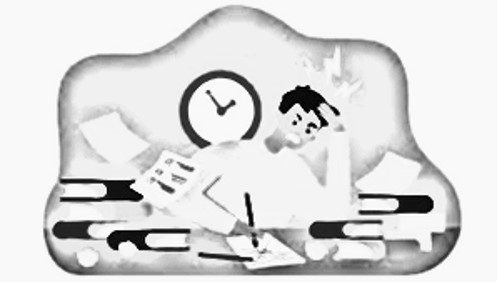
To the great dismay of students and parents alike, exam season comes for us all, and with it comes exam stress. But what is exam stress? How can we recognise when it’s unmanageable? What can we do when it is unmanageable?
Exam stress in itself is not abnormal; exams can be scary! Emotionally, it can be difficult to deal with feelings of stress, anger, and hopelessness. Furthermore, it can become more troublesome when it manifests physically as headaches, changes in eating habits, difficulty sleeping, difficulty focusing, etc. So, how can you, as a student, get ahead of the curve or cope with the symptoms as they come?
In terms of getting ahead of the curve, figuring out how you best study and how to study efficiently can be invaluable. There are several kinds of study habits you could try, such as the pomodoro technique 1, eating the frog 2, and more, paired with different study techniques such as blurting 3, flashcards, mind maps, Feyman technique, and other ways 4 you may find most comfortable studying.
To cram or not to cram? For some, cramming can be helpful. Active procrastination can allow you to procrastinate so that you use motivation under time pressure to complete tasks or deadlines efficiently. However, cramming can also be harmful. Cramming late into the night, taking away your sleep, and overloading your brain the night before an exam can end up making you feel worse going in and could negatively impact your performance relative to if you spaced out your learning. On occasion, such as the night before a test, cramming is understandable and fine, but cramming during an exam season is unsustainable and unwise. If you do find you work better or complete tasks more efficiently under a time constraint, see if you can set yourself deadlines for the end of the day or week throughout the studying process if that’s what works best for you.
When it comes to actually coping with stress, there are different ways of doing so, such as problem-focused and emotion-focused coping. Problem-focused coping involves investing effort in studying or, if you’re really struggling, speaking with a teacher to see how they could help or how you could improve. Emotion-focused coping involves reducing stress by attempting methods of relaxation. Both coping skills can be helpful, as problem-focused can allow you to get a better handle on what you may need to do more effectively, while emotion-focused can allow you to soothe yourself so you can be more comfortable throughout exam season.
So, what are ways to cope with examination stress?
- Mindfulness strategies such as meditation or breathing exercises
- Getting proper sleep can positively impact both your grades and your health in general. About 8-10 hours is recommended.
- Getting exercise can not only provide a break but can also work for stress relief. Said exercise doesn’t necessarily have to be intensive either, going for a 10 minute walk can be beneficial.
- Make sure to take breaks. As previously mentioned, spacing out your studying can be good for your learning but it can serve as an energy boost or allow you to step away from the focus-oriented environment of wherever you’re studying to a more comfortable one.
Other than getting enough sleep, you don’t have to pressure yourself to fulfill every possible coping mechanism. What’s important is dealing with the stress in a way that is not only healthy but also works for you. If distancing yourself from your study environment for a bit every day to watch a show or read helps you, then go for it.
Coping doesn’t have to be an isolated process, it can involve reaching out to teachers, parents, or your friends. How can you do this?
- Asking teachers what areas you specifically need to improve on. This can help you structure your studying so that you’re prioritizing correctly while still keeping foundational knowledge you may already have.
- Studying with friends can help you connect with others while helping you be motivated to study within the group. However, communication is also needed to establish how long you’ll all be studying for, how focused you need to be, etc.
- Keeping an open line of communication with your parents on how they can help you cope. At the end of the day, your parents want to help you and make sure you’re getting stuff done. So, you could tell them how to help you, for example, giving them your phone so you’re less distracted can indicate to them that you’re spending your time wisely. You could also tell them what will stress you out more, such as asking about how long you’ve studied, this way they can adjust the questions they ask and what to push instead of that.
Overall, like exams, coping with stress can be difficult, especially when figuring out how to get started. Establishing effective and efficient study habits early on can be really helpful in terms of knowing that, despite the stress, you know what works best for you and that you’re doing what you can. Coping with the overall emotions of anxiety can be difficult, but you’re allowed to struggle and be unsure. Be kind to yourself in this stressful time. Parents can be of great help through communication, let them know when you’re struggling and if or how they can help.
Finally, remember that exams are not inherent tests of your worth or intelligence. You got this, good luck!
Resources
Health Information Tips for DSE Students:
Coping with Exam Stress – Harrow
About the Author
This blog is written by Micaiah Boerner, a 2024 summer intern at Red Door.
- https://www.asundergrad.pitt.edu/study-lab/study-skills-tools-resources/pomodoro-technique
- https://asana.com/resources/eat-the-frog
- https://www.bcu.ac.uk/exams-and-revision/best-ways-to-revise/the-blurting-method#:~:text=Blurting%20involves%20writing%20down%20all,ve%20missed%20or%20got%20wrong.
- https://www.usa.edu/blog/study-techniques/
References
Asana. (n.d.). Why you should eat the frog first [2024] • asana. Asana. Retrieved July 17, 2024, from https://asana.com/resources/eat-the-frog
Buchwald, P., & Schwarzer, C. (2003). The exam-specific strategic approach to coping scale and interpersonal resources. Anxiety, Stress & Coping, 16(3), 281–291. https://doi.org/10.1080/1061580031000095434
harrowdev. (2023, December 7). Exam stress: Understanding its impact and ways to cope with it. Harrow International School Hong Kong. https://www.harrowschool.hk/exam-stress-understanding-its-impact-and-ways-to-cope-with-it/
How to reduce test anxiety. (n.d.). Mayo Clinic. Retrieved July 12, 2024, from https://www.mayoclinic.org/diseases-conditions/generalized-anxiety-disorder/expert-answers/test-anxiety/faq-20058195
How to revise with the blurting method. (n.d.). Birmingham City University. Retrieved July 17, 2024, from https://www.bcu.ac.uk/exams-and-revision/best-ways-to-revise/the-blurting-method
Kornell, N. (2009). Optimising learning using flashcards: Spacing is more effective than cramming. Applied Cognitive Psychology, 23(9), 1297–1317. https://doi.org/10.1002/acp.1537
Mozafaripour, S. (2024, June 6). 10 effective study tips and techniques to try this year | usahs. University of St. Augustine for Health Sciences. https://www.usa.edu/blog/study-techniques/
Pomodoro technique | dietrich arts & sciences undergraduate studies. (n.d.). Retrieved July 17, 2024, from https://www.asundergrad.pitt.edu/study-lab/study-skills-tools-resources/pomodoro-technique
Spangler, G., Pekrun, R., Kramer, K., & Hofmann, H. (2002). Students’ emotions, physiological reactions, and coping in academic exams. Anxiety, Stress & Coping, 15(4), 413–432. https://doi.org/10.1080/1061580021000056555
Stress. (n.d.). Retrieved July 12, 2024, from https://www.who.int/news-room/questions-and-answers/item/stress
Tesorero, A. (2023, March 17). A good night’s sleep can help students get better grades, say UAE doctors. TCA Regional News Retrieved July 12, 2024, from https://www.proquest.com/wire-feeds/good-nights-sleep-can-help-students-get-better/docview/2787623647/se-2
The science of cramming: Does it work? (2022, May 11). USD Student Media.
Why you shouldn’t cram before exams (And how to study properly instead). (n.d.). Retrieved July 12, 2024, from https://au.reachout.com/study-work-and-money/exam-stress/why-you-shouldnt-cram-before-exams
Zeidner, M. (1995). Coping with examination stress: Resources, strategies, outcomes. Anxiety, Stress & Coping, 8(4), 279–298. https://doi.org/10.1080/10615809508249379
 Start your Red Door Journey