
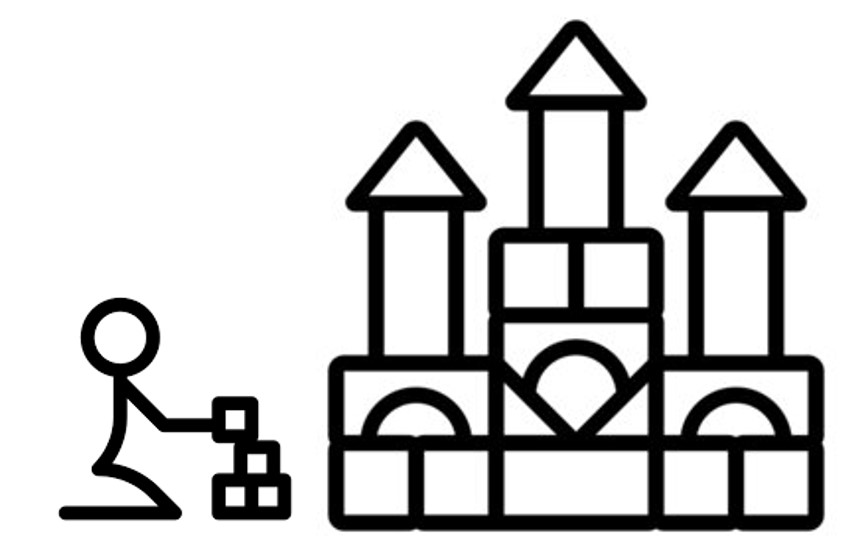
You might be surprised by the positive impact of a few small changes, or exercises, and how they may generate changes in how you react to the world, and therefore your mental health.
Sleep
When a new client comes in for a session, one of the first questions I might ask them is, “How are you sleeping?”
We each need 8-10 hours of sleep a night but few of us get that amount. Sometimes people brag about only needing 5 hours a night. Paradoxically these people are often snappy with colleagues. That is not a coincidence. To be able to be calm, we need to be well rested.
Sleep debt is a key ingredient of burnout. Burnout is a condition characterised by feelings of exhaustion or depletion, negative affect towards one’s job and feelings of dissociation.
Luckily the human species can catch up their individual sleep debt at the weekend, but this burnout-crash out cycle is not good for your health in the longer term.
Breathe
The implementation of calming breath techniques can help us calm down in the early steps of anxiety.
I personally use box breathing/ 4 Square techniques myself and with clients when I see their anxiety build up in session.
Regular use of breathing techniques won’t erase your anxiety, but it will help, in the short term, to elevate some the symptomology. That way each individual incident when you feel anxious, might be better managed.
Talk
Possibly you’ve heard “you should talk to someone”, and maybe you should. Thoughts expressed verbally create different reactions than those maintained inside the privacy of your head. When you feel overwhelmed reach out to a friend, colleague or professional to talk. People can’t know what you don’t communicate so share your experiences, the good and the difficult. People would rather give you a hour of their time, than have you suffer in silence.
Obviously, I am a big believer in the benefits of counselling (also referred to as talk therapy). Research also supports counselling with all types of populations – from stressed out professionals, to youth, to older people, to couples in conflict. Client – therapist rapport; how well the two-perspective work together, is essential for the best results.
So, if you have a negative experience with a counsellor in the past, consider that it was maybe simply a therapist – client mismatch rather than a testimony if counselling will work for you or not in the long term.
Focus on what matters
In an era of Instagram, you may find yourself comparing yourself to others, constantly building a larger and larger “to do list of things you believe you ‘should’ be doing in your life. .
Let’s try the opposite. By learning about your key values and what matters most to you can ‘let go’ of all the superfluous “to do”s that you’ve written in your life.
In counselling we use values checklist to start a discussion about who you are use family exercises to help you identify your key life goals as well as what you want or need to avoid. You can do some of the work yourself reading some coaching focused webpages, or talking with a counsellor.
Once you know what matters, can identify what attractions are really just ‘noise’ and have a stricter road map of who you are and want to be you will feel more able to prioritize your time more effectively. In counselling we use a few techniques to help refine what you want, from what is really essential for you to achieve. Sorting the ‘wants’ from the ‘musts’, helps people prioritise their time and energy.
Habits
Small habits soon accumulate into meaningful behaviours change. If you start a small habit change today, or even a medium habit, and keep at it you can accomplish great change in your life.
As derailed in the famous James Clear book. “Atomic habits”, the compounding effect of small chapters are amazing.
One technique I use frequently in counselling is “don’t break the thread.” Once you have decided on a small change imagine yourself add up a bead to a thread/string. Every day you add a bead to the thread and don’t break the thread. Otherwise, you need to start collecting beads from zero again.
This counting behaviour is the basis of many sober apps (e.g. I am sober) help you track a number of cessation behavioural changes.
How long does it take to form a habit. When we discuss this in counselling sessions, I recommend you plan for 3 months, or 100 days for real change to occur. You will truly feel different than if you only tackle one month of change.
Gain flexibility
The greatest small change you can help yourself with is to start training yourself towards greater cognitive flexibility.
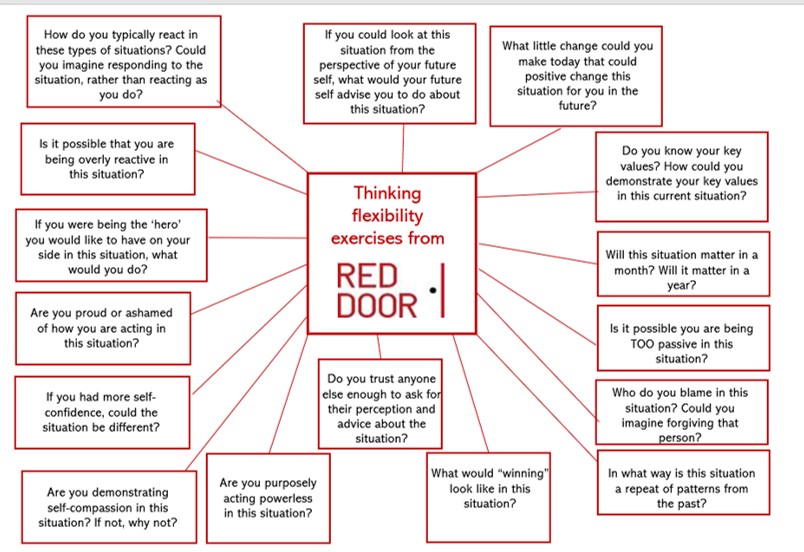
Cognitive flexibility describes the ability to adjust your thinking to view and interpret situation from different perspectives. When we are inflexible, even rigid, we tend to construe situations as black and white, right and wrong, perfect or unacceptable. .
Being flexible is different from overthinking or second guessing a situation.
When we are working to be flexible, we first need to understand that in every situation we are telling ourselves a narrative. It is helpful for you to consider starting the description of any situation with the phrase, “the story I am telling myself” so that you can better appreciate that you are indeed, telling yourself a story.
Our personal narratives have significant power. When we continuously tell ourselves, ”You are stupid”, or, “You are not as good as other people” we poison our hope in ourselves. When you start to listen the narrative of your inner voice you may be surprised by how harsh that voice actually is. You have probably spent years allowing this inner critic to hold court, and pass down judgement within your head. You deserve the chance to set yourself free from your inner tyrant.
Some people might swing between feelings of superiority and inadequacy. This experience of pendulum self-esteem is unhealthy. You are not the best, or the worst. Accepting that you have strengths, and weaknesses, and are still ENOUGH, is freeing.
A key component of being cognitively flexible is to understand that you will understand that you may feel differently about a given situation, when you look at it from different perspectives.
For example, you could be urgent about on incident that happened today at work/ school. If I and you, “Will this indecent still upset you in a year?”, you may automatically start to perceive the importance of such an incident differently. Suddenly you are reminded that the humiliation or anger that you feel today will not last.
There are a number of questions that help build cognitive flexibility. You don’t have to talk through these questions with anyone else, but it can be helpful if you are open to exploring how tightly you hold onto certain narratives rather than exploring different perspectives.. Counsellors who focus on building cognitive flexibility may ask you some of the questions below.
A few questions that build cognitive flexibility.
- What would “winning look like in this situation?
- Will this situation incident be as important in a month?
- If you had more self-compassion, could you approach this situation differently?
- Is it possible you are over reacting in this situation?
Sometimes we have too many thoughts and we need to think less. As is the case with overthinking. A specific type of overthinking is rabbit warren thinking. In this situation, you fall from are “what if” catastrophic chasm to another. People who are guard at risk mitigation in their day jobs are often very good, and well trained, to develop this type of thinking. A type of thinking that might be helpful in one circumstance, can be problematic in another.
Sometimes when we have too many “what if” questions we need to find a way to think less. In order, to do this I work with clients to remind them to have the confidence that they CAN respond almost every situation. Therefore, you don’t need to constantly worry about identifying the situations in advance. Sometimes we can navigate our way to calm from wherever we land, we just need to have the confidence in ourselves to respond constructively.
Instead of worrying, “What if?”, you can simply tell yourself, “No matter what, I can respond”
Write
When is doubt, write. In am a strong proponent of journalling. I recommend journals with prompts over simply writing an account of your day.
Prompted journals provide a pathway to a deeper understanding of yourself. When we write out our thoughts, we give our brains that opportunity to see our thoughts on paper. This distance allows us the chance to utilise perspective building exercises.
Responding to prompts is a great method to help us build greater cognitive flexibility around incidents in our lives. Sometimes it helps to look at events that have hurt us, in challenging ways. Perhaps even find what we learnt from such situations. This doesn’t mean that we weren’t hurt, or that others have not been careless with our feelings, but also empowers us to take charge of the outcome of situations.
I hope you can consider to take up a challenge, to highlight one or two of these small changes. I promise you, it will have a big impact on your mental health.
—–
Note: part of this content was previously shared as a speech at an event for the the musicians foundation in March 2024.
#change #habits #sleep #creatingcalm #counselling #counseling #talktosomeone #valueschecklist #cognitiveflexibility #perspective #reflection #journalling
About the author: Angela Watkins is a counsellor and psychologist working with adults and teens. Angela has been named best therapist in Hong Kong. To contact Angela for an appointment email angelaw@reddoor.hk or message +852-93785428.

 Start your Red Door Journey