
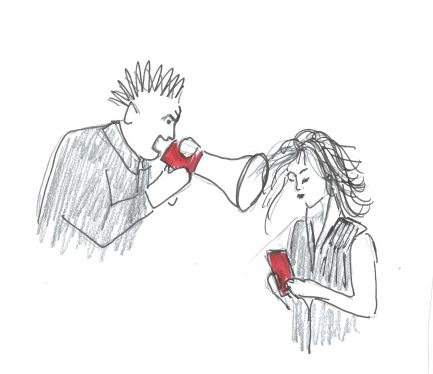
Teenagers Are Not Aliens
While it may sometimes feel like your teen is from another planet, adolescents are not, in fact, an alien species. They are, more simply, a misunderstood one.
If your teen is under 18, legally, they are still a child, and you are responsible for guiding them. As uncomfortable as it might be, take the lead, take control, and help them navigate this challenging stage until their brains are fully developed and capable of independent reasoning.
Understanding the Teen Brain
To truly understand teenagers, it’s essential to understand their developing brains. Until recently, society considered teens as “little adults,” but as detailed in The Teen Brain by Frances Jensen and Amy Ellis Nutt, this is far from the truth.
From a neurological perspective, the teen brain is only about 80% mature. The finely tuned connections in the brain’s wiring are still forming. During this period, their brains are highly receptive to learning and excitement. The neurons at the back of the brain, responsible for sex and excitement, are well-connected, but the frontal lobes—crucial for rational thought, self-awareness, risk assessment, abstract thinking, and planning—are still developing. Jensen likens the teen brain to a sports car that’s revved up but has nowhere to go.
Teens are also expanding their knowledge base, in a phase characterized by great plasticity, offering significant opportunities for growth and learning. However, this open brain is also more responsive to dopamine—the neurotransmitter that makes us feel good and fuels desire, often leading teens to seek out stimuli that boost dopamine levels, like alcohol and drugs.
The Teen Personality: Excited, Curious, and Irrational
Putting it all together, a typical teenage personality can be described as highly excited, often learning easily but struggling to articulate themselves, resist stopping an activity, or see things from another person’s point of view. It’s like a second “terrible toddler” stage.
One memorable example from a recent event involved a parent, an early childhood educator, who said, “I suddenly realized that my teen daughter, who was acting rude and obnoxious, wasn’t looking for a fight. Like a toddler, she was seeking comfort. When I offered a hug, she collapsed into my arms like she did when she was little.”
Tips for Navigating the Teen Brain
Here are some recommendations to consider when communicating with and supporting your teen:
1. Create a Time to Talk
Don’t assume your teen is ready to engage just because you are. Set a specific time for conversations and give them space for silence—remember, “Silence is never silence,” as Irvin Yalom notes.
2. Get Real with Facts and Stories
Teens respond best to concrete data and relatable stories, especially when discussing sensitive topics.
3. Prioritize Sleep
Sleep is vital—teens need at least 8.5 hours nightly to support brain development and stress relief. If they need to wake at 7 am, they should be in bed by around 10 pm, with devices turned off by 10 pm.
4. Use Reinforcement and Support Memory
Since planning and memory are still developing, have your teen write down tasks and repeat instructions to reinforce learning.
5. Limit Distractions
Teens are not great multitaskers, and their easily excitable brains are prone to distraction. Limit messaging, videos, and other distractions during study time. Recent research suggests over 80% of teen driving fatalities involve some form of distraction—often their phones.
6. Help Install the OFF Switch
Teens find it hard to stop activities due to dopamine sensitivity. Teach them to turn devices off and set boundaries on screen time together—discuss and agree on appropriate limits.
7. Perspective Matters
Because self-awareness is still developing, teens may misinterpret your tone or intentions. Be mindful of how they perceive your communication, and ask whether they understand and feel understood.
8. Prioritize Safety
As outdoor activities increase, revisit safety practices with your teen, especially regarding socializing, alcohol, and drugs. Explain how their teen brains are sensitive to substances and work out safety plans. Role-play scenarios, like recognizing when a friend has had too much to drink, and encourage them to seek help when needed.
9. Discuss the X-Plan
Consider talking through options like the “X-plan”—a safety plan designed for emergencies—so your teen knows how to handle difficult situations.
Final Thoughts
I could go on about communication techniques, but I’ll save that for another time. Parenting a teen can be challenging and lonely—but also full of shared laughter and growth. In our workshops, parents often find comfort in knowing they’re not alone in the frustrations and joys of raising teenagers.
Keep striving to understand and support your “alien-teenager.” Remember, we’re all in this together.
I could write even more about effective communication techniques with teens but I’ll save that for another blog. Parenting a teen can be challenging and even lonely, I noticed in our regular parenting-a-teen workshops that the empathy and frustration that the parent-participants shared, and the laughter as well. Keep going in your search to understand and best support your alien-teenager, and remember, we are not alone.
#parenting
#parenthood
#parentingtips
#raisingteens
#postiveparenting
#parentingteens
#parentingadvice
#teenager
#parentofteen
#reddoorcounselling
Note – an earlier version of this article was published in 2019.
 Start your Red Door Journey