
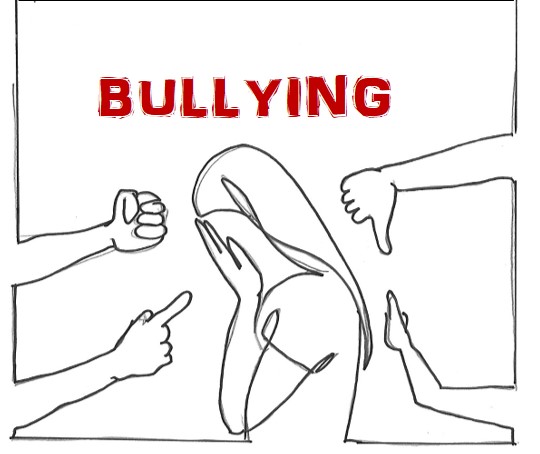
Many adults still experience the pain and anxiety associated with bullying incidents from their past. Why can’t they just get over it.?
The effects of bullying are not left behind at school:
When we explore books on bullying (see the end of a few that I recommend) these long-term effects can include Trauma (Adult post bullying syndrome), considering self-harm and suicide, continued feelings of rejection, becoming a people-pleaser, depression, remaining extremely self-conscious, remaining indecisive and anxious, feeling anger, maintaining revenge fantasies, living in denial, having difficulty trusting people, and even bullying others yourself.
The reason that bullying remains important is that the incidents themselves tend to echo a longing for acceptance and belonging, and these incidents remind us that there are threats to our sense of acceptance and belonging – feeling powerless, feeling humiliated, feeling insecure, feeling ashamed. The script we may say to ourselves is “ I want to believe that I am xxx but my experience indicated that I am yyy”

What is bullying?
Bullying is a challenging concept to define. In academic literature many aspects of bullying are argued, for example academics debate aspects such as if a threat needs to be clear, if exclusion is a different or the same as bullying, if a person who has been bullied can also be considered a bully.
In simple terms bullying can involve ongoing actions that are deliberate violations of one’s dignity. (Martocci, 2021). Many people when recounting stories of their personal experiences are reminded how powerless and humiliated, they felt
when they recount their personal historieis of being bullied
Bullying is different from geopolitical atrocities, where people are under physical and deep psychological threat. That doesn’t mean that we should dismiss bullying as it is not as severe as living under threat of war etc.
How can we recover?
When bad events happen to us we can sometimes blame ourselves for what happened, instead of placing bad behaviour at the feet of the people who are not behaving nicely. We can become ashamed of the events, and ourselves.
Individuals can remain obsessed thinking about the bullying incidents, can deny the impact of the actions on them, live in an escapist fantasy where they bullying never happened, or remain angry about what happened. We need to work through these feelings.
If you are still hurting from those events of the past, you might like to consider journalling your feelings around those incidents and responding to specific prompts that we have outlined that can help you work through the impact that those incidents had on you, and may continue to shape your experience. If journalling is not your thing, then consider talking to a counsellor. You will be asked to reflect on those events, and whilst that might feel a little uncomfortable at first, we use these reflections to help understand how bullying has shaped your world view, self-concept, and reactions to conflict. When we explore and understand how these incidents have impacted you, and continue to drive your reactions, we can start to rewire your thoughts, feelings and fears.
Start to heal – reflection exercisesPrompts you might use to help you constructively reflect on your bullying experiences. Journalling is an important process within the counselling realm. For more about the benefits of journalling see our articles on this topic.
Reflective questions that could work as journal prompts. These prompts will also be helpful if you experienced bullying at work as an adult, not only if you are looking to overcome bullying experiences from your youth.
* What do I let my bullying incident[s] tell me about my value and my sense of belonging? What is your narrative around what happened. What do you tell yourself about how you were feeling int the moments around being bullied. Did you feel powerless? Humiliated?
How did you respond to being bullied? Did you act in denial? Has it made you become depressed? Have you escaped into another world? Did your shame around these events render you mute to talk about them? What has been good/bad for you about the way you chose to respond?
* What was unfair about that situation? * How has this incident affected your self-confidence? * Approaching yourself from a perspective of self-compassion. Can you tell yourself for the components that you might be responsible VERSUS the parts that you are definitely not responsible for. Think about what you would have wanted to happened during an incident of bullying. Maybe you wanted someone to accept you, instead of their perceived rejection of you. How can you give yourself the acceptance you did not receive in that moment?- * Do you hold yourself responsible for what happened? Is this a kind way for you to treat yourself?
About the author: Angela Watkins is a counsellor at RED DOOR counselling in HOng Kong. Angela works with adults and teens exllporing their experience of trauma. For appointments with Angela contact her via email on Angelaw@reddoor.hk
Books on bulling
De Lara, E.W. (2016) Bullying scars: the impact on adult life and relationships.
Lohmann, RC, and Taylor, J. V. (2013) The bullying workbook for teens.
Martocci, L (2021) My bullied past – why does it still hurt?
Mathews, J and Mathews, A. (2011) Stop the bullying.
Payne, K, J., and Llosa, L.N. (2022) Emotionally resilient tweens and teens.
#teens #teenmentalhealth #reddoorcounselling #bullying
 Start your Red Door Journey