
Supporting a friend whilst they go through divorce can be challenging. It is hard to witness people in pain – which is a major component of the divorce process. At times it may be frustrating. You may consider that your friend is making mistakes in their negotiations. You may be of the belief that they are being ‘ too dramatic’ about their circumstances. You may disagree with their narrative of what happened in their marriage. As divorce is an emotional process, your friend might seem, ‘too much’ for you to handle sometimes.
It takes a special kind of friend to be able to support someone during a divorce.
As a counsellor, I help individuals and groups navigating this process. Our RED DOOR proprietary research on divorce indicates that having good friends is one of the most important supports that divorcees say helped them navigate the process positively. It’s great when friends turn up in support of the divorce.
In some instances friend can, inadvertently, make a painful situation worse. In our Iron Fairies support group, a frequent topic of discussion is how divorcees have experienced a second episode of betrayal, first from their marital partner, and secondly, from their closest friends. Friendships make the divorce process both easier, and harder.
The following blog combines my learnings from supporting people through divorce, as well as listening to groups of people share how their friends have helped, and otherwise. If you have a friend going through divorce, I respectfully request that you to consider how you are helping your friend navigate the process, and contemplate if some of your actions might be causing hurt.
How friends help divorcees navigate the divorce process.

Empathy
Empathy is the ability to emotionally understand what another people feel, see things from their point of view, and imagine yourself in their place. By walking in the shoes of your friend going through divorce, you might better understand their fears, anger, and hurt. When we listen and really try to understand our friends’ feelings and their experience we can be of more help, if we choose to.
You don’t have to fix a situation; you just need to try to understand it.
Patience
You may fiend your friend’s pain and grief exhaustion to be around. People going through divorce are going to explore a plethora of emotions, and occasionally feel overwhelmed and dysregulated. It is common to feel angry, stuck, scared, sad, tired, and defeated. Helping your friend as they run this emotional gauntlet is difficult. Compassion fatigue is a real thing.
It is helpful to understand that divorce takes longer than most people appreciate. A “quick divorce’ is probably a year to 18 months in duration. And your friend’s pain may not end when the decree nisi is received.
A note to those going through divorce – You will probably be surprised by who turns up for you during your divorce. Most people are unaware of the pain of divorce unless it has happened to them directly. Those who have been through the process may become your closest friends during this challenging time.
Be patient with your friend, and understand that for some months, the divorce may be all that they talk about. Give them some time.
Many divorcees express that they fear their friends become “fed up” listening to their updates about divorce. Understand that you can also set boundaries to say, especially after you have listened to their struggles for a good few months, to draw a line and suggest that you want to have other topics to discuss as well as their divorce. This is fair.
However, don’t block the topic of divorce completely, if your friend trusts you, invalidating their greatest pain and need will hurt them.
Define the type of support that your friend needs
One form of boundary that you might like to define with your friend going through divorce is the type of support that they need at this time. They may need tangible support – helping with activities. You could be that someone who goes to court with them, helps them pack boxes, or look after their children on occasion.
Most divorcees need significant emotional support. If this is too hard for you to provide, for your own reasons, provide practical support instead.
Reputation protection
Unfortunately people like to gossip. A couples’ marital breakdown is a juicy piece of news for others to babble about. Don’t join the party. Disengage.
Divorce has enough challenges – the grief of love lost, the need to conduct tricky negotiations – without the humiliation of being the subject of idle chit chat. If you encounter gossip about your friend, shut it down. Remind people how distasteful it is to engage in malicious talk about a person in pain. Then leave.
A person’s ex partner will have their “version of events” which could be slanderous of your friend. Defend your friend without getting caught in the reeds of scandal. For example, you can simply say, “You certainly have a great story that you are running around telling”, and leave it to that. Those within earshot will get the message.
What actions may hurt your friend, directly or inadvertently.
Switzerland*
Your friend may ask you to stop talking to their ex-partner. What do you think of such a request. might feel convenient, and more mature, to say that you want to stay neutral. After all, you might think, “every story has two sides”.
The chump lady, a regular commentator on surviving infidelity, calls friends who express a desire to be neutral “Switzerlands”. It is not meant as a compliment. When a person is struggling in pain, people rarely seek out “neutral” support. They want to feel understood.
In my experience as a counsellor, individuals going through divorce need to feel that their friends are on their side. Only when this basic tenant is in place do you have the validity to shine light on your friends choices. Your friend is vulnerable and will possibly surround themselves with people who’s loyalty is clear.
Wanting to remain neutral may be more about your comfort level. It is difficult to negotiate social relationships with both parties in a divorce. Friends that try to play Switzerland sometimes inadvertently given key information away. Simply talking to both parties in a divorce puts you in a position where you might hold information best not shared. Remember you are not a qualified, or invited, mediator.
If you in a couple who were couple friends with the divorcing partners, you will need to be very careful about alliances. Often one of each couple, support different people in the divorce. If you find yourself in this emotional matrix, be careful regarding what information you share with your romantic partner. It is hard to know the value of information when tricky negotiations are taking place.
Comparison
Other peoples drama can seem unattached and difficult to understand, as its not your drama. You may try to analyse your friend’s relationship so that you can find out what went wrong. Check your motives for doing this.
What we see in practice is that sometimes people are looking what to avoid in their own marriage when analyzing their friend’s marital breakdown. Inadvertently, you may be looking to blame your friend for their marriage breakdown, so that you can, within a cognitive bias, say your relationship is stronger than theirs.
For example, you might consider, “Amy’s husband left her. Amy refused to take on work outside the home and the weight of supporting the family fell onto Jim alone. I have a good job so its unlikely that my partner will leave me.”
Its tough to not compare, just reflect, are you helping, or hurting, or even simply trying to provide yourself with an illusion of “security” through this comparison.
Betrayals
Many divorcees experience perceived betrayals by friends during the divorce process. Through our support of people going through the process of divorce we hear numerous accounts of friendship betrayals including:
- 📜 Sharing key information about the divorcee with their ex-partner.
- 💌 Flirting with the divorcee’s ex-partner.
- 😤 Expressing frustration with the divorcee to others, without asking for space from their divorce process.
- ⚔️ Using your friend’s divorce as a tool against them when competing for a job opportunity.
- 🎯 Setting the ex-partner up on dates.
- 🤫 Keeping secrets about their ex-partner and gossiping to others about what you know.
- 🇨🇭 Pretending to be “Switzerland”
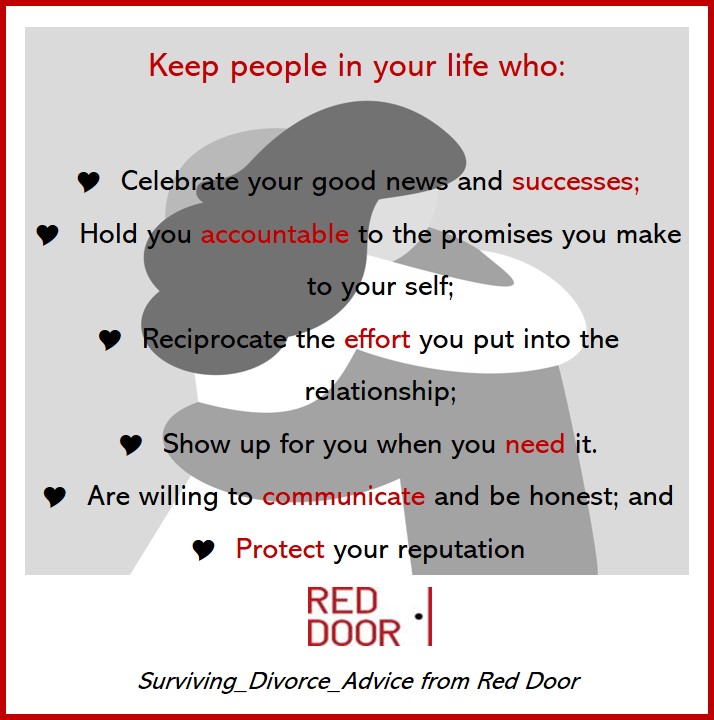
For many people the process of divorce can be humiliating. We need to be careful not to kick our friends with when they are down.
It is not easy to be a good friend during the divorce process. It takes a special person to help navigate the pain, fear and necessary change. If you can be that person for your friend, you are to be admired, congratulated, and cherished.
About the author- Angela Watkins is a counsellor working for several years with individuals going through divorce in individual and group therapy (the Iron Fairies). To contact Angela for session information contact angelaw@reddoor.hk
- for more information about Switzerlands, read Leave a cheater, gain a life: the chump lady’s survival guide by Tarachy Schorn.
 Start your Red Door Journey