
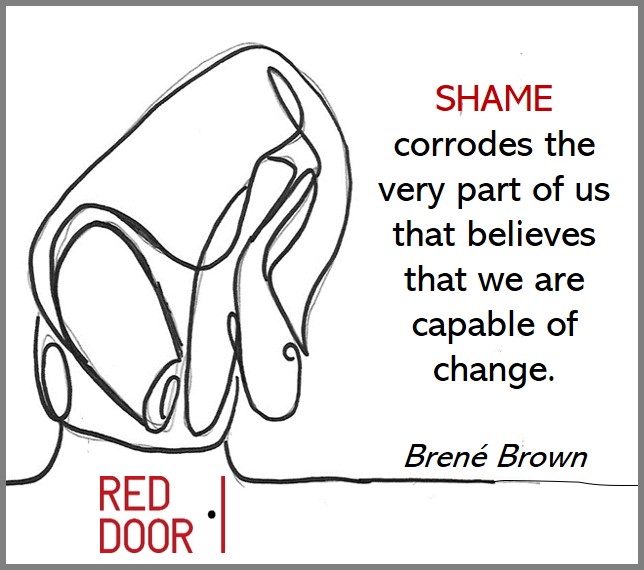
So many people are living in a psychological jail created by a sense of shame. Shame doesn’t have to dominate how you feel about yourself, and the decisions that you make. Break free from the prison of shame.
Shame is a complex, painful experience that most of us experience at some point in our lives. It is characterised by the mental distress, often together with unpleasant feelings within your body including feeling like you have knots in your stomach, chest pain, lumps in the throat, and heated skin, when you feel you have done or are wrong in a situation. There are usually accompanying negative intrusive thoughts such as, “I am bad or messed up”.
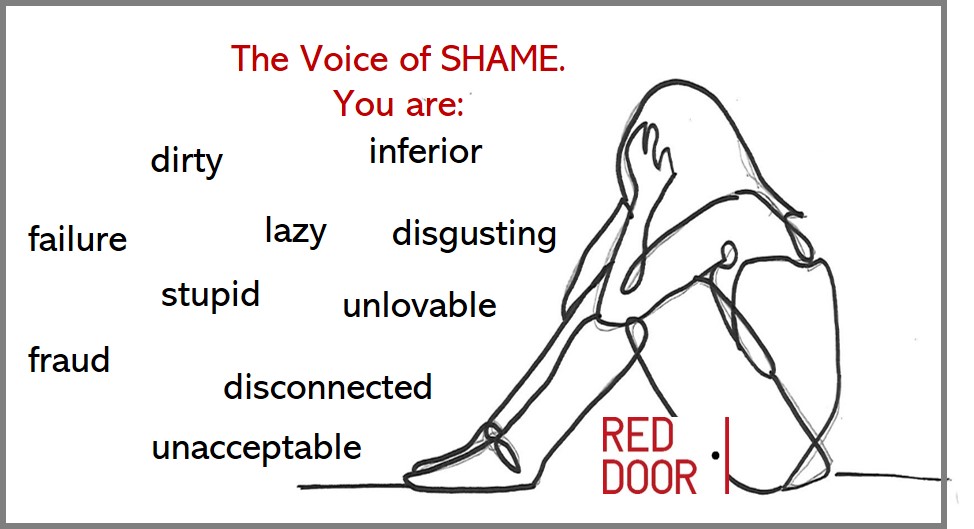
When our shame becomes chronic, it can take over our identity and our energy to live fully. When we experience this type of shame, we are steeped in the fear of being ridiculed, diminished or feeling flawed. Whatever, we feel ashamed of, at its foundation is an unconsciously belief of inferiority or being unacceptable – even being unlovable. I call these our root shame beliefs – they include thoughts such as:
- I am unlovable
- I am dirty
- I am disgusting
- I am inferior
- I am a joke
- I am a bad person
- I am a fraud
- I deserve to be punished
- I am nothing
Shame is a common denominator in low self-esteem, high reactivity, perfectionism, intimacy issues and co-dependency. Shame traps us. Shame breaks us.
There are different types of shame – some is attached to situations, when you break an norm or expectation, or existential shame, when you come to realise something about yourself (e.g. you drink too much). When shame internalised/toxic shame it becomes especially problematic. Internalised/ Toxic shame is when you believe that something is fundamentally wrong with you. Often this is the result of external experiences or commentary.

Shame is different from guilt. Guilt is about a specific behaviour or fear of a punishment, whilst shame is about feeling that something is unacceptable about us. When we feel shame, blame is never far behind.
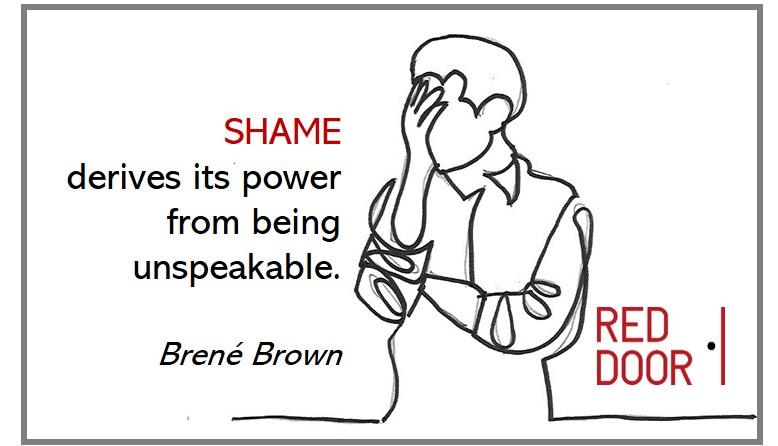
Some cultures place a particularly high value on reputation, face, honour and one’s contribution to their community. In such societies, shame may be used as a tool to modify the behaviour of a member of the community. In some cases, if a ‘wrong’ can not be corrected a traditional expectation may even include suicide.
If shame has been shaping your experience, we want you to know that you CAN move out of those associated experiences of being disconnected, rejected, diminished and reduced.
What are people ashamed of?
People are ashamed for a variety of reasons. In therapy we see shame from which we try to free our clients. Often, as people who care about our clients, we wish we could help them see that they should NOT be ashamed of the things they are ashamed of. Shame is rarely fair or even rational. Shame destroys our sense of self, and our feeling of acceptance, unnecessarily.
People feel ashamed about:
- Their appearance
- Their culture, ethnicity
- Their addictions (drinking, drugs, gambling)
- Their mental health
- Their sexuality
- Their identity
- Financial troubles or status
- Their learning challenges
- Their marital status – particularly if they have been forced into divorce
- Being rejected by their family of origin
- Being in an abusive romantic relationship
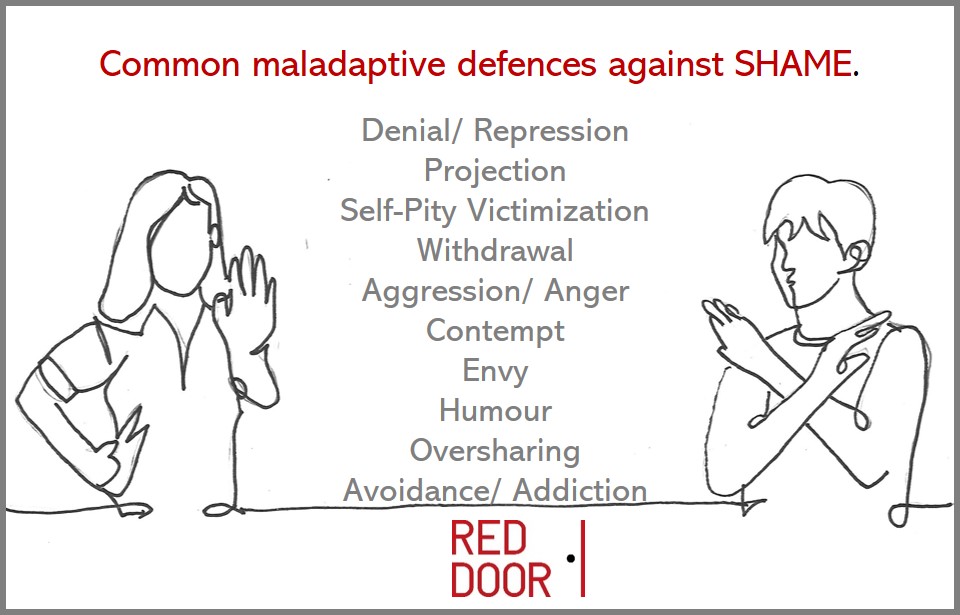
Defence mechanisms against shame.
We respond to shame in a number of maladaptive ways. Have you been using these techniques to maintain or avoid dealing with your shame?
- Denial/ Repression – we refuse to believe what has happened or bury it because we or others think it is unacceptable. This can lead us to become easily triggered as we mask our sensitivities. Paradoxically we try to make a stimulus have no impact, but instead we can become hypersensitive to trivial criticism that we worry could reveal the source of our shame.
- Projection – when we project, we disown our unacceptable feelings, thoughts or qualities onto someone else. Sometimes we blame another person before we think they can judge us.
- Self-Pity victimisation – sometimes we really are victims, but we can also portray ourselves as a victim as way to avoid growth. It is rare, but some adults provoke abuse from others in order to receive the punishment they believe they deserve as part of their shame.
- Withdrawal – we can force ourselves to live in the shadows so that others can’t see the source of our shame. Introverts are more likely to follow this approach.
- Avoidance/ Addiction – When we have strong shame we may choose to self-medicate to escape the negative feelings and thoughts associated with our self-hatred.
- Contempt – sometimes we make use arrogance as a defence. Using and inflated sense f ourselves to avoid our feelings of inferiority.
- Envy – we can compare ourselves to others and blame them for our situation. For example, “I have to be this way because those other people have all the resources and I have none”
- Oversharing – when we asked about our circumstances we share the whole story, including all the ugly details of our experience because we feel obligated or compelled to share our shame.
- Acting out in anger or aggression – aggressiveness may become intensified if we believe that another person stimulates our self- judgement. We may become vindictive, physically aggressive, or passive aggressive.
A way out of shame.
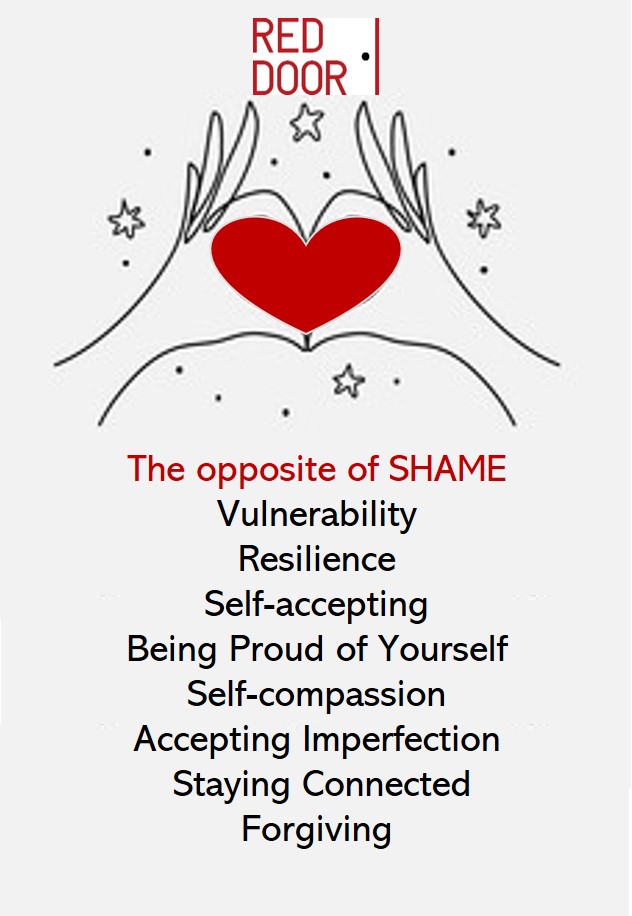
Shame makes us silent, defensive, hypersensitive, combative, forced to live in denial or anger. The opposite of shame is also part of the cure for shame. The opposite of feeling shame is being self-accepting, being compassionate to yourself, accepting that perfection is not ideal or realistic, being forgiving of your problems and shortcomings, understanding that progress is made in consistent effort (i.e. resilient), and being connected to people rather than treating yourself as if you deserve punishment.
Easier said than done, I hear you say.
In counselling we recommend a number of techniques and have sessions focused on various recovery practices. Some that I particularly recommend are quietening your inner critic, creating an inner champion, and reflective journalling to help you recover.
Whilst you can do this work on your own, using some of the books listed as recommendations to this article, working with a counsellor will probably be more efficient. A counsellor can help frame questions to help you better see your shame traps, and navigate the practices that maintain your shame, as well as help you prioritise activities that could help.
Shame reducing exercises
Shame makes us silent, defensive, hypersensitive, combative, forced to live in denial or anger. The opposite of shame is also part of the cure for shame. The opposite of feeling shame is being self-accepting, being compassionate to yourself, accepting that perfection is not ideal or realistic, being forgiving of your problems and shortcomings, understanding that progress is made in consistent effort (ie resilient), and being connected to people rather than treating yourself as if you deserve punishment.
Easier said than done, I hear you say.
In counselling, we recommend a number of techniques and have sessions focused on various recovery practices. Some that I particularly recommend are quietening your inner critic, creating an inner champion, and reflective journalling to help you recover.
Whilst you can do this work on your own, using some of the books listed as recommendations to this article, working with a counsellor will probably be more efficient. A counsellor can help frame questions to help you better see your shame traps, and navigate the practices that maintain your shame, as well as help you prioritise activities that could help.
Recovery from shame.
When we explore how people react to shame, we can summarised that, in response to their shame, people move against people, away from people, or move towards people. Moving towards people means being vulnerable, showing love. In order to be able to be vulnerable and show love we need to free ourselves from the power we have given our shame.
Quieten your inner critic
In order to free ourselves from shame, you will need to quiet your Inner Critic. Each of us has an inner critic, who often picks away at our sense of self, building a kingdom of shame. In session we will often confront a client’s inner critic so that they can, often for the first time, realise that they are feeding themselves a series of unhelpful and poisonous thoughts. This inner critic maintains your shame. The inner critic writes excessively long to do lists of “should” in response to your reaction whatever you are ashamed of.
Remember Many of us give a full stage and podium to our inner critic, but little air time to soothing words of self-affirmation of our inner champion. Remember the words that you say to yourself can build you up or strip you down. If you are suffering from negative self-concept you need to feed yourself positive words. The thing you are ashamed of, is probably not really that shameful. You need to change the record that plays in your head. Remember nothing changes, if nothing changes.
I often encourage clients to name their inner critic, usually with a name that I dislike. Mine is called Kevin, simply so I can say to myself, “Shut up Kevin,” whenever I find myself in a labyrinth of self-criticism. This quietens the critic AND makes me smile. You need to then work on its antithesis – the inner champion or cheerleader.
Engage your inner champion.
Engage your inner champion/ cheerleader. creating a character or component inside yourself whose role is to be the champion you need. This voice needs to help you accept your shame and turn your vulnerability from something to hide from to something we can be proud of. There is a reason that the movement towards acceptance of the LGBTQ+ community is called PRIDE.
When deciding what your inner champion might need to perform in support of you, consider the opposite elements of shame. This key inner voice needs to help you stay connected to the world, be compassionate, feel pride in yourself, help you to be resilient, accept that you are imperfect being and that, that, is okay. Self-acceptance is a priority.
For example, your inner champion could:
- Encouraging you
- Give you empathy
- Supporting you when you feel unfairly treated
- Help to build your self-esteem
- Help you to feel empowered
- Validating your feelings
- Talk to you positively about our looks, feelings, experiences
- Understand that when people judge people like you, it demonstrates their problems, not ours.
- Helping you identify and regulate your emotions
- Help us face up to our responsibilities rather than feel “less than” because of parts of us we don’t accept
Your champion is going to respond to the demands of your inner critic – using self compassion and acceptance, and even forgiveness to free us from the tyranny of should that the critic will list for us to live under. We can sometimes explore these internal dialogues by using journals.
Using journal pages and prompts to help you break free from shame.
I am a proponent of journaling. I see it as an essential component of self-therapy. I’ve attached a link to an article about journaling to help you better appreciate the benefits of journaling at the end of this article.
The creative process of journalling allows all of your voices to be expressed on the page. Internal self-dialogue, is much more clear when captured on paper. I prefer prompted journals as an empty page can be daunting.
Exercise series 1: Let your shame speak
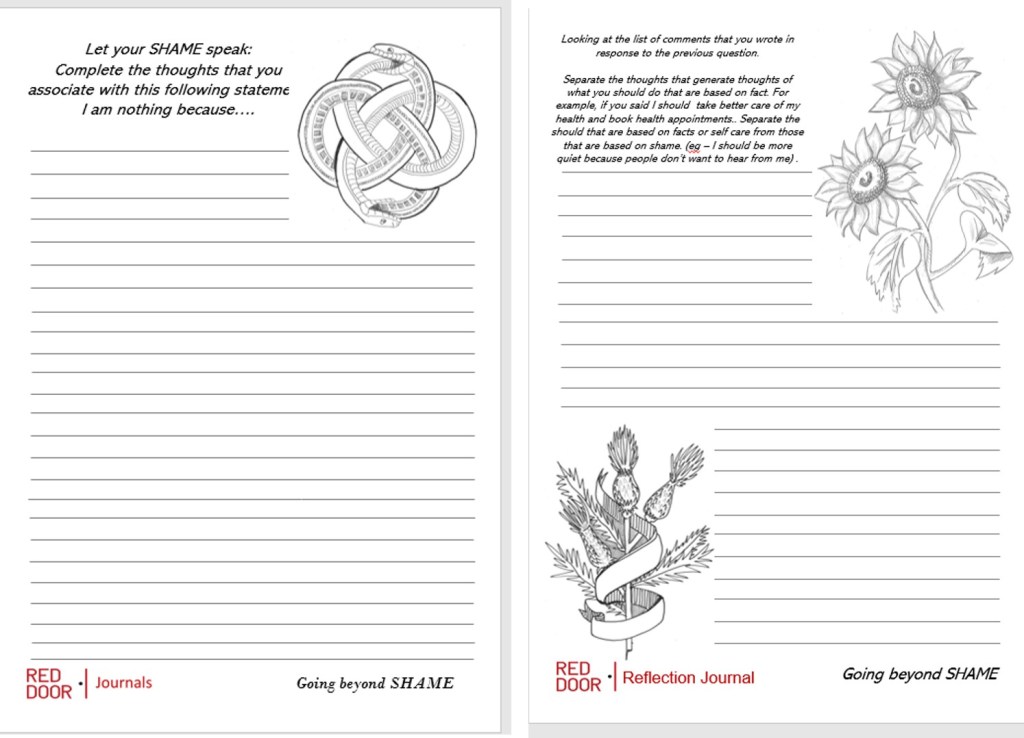
In this series of journal pages, you will give your shame a voice to allow it to express the thoughts associated some of your fundamental shame beliefs. For example, you write your response to a root belief that you hold within your experience of shame. You can know what your root belief is by reading each of the common shame root beliefs and feel in your body the one that gives you the biggest response. We have created these pages for your consideration.
Step 1: Let your shame speak –responding to a root belief
Step 2 Separate the shoulds based in fact from the shoulds that are based in shame
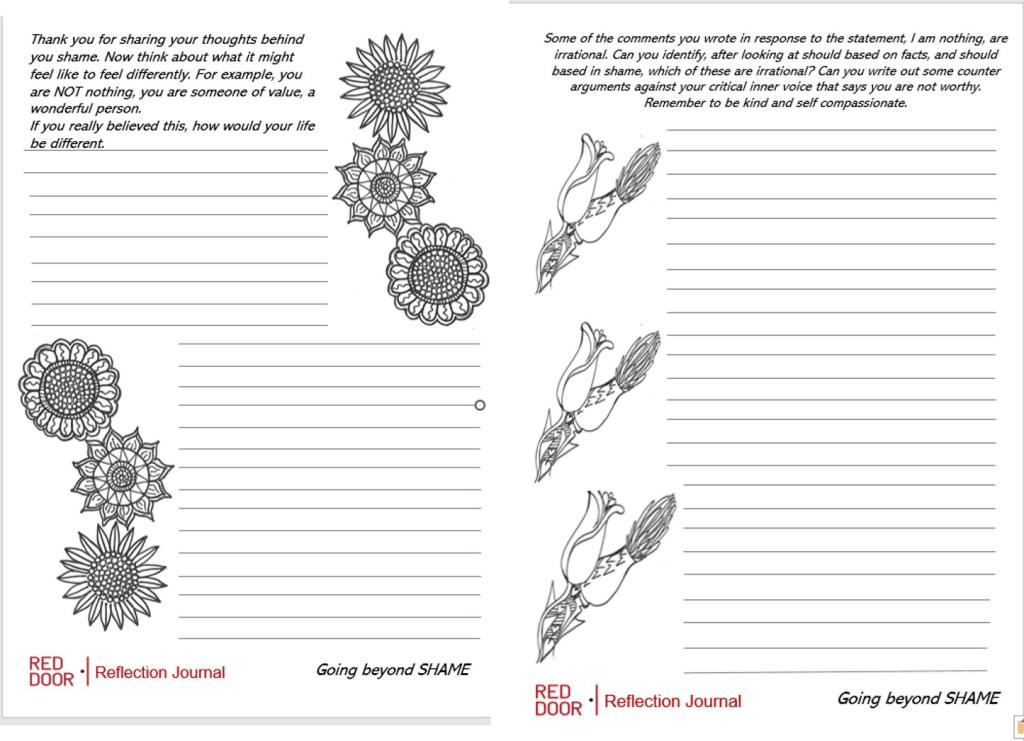
Step 3 Imagine an alternative future
Step 4 Create a rebuttal.
Exercise series 2: Reprogramming messages from the past.
Step 1: Identify messages from your youth that have come to affect you and your perception of yourself. Think about the messages that your friends or family, or culture, impressed upon you when you were young. List these out. These might include
- Be nicer
- Don’t be so sensitive
- Don’t act crazy
- You are a psycho
- Act like a lady
- Don’t be so stupid
- Be nicer to people
- You are lazy
Step 2: What was the impact. Did you feel embarrassed or humiliated by these messages. How are you allowing them to affect you as an adult?
Step 3: Have you turned these messages into a tyranny of should that your inner critic reminds you of regularly. Does it seem fair that you are so tough on yourself?
Step 4: Consider listening to your inner champion instead. Are these messages needed or helpful to you? If you were showering yourself with self-compassion and protecting yourself, would you listen to these messages and the tyranny of should any more?
Try these activities to help you work through your shame. Sometimes it is hard to be objective when you are looking at and within ourselves. You can consider working through a counsellor to help you find pathways through tough spots, when you get stuck, or find some elements too painful. A good counsellor can help you move through the shame reduction process, and break you free from the thoughts that have been keeping your trapped.
About the Author: Angela Watkins is the lead counsellor at RED DOOR. Angela helps adults, teens and families break through emotional road bumps. You can feel better. To contact Angela for an appointment email angelaw@reddoor.hk.
Other blogs about Journaling:
Useful books:
Darlene Lancer (2014) Conquering shame and codependency: 8 Steps to freeing the true you
Rebecca Mandeville (2020) Rejected, shamed and blamed: Help and hope for adults in the family scapegoat role.
Hilary Jacobs Hendel (2018) It’s not always depression: Working the change triangle to listen to the body, discover core emotions and connect to your authentic self.
Brene Brown (2007) I thought it was just me: Women reclaiming power and courage in a culture of shame.
Stephen Guise (2015) How to be an imperfectionist.
 Start your Red Door Journey