Mindfulness: Creating Your Corner of Calm

Did you know that the average person has between 12,000 to 60,000 thoughts per day and that most are negative and repetitive? Thoughts that drag us back into the past or thrust us right into the future. All this internal noise and motion can leave us feeling exhausted and stuck. On top of that, life has become more pressured and stressful for many, and technology has made it even harder to find the off switch. What if there were a way to manage those thoughts and distractions so that we could be less bogged down and more focused and worry-free? Imagine if we could train our minds to be our allies instead of that obstacle to getting stuff done. That power and possibility, indeed, lie within us.

You may have heard of mindfulness but are dubious about the concept. You may be intrigued but cannot envisage being still or silent. Or like many others, you may have dabbled here and there but ultimately struggled to find the time and maintain the habit. It can feel intimidating, even fearful for some to know where to start or what to do. The good news is the more you practice, the easier it gets, and the benefits accumulate. Just as you can build your muscles in a gym, you can train your mindfulness muscle. And it’s high time we approach mental fitness the same way we do our physical health.

So, if you’re seeking a greater sense of inner calm and a way to live more fully and consciously, then mindfulness may be just the practice you need. In this blog, we’ll explore the power of mindfulness and share practical tips and techniques that you can incorporate into your daily routine. So, let’s take a deep breath, let go of any distractions, and begin our journey towards greater mindfulness.

What is Mindfulness?

It is a scientifically backed practice that originated in Buddhist philosophy over 2500 years ago and was popularized in the West by U.S. Professor Jon Kabat-Zinn as a treatment for stress. Everyone can benefit from the positive and calming effects of mindfulness, not just those with mental health concerns. It is a state of awareness that comes from purposefully paying attention to our thoughts in the present moment without judgement. It’s about being curious and is the antithesis of being on autopilot. When we’re mindful, we engage our senses deliberately and we take in things we can see, smell, hear, touch, and taste.

What are the benefits of Mindfulness?

  • Mindfulness can reduce anxiety and depression
  • Mindfulness can be used to manage stress
  • Mindfulness can improve learning and memory
  • Mindfulness can improve decision making
  • Mindfulness can boost creativity and problem-solving
  • Mindfulness can improve our ability to focus
  • Mindfulness can help to regulate our emotions
  • Mindfulness can improve our relationships
  • Mindfulness can help us let go of automatic negative thoughts
  • Mindfulness can increase self-acceptance

Practices to assist mental decluttering and induce a sense of calm

These relaxation exercises can be practised independently anywhere and anytime you can spare 5-10 minutes. Some will resonate more than others so do experiment and find what suits you best. The positive effects can be felt instantly, and the ease of practice and benefits increase with frequency and consistency of practice. So, what are you waiting for?

Meditation

This practice takes the form of a voice guiding you through meditation or listening to a backdrop of soundscapes, white noise, or healing music to relax your mind and senses. The practice of stillness allows you to gain inner peace, break the cycle of reactivity and enhance your overall well-being. Meditation can be performed seated, on the floor or a chair, or even lying down. Once you have found your quiet spot and sorted out your posture, you can choose an anchor such as your feet on the floor, hands on your lap, sounds, or your breath. Some may prefer to keep their eyes open and have a visual focal point such as a candle. There is a plethora of tools now available to assist you given the surge in popularity of this practice. Similarly, there has been an explosion of well-being apps in recent years. Apps such as Calm, Headspace, and Insight Timer can help you cultivate a daily practice. The latter app is a favourite of mine in connecting you with thousands of teachers that cater to different tastes. The YouTube channel, Great Meditation, is another great resource with simple accessible meditations where you can select a male or female voice according to your preference.

Breathing Exercise

One of the most common mindfulness practices, this technique involves controlled breathing that helps to release any stress and tension, calm your mind, and aid emotional regulation. Also known as Diaphragmatic or Abdominal Breathing. Once you are seated comfortably, you can lower your gaze or close your eyes. Bring your awareness to the breath as you inhale through your nose and exhale out through your mouth. You can place your hand on your belly to check it is being engaged – it should rise as you inhale. It helps to visualize any tension leaving the body as you breathe out. This practice may be better suited to those who are not so keen on guided meditations. Breathwrk is a popular app that is focused purely on breathing exercises.

Informal Mindfulness Exercises

An informal approach that adopts the core principles of mindfulness meditation and one that can be easily integrated into your everyday activities. In essence, the objective is to bring your thoughts to the present moment and focus on a chosen stimulus whilst connecting with your senses.

  1. Select an activity that forms part of your daily routine such as brushing your teeth, having a shower, cooking, eating or walking.
  2. Focus on the sensory experience of your actions through movement, taste, touch, smell, sight, and sound.
  3. For example, as you brush your teeth, take note of the sound as the brush hits your teeth, the feel and temperature of the foam, and the smell and taste of the toothpaste. Also, notice the water and foam draining down the sink whilst observing the movement of your arms and hands.
  4. Acknowledge any thoughts that arise without dwelling on them and bring back your attention to the activity.

Body Scan / Progressive Muscle Relaxation (PMR)

This is a practical technique that strengthens the mind and body connection. It may be particularly helpful in cases where anxiety is manifested in muscle tension. This practice involves observing any physical sensations in your body as you scan from your toes to the top of your head. It is best practised by lying down with your eyes closed but can also be done seated. As you move through the body, slowly tense, and relax each muscle and body part. Pay special attention to any areas of tightness or discomfort and release any tension or stress that you may be holding. If you have any physical injuries, skip the affected areas, and avoid practising after heavy meals.

Imagery or Visualization

Visualization is an effective way to relax the mind and body that helps to alleviate stressful thoughts. It is a powerful technique that involves immersing yourself in the full sensory experience of a particular scene or favourite place such as a beach or the mountains. This exercise can be accessed through guided meditations or done independently and is a skill that can be learned. Anytime you feel stressed or overwhelmed, you can simply take a mental vacation to your happy place and return to your day feeling refreshed. Due to its highly calming effect, it could also be incorporated into your bedtime routine to promote better sleep.

5-4-3-2-1 and 3-3-3 Grounding Techniques

These grounding techniques synchronize the mind and body, bringing you back to the present moment by fully engaging the senses. They are effective in countering anxious thoughts and are prized for their simplicity as they are easy to remember and can be practised anywhere.

  1. 5-4-3-2-1 or 5 senses grounding technique – name 5 things you can see, 4 things you can touch, 3 things you can hear, 2 things you can smell, and 1 thing you can taste.
  2. 3-3-3 rule for anxiety – look around your current environment and name 3 things you can see, 3 sounds you can hear, and move 3 parts of your body or touch 3 things.

Mindful Colouring

This is another mindfulness exercise and form of art therapy that is enjoyed by both adults and children. Both calming and relaxing, it helps to reduce any anxious and unhelpful thoughts in addition to improving mood, focus, and concentration. These highly intricate designs can take the form of mandalas, geometric patterns, fauna, and flora and can be downloaded and printed from multiple online sites. Alternatively, there are plenty of colouring books available too.

Self-reflective Practice – Journalling

This mindful practice is beneficial to implement at either end of the day in a quiet spot and helps to promote increased awareness and understanding of yourself. Journalling aids the release of emotions and can be a cathartic process. The practice involves writing down your thoughts and feelings in a non-judgmental way and allows you to recognize any triggers and identify any negative thoughts or patterns. The idea is to write whatever comes to mind though prompts are available if this feels too overwhelming. If you are averse to traditional pen and paper and have a preference for the digital format, Day One is a highly-rated app that you can explore.

Incorporating mindfulness practices into your daily life can have numerous physical and psychological benefits. Whatever your chosen technique, the key is to approach these practices with an open mind and a non-judgmental attitude. Even if you can only spare a few minutes at a time, your mind and body will thank you for it, and it will influence how you appear the rest of the day. So, why not give it a try and discover the transformative power of contemplative practices for yourself?

#mindfulness #meditation #mindfulnessexercises #mindfulliving #mindbodyconnection #anxietyrelief #wellbeing #relaxation #selfcare

About the author: This week’s blog is written by Tanya Knott. Tanya works with adults and teens and focuses on the following areas in her practice: Life transitions. Career coaching. Grief. Anger management. Stress management. Anxiety. Depression. Sleep issues. Individual relationship issues. Mindfulness.

Tanya is a counsellor and psychotherapist at RED DOOR. Her practice is informed by 15+ years of HR and recruitment experience and evidence-based techniques such as CBT and Mindfulness. She is deeply passionate about helping those who feel lost or overwhelmed when faced with uncertainty or challenging life transitions. By guiding her clients to develop greater self-awareness, she helps them identify tools and coping strategies to better navigate any challenges that life may bring.

Contact the RED DOOR reception to set up an appointment with Tanya. reception@reddoor.hk or message 852-93785428

Other blogs on Mindfulness, Journalling and Colouring

Break free from the prison of SHAME.

So many people are living in a psychological jail created by a sense of shame. Shame doesn’t have to dominate how you feel about yourself, and the decisions that you make. Break free from the prison of shame.

Shame is a complex, painful experience that most of us experience at some point in our lives. It is characterised by the mental distress, often together with unpleasant feelings within your body including feeling like you have knots in your stomach, chest pain, lumps in the throat, and heated skin, when you feel you have done or are wrong in a situation. There are usually accompanying negative intrusive thoughts such as, “I am bad or messed up”.

When our shame becomes chronic, it can take over our identity and our energy to live fully. When we experience this type of shame, we are steeped in the fear of being ridiculed, diminished or feeling flawed. Whatever, we feel ashamed of, at its foundation is an unconsciously belief of inferiority or being unacceptable – even being unlovable. I call these our root shame beliefs – they include thoughts such as:

  • I am unlovable
  • I am dirty
  • I am disgusting
  • I am inferior
  • I am a joke
  • I am a bad person
  • I am a fraud
  • I deserve to be punished
  • I am nothing

Shame is a common denominator in low self-esteem, high reactivity, perfectionism, intimacy issues and co-dependency. Shame traps us. Shame breaks us.

There are different types of shame – some is attached to situations, when you break an norm or expectation, or existential shame, when you come to realise something about yourself (e.g. you drink too much). When shame internalised/toxic shame it becomes especially problematic. Internalised/ Toxic shame is when you believe that something is fundamentally wrong with you. Often this is the result of external experiences or commentary.

Shame is different from guilt. Guilt is about a specific behaviour or fear of a punishment, whilst shame is about feeling that something is unacceptable about us. When we feel shame, blame is never far behind.
Some cultures place a particularly high value on reputation, face, honour and one’s contribution to their community. In such societies, shame may be used as a tool to modify the behaviour of a member of the community. In some cases, if a ‘wrong’ can not be corrected a traditional expectation may even include suicide.

If shame has been shaping your experience, we want you to know that you CAN move out of those associated experiences of being disconnected, rejected, diminished and reduced.

What are people ashamed of?
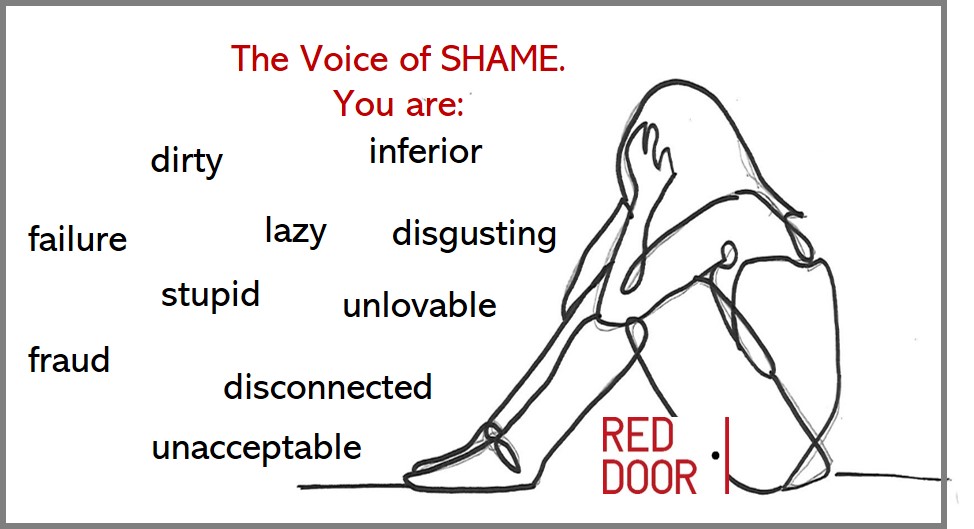
People are ashamed for a variety of reasons. In therapy we see shame from which we try to free our clients. Often, as people who care about our clients, we wish we could help them see that they should NOT be ashamed of the things they are ashamed of. Shame is rarely fair or even rational.  Shame destroys our sense of self, and our feeling of acceptance, unnecessarily.

People feel ashamed about:

  • Their appearance
  • Their culture, ethnicity
  • Their addictions (drinking, drugs, gambling)
  • Their mental health
  • Their sexuality
  • Their identity
  • Financial troubles or status
  • Their learning challenges
  • Their marital status – particularly if they have been forced into divorce
  • Being rejected by their family of origin
  • Being in an abusive romantic relationship
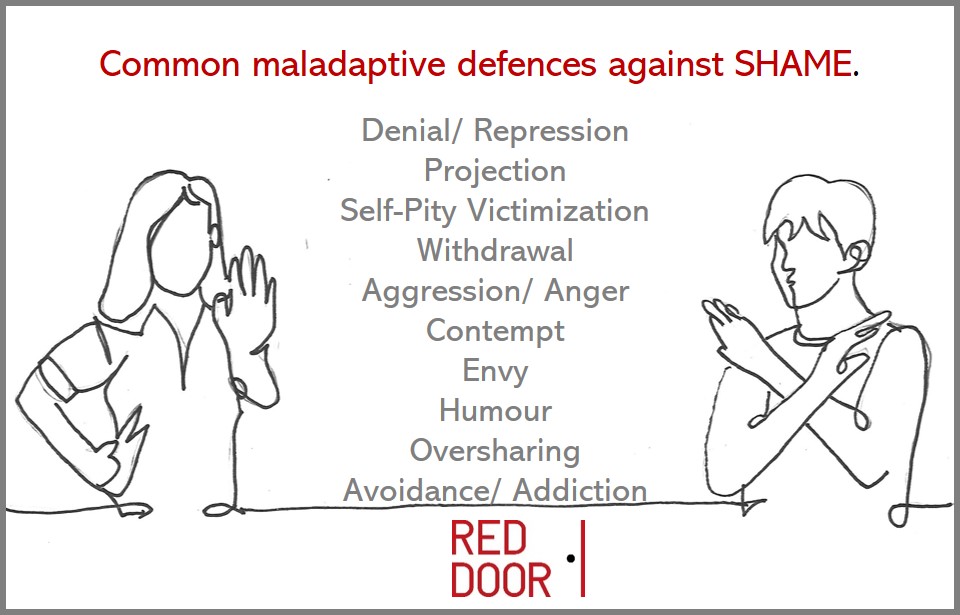
Defence mechanisms against shame.

We respond to shame in a number of maladaptive ways. Have you been using these techniques to maintain or avoid dealing with your shame?

  • Denial/ Repression – we refuse to believe what has happened or bury it because we or others think it is unacceptable. This can lead us to become easily triggered as we mask our sensitivities. Paradoxically we try to make a stimulus have no impact, but instead we can become hypersensitive to trivial criticism that we worry could reveal the source of our shame.
  • Projection – when we project, we disown our unacceptable feelings, thoughts or qualities onto someone else. Sometimes we blame another person before we think they can judge us.
  • Self-Pity victimisation – sometimes we really are victims, but we can also portray ourselves as a victim as way to avoid growth. It is rare, but some adults provoke abuse from others in order to receive the punishment they believe they deserve as part of their shame.
  • Withdrawal – we can force ourselves to live in the shadows so that others can’t see the source of our shame. Introverts are more likely to follow this approach.
  • Avoidance/ Addiction – When we have strong shame we may choose to self-medicate to escape the negative feelings and thoughts associated with our self-hatred.
  • Contempt – sometimes we make use arrogance as a defence. Using and inflated sense f ourselves to avoid our feelings of inferiority.
  • Envy – we can compare ourselves to others and blame them for our situation.  For example, “I have to be this way because those other people have all the resources and I have none”
  • Oversharing – when we asked about our circumstances we share the whole story, including all the ugly details of our experience because we feel obligated or compelled to share our shame.
  • Acting out in anger or aggression – aggressiveness may become intensified if we believe that another person stimulates our self- judgement. We may become vindictive, physically aggressive, or passive aggressive.

A way out of shame.

Shame makes us silent, defensive, hypersensitive, combative, forced to live in denial or anger. The opposite of shame is also part of the cure for shame. The opposite of feeling shame is being self-accepting, being compassionate to yourself, accepting that perfection is not ideal or realistic, being forgiving of your problems and shortcomings, understanding that progress is made in consistent effort (i.e. resilient), and being connected to people rather than treating yourself as if you deserve punishment.
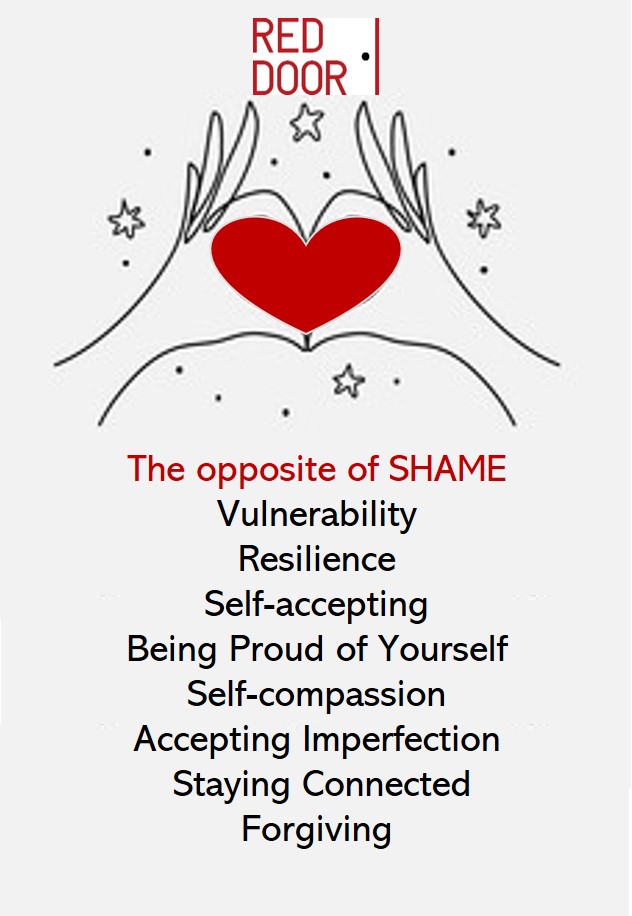
Easier said than done, I hear you say.

In counselling we recommend a number of techniques and have sessions focused on various recovery practices. Some that I particularly recommend are quietening your inner critic, creating an inner champion, and reflective journalling to help you recover.

Whilst you can do this work on your own, using some of the books listed as recommendations to this article, working with a counsellor will probably be more efficient. A counsellor can help frame questions to help you better see your shame traps, and navigate the practices that maintain your shame, as well as help you prioritise activities that could help.

Shame reducing exercises

Shame makes us silent, defensive, hypersensitive, combative, forced to live in denial or anger. The opposite of shame is also part of the cure for shame. The opposite of feeling shame is being self-accepting, being compassionate to yourself, accepting that perfection is not ideal or realistic, being forgiving of your problems and shortcomings, understanding that progress is made in consistent effort (ie resilient), and being connected to people rather than treating yourself as if you deserve punishment.

Easier said than done, I hear you say.

In counselling, we recommend a number of techniques and have sessions focused on various recovery practices. Some that I particularly recommend are quietening your inner critic, creating an inner champion, and reflective journalling to help you recover.

Whilst you can do this work on your own, using some of the books listed as recommendations to this article, working with a counsellor will probably be more efficient. A counsellor can help frame questions to help you better see your shame traps, and navigate the practices that maintain your shame, as well as help you prioritise activities that could help.

Recovery from shame.

When we explore how people react to shame, we can summarised that, in response to their shame, people move against people, away from people, or move towards people. Moving towards people means being vulnerable, showing love. In order to be able to be vulnerable and show love we need to free ourselves from the power we have given our shame.

Quieten your inner critic

In order to free ourselves from shame, you will need to quiet your Inner Critic. Each of us has an inner critic, who often picks away at our sense of self, building a kingdom of shame. In session we will often confront a client’s inner critic so that they can, often for the first time, realise that they are feeding themselves a series of unhelpful and poisonous thoughts. This inner critic maintains your shame. The inner critic writes excessively long to do lists of “should” in response to your reaction whatever you are ashamed of.

Remember Many of us give a full stage and podium to our inner critic, but little air time to soothing words of self-affirmation of our inner champion. Remember the words that you say to yourself can build you up or strip you down. If you are suffering from negative self-concept you need to feed yourself positive words. The thing you are ashamed of, is probably not really that shameful. You need to change the record that plays in your head. Remember nothing changes, if nothing changes.

I often encourage clients to name their inner critic, usually with a name that I dislike. Mine is called Kevin, simply so I can say to myself, “Shut up Kevin,” whenever I find myself in a labyrinth of self-criticism. This quietens the critic AND makes me smile. You need to then work on its antithesis – the inner champion or cheerleader.

Engage your inner champion.

Engage your inner champion/ cheerleader.  creating a character or component inside yourself whose role is to be the champion you need. This voice needs to help you accept your shame and turn your vulnerability from something to hide from to something we can be proud of. There is a reason that the movement towards acceptance of the LGBTQ+ community is called PRIDE.

When deciding what your inner champion might need to perform in support of you, consider the opposite elements of shame. This key inner voice needs to help you stay connected to the world, be compassionate, feel pride in yourself, help you to be resilient, accept that you are imperfect being and that, that, is okay. Self-acceptance is a priority.

For example, your inner champion could:

  • Encouraging you
  • Give you empathy
  • Supporting you when you feel unfairly treated
  • Help to build your self-esteem
  • Help you to feel empowered
  • Validating your feelings
  • Talk to you  positively about our looks, feelings, experiences
  • Understand that when people judge people like you, it demonstrates their problems, not ours.
  • Helping you identify and regulate your emotions
  • Help us face up to our responsibilities rather than feel “less than” because of parts of us we don’t accept

Your champion is going to respond to the demands of your inner critic – using self compassion and acceptance, and even forgiveness to free us from the tyranny of should that the critic will list for us to live under. We can sometimes explore these internal dialogues by using journals.

Using journal pages and prompts to help you break free from shame.

I am a proponent of journaling. I see it as an essential component of self-therapy. I’ve attached a link to an article about journaling to help you better appreciate the benefits of journaling at the end of this article.

The creative process of journalling allows all of your voices to be expressed on the page. Internal self-dialogue, is much more clear when captured on paper. I prefer prompted journals as an empty page can be daunting.

Exercise series 1: Let your shame speak
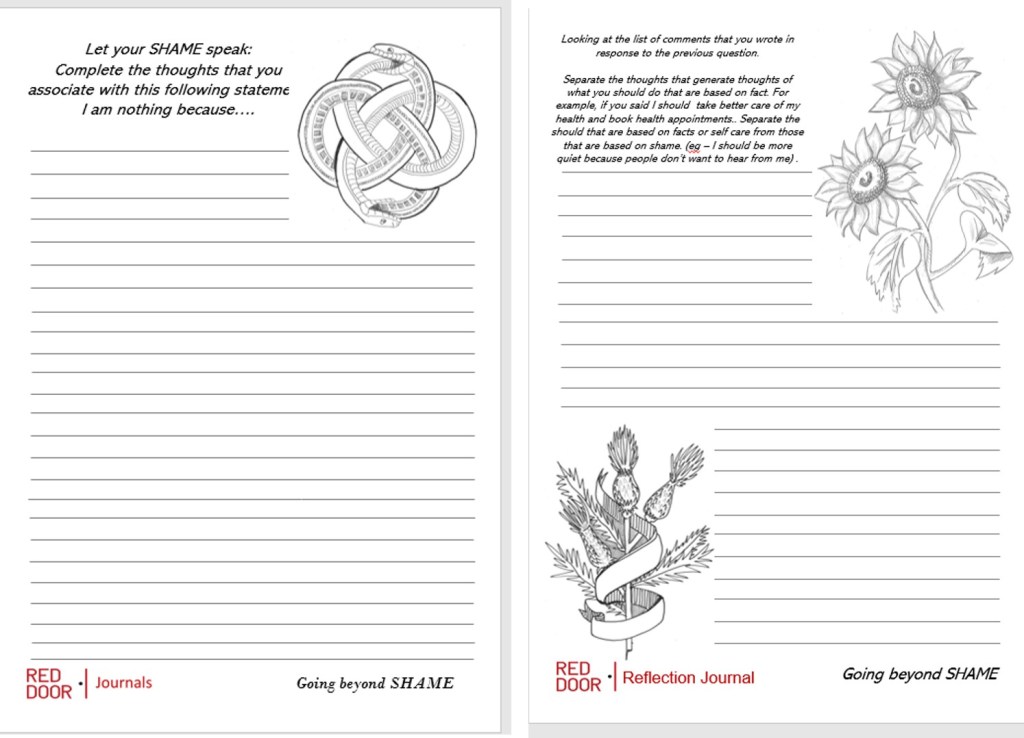
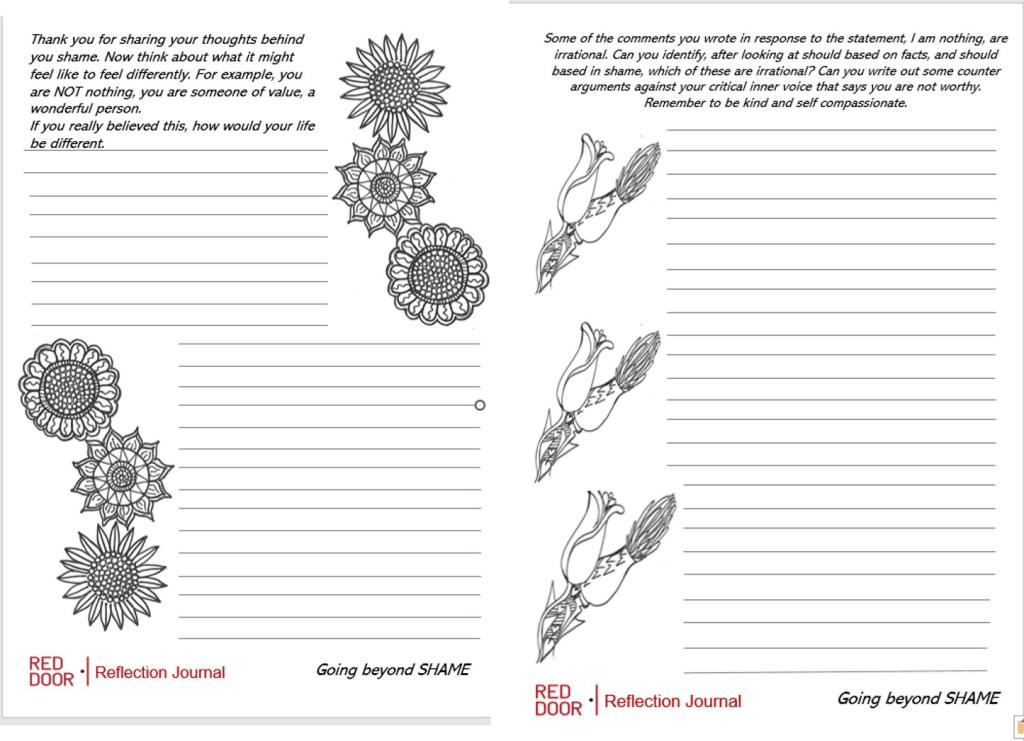
In this series of journal pages, you will give your shame a voice to allow it to express the thoughts associated some of your fundamental shame beliefs. For example, you write your response to a root belief that you hold within your experience of shame. You can know what your root belief is by reading each of the common shame root beliefs and feel in your body the one that gives you the biggest response. We have created these pages for your consideration.

Step 1: Let your shame speak –responding to a root belief

Step 2 Separate the shoulds based in fact from the shoulds that are based in shame

Step 3 Imagine an alternative future

Step 4 Create a rebuttal.
Exercise series 2: Reprogramming messages from the past.

Step 1: Identify messages from your youth that have come to affect you and your perception of yourself. Think about the messages that your friends or family, or culture, impressed upon you when you were young. List these out.  These might include

  • Be nicer
  • Don’t be so sensitive
  • Don’t act crazy
  • You are a psycho
  • Act like a lady
  • Don’t be so stupid
  • Be nicer to people
  • You are lazy

Step 2: What was the impact. Did you feel embarrassed or humiliated by these messages. How are you allowing them to affect you as an adult?

Step 3: Have you turned these messages into a tyranny of should that your inner critic reminds you of regularly. Does it seem fair that you are so tough on yourself?

Step 4: Consider listening to your inner champion instead. Are these messages needed or helpful to you? If you were showering yourself with self-compassion and protecting yourself, would you listen to these messages and the tyranny of should any more?

Try these activities to help you work through your shame. Sometimes it is hard to be objective when you are looking at and within ourselves. You can consider working through a counsellor to help you find pathways through tough spots, when you get stuck, or find some elements too painful. A good counsellor can help you move through the shame reduction process, and break you free from the thoughts that have been keeping your trapped.

About the Author: Angela Watkins is the lead counsellor at RED DOOR. Angela helps adults, teens and families break through emotional road bumps. You can feel better. To contact Angela for an appointment email angelaw@reddoor.hk.

Other blogs about Journaling:

Useful books:

Darlene Lancer (2014) Conquering shame and codependency: 8 Steps to freeing the true you

Rebecca Mandeville (2020) Rejected, shamed and blamed: Help and hope for adults in the family scapegoat role.

Hilary Jacobs Hendel (2018) It’s not always depression: Working the change triangle to listen to the body, discover core emotions and connect to your authentic self.

Brene Brown (2007) I thought it was just me: Women reclaiming power and courage in a culture of shame.

Stephen Guise (2015) How to be an imperfectionist.
Understanding your Mother Wound – Repair is possible.

The term mother wound is used by psychologists to describe the emotional pain or trauma that can be result of a difficult or disruptive relationship with one’s mother. You do not need to have had “bad” parents, or a history of trauma, to acknowledge that a part of you feels wounded from how interactions with your mother have left you feeling incomplete or unloved.

Many people identify that they have experienced a lack of emotional validation from their mothers. Individuals have a plethora of reasons to be unable to provide emotional care for their children. Whilst this creates pain in the children of these mothers, this article is not about blaming that parent.

It is unfortunate that you did not have the type of parent that you needed, and deserved. You can stay stuck in that pain, or consider looking at how to heal that hurt.

Healing the mother wound is about actively providing the care for yourself to heal what remains. In the same way that if someone accidentally cut you with a knife, it does you better to pay attention to treating the wound than shouting at the weapon that caused the injury.

You may feel angry because of the perceived failings of your parents. I encourage you to talk through that anger with a professional. You do not have to forgive or forget. That said, this venting, whilst cathartic, does not completely heal the wound. Blaming your current status on other people might feel good, but you will still need to actively work on a repair for yourself. This probably feels unfair. An alternative way to look at it would be to say that you are seizing the reigns of your future and will do the work to deliver your future, rather than waiting for someone else to do the work for you (not possible) or stay stuck in the past (in which case repair rarely occurs).

Understanding your mother wound

Take a moment to reflect on your relationship with your mother. Think about how that relationship affects you today. Did you feel loved and secure? Were you let wondering if you were good enough? Did you need to act in a role that didn’t allow you to be a child? Did your needs take second place to the needs of other family members? Were you labelled as lazy, crazy, a troublemaker? Write these observations down so that you can reflect on this commentary later. Recognising the ways that your past experiences affect your present can help you begin to heal.

Some of the symptoms and signs that you have as a consequence of having a mother wound can include:

  • Perfectionism
  • Low self-esteem
  • People pleasing (being a Yes-person)
  • Poor personal boundaries
  • Self-sabotaging behaviours
  • Problems with being assertive
  • Difficulty caring for your needs
  • Idol worshiping other people
  • Being conflict avoidant
  • Difficulty regulating your emotions, feeling over emotional
  • Constant feelings of shame and guilt
  • Trouble in interpersonal relationships including fear of abandonment, difficulty trusting people and/or co-dependency
  • A sense of emptiness.
  • Lack of confidence to parent your own children
  • Difficulty accepting responsibility for your role in situations
  • Vulnerability to addiction or self-medication
  • Regular negative self-talk

What can you do to heal your mother wound?

The following activities will help to heal your mother wound. Whilst you can do these alone, these tasks are often more effective when performed in collaboration with a counsellor. Counsellors are trained to help frame questions in a constructive, reflective manner that helps clients to focus on the feelings and their responsibilities rather than noise and excuses, additionally they can help you to feel safer, and more calm, during these painful explorations.

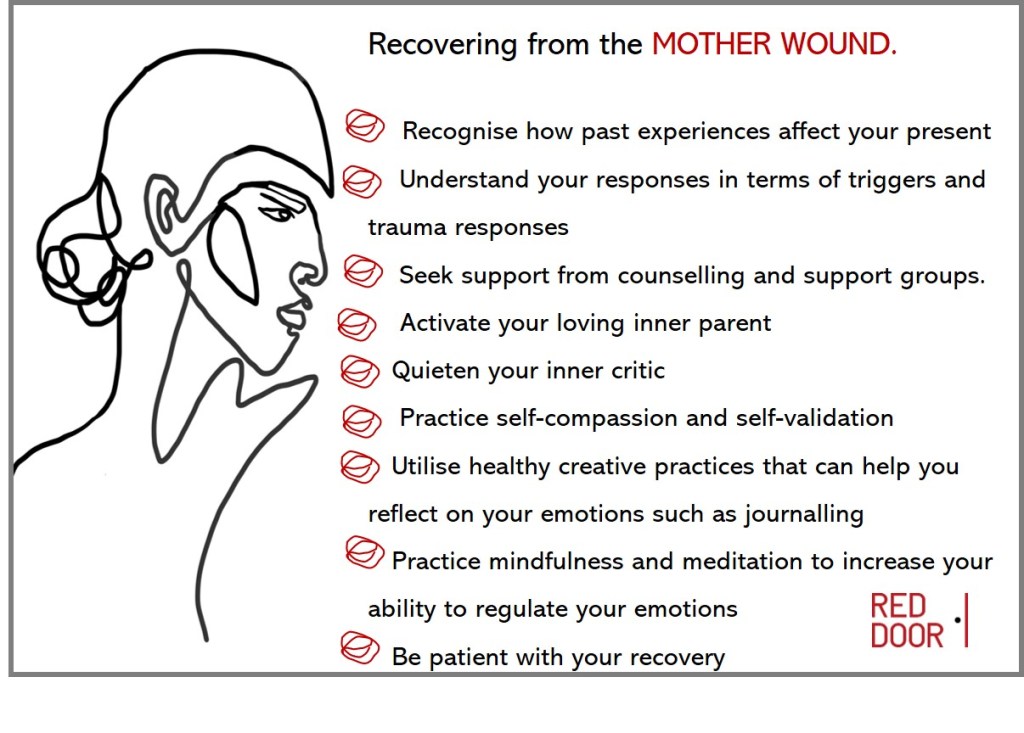
Reflections and recognise An important first step is to understand how your past is affecting your present. We listed a series of symptoms in the section above. It is important for you to consider particular instances where you have demonstrated these behaviours so that we can consider what thoughts, reactions, or triggers are occurring in those situations.

Let me give you an example. A client recently told me a story about a recent frustrating her interaction with her boss. In the recount, Janice (not her real name), was annoyed that her boss had not yet repaired the air conditioner in the classroom where Janice teaches thirty 5-year-olds. Janice identified that she was angrier about the air conditioner than she felt was logical. Knowing Janice well, as well as her history with a mother who often dismissed the impact of events in Janice’s early life, I asked if her current reaction could be related to feeling ignored by her mother when she had made bids for emotional validation as a child. Suddenly Janice’s overreaction made sense. Janice was reacting not only to her boss’s current inaction, but to a repeated, old wounded belief, that she was not important enough to be listened to, a mother wound.

If you have overreacted to a situation, do not stay locked in the shame you might feel about it. Be curious. Could the present actually be reminding you of the past? We call this type of reaction a trauma response. It is usually attached to a traumatic event, but isn’t always. If certain circumstances remind you that you feel ignored, dismissed, labelled unfairly, or mocked, it may be as part of your history, and pain from your childhood.

Throughout the recovery from a mother wound, and especially at this time, journalling your thoughts is particularly helpful. Start writing some helpful prompts that can start your ability to reflect on these situations. Here are some prompts which might help.

Pick one symptom that you suspect may be attached to experiences from your childhood. When did you start to notice this behaviour in yourself? What could have happened in the past that planted the seeds for this behavioural choice? If you could, magically be rid of this problem, how would your life be different?

Pick one symptom that you suspect may be attached to experiences from your childhood. What are the benefits to you of feeling this way, or performing this behaviour? What does it mean for you as an adult to be experiencing this behaviour/ feeling? Are you ready to consider changing this behaviour/feeling? Do you know how?  

A key component of recovery from the persistent challenges from a mother wound involve the essential element of re-parenting. Re-parenting involves creating a character or component inside yourself whose role is to be the parent that you need. That role is sometimes refered to as your Inner Parent.

Counselling provides a objective, yet non judgmental way to look at yourself and how you interact with the world. All of us can benefit from the process of self-exploration which is an essential component of the counselling processing.

When deciding what your inner parent might need to perform in support of you, it will be helpful for you to consider what you want/wanted your parent to do in their role as parent.

For example your inner parent could:

  • Encouraging us
  • Calming us
  • Taking care of our basic needs
  • Organising our health checks
  • Supporting us when we feel unfairly treated
  • Help to build your self-esteem
  • Looking after your safety
  • Validating your feelings
  • Nurturing you
  • Helping you identify and regulate your emotions
  • Help us face up to our responsibilities
  • Prioritise us over other people

When you write a list of these activities you can use it to start to set an agenda of what your Inner Parent needs to provide for you. The questions that remain is how can you achieve these goals. Talking this through with a counsellor, or close friends will be a great place to start.

Do yourself a favour – write the agenda of your inner parent today, and start re-parenting yourself tomorrow.

In order to set up a compassionate inner parent for success, you will need to quiet your Inner Critic. Each of us has an inner critic, who often picks away at our sense of self, building a kingdom of shame. In session we will often confront a client’s inner critic so that they can, often for the first time, realise that they are feeding themselves a series of unhelpful and poisonous thoughts. I often encourage clients to name their inner critic, usually with a name that I dislike. Mine is called Kevin, simply so I can say to myself, “Shut up Kevin,” whenever I find myself in a labyrinth of self-criticism. This quietens the critic AND makes me smile.

To help recover from the emptiness we may feel from the way we were raised we need to practice self-compassion and self-validation. Being kind to yourself is an active process. Many of us give a full stage and podium to our inner critic, but little air time to soothing words of self-affirmation. Remember the words that you say to yourself can build you up or strip you down. If you are suffering from negative self-concept you need to feed yourself positive words. You need to change the record that plays in your head. Remember nothing changes, if nothing changes.

Look up self-compassion workbooks in Amazon to start building and enterprise of exercises to help you. Or talk to your counsellor who can help create a customised programme around your needs and messaging.

The practice of mindfulness and mediation to create a greater generalised sense of calm so that you can better observe your reactions to situations and be curious and more reflective over your behavioural responses. Working with a mindfulness trained coach can help you better notice and react to situations that trigger you.

Utilizing healthy creative practices can help you reflect on emotions and create a vision of your future with the help of your Inner parent. Creative expression of ideas, feelings and conerns decrease stress and anxiety, increase feelings of calm and help develop self-awareness. Engaging in creative endeavors is good for your mental health. For example, you can use colouring, painting, needlecraft, clay work and writing to express yourself.

For those of you who know me, you will know I am a fan of reflective journalling. Journalling allows your internal dialogue to be played out on the page. If you use journal prompts you can better capture your thoughts to be expressed on a particular issue or worry. Its harder to start journalling from a blank page.

Some journal prompts that might help you could include:

When was the last time I was truly kind to myself. How did I feel when I was looked after by myself?

Am I able to allow myself to “parent”? If not, what thoughts and concerns are holding me back?

What kindness or support could I provide for myself that would make a big difference in my life?

If I had to compare the amount of time that a listen to my inner critic rather than my inner parent, what would the balance look like? What could I do to make the ratio of air-time better for my mental health?

Lastly, be patient with yourself and your healing journey. You may want to rush to be whole again. It might be better to change one small thing at a time, so that you can reflect and re frame your world around the small changes that could be made. Allow yourself time to grow , after all that’s what a good parent would do.

About the Author – Angela Watkins is a psychologist and counsellor helping teens and adults recover from hurt and shame. Angela helps clients make the changes that take back their control of their lives. To book an appointment contact angelaw@reddoor.hk

Helpful books about the mother wound and reparenting:

Larry ALLEN (2023) Unearthing the mother wound: Healing and growth for a happier life

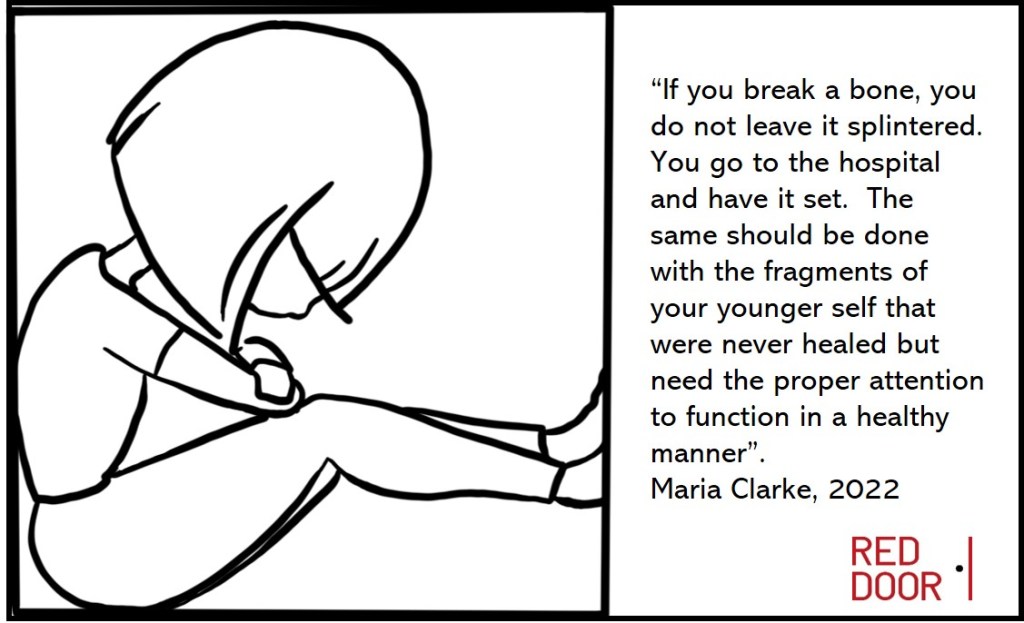
Maria CLARKE (2022) Healing your wounded inner child

Natasha LEVINGER (2023) Healing your inner child: Re-parenting yourself for a more secure and loving life.

Other articles you might find helpful: 

Changing your thinking:

https://reddoorhongkong.wordpress.com/2024/10/06/change-the-view-challenging-your-thinking-filters/

about writing a journal

https://reddoorhongkong.wordpress.com/2023/06/08/troubled-by-your-thoughts-try-journalling/

breaking free from narcissism

https://reddoorhongkong.wordpress.com/2024/01/11/breaking-free-from-narcissistic-manipulation/

when parents and children become estranged

https://reddoorhongkong.wordpress.com/2023/04/10/when-families-break-up-parent-adult-child-estrangement/