

We can’t, as parents of teenagers, simply prohibit them from being on the internet, and it’s almost impossible to out-manoeuvre an internet-savvy teen. Instead, I suggest that you work collaboratively with them to keep them safe and protect their self-esteem.
Much of the advice you will find on the internet aims to help parents better control their child’s interactions online. Today’s teens are informed about internet risks, but you can help them navigate these challenges to keep their reputation safe, watch your wallet, and keep them out of trouble.
Teens are distinctly different from children. What I propose for teens is not what I suggest for children. Once your child enters the teen years, independence online and offline becomes a continual negotiation.
Teens’ social media lives raise a plethora of issues that they can learn to navigate collaboratively with their parents. To do this effectively, suspend your desire to dictate decisions and agendas. Allow discussion and negotiation to occur, and listen to the ideas your teen has in mind. Open, non-judgmental communication will be your greatest asset. The teen years for parents involve conceding any desire to control your child to protect them.
Talk with your teen about what they think is okay to post on social media regarding their lives. You may need to negotiate with them, and you might lose this discussion. Be prepared to compromise in order to remain engaged.
My own teen posts photos that I consider “too sexy.” It made me reflect on my motives for trying to control her online image. Do I think she is acting too provocatively? Is my perception tied to my social values about what teens should look like? Although I don’t necessarily agree with her posts, I recognize who she is in real life. We often laugh about what’s missing from her outfit in a photo. I can see her online presence and how people celebrate her, rather than the creepy boogeyman I initially anticipated.
That said, we must acknowledge that social media influences how teens, particularly young women, see themselves in comparison to others. The internet can exert a strong influence over teens’ self-esteem. This situation used to be exacerbated by magazines; now, they have exposure to thousands of retouched, fabricated lives and stories daily. Discussing with teens how “real” their profiles are, and how authentic the lives of others are online, is essential. Ask openly: Do you feel better or worse about yourself after scrolling through Instagram? Encourage teens to assess what “perfect” means on the internet. It’s crucial they recognize that a concept of perfection is an illusionary construct.
Social media is central to teens’ social lives. Seeking new contacts on Snapchat and Instagram allows teens to develop friendships outside their school year groups, in different schools, and in various parts of the city. Additionally, some teens who feel marginalized often find great support online. We generally encourage this diversification of friendships, especially for girls, who might regularly experience exclusion.
However, discuss friendship parameters with your teen. For example: What age range is sensible for them to interact with? For my teen, a general 18-month to 2-year gap applies. For younger teens, this range might be too broad; perhaps sticking to the same year group is more appropriate. Kids seek the power to choose, so letting them negotiate some of these boundaries can be helpful. Avoid the temptation to ban members of the opposite sex or potential romantic partners, as this may lead to secrecy rather than compliance.
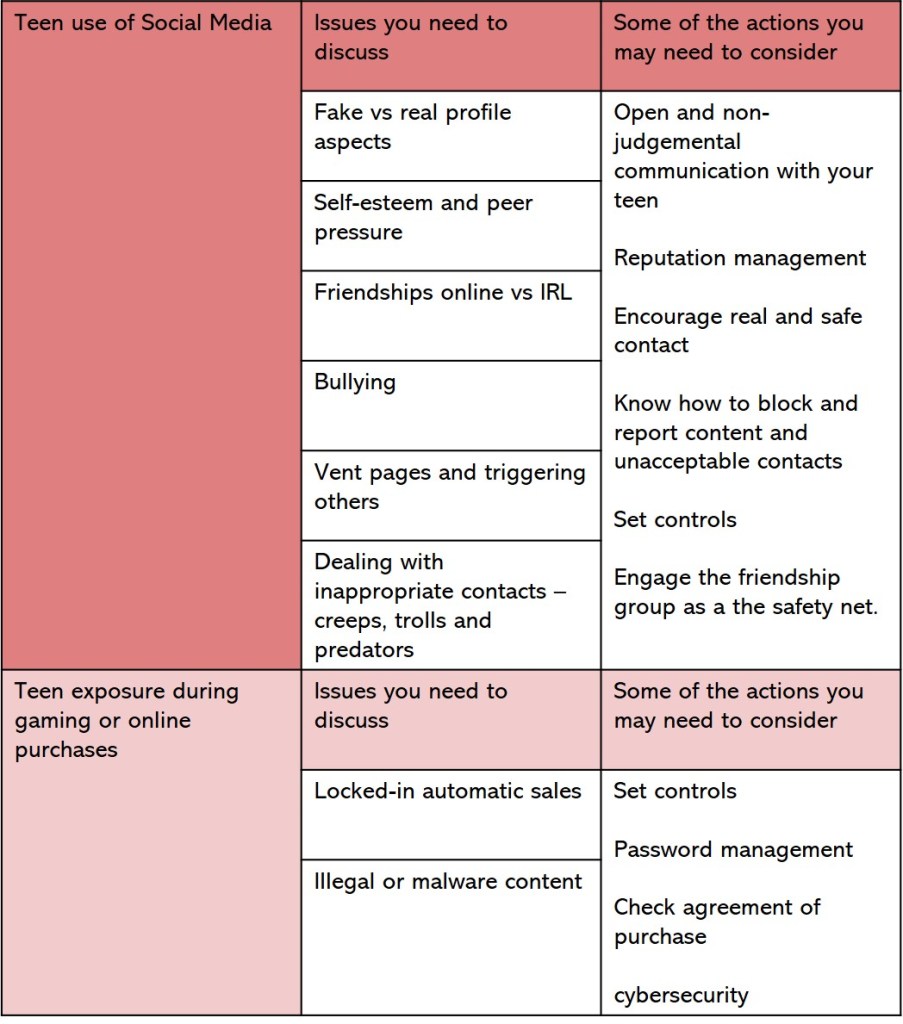
What I do encourage is that teens get the chance, in groups, to meet the people they talk to online in real life. In counselling, I often sense how close many of those online relationships feel to teenagers. Often, they feel they can share more openly and deeply with those they’ve never met. But encourage your teen to convert online friendships to real-life situations. Online friends can be volatile and may shift from supportive to adversarial quickly, and sometimes the information shared can be deliberately deceptive. Discuss what they prefer about their online versus offline friends, helping them recognize the advantages of each.
Encourage your teen to make decisions about their profile independently, not influenced by others, including you. Peer pressure to post controversial content is more common than you might think. Conversations about what good friends expect from them and what they feel comfortable sharing will help them express who they are.
This brings us to bullying. Bullying online is rampant. Your child’s school will have a policy regarding this behaviour and may involve the police depending on the act. Your child will likely recount a story of internet bullying they’ve heard at school. Ask them about it. Instead of simply addressing right and wrong, ask them what might have driven a bully to act that way, what their agenda could be, and why they’d want others to feel a specific way. Encouraging this kind of reflective dialogue helps teens understand human vulnerabilities that can lead to careless online behaviour.
Also, inquire if they ever get contacted by people who make them uncomfortable, and ask how they’ve handled it. Teens are aware of potential creeps, but they might not know what to do. Talking to their friends can yield valuable advice, and horror stories can serve as learning experiences. My teen simply blocks anyone who gives her a bad vibe. In discussing it further, she explained that the “weird vibe” often came from strangers contacting her out of the blue. Most of her contacts are friends of friends, and she asks her connections for background information to determine if someone is worth engaging with. Reinforce her careful decision-making regarding whom to block.
We also need to talk about vent pages, which teens often use to express their anxiety and pain. Venting online may lead to regret later, as these expressions contribute to their online reputation and can be distressing for others. Teens may not realize that expressions of wanting to “disappear” or harm themselves can trigger their peers. This can result in serious consequences, as I’ve seen with several teen clients. While I believe in helping teens express themselves, we must also find appropriate avenues for this. Encourage an old-fashioned diary instead—but don’t snoop through it!
It’s important to also address the use of AI chatbots. Many teens are turning to these bots as a source of support for their mental health. While they can offer accessibility and a degree of comfort, it’s crucial to remember that AI systems lack the emotional understanding and nuanced judgement of trained professionals. They can provide unsafe advice or misinterpret a teen’s needs, sometimes even reinforcing harmful beliefs. Therefore, while teens may find them convenient, it’s vital to stress that these tools should never replace real human connections and support from trusted adults.
The teen years are such an interesting time, and independence is the goal of this period. Negotiating internet safety with your teen rather than enforcing strict rules can help you navigate this important transition. Open, non-judgmental communication lays the groundwork for better protection and future collaboration.
About the author: Angela Watkins is a counsellor and psychologist working with teens to improve their mental health. She also works with families and adult clients. You can contact Angela at angelaw@reddoor.hk.
We have three teen focused counsellors at RED DOOR..
#teens
#teenager
#socialmedia
#internetsafety
#parenting
#bullying
 Start your Red Door Journey